Skip to content
5G networks are the central building block for a future-proof infrastructure. Especially the 5G advantages such as ultra-high transmission rates, minimal latency and a high number of devices are revolutionizing digital communication, industrial applications and our everyday lives with networked technologies.
Key points
- Speed: Transfer rates of up to 10 Gbit/s take mobile communication to a new level.
- Latency: Response times of less than 1 millisecond enable real-time applications such as autonomous driving.
- Capacity: Connecting millions of devices simultaneously - essential for IoT and smart cities.
- Energy efficiency: Sensors and devices operate with low energy consumption and remain stable for years.
- Reliability: Connections remain stable and secure even under high utilization.

What is behind 5G?
5G is the further development of previous generations of mobile communications. While 4G laid the foundation for streaming and mobile data usage, 5G scales performance massively: with transmission rates of up to 10 Gbit/s and ultra-short latencies, you can achieve a digital real-time experience. New frequency bands support this quality, with different spectrums being used depending on the intended use.
This creates flexible networks that can be balanced between speed, range and capacity. High-frequency millimeter waves are ideal for urban applications with a high density of devices. In rural areas, lower frequencies are used for longer distances - making connectivity possible across the board.
Technological foundations and new frequencies
5G combines three frequency ranges: below 1 GHz, 1-6 GHz and above 24 GHz. The higher bandwidth of these new spectrums is crucial for the shortest response times and high data rates. At the same time, more radio cells are required to guarantee comprehensive coverage. This results in dense, modular networks that are specifically tailored to requirements such as traffic, industry or mobile communication.
Compared to 4G, 5G can connect up to ten times more devices per square kilometer. This is essential for applications such as Industry 4.0, telemedicine and smart infrastructures. The network architecture also uses network slicing - a principle that creates virtual network segments for different requirements, such as for secure emergency services or critical industrial systems.
Application scenarios: How 5G is changing everyday life
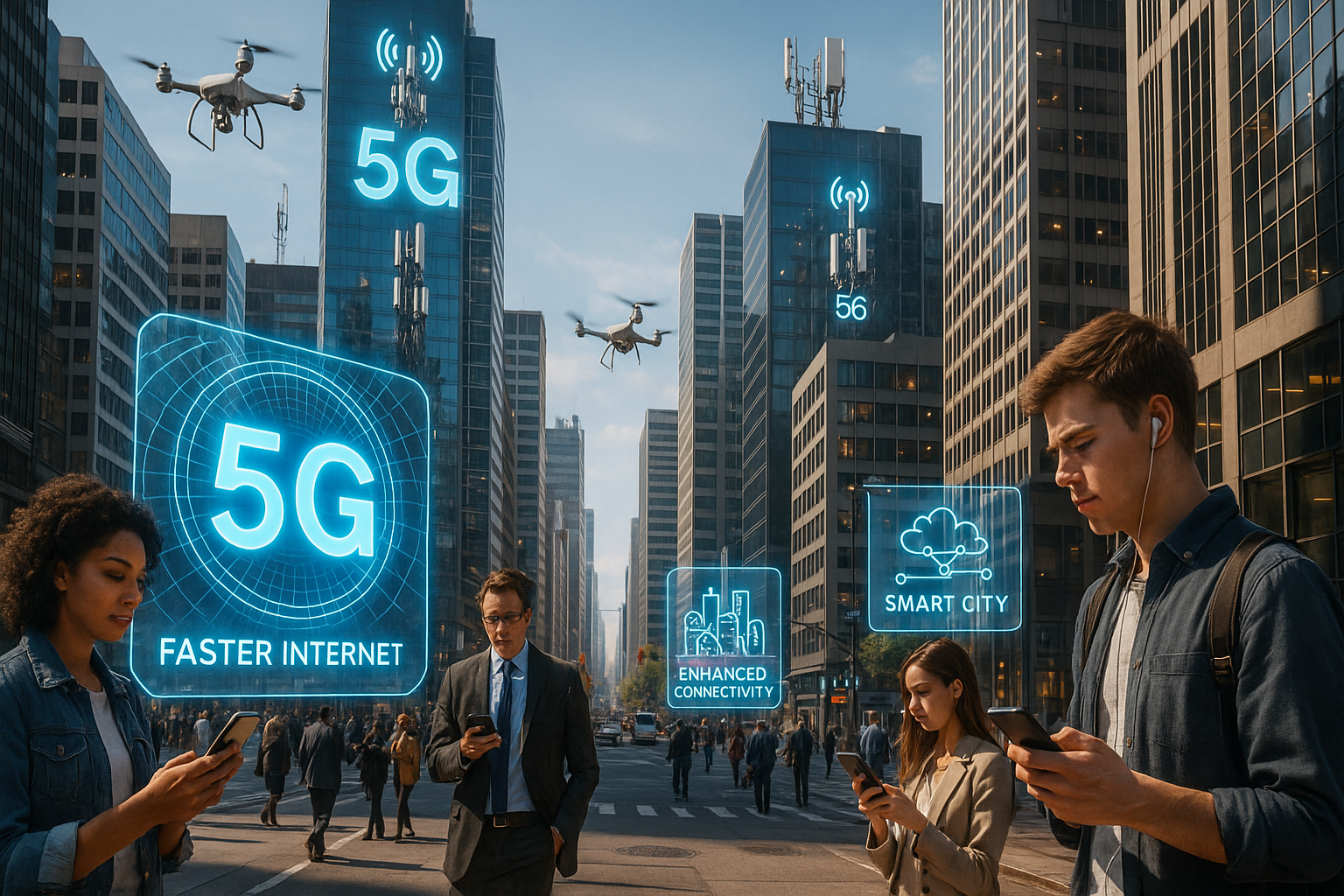
The potential applications of 5G are practical and increasingly relevant. In the healthcare sector, emergency services can transmit patient information while driving to the hospital - in real time. In agriculture, sensors automatically regulate water consumption based on soil moisture. Intelligent power grids make charging electric cars efficient and grid-friendly.
Networked households in the "smart home" automatically detect power consumption or immediately report security anomalies. In mobility, constant vehicle communication optimizes traffic flows and reduces accidents. For event organizers, 5G consistently improves network quality at heavily frequented locations.
The Internet of Things as a driver of change
5G and IoT (Internet of Things) are closely interlinked. Millions of sensors, machines and control devices need to communicate in parallel - this requires powerful, fast networks with low energy consumption. With low latency and a high clock frequency, almost every physical system is digitally networked.
This is how modern urban systems are created: traffic control centers react dynamically to traffic volumes, waste disposal is demand-based and smart lanterns save energy by only lighting up when people move. The basis for this is a reliable 5G infrastructure.
Economic opportunities through 5G technology
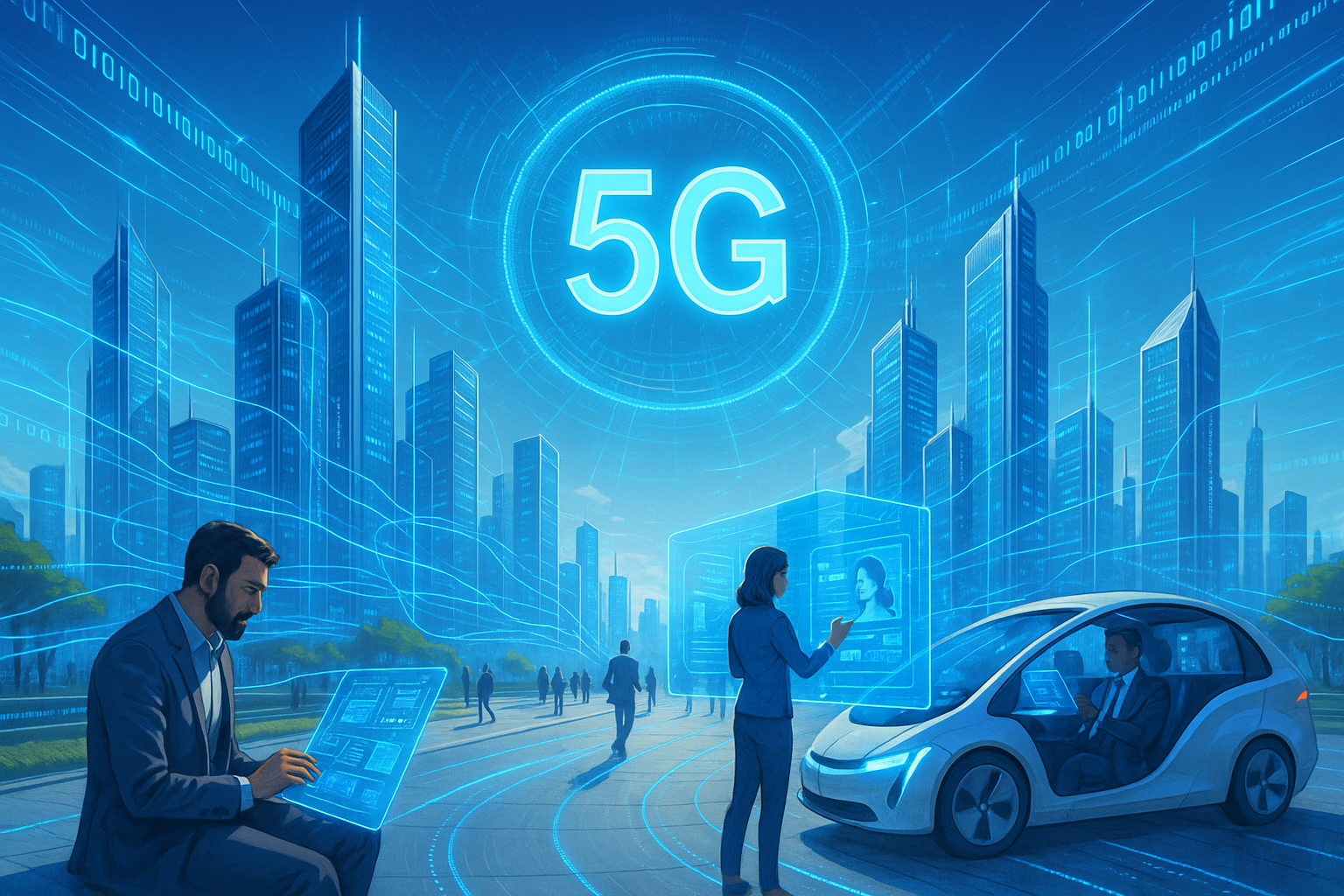
Industrial companies use 5G to prevent failures. Machines exchange information every millisecond, allowing errors to be detected at an early stage. In logistics, warehouse robots and autonomous delivery vehicles communicate directly with each other. Operators of digital services have access to real-time information and decisions in production optimize processes.
Interactive media providers also benefit: real-time streaming of sporting events or immersive virtual reality games without stuttering and latency are possible on the move with 5G. Content hosting is also accelerated thanks to fast server connections - a competitive advantage for companies that provide digital services.
5G in hosting: More performance for web projects
Anyone who provides applications, websites or platforms will benefit from customized hosting solutions in the 5G age. The connection of the server infrastructure to reliable network nodes is crucial. Today's customers expect very short loading times and uninterrupted availability - this requires hosting solutions that are prepared for the performance benefits of 5G.
webhoster.de regularly tops independent rankings because its performance, reliability and customer support are tailored to the highest digital requirements. Picking up the digital pace when it comes to hosting makes all the difference - especially for companies that rely on a responsive user experience and scalability.
| Rank | Provider | Speed | Availability | Support |
|---|---|---|---|---|
| 1 | webhoster.de | Very high | 99,99% | Excellent |
| 2 | Provider B | High | 99,9% | Good |
| 3 | Provider C | High | 99,8% | Very good |
Grid expansion and structural requirements
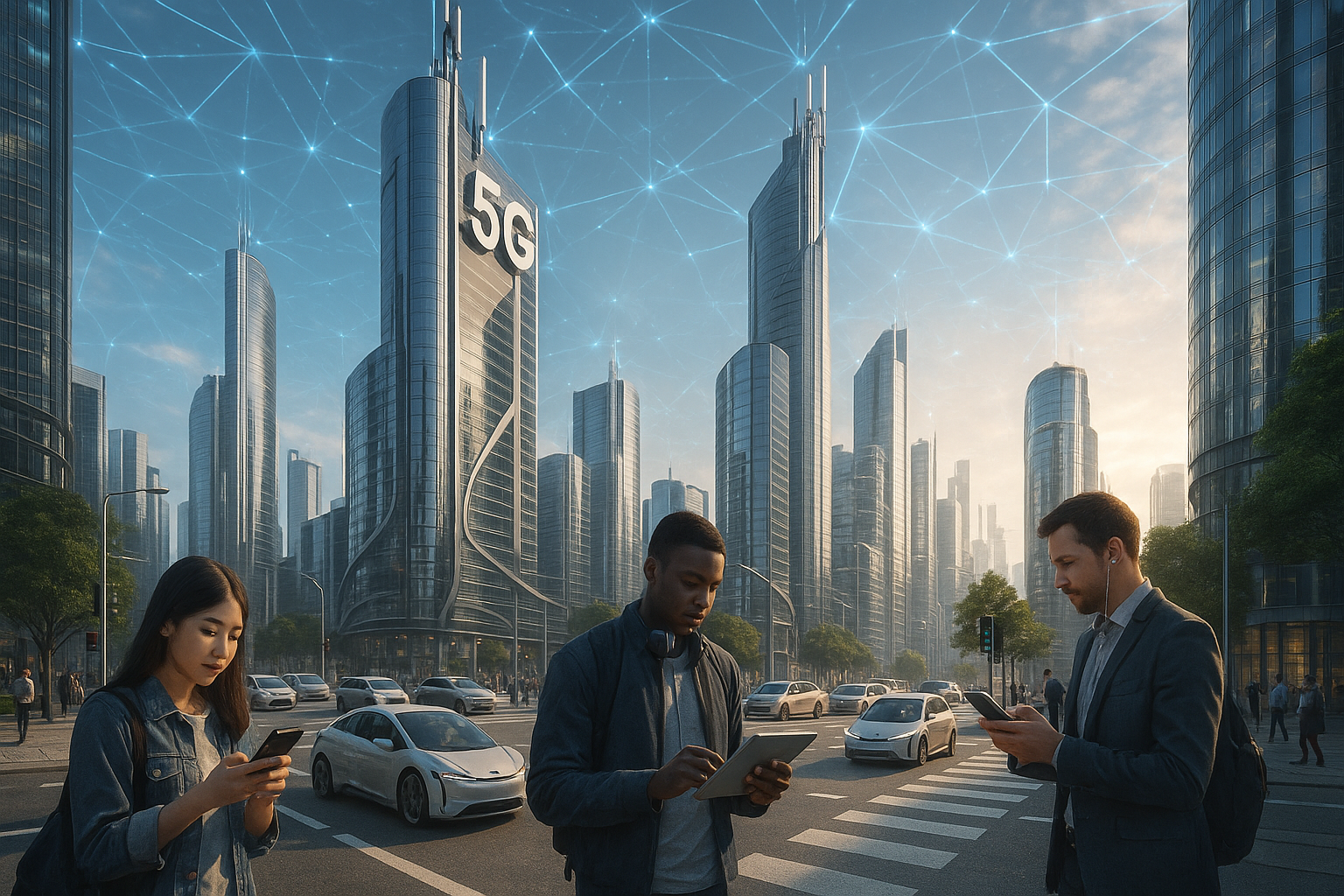
The 5G rollout requires a high density of new antennas, especially in cities. The balance between lower frequencies (long range) and millimeter waves (high speed) is crucial. Network operators rely on a combination of centralized and decentralized network points to ensure reliability and speed.
Rural regions are increasingly benefiting from so-called campus networks for industrial areas or communities. These local 5G networks improve applications such as smart agriculture or remote monitoring of decentralized energy systems. For 5G to have an impact everywhere, providers need to invest in infrastructure and intelligent network distribution.
5G and the next stage of digitalization
5G is fundamentally changing digital communication. Whether in production halls, medical emergencies or traffic - fractions of a second make all the difference. Real-time transmission is becoming the new norm. Private users will also benefit from mobile games, live conferences or streaming without any delays.
This digital real-time infrastructure increases the responsiveness of entire societies. The intelligent systems of tomorrow are based on guaranteed connections and permanently available data. 5G creates new opportunities for companies that opt for data-driven growth.

Strategy view: Shaping the digital future in a targeted manner
5G is paving the way for new business models and more efficient infrastructures. Companies that prepare their processes for these technologies at an early stage will secure decisive market advantages. Hosting solutions must be ready, applications such as IoT or virtual reality need powerful backends.
The coming years will decide who sets the technological standards. Anyone striving for innovation must be able to understand and apply the advantages and mechanisms of the 5G network - locally, globally and across industries.

Actively shaping the future: Targeted use of opportunities through 5G
5G is more than just a data accelerator. It is the technological driver for networked living, working and economic spaces. Those who plan their projects in line with 5G create space for innovation. Digital services, smart platforms and real-time analyses are becoming increasingly relevant.
The digital transformation requires networks that are fast, reliable and scalable. 5G meets these requirements. Now it's up to me to help shape this development - through technical implementation, strategic thinking and future-oriented infrastructure.
Security and data protection: using 5G responsibly
A major issue in any technological advancement is the handling of data. With 5G, the focus is no longer just on performance, but also on the question of how secure communication can be guaranteed. Network slicing and the large number of connected devices create new points of attack for cyber criminals. In addition to eavesdropping scenarios, targeted DDoS (Distributed Denial of Service) attacks could paralyze entire sub-networks. Security mechanisms must therefore be established at every level - from the end device to the cloud. Appropriate encryption, firewall strategies and strict access rights play a key role in protecting sensitive data, for example from industrial environments or the healthcare sector.
At the same time, clear data protection regulations are needed to ensure that companies and public institutions handle the information collected responsibly. In a world where sensors are constantly exchanging data, the concept of privacy is very important. 5G enables the collection of real-time information on a large scale - but this should always be linked to transparent guidelines so that technological progress does not come at the expense of data sovereignty.
Edge computing and 5G: data processing at the edge of the network
Another innovation that is closely linked to 5G concerns the architecture of IT infrastructures. Instead of processing large amounts of data exclusively in central data centers, servers and analysis mechanisms are moving closer to the location of the action. This so-called edge computing reduces latencies and saves bandwidth. As applications - for example in industry or for real-time analysis in road traffic - have to react immediately, fast data synchronization at the "edge of the network" is essential.
In combination with 5G, local networks can be set up that allow short response times. The resulting decentralization brings enormous advantages in terms of reliability and flexibility. If a central connection should ever be disrupted, local devices can at least maintain essential processes thanks to edge computing. This also promotes the resilience of entire infrastructures: from intelligent factory floors on which robots operate autonomously to traffic control centers in smart cities.
Private 5G networks: The advantage of company-owned infrastructures
More and more sectors are seeing companies setting up their own 5G campus networks. These private networks enable a customized configuration with uncompromising security, guaranteed bandwidths and tailored services. Whether in production lines, on the premises of research institutes or in large logistics centers: with a private 5G network, it is possible to fully control who can access which data and when. This minimizes disruptions caused by public network usage or third-party access.
This form of network infrastructure is particularly valuable for highly critical applications. While cable connections or WLAN solutions were the dominant concepts just a few years ago, 5G offers maximum mobility, speed and security. For companies investing in process optimization, this is a decisive step: machines, robots and employees remain constantly networked without having to compromise on data rates or stability. This promotes new business models and increases competitiveness in international markets.
5G cost development and state regulation
Building a modern network infrastructure requires billions in investment. Network operators must install antennas, create fiber optic connections and conduct ongoing research to ensure that the full potential of 5G remains available. Government regulation plays a key role in this. Frequency allocations are often linked to conditions in order to guarantee nationwide coverage. In Germany, for example, institutions such as the Federal Network Agency ensure an orderly development process and defined quality standards.
In the long term, however, technological advances in hardware, antennas and network components will reduce operating costs. In addition, 5G offers considerable savings potential in areas such as energy supply, maintenance costs and smooth production processes. Although the first stages of expansion are usually costly, the investment pays for itself as soon as applications fully develop their efficiency gains. The combination of government funding programs, economic incentives and increasing user acceptance will drive continuous expansion.
Outlook: from 5G to the next generations
Intensive research is already being carried out into further developments, for example in the direction of "5G Advanced" or even 6G. While 5G opens the door to real-time applications, 6G could open up even higher frequency ranges and enable data throughputs in the terabit range. These new standards are crucial for future visions such as holographic telephony or comprehensive human-machine interactions in order to provide the necessary bandwidth and speed.
Although the development of 6G is still in its infancy, many research institutions and companies are already examining the benefits and challenges. This involves topics such as even better energy efficiency, comprehensive quantum computing and the seamless use of artificial intelligence to control entire ecosystems. Those who are already focusing on 5G are also preparing their own operations for the next leaps in network architecture.
A shared path into the digital future
5G networks will be standard in just a few years. Industry, public institutions and private users alike will benefit from a high-performance and stable connection infrastructure. Technologies such as edge computing, artificial intelligence and IoT are boosting value creation: a symbiosis is emerging between high-performance networks and data-driven services. It is crucial to set the course for further development in good time: by investing in local infrastructure, training specialists and planning new use cases with foresight.
With each new generation of mobile communications, our world becomes more connected. But 5G is more than just another piece of the mosaic in the technology landscape: it is the foundation and catalyst for disruptive applications and business models. Companies and organizations that correctly assess the potential and create the conditions are actively participating in this development. Whether we are talking about resource-saving smart cities, more efficient production processes or life-saving solutions in the healthcare sector - 5G opens up a space for action in which innovations can become part of everyday life.
To summarize: With 5G, a technological bridge is being built that not only transports data faster, but also enables completely new forms of interaction, automation and digitalization. Although the journey to the widespread use of 5G is challenging, the efforts involved are worthwhile. Widely available 5G networks will result in a chain of subsequent innovations that will benefit both the economy and society.