Skip to content
CMS updates and regular maintenance secure the future of your website - technically, legally and economically. Without reliable updates, there is a risk of security gaps, poorer performance and a long-term loss of trust among visitors and customers.
Key points
- Security gaps due to outdated CMS versions are among the most common sources of attack
- Regular backups protect against updates protect against data loss
- Performance increases through lean code and effective caching
- Monitoring Detects attempted attacks and malfunctions at an early stage
- Professional service providers offer sustainable maintenance packages with a service guarantee
Why regular CMS updates are crucial in 2025
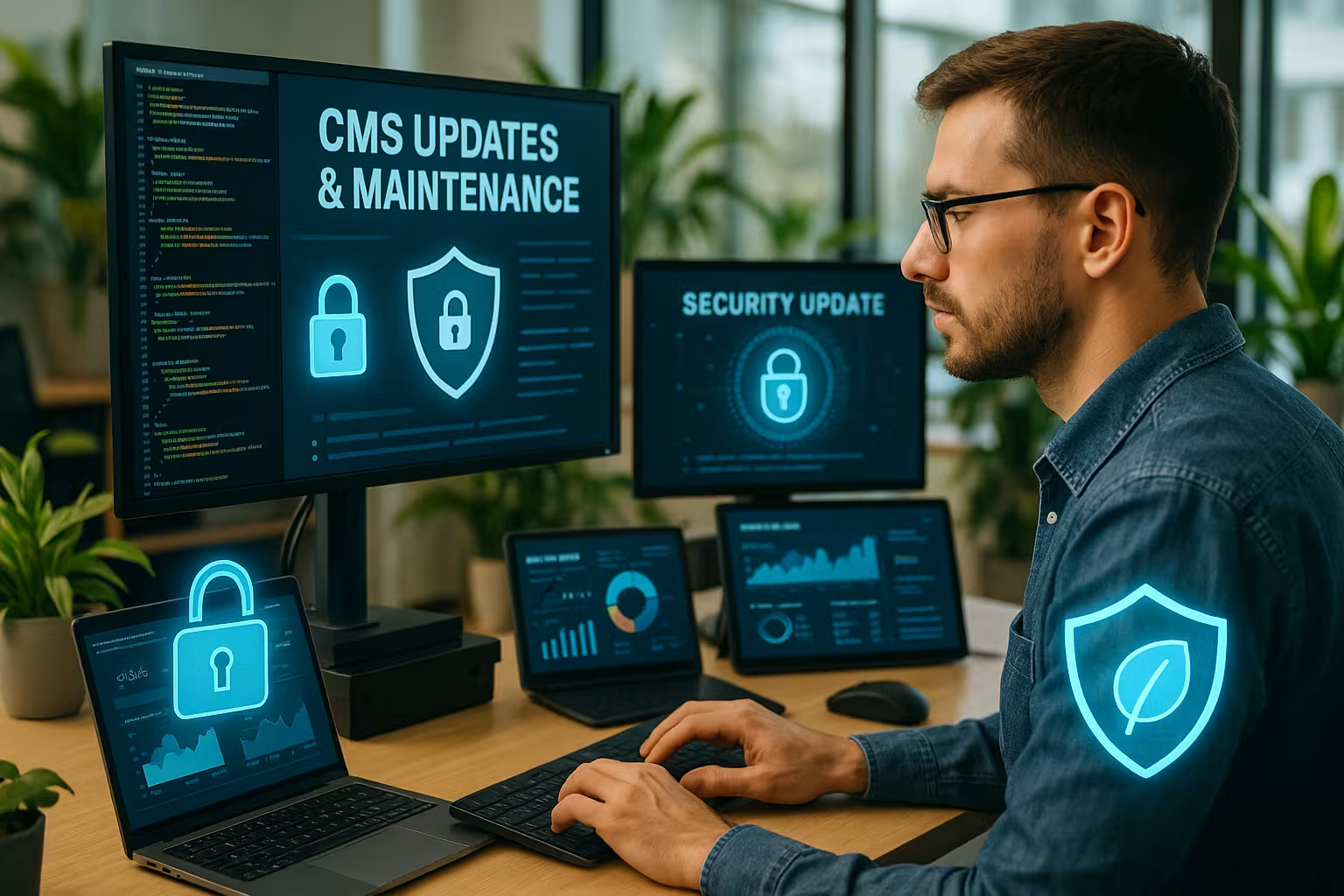
A CMS is never finished. Developers are constantly releasing updates that fix bugs, provide new functions and contain security patches. Any website operator who skips these updates exposes their digital platform to potential risks. Particularly frequently affected systems such as WordPress are the focus of attackers, as known vulnerabilities in many plugins and themes are systematically exploited. A perfect example: an unpatched vulnerability in a popular gallery plugin resulted in over 280,000 compromised websites in 2024. Such cases can be easily avoided with the latest CMS updates. This is why continuous patching is far more than a technical obligation - it is an investment in the availability, trust and future viability of the entire website.How to avoid risks with well thought-out update processes
Many updates not only bring improvements - they also change processes or dependencies. That's why I never start updates spontaneously in the live system. With a clear process, I significantly reduce the risk of problems during the update process. This process helps with orientation:- Backup of all content, media and database
- Test the update in a Staging environment
- Updating the CMS core
- Single run for Plugin and theme updates
- Deletion of unused extensions and themes
Maintenance is more than updates: how to keep your website accessible and performant
When it comes to CMS maintenance, many people only think of technical updates. In fact, there is much more to it: User management, performance checks, content validation - all of this directly affects the user experience and visibility in search engines. Especially with growing content volumes and numerous author accesses, small negligence can have major consequences: Loading times increase, admin accesses remain active even though the employee has long since left the company - typical risks that can be easily managed with a fixed maintenance routine. I attach great importance to weekly security scans, monthly speed tests and quarterly content relevance checks. This keeps the website fit in terms of both content and technology.Clever use of automation and maintenance tools
A large part of maintenance can now be controlled by useful plugins - automated backups, malware checks and even notification services for plugin gaps are possible. The challenge is to maintain a balance between automation and manual monitoring. I recommend continuing to check every security-relevant change or core update manually. Anyone who is unsure about the choice will benefit from professional CMS service providers. Providers like webhoster.de combine automatic security checks with real human support - particularly helpful for web projects with business-critical functions.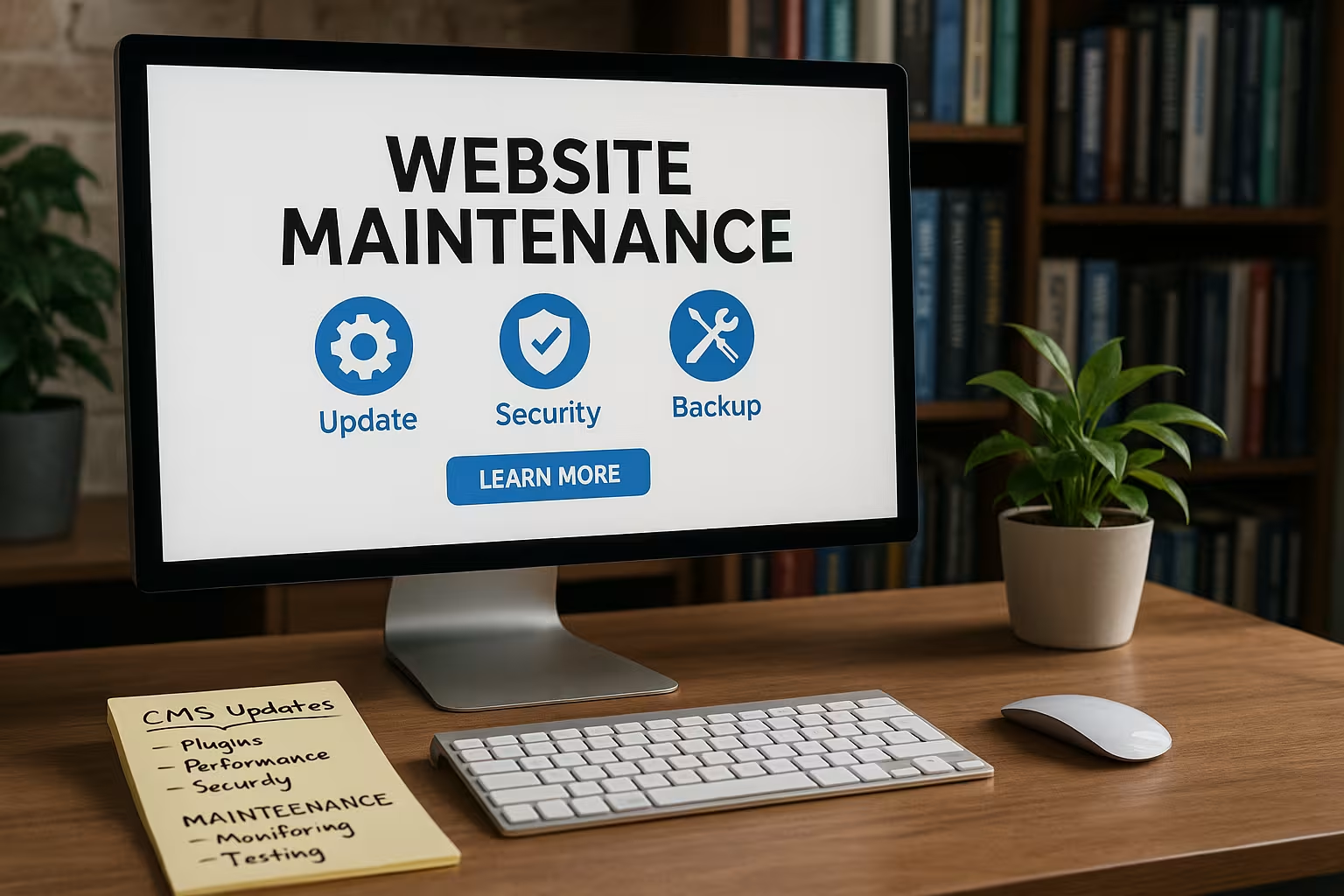
Avoid the most common pitfalls when updating your CMS
A CMS update can quickly become a stumbling block if core areas such as plugin compatibility or access rights are not taken into account. A direct update attempt in live operation is particularly risky - without a backup and without a test environment. One problem with the theme is enough to completely paralyze the website. I have learned that it is precisely minor details - such as outdated add-on scripts or iframe content from third-party providers - that cause difficulties when updating. Extended monitoring and well-documented processes help to prevent such sources of error. Typical problems such as the stuck WordPress maintenance mode can be solved with just a few simple steps. Nevertheless, regular documentation saves valuable time and nerves in an emergency.Different update types: Major, minor and security updates
Not every update is the same. Many operators neglect the subtle differences between major, minor and pure security updates. Major updates often involve fundamental changes to the structure or code. This is where the greatest risks for incompatibilities with plugins and themes arise. Minor updates, on the other hand, generally focus on minor improvements, bug fixes and small functional adjustments - they can be implemented more quickly and pose less potential for conflict. It is important to be informed in good time about the planned version jumps of your CMS platform: Subsequent updates often build on previous versions. If you miss a series of minor updates, you often have more integration work to do with a major update. Security-relevant fixes in particular must be installed as quickly as possible so that attackers do not have time to exploit known gaps. My advice is therefore to first prioritize the installation of security updates and then - with the necessary care and test environment - follow up with a major update.Efficient database maintenance: more speed and stability
In addition to the visible updates in the form of templates or plugins, one area often goes unnoticed: the database. Especially with content management systems such as WordPress, numerous database entries and revisions accumulate over months or years that are no longer needed. In my practice, regular database clean-ups have proven their worth. I delete outdated revisions, remove temporary entries and optimize the tables. A tidy database ensures faster loading times, reduces the risk of database errors and makes backups leaner. Tools and plugins that automatically remove superfluous revisions help enormously, but it still makes sense to create a comprehensive backup before every major deletion. Do not underestimate the influence of a lean database on the overall performance of the website - especially with hosting packages with limited resources, a lot of speed can be gained here.Rights and role management: data protection and compliance
A secure and well-maintained website is always linked to the protection of sensitive data. Access rights must be strictly controlled, especially in companies or organizations. This applies not only to orphaned admin logins, but to all user roles: Editors, authors or external service providers. For example, anyone who grants an external party temporary full access to the CMS should link this to a clearly defined time frame and revoke access rights once the project has been completed. With regard to data protection laws, it is also essential to grant as few people as possible access to personal data. If your CMS stores additional user information, it is worth regularly checking whether this data is actually needed. If you take a proactive approach here, you can maintain an additional level of security and at the same time meet the requirements of modern data protection guidelines.SEO optimization: Updates as an opportunity for fresh content
CMS updates are also an opportunity to bring the website up to date in terms of content and structure. Search engines reward up-to-date and high-quality content - regularly checking whether older articles or product pages are still correct is therefore not just a chore. New technical possibilities such as improved rich snippets, extended SEO options in your tools or an optimized URL structure often hold additional potential for better rankings. I like to use update windows to take a look at the settings area of my SEO plugins at the same time: Are meta tags for new posts set correctly? Do the sitemaps still match the structure of the website? Which posts are gaining visibility and where can I improve the length of stay with additional content? Such questions can be answered efficiently during or shortly after an update process. As a result, you will not only have a well-rounded website in technical terms, but also in terms of content, which will impress visitors and be easily recognized by search engines.Tips for successful major updates
Major version jumps in particular require more extensive testing, as fundamental areas can change in addition to minor bug fixes. I recommend the following points to ensure that major updates run as smoothly as possible:- if possible, check all plugin and theme providers for compatibility information in advance
- Check that the PHP versions and server settings used are up to date
- Perform the update in a separate test environment - if possible identical to the live system
- Test browser compatibility, especially when major updates change the editor or front-end functions
- if a rollback becomes necessary, have the last working backup to hand

Security setup: Protection starts in the user administration
Outdated plugins are a danger - but unused admin accounts also considerably weaken the security level. In companies with frequent staff changes, logins with full access often remain in place. An audit of access rights is therefore a fixed part of my monthly maintenance plan. I also rely on enhanced login security such as two-factor authentication and limited login attempts. Together with an SSL certificate and the use of tested, regularly updated plugins, this creates a solid level of protection. A reliable backup strategy is essential: I recommend at least daily automatic backups to separate storage locations. If you need help with the setup, you can find a complete WordPress backup guide in the blog of webhosting.de.Cloud or local backup? A question of strategy
The choice of backup storage is also often underestimated. Some companies prefer local backups on their own server or data carrier, while others rely on cloud services. Both options have advantages and disadvantages. Local backups remain completely in your hands and are not subject to external service agreements - but are at risk in the event of hardware defects, burglary or natural disasters. Cloud backups can be restored from anywhere, but are dependent on a stable internet connection and a trustworthy service provider. For security reasons, I recommend a combination of both strategies (hybrid backup). This minimizes the risk of complete data loss. I use automated solutions that back up data at fixed, scheduled intervals and issue notifications in the event of errors. It is important to monitor the backups promptly after every major update: Only with a valid and executable restore point in the background can you really sleep soundly.
Compare providers: Who is the right maintenance partner?
Not every company wants to implement CMS maintenance itself. The good news is that there are specialized providers who focus on updates, monitoring and immediate assistance. It is important that they communicate clearly, are available in an emergency and define clear performance limits. A comparison quickly shows who covers which service area:| Place | Provider | Services | Recommendation |
|---|---|---|---|
| 1 | webhoster.de | Managed hosting, updates, monitoring, backups, security, support | Test winner |
| 2 | Provider B | Updates, backups, support | – |
| 3 | Provider C | Basic updates, security | – |
How to create sustainable security and performance
I recommend scheduling maintenance activities - for example, monthly for visible updates and migration-related adjustments, weekly for backups, login checks and malware scans. A maintenance strategy like this can be easily integrated into any content team. These measures ensure long-term availability:- Always check CMS updates in the test system in advance
- Deactivate outdated plugins and replace them with well-maintained alternatives
- Run malware scanner automatically on a weekly basis
- Configure browser caching correctly
- Regularly evaluate SEO-relevant CMS functions