Skip to content
With SSL encryption, websites and applications secure the transmission of sensitive data against unauthorized access. The modern TLS standard combines asymmetric and symmetric cryptographic methods, including RSA, AES and ECDHE, to reliably protect communication.
Key points
- SSL/TLS protects connections through encryption and authentication.
- The SSL/TLS handshake defines the security parameters of a session.
- There are symmetrical and asymmetrical encryption methods are used.
- The use of current protocols such as TLS 1.3 significantly increases safety.
- Misconfigurations are among the biggest weaknesses in practice.
Many factors come into play, especially when it comes to security. An encrypted connection not only guarantees secure transmission, but also that the remote station is actually the one it claims to be. In professional web projects, it is often overlooked that a faulty server configuration can leave gaps despite the certificate. For example, older protocol versions such as TLS 1.0 or insecure cipher suites may still be activated and therefore jeopardize the entire connection. It is also important to regularly review your own security concept, as new attack scenarios arise and the requirements of browsers and operating systems are constantly evolving.
Regardless of the size of a web project, correct SSL/TLS implementation is a central pillar of the security concept. Errors or omissions can not only have legal consequences, such as breaches of data protection, but can also permanently shake the trust of users and customers. Compliance with proven standards - e.g. deactivating outdated protocols and consistent updates - is therefore strongly recommended by many industry associations.
SSL and TLS: the basics of secure data transmission
The terms SSL (Secure Sockets Layer) and TLS (Transport Layer Security) refer to protocols for securing communication via networks. While SSL started out historically, TLS is now considered the standard - currently mainly TLS 1.3. Websites, APIs, email servers and even messaging services use this technology to encrypt and secure data streams. The basic goals are Confidentiality, Authenticity and Integrity.
Even though "SSL certificates" are still often referred to, they have long been using the TLS protocol. For beginners, for example, instructions such as Set up cheap SSL certificatesto get an initial overview.
In practice, the selection of a suitable TLS version has a major impact on security. Ideally, browsers, operating systems and servers should support at least TLS 1.2, but the use of TLS 1.3 is even better. For applications that are particularly critical - for example in payment transactions or sensitive health data - it is advisable to configure even more strictly and only allow absolutely secure cipher suites. Another aspect is the use of the latest operating systems and web server versions, as these contain security updates that older systems often no longer receive.
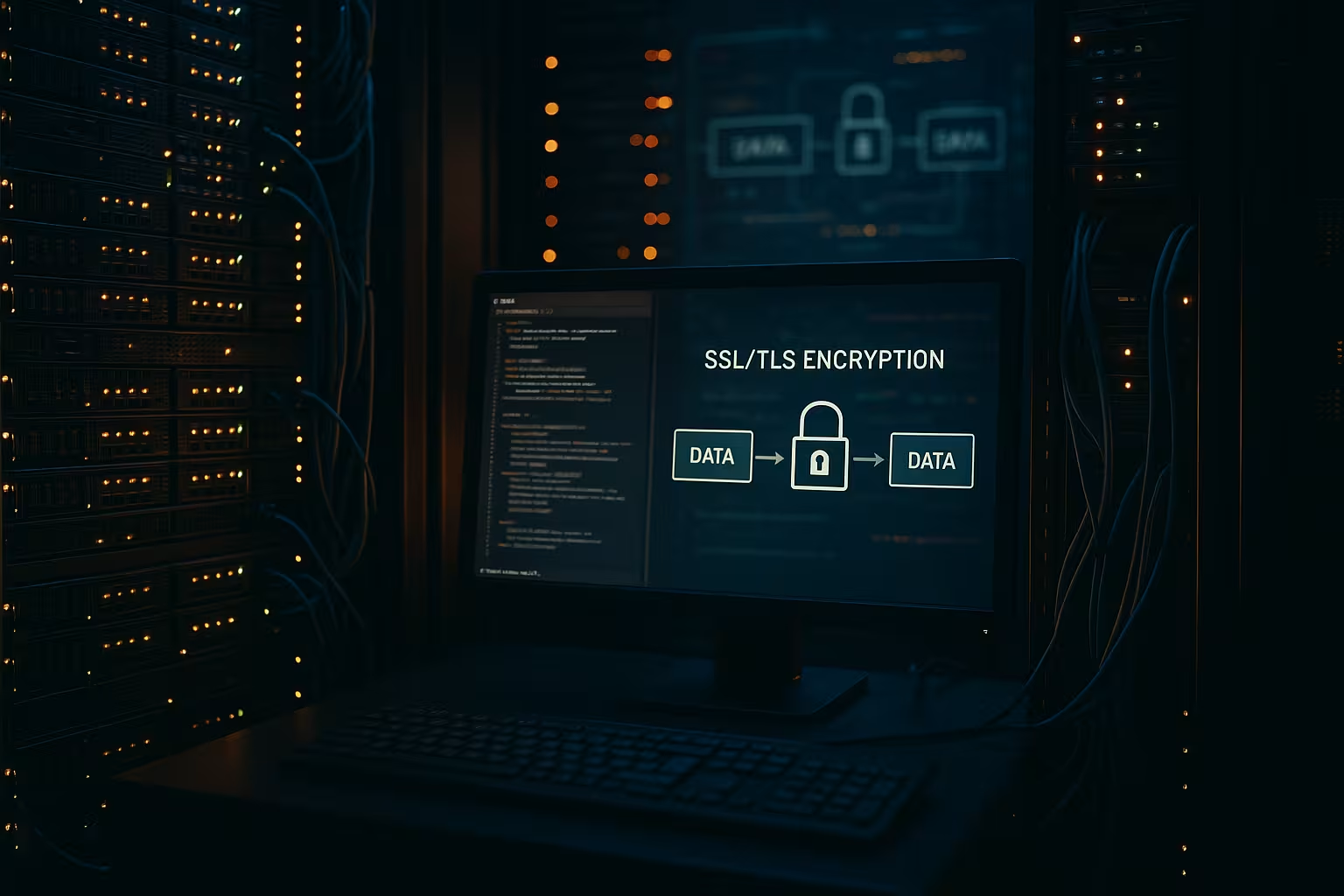
How SSL/TLS works in detail
The so-called SSL/TLS handshake is at the heart of a secure connection. The client and server negotiate technical framework conditions for the subsequent encrypted communication. Supported protocols, common algorithms and authentication by certificate play a central role here. Following this process, the actual data is protected using symmetrical procedures. The rough process can be presented in a structured manner:
| Step | Description |
|---|---|
| ClientHello | Client sends supported cipher suites & protocols |
| ServerHello | Server responds with selection & certificate |
| Certificate examination | Client validates certificate and authenticity |
| Key exchange | A common session key is derived |
| Data transmission | Secure symmetric encryption of all content |
The implementations differ considerably depending on the TLS version. As of TLS 1.3, many older ciphers that were considered insecure have been removed from the protocol, including RC4 and 3DES.
In addition to the actual handshake, the so-called TLS Record Protocol plays a decisive role. It segments and fragments the data to be transmitted into manageable blocks and summarizes them in so-called TLS records. These records contain information on integrity checks, encryption and the respective data content. This ensures that each individual message in the data stream is protected and not manipulated before it reaches its destination.
In the course of this, it is also important to check the validity of the certificate. In addition to the signature itself, the client checks whether the certificate is still within its validity period and whether a Certificate Revocation List (CRL) or the Online Certificate Status Protocol (OCSP) signals a revocation. If such check steps are ignored, even the best encryption is useless, as the potential for attacks, for example through manipulated certificates, can increase immensely.
Which encryption techniques are used?
SSL/TLS combines various cryptographic methods in a coordinated procedure. Depending on the protocol version and server configuration, different techniques can be active in parallel. I will show you the four main components here:
- Asymmetric encryption: For the secure exchange of the session key. Commonly used: RSA and ECDSA.
- Key exchange procedure: For example, ECDHE, which guarantees "perfect forward secrecy".
- Symmetric encryption: After the handshake, AES or ChaCha20 takes over the ongoing data traffic.
- Hashing & MACs: SHA-2 family (especially SHA-256) and HMAC for securing data integrity.
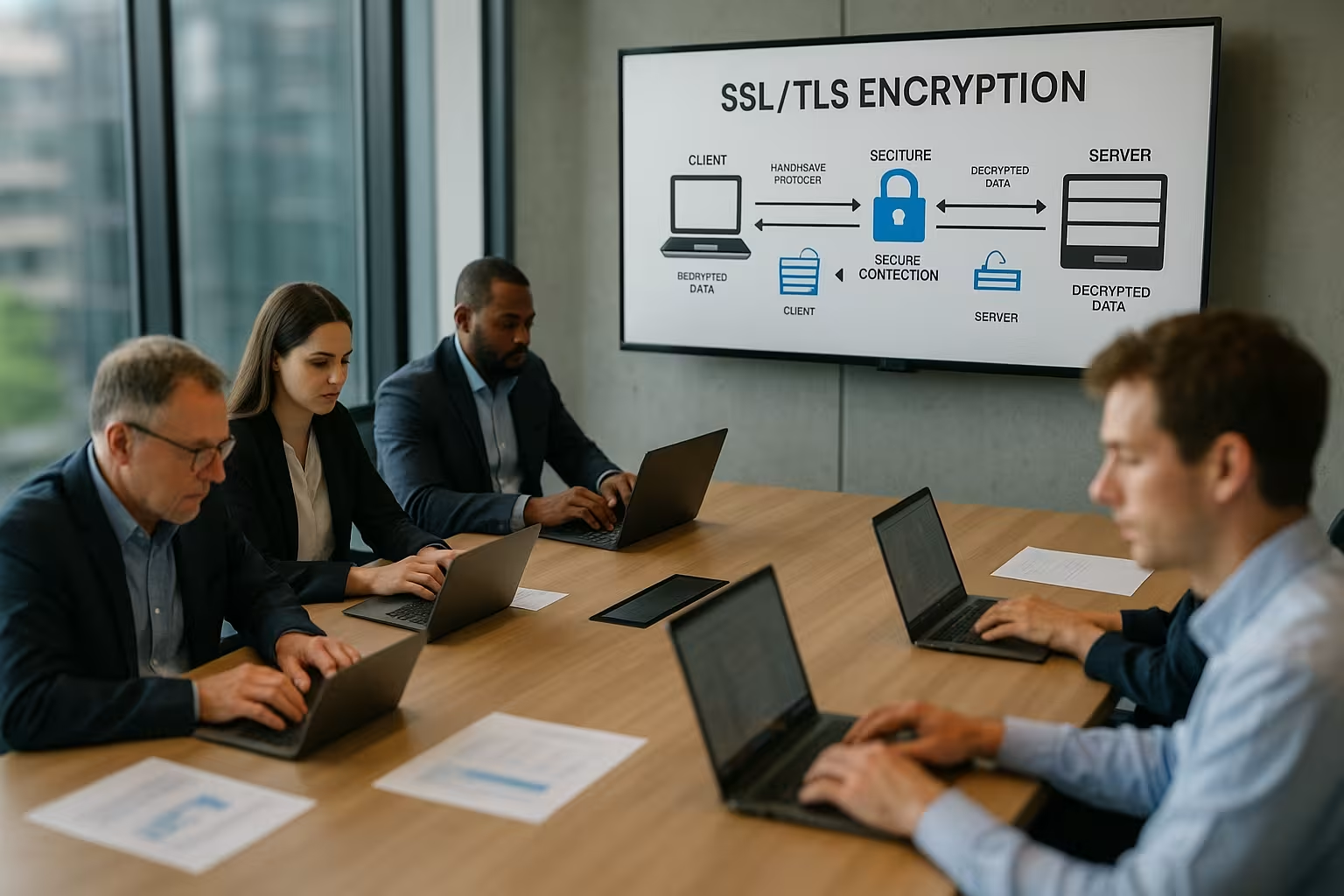
Elliptic curve cryptography (ECC) is becoming increasingly important, especially for asymmetric procedures. Compared to classic RSA, elliptic curves are considered more efficient and require shorter keys for comparable security. As a result, better latency times can be achieved, which significantly improves the user experience in high-frequency web environments. At the same time, key exchange with ECDHE (Elliptic Curve Diffie-Hellman Ephemeral) is a cornerstone of Perfect Forward Secrecy because a temporary key is created each time a connection is established, which is not reused and therefore remains difficult to decrypt afterwards.
In addition to encryption, we must not forget that SSL/TLS is also the Authenticity is used for communication. The key pair linked to the server certificate ensures that browsers or other clients can recognize beyond doubt whether the server is the correct one in terms of identity. However, this requires that the certificate has been issued by a trustworthy certification authority (CA), which is stored in the common trust stores.
Symmetrical vs. asymmetrical: why both are necessary
Right at the beginning, people often ask themselves why SSL/TLS combines two different encryption techniques. The answer lies in the combination of Efficiency and Security. While asymmetric methods are secure but computationally intensive, symmetric algorithms score points for speed. SSL/TLS therefore uses asymmetric encryption exclusively during the handshake - i.e. for certificate exchange and key agreement.
Once the session key has been successfully generated, the user data is transmitted exclusively using symmetric algorithms. AES variants with 128 or 256 bits and the algorithmically leaner ChaCha20 are particularly common - often preferred for mobile devices with limited computing power.
An additional advantage of this dichotomy is flexibility. Security researchers and developers can test or implement new, more efficient symmetric or asymmetric procedures independently of each other. This allows future protocol versions to be adapted on a modular basis without jeopardizing the entire architecture. If, for example, a part of the crypto algorithms can be attacked due to the discovery of new vulnerabilities, this part can be replaced without changing the entire concept. In practice, this shows how important open standards are for SSL/TLS in order to adapt to new threats.
Development: From SSL to TLS 1.3
After the known vulnerabilities of earlier SSL versions such as SSL 2.0 or SSL 3.0, TLS was established as a more secure alternative. TLS 1.3 is the standard in modern IT environments. Decisive improvements include
- Simplified handshake for shorter connection setup times
- Prohibition of insecure algorithms such as SHA-1 or RC4
- Obligation to use Perfect Forward Secrecy
These advances prevent stored communication from being decrypted retrospectively - a huge gain for long-term data security.
TLS 1.3 also offers improvements that protect privacy. For example, the so-called SNI (Server Name Indication) is not necessarily transmitted in plain text for encrypted connections if additional mechanisms are implemented. This makes it more difficult for attackers or surveillance agencies to read the domain names used to establish the connection. The reduced overhead also benefits website operators because page views are faster overall.
Another improvement is the option of a zero RTT resumption handshake, which allows a previously defined session key to be reused for subsequent connections without having to rebuild the entire process from scratch. However, this also harbors risks if security aspects are not correctly observed - because replay attacks could theoretically be constructed if the reconstruction is not properly implemented or validated. Nevertheless, the benefits for legitimate connections outweigh the risks, especially in high-load scenarios such as content delivery networks or real-time applications.
Sources of error and mistakes
A common misconception: SSL/TLS is not only relevant for websites. Protocols such as IMAP, SMTP or FTP are also secured by TLS encryption. It can also be used to protect API endpoints and even internal web applications. A HTTPS forwarding should always be set up correctly.
Typical pitfalls in practice:
- Expired certificates
- Outdated cipher suites in server configurations
- Self-signed certificates without browser trust
- Missing redirects to HTTPS

Another major issue is the correct integration of intermediate certificates. If these are not properly integrated into the certificate chain, this can lead to insecure or invalid connections, which browsers classify as a risk. Implementation in development and staging environments should also be just as secure from the outset as in the production system in order to prevent insecure configurations from being inadvertently adopted.
Especially in highly dynamic environments in which container technologies, microservices or serverless architectures are used, even small misconfigurations can have serious consequences. As soon as several components need to communicate with each other, you should ensure that each of these components has valid certificates and a trustworthy root certificate. A standardized and automated approach to certificate management is a decisive advantage here.
Requirements for hosting providers
A reliable hosting provider automatically supports current encryption standards. Certificate management, automatic renewal and standard implementations for TLS 1.3 are now standard features. A concrete step towards simple security is the Setting up a Let's Encrypt certificate - possible in just a few minutes.
Support for HTTPS redirects and the option to install or integrate your own certificates are also important. This is the only way to implement customer-specific requirements - especially for stores or customer login systems.

In recent years, many hosting service providers have focused heavily on providing automated certificate solutions so that even small and medium-sized companies without a deep understanding of technology can create a secure environment. Convenience increases when the renewal of certificates runs completely automatically in the background and the operator no longer has to worry about expiration dates.
However, customers are still responsible for maintaining their individual settings. Just because a hosting provider offers TLS 1.3 does not mean that the customer has actually configured it or that this protocol is active for all subdomains. In addition, extensions such as HTTP/2 or HTTP/3 (QUIC) must be checked regularly in order to take advantage of any benefits in terms of speed and security. Monitoring also plays a role: a good hosting provider enables real-time monitoring and alerts in the event of certificate or connection problems so that users can react quickly.
Security today and tomorrow: What comes after TLS 1.3?
TLS 1.3 is currently considered a highly secure platform. Nevertheless, even this technology is not completely immune to attacks. Future developments could focus on alternative methods such as post-quantum-resistant cryptography. Initial drafts of TLS 1.4 aim to improve compatibility, shorten handshakes and reduce latency. The algorithm change to more secure hashes such as SHA-3 also plays an important role.
Digital certification authorities are also experimenting with blockchain technologies for greater transparency and trustworthiness of TLS certificates. The trend is clearly moving towards automation and zero trust architecture - without constant manual intervention.
A crucial aspect of this further development will be how standardization bodies, research institutions and the industry react together to new attack vectors. When it comes to quantum computers, many experts assume that current RSA and ECC methods could be at least partially compromised over the coming decades. This is where post-quantum cryptography (PQC) comes in and develops methods that, according to previous findings, are more resistant to the possibilities of a quantum computer. It is therefore conceivable that a version of TLS will emerge in the long term that integrates PQC algorithms in a similarly modular way to RSA and ECDSA today.
Furthermore, order and transparency in the certificate system are becoming increasingly important. A further outlook is the consistent implementation of Certificate Transparency (CT), in which all newly issued certificates are recorded in public logs. This enables browsers and users alike to detect forgeries at an early stage and better track the authenticity of certificates. Such mechanisms increase public trust and make it more difficult for attackers to use deceptively genuine but fraudulent certificates.
The practical side of encryption and authentication will also be simplified in future versions. The aim is to reduce configuration effort and raise the security standard at the same time. In future, hosting providers could make even more intensive use of automated tools that automatically switch to stronger cipher suites or block problematic configurations. This will benefit end users in particular, who have less technical knowledge but still want strong security.
Summary: SSL/TLS remains indispensable
The combination of asymmetric and symmetric encryption makes SSL/TLS an extremely effective protection mechanism for digital communication. Certificate exchange, session keys and perfect forward secrecy effectively prevent data streams from being read or manipulated. Website operators or providers who offer hosting services must therefore ensure that they have tested implementations, fast certificate updates and modern TLS versions.
Modern SSL encryption goes far beyond websites. It also protects APIs, emails and mobile communication. Without TLS, trust in digital interactions would drop massively - be it when paying, uploading sensitive data or accessing cloud services. This makes it all the more important to prevent gaps from arising in the first place.
Overall, it can be said that the certificate and protocol landscape is in a constant state of flux and requires a high level of readiness to adapt. However, by constantly replacing old, insecure technologies and upgrading with new, better-protected procedures, SSL/TLS will remain a central element of Internet security in the future. Services of all kinds - from online stores and streaming providers to remote workstations in global corporations - rely on encrypted and trustworthy connections. It is precisely this demand that motivates developers, security researchers and providers to further improve SSL/TLS and respond to future challenges at an early stage. As digitalization progresses, we can confidently assume that further evolutions such as TLS 1.4 or more temperature-resistant quantum algorithms will be used in a few years' time to ensure the highest level of security.