Skip to content
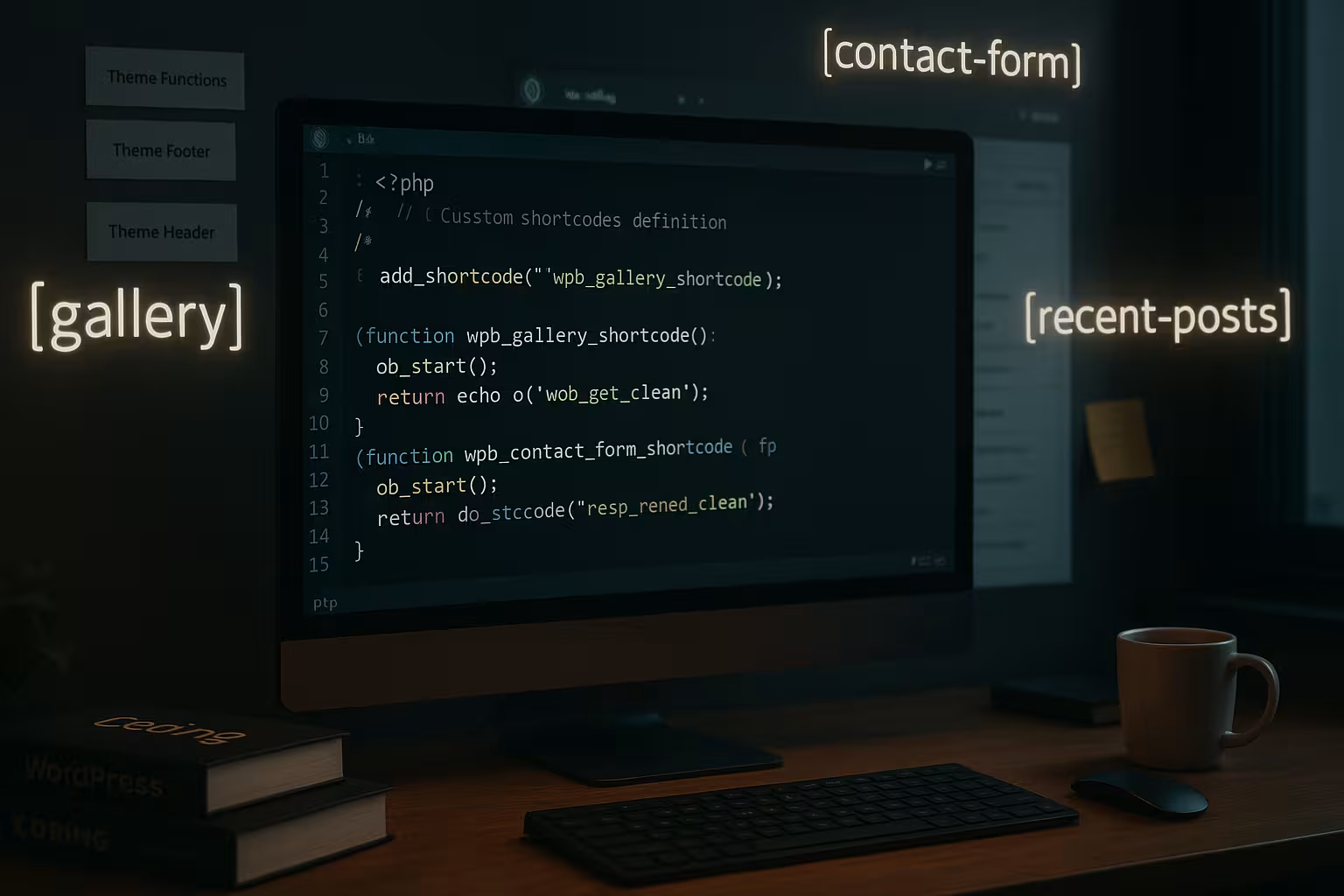
I'll show you specifically how I register shortcodes directly in the theme, deliver them safely and render them in the right places - this is how I build a wordpress shortcode theme with a clear structure, clean code and fast loading times. I provide practical examples, explain do_shortcode in the template, discuss attributes, escaping and caching and add best practices for long-term maintainable themes.
Key points
- Registration via add_shortcode and clear callback functions
- Integration in the editor, in widgets and in templates with do_shortcode
- Security through escaping, attributes and validation
- Maintenance with child theme, documentation and version control
- Performance with caching, economical queries and cache invalidation
Shortcodes in the theme: registration and structure
I place the registration in the theme in the functions.php or in a small must-use plugin if I want to separate functionality from the layout. Each callback function returns a string and does not use an echo, otherwise the output ends up in unexpected places. I choose unique prefixes for the naming to avoid conflicts with plugins. This way I keep the code readable and create a clear order, for example /inc/shortcodes.php with a targeted require_once in functions.php. For the start, a simple greeting shortcode is sufficient, which I later expand step by step.
<?php
// /wp-content/themes/my-theme/functions.php
require_once get_template_directory() . '/inc/shortcodes.php';
<?php
// /wp-content/themes/my-theme/inc/shortcodes.php
function my_greeting_shortcode() {
    return 'Hello, welcome to my website!
}
add_shortcode('greeting', 'my_greeting_shortcode');

Use shortcodes in the template: do_shortcode
I call shortcodes in the template with do_shortcode when I integrate content into headers, footers or special templates. This keeps the editor clear and I keep recurring modules in a central location. I document template calls in the code with a short comment so that others know immediately which shortcode is running here. For dynamic parameters, I create the shortcode string in PHP and pass values safely escaped. This method works in every template file such as header.php, footer.php or page-templates.
<?php
// In a template file
echo do_shortcode('[greeting]');
echo do_shortcode('[colorbox color="green"]Nice text[/colorbox]');
Attributes, content and security
I set attributes with shortcode_atts and protect values with esc_html, esc_attr and esc_url. This prevents XSS and ensures valid HTML in all output. I optionally treat content enclosed by a shortcode with wp_kses if I only want to allow certain tags. For colors, I only accept whitelist values or check with regex so that no scripts slip through. With these rules, shortcodes remain reliable and deliver predictable output.
<?php
function my_colorbox_shortcode($atts, $content = null) {
$atts = shortcode_atts([
'color' => 'blue',
], $atts, 'colorbox');
$color = preg_match('/^#?[0-9a-fA-F]{3,6}$/', $atts['color']) ? $atts['color'] : 'blue';
$inner = wp_kses($content, ['strong' => [], 'em' => [], 'a' => ['href' => []]]);
$style = 'background:' . esc_attr($color) . ';padding:10px';
return '<div style="' . $style . '">' . $inner . '</div>';
}
add_shortcode('colorbox', 'my_colorbox_shortcode');

Practical examples: current year, button and dates
I use small helper shortcodes for recurring content such as the current Yearbuttons or lists from custom post types. A year shortcode saves me maintenance work in the footer or in text blocks. I equip buttons with text, URL and color so that editors can work without changing the code. For data output from CPTs, I limit the query and cache the results so that the page remains fast. Here are three short snippets as a basis.
<?php
// Jahr
add_shortcode('current-year', function() {
return date('Y');
});
// Button
add_shortcode('button', function($atts) {
$atts = shortcode_atts([
'text' => 'click now',
'url' => '#',
'color' => '#2d89ef',
], $atts, 'button');
$text = esc_html($atts['text']);
$url = esc_url($atts['url']);
$color = esc_attr($atts['color']);
return '<a href="/en/' . $url . '/" style="background:' . $color . ';padding:8px 18px;color:#fff;border-radius:4px;text-decoration:none">' . $text . '</a>';
});
Theme or plugin? Decision support and migration
I include shortcodes in the Theme if they affect the layout, and in a plugin if I want to continue using them independently of the theme. This way, I don't lose functions when changing themes and keep the architecture clear. For the documentation, I create an overview of all shortcodes with parameters so that editors can quickly find the correct syntax. When moving later, I export the shortcode files and carefully replace the require paths. The following table helps with the decision.
| Use | Theme | Plugin |
|---|---|---|
| Binding to layout | High (e.g. Hero-Box) | Low |
| Migration risk | Higher with theme change | Low, is retained |
| Maintenance/Updates | With theme release | Own release, more flexible |
| Target group | Layout features | Contents/Functions |
Using shortcodes in the editor and in the block editor
I add shortcodes in the classic editor directly as Text and use the shortcode block in the block editor. This separation keeps the content clear and reduces errors when copying. For editors, I document examples directly in the backend, for example as a sample block or note in the template. I pay attention to differences between editors in spacing and inline styles, as blocks sometimes add additional wrappers. If you are thinking about the choice of editor, you will find in the comparison Block editor vs classic helpful hints.
Performance: Caching and clean queries
I keep shortcodes fast by caching computationally intensive parts and limiting data access, which reduces the Loading time lowers. For recurring issues, I use Transients or WP Object Cache with a meaningful key. I limit queries with posts_per_page, only set required fields and avoid expensive COUNT operations. I add width/height and lazy loading to image outputs to make the page visible more quickly. For dynamic components, I delete the cache as soon as content changes.
<?php
add_shortcode('latest-offers', function($atts) {
    $key = 'sc_latest_offers_v1';
    $html = wp_cache_get($key);
    if ($html !== false) {
        return $html;
    }

    $q = new WP_Query([
        'post_type'      => 'angebot',
        'posts_per_page' => 5,
        'no_found_rows'  => true,
        'fields'         => 'all',
    ]);

    ob_start();
    if ($q->have_posts()) {
        echo '<ul class="offers">';
        while ($q->have_posts()) { $q->the_post();
            echo '<li>' . esc_html(get_the_title()) . '</li>';
        }
        echo '</ul>';
        wp_reset_postdata();
    }
    $html = ob_get_clean();
    wp_cache_set($key, $html, '', 600);
    return $html;
});

Find and rectify sources of error quickly
I activate the Debug-mode and check whether the shortcode is registered correctly. Often a white screen or raw text indicates that the function does not load or uses echo instead of return. Log entries reveal unexpected data types, incorrect attributes or missing escapes. In templates, I test step by step: first static text, then the shortcode, then parameters. If you want to proceed systematically, use the guide to the WordPress Debug Mode.
Work with a child theme to ensure updates
I create my own shortcodes in the Child theme if I can't or don't want to change anything in the parent theme. This way, customizations are retained during theme updates and I control the loading sequence. Important: register the child theme correctly, keep functions.php lean and only include specific files. For structured projects, I separate shortcodes in /inc and document them with inline comments. A compact guide is provided by the Child theme instructions.

Styling, semantics and accessibility
I take care of clean HTML and semantic tags so that screen readers recognize content correctly. I only display buttons as a tag with role="button" if they are really links, otherwise I choose real buttons. I keep color contrasts high and set focus styles so that keyboard users can clearly see where they are. I reduce inline styles and move design to a CSS file with clear classes. This keeps shortcodes flexible and accessible at the same time.
API integration and secure integration of external data
I retrieve external data via wp_remote_get and cache them so that the page does not hang during API timeouts. I check responses for status codes, parse JSON in a controlled manner and only allow the fields that are really required. In the event of failures, I show a lean fallback output or hide the block. For user content, I remove dangerous tags and validate links thoroughly. This keeps shortcodes stable, even if external services fluctuate.
Load assets only when in use
I only load CSS/JS for shortcodes if they actually appear on the page. This saves requests and keeps the critical path CSS small. I register styles and scripts centrally and enqueue them in the callback or specifically as soon as I recognize the shortcode in the content. Important: never write hard code in the header without thinking, but work via the enqueue APIs.
<?php // functions.php – Register assets add_action('wp_enqueue_scripts', function() { wp_register_style('my-shortcodes', get_template_directory_uri() . '/assets/shortcodes.css', [], '1.0');
wp_register_script('my-shortcodes', get_template_directory_uri() . '/assets/shortcodes.js', [], '1.0', true); });
// Only load if present in content add_action('wp', function() { if (is_singular() && has_shortcode(get_post_field('post_content', get_queried_object_id()), 'button')) { wp_enqueue_style('my-shortcodes');
wp_enqueue_script('my-shortcodes'); } }); // Alternatively, call directly in the shortcode callback: function my_assets_example_shortcode($atts, $content = null) { wp_enqueue_style('my-shortcodes'); return '<div class="my-box">' . wp_kses_post($content) . '</div>';
}
add_shortcode('my-box', 'my_assets_example_shortcode');
Shortcodes vs. direct function calls in the template
I make a conscious distinction: for fixed template modules, I prefer to call the function directly instead of parsing a shortcode. This saves overhead, increases readability and avoids surprising filter effects. Shortcodes are intended for editorial content; templates benefit from clear function calls with clear parameters.
<?php
// Instead of:
echo do_shortcode('[greeting]');

// Better in the template:
echo my_greeting_shortcode();
Nested shortcodes and formatting
I take into account nested shortcodes and the automatic insertion of p and br tags. If shortcodes enclose other content, I continue to render the inner content with do_shortcode, but only allow permitted tags. I remove unsightly p tags around shortcodes with shortcode_unautop if the markup would otherwise be torn up.
<?php function my_wrap_shortcode($atts, $content = null) { $inner = do_shortcode($content); // allow nested shortcodes return '<div class="wrap">' . wp_kses_post($inner) . '</div>';
}
add_shortcode('wrap', 'my_wrap_shortcode');
// Optional formatting help
add_filter('the_content', 'shortcode_unautop');
Internationalization and localization
I keep shortcodes language-capable: I translate text strings with the theme text domain and use date_i18n for dates. This way, modules work in multilingual environments and remain consistent when switching languages. I localize default texts directly in the shortcode callbacks and escape them according to context.
<?php
// Theme prepared for translations
add_action('after_setup_theme', function() {
    load_theme_textdomain('my-theme', get_template_directory() . '/languages');
});

// Localized greeting
function my_greeting_shortcode() {
    return esc_html__('Hello, welcome to my website!', 'my-theme');
}

// Localized year
add_shortcode('current-year', function() {
    return esc_html(date_i18n('Y'));
});

Cache invalidation, variants and keys
I plan caches in such a way that variants are cleanly separated and content becomes obsolete promptly when changes are made. Attributes such as limit or taxonomy are included in the key. When saving relevant post types, I specifically delete the affected keys. In high-traffic setups, I rely on a persistent object cache backend and group keys by feature so that I can empty them collectively.
<?php
add_shortcode('latest-offers', function($atts) {
    $atts  = shortcode_atts(['limit' => 5], $atts, 'latest-offers');
    $limit = max(1, (int) $atts['limit']);
    $key   = 'sc_latest_offers_v1_' . $limit;

    if (($html = wp_cache_get($key, 'mytheme')) !== false) {
        return $html;
    }

    $q = new WP_Query([
        'post_type'      => 'angebot',
        'posts_per_page' => $limit,
        'no_found_rows'  => true,
    ]);

    ob_start();
    if ($q->have_posts()) {
        echo '<ul class="offers">';
        while ($q->have_posts()) { $q->the_post();
            echo '<li>' . esc_html(get_the_title()) . '</li>';
        }
        echo '</ul>';
        wp_reset_postdata();
    }
    $html = ob_get_clean();
    wp_cache_set($key, $html, 'mytheme', 600);
    return $html;
});

// Cache invalidieren, wenn Angebote geändert werden
add_action('save_post_angebot', function() {
    foreach ([1,5,10] as $limit) {
        wp_cache_delete('sc_latest_offers_v1_' . $limit, 'mytheme');
    }
});
Deepen security: Sanitizer, permitted attributes and rel/target
I extend shortcodes with sensible but secure options. For links, I limit target to _self/_blank and set rel="noopener noreferrer" for new tabs. I check colors with sanitize_hex_color. I treat content context-sensitively, for enclosed content I choose wp_kses_post or a more restrictive allowlist.
<?php
add_shortcode('button', function($atts, $content = null) {
$atts = shortcode_atts([
'text' => '',
'url' => '#',
'color' => '#2d89ef',
'target' => '_self',
], $atts, 'button');
$text = $atts['text'] !== '' ? $atts['text'] : ($content ?: esc_html__('Click now', 'my-theme'));
$text = esc_html($text);
$url = esc_url($atts['url']);
$color = sanitize_hex_color($atts['color']) ?: '#2d89ef';
$target = in_array($atts['target'], ['_self','_blank'], true) ? $atts['target'] : '_self';
$rel = $target === '_blank' ? 'noopener noreferrer' : '';
$style = 'background:' . $color . ';padding:8px 18px;color:#fff;border-radius:4px;text-decoration:none';
return '<a class="sc-button" href="/en/' . $url . '/" style="' . esc_attr($style) . '" target="' . esc_attr($target) . '" rel="' . esc_attr($rel) . '">' . $text . '</a>';
});
Editor, widget and feed contexts
I take into account the context in which the shortcode runs. I explicitly allow shortcodes in classic text widgets and use the shortcode block in the block widget editor. In feeds or in the search, I deactivate particularly complex shortcodes and return empty. In addition, I only load assets on singular pages if the shortcode appears in the content.
<?php
// Classic widgets: activate shortcodes
add_filter('widget_text', 'do_shortcode');

// Avoid expensive output in feeds
add_shortcode('latest-offers-feed-safe', function($atts) {
    if (is_feed()) {
        return '';
    }
    // ... regular output
});
Deprecation, migration to blocks and compatibility
I plan the future of my shortcodes: When a tag is replaced, I redirect it to the new one for a while and announce the change in the changelog. If you rely on the block editor, you can register server-side blocks with render_callback and use the same PHP function internally as the shortcode. In this way, both paths coexist cleanly until the shortcode expires.
'', 'url' => '#'], $atts, 'old-button');
    $text = $map['text'] ?: $content;
    return do_shortcode('[button text="' . esc_attr($text) . '" url="' . esc_url($map['url']) . '"]');
});

// Later: remove completely
// remove_shortcode('old-button');
Tests and quality assurance
I validate critical shortcodes with unit tests so that refactorings don't bring any surprises. In tests, I check that mandatory attributes are validated, default values are set and output is correctly escaped. For HTML output, I choose robust assertions (contains instead of exact match) so that small formatting changes do not break all tests. I also test edge cases such as empty content, invalid colors and very long texts.
assertStringContainsString('Hi', $out);
        $this->assertStringContainsString('href="#"', $out);
    }

    public function test_button_blocked_invalid_color() {
        $out = do_shortcode('[button color="javascript:alert(1)"]');
        $this->assertStringNotContainsString('javascript:', $out);
    }
}
Finally: My compact practical overview
I register shortcodes clearly, deliver them securely and keep them with Caching quickly. For editorial use, I document examples and ensure consistent parameters so that everyone can use them with confidence. Layout-related modules end up in the theme, content-related functions in a plugin so that the site remains flexible in the long term. With a child theme, debug logs and clean semantics, development and maintenance remain relaxed. The result is a wordpress shortcode theme that renders reliably, is easy to maintain and gives content teams real freedom.