Skip to content
Before registering a domain in Germany, I check the name, extension, legal pitfalls and follow-up costs very carefully because they directly determine findability and brand protection. I also pay attention to data protection, transfer rules and support quality so that the address remains secure and flexible in the long term.
Key points
- Domain name: short, clear, without umlauts
- TLD strategy.de local, other endings defensive
- Law: Check trademark and name protection in advance
- TransparencyKnow prices, terms, follow-up costs
- Data protection: Observe Whois privacy and GDPR
Why a .de domain brings trust
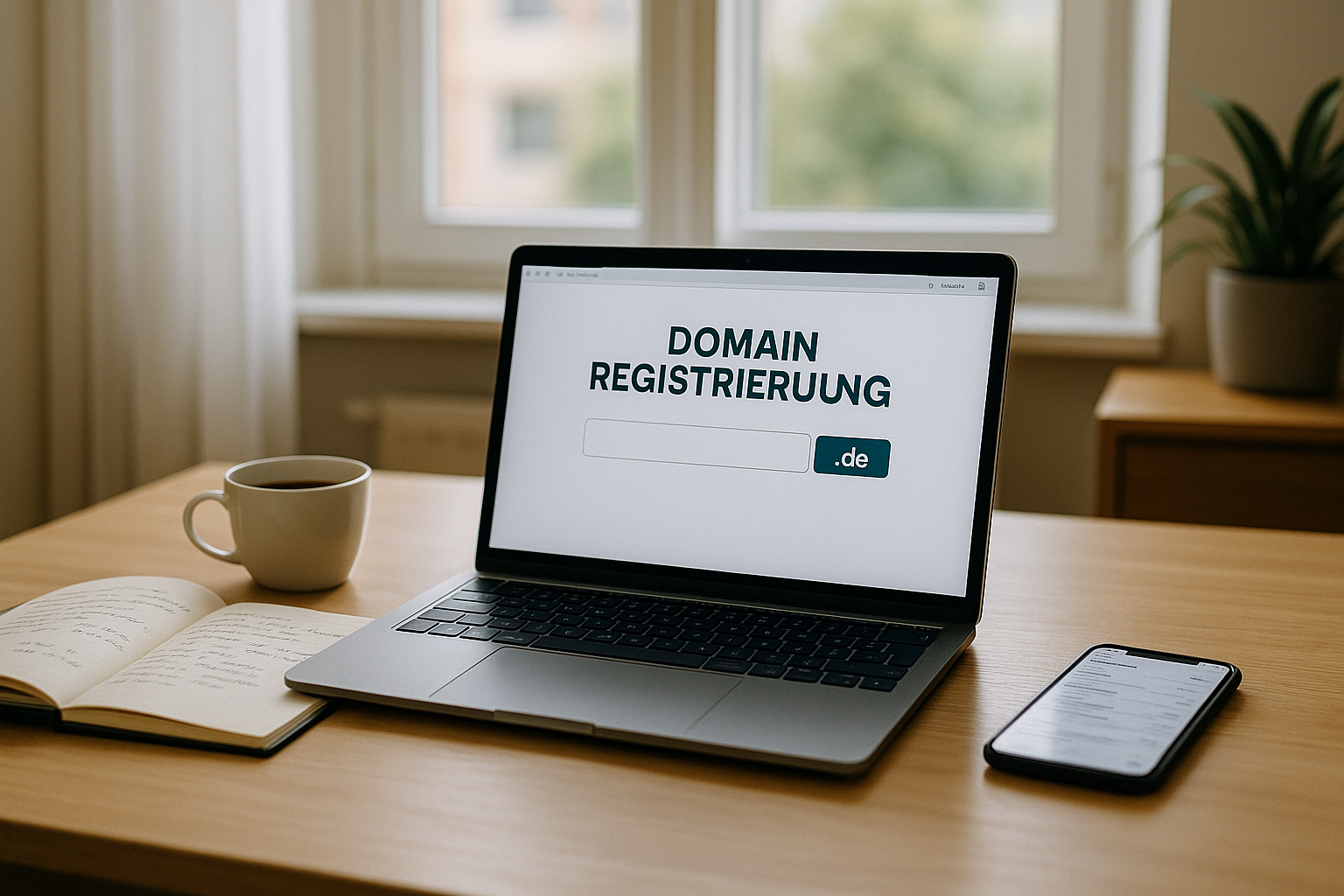
A .de-address signals proximity to the German market and clear legal responsibility. I see advantages in terms of data protection, user habits and local relevance in search results. People type in familiar endings more quickly, which reduces typing errors and Clicks increases. For German-speaking target groups, this creates familiarity and sharpens the brand image. Questions relating to authorities and contracts also remain manageable because German law applies. I can supplement international plans with additional endings without losing the domestic basis.
Choose the right name
I opt for a short, unambiguous and easy-to-speak Names. I avoid umlauts, special characters and numbers to prevent misunderstandings when entering the name. The name should clearly convey the core service, the company name or an important keyword. I also check how the domain sounds when read aloud and whether there are any unintentional ambiguities. For a quick start, a compact manual with practical steps. This is how I ensure I have a name that is recognizable and easily remembered on business cards or posters.
Technical basics: DNS architecture, TTLs and zone maintenance
When it comes to technology, I plan cleanly right from the start. Ideally, I set my nameservers to georedundant (at least two, preferably three) so that failures at individual locations have no effect. Anycast DNS ensures short response times worldwide. In the zone, I keep TTLs practical: I often use 300-3600 seconds for productive A/AAAA records; I lower them temporarily before relocations so that changes take effect more quickly. I pay attention to a correct SOA setup (serial strategy, refresh/retry/expire) and document changes with a changelog.
I avoid long CNAME chainsInstead, I set targeted A/AAAA or ALIAS/ANAME records at the Apex if the registrar supports this. I use wildcards deliberately and test whether they catch unwanted subdomains. For ACME/Let's Encrypt validations, I plan _acme-challenge records or use API-supported updates. A Secondary DNS with the other provider increases operational security; I keep both zones synchronized in terms of content and cryptography. This care prevents downtime when it counts - at launch, during transfer or during campaigns.
The right extension: TLD strategy
For local projects I choose .de as the first option because it is established in everyday life. If I am planning an international focus, I add .com or thematic endings such as .store, .tech or .bio. I also register important variants to prevent misuse and imitations. This defensive registration pays off when the brand name grows and competitors are eyeing similar addresses. However, I keep the number of endings manageable so that administration and costs do not get out of hand. With a clear ending strategy, I shield the brand and remain flexible for later expansion.
Legal checks before registration
Before I book a domain, I check the trademark register and Names in detail. Conflicts with existing trademarks, company logos or naming rights cause stress and costs. I check spelling variants, hyphens and multi-word combinations so that no collision is overlooked. I also do not touch protected designations, celebrity names or community names. A quick check in the DPMA and EU register often saves expensive warnings. This diligence gives me security and prevents subsequent renaming with a loss of visibility and trust.
Specifically for .de I consider the DENIC-DISPUTE-If I can make the rights to a name plausible, a DISPUTE entry can be used to temporarily prevent a transfer to third parties until the legal situation has been clarified. The previously necessary Admin-C no longer exists; the owner data is decisive. I archive my searches (screenshots, time stamps) and make sure that the domain holder is correctly named as the company, not as a private individual if the domain is used for business purposes.
Check availability and secure variants
I always start with a tested Availabilityso that there are no surprises. If the desired name is occupied, I test sensible alternatives without cryptic additions. I often check for common typos, plural forms and the most important endings at the same time. In this way, I prevent free riders and redirect stray calls to the main domain. If you want to take a structured approach to the process, you can use tools and checklists, for example here: Check availability. This keeps the brand consistent and I retain full control over spellings.
For consistency, I lay down my Canonical strategy www or non-www, 301 redirects, consistent spellings and clean certificates on all variants. I permanently redirect typo domains and monitor whether they deliver real traffic. This way, I collect authority on the main domain instead of fragmenting signals.
Comparison of trustworthy providers
A reputable registrar provides clear Pricessimple administration and fast support. For me, DNS management, email forwarding, SSL options and easily accessible help are important. I prefer providers with clear interfaces and fair contract conditions. Transfer-friendliness, fast auth codes and transparent notice periods are also important. The following table shows a compact overview of typical services that I check with German registrars. This way, I decide on the basis of benefits, not just on the basis of a tempting offer in the first year.
| Provider | .de price | Included services | Special features |
|---|---|---|---|
| IONOS | from 1,30 €/month | E-mail, SSL certificate, subdomains | 24/7 support, personal advisor, domain generator |
| Hostinger | from 3,99 €/year | Whois protection, fast support | Many endings free of charge, English-language help |
| Checkdomain | from 0,84 €/year | SSL, convenient search | Many endings, 24/7 support |
| united-domains | from 3,00 €/year | E-mail forwarding, DNS, support | Over 700 TLDs, domain trading platform |
| STRATO | from 0,60 €/month | Webmail, simple administration | Flexible additional benefits |
I also evaluate performance, accessibility and Security of customer accounts. This includes two-factor login, DDoS protection on the infrastructure side and reliable backup concepts. For hosting and servers, I look for experience with performance and support in Germany. The more clearly a provider communicates, the easier it is for me to manage domains over the years. These criteria prevent later changes due to dissatisfaction and save time.

Cost traps and contract clauses
I pay attention to the difference between entry-level and Renewal-price, because year two determines the real costs. I check minimum terms, setup fees and prices for additional services before signing up. These include DNS convenience, SSL packages, e-mail inboxes and Whois Privacy. A look at the notice periods prevents me from renewing unintentionally. For price comparisons and discount campaigns, I use texts like these Pricing tips for .de. With a clear overview of costs, I can plan stable budgets and remain capable of acting.
I also note Restoration fees (restore) and transfer costs. I check whether multi-domain discounts or package prices are really cheaper in the long term and keep domain and hosting contractually separable to avoid lock-in. I archive invoices centrally so that accounting and warranty periods are clearly documented.
Data protection, whois privacy and GDPR
Whois records show contact information, that's why I protect my Data with privacy options, where available. For natural persons, the GDPR reduces insights, but complete protection is only possible with suitable packages. I control which details appear publicly and keep my details up to date. This minimizes spam, cold calls and identity risks. At the same time, I remain reachable if technical contacts are required for operations. This balance of visibility and protection strengthens respectability without revealing private information.
For business projects I also think of Imprintprovider identification and correct contact details. If the domain owner, contractual partner and company identified on the web match, I reduce friction during compliance checks, payments or advertising platforms. I document changes so that I can prove who is responsible in the event of queries.
Comfort functions: DNS, e-mail and SSL
I save time in everyday life with a clear DNS-management, quick records and templates for common setups. Email forwarding, mailboxes and catch-all functions facilitate communication and testing. I keep SSL certificates active at all times so that browsers avoid warnings and trust increases. For multiple subdomains, I like to use wildcard certificates if the product fits. A structured customer area with protocols and role rights helps the team. These convenience features pay off on a daily basis and significantly reduce support tickets.
Set up e-mail and domain security properly
To ensure that emails arrive reliably and phishing is made more difficult, I define SPF, DKIM and DMARC right at the start. I keep SPF lean, avoid too many "include" cascades and close with ~all or -all at the end of the project as soon as all legitimate senders have been recorded. I set DKIM keys with 2048 bits, rotate them regularly and use different selector names for different systems. I use DMARC to define guidelines (p=none/quarantine/reject) and evaluate reports before I toggle harder.
For transport encryption I establish MTA-STS and TLS-RPTto recognize and reject insecure connections. Reverse DNS entries for mail servers, consistent HELO/EHLO names and clean PTR records are part of this for me. I keep sending and receiving domains separate if deliverability is critical. This way, the trust capital of the main domain remains unaffected if an external sending service causes problems.
DNSSEC, CAA and DANE in practice
I activate DNSSECif the registrar and name server support this. I enter the DS record correctly in the registry and plan key changes (ZSK/KSK) in advance. I test changes to avoid "bogus" zones. CAA records restrict issuing certification authorities and reduce the risk of incorrectly issued certificates. For SMTP DANE/TLSA DNSSEC can provide additional security if both sides use the procedure.
Discipline is important during rollovers: first publish new keys, then remove old ones. I provide monitoring checks before and after zone changes and document the setup so that substitutes can also act securely. This turns optional cryptography into a resilient security gain.

Transfer, relocation and notice periods
If a change is necessary, I first secure the Auth code and read the transfer instructions from the target provider. I check blocking periods, owner data and whether the domain is about to expire. I plan name server changes so that downtimes are kept to a minimum. I adhere to deadlines for terminations and document confirmations. I then check the DNS zones again to ensure that e-mail and websites run without interruption. An orderly transfer saves nerves and prevents loss of revenue.
For .de the AuthInfo-code (e.g. AuthInfo1) is used; I arrange for it to be sent to the issuing registrar in good time. Before the move, I reduce TTLs, create the target zone in advance and test staging hosts. After the transfer, I clean up old zones so that no shadow entries remain. For special cases or disputed changes of ownership, I use the procedures provided and adhere exactly to the registrar workflows.

Life cycle of a .de domain: Registration to deletion
I know the LifecycleAfter registration, the domain usually continues to run annually, provided I renew it on time. If it is deleted, the .de domain typically has a Redemption phasewhere I can restore it for a fee. If the contract with the provider expires or is terminated, the domain may end up in the TRANSIT-status at the registry. I then decide whether I want to keep it there directly or move it to a new registrar.
I plan extensions conservatively and set reminders 60, 30 and 7 days before expiry. For projects with campaigns or seasonality, I extend early to avoid stress. I do not calculate backorders and drop catching as a strategy; availability after a deletion is uncertain and risky.
Governance: roles, processes and proof of ownership
For governance, it is important to me that Domain holder and billing address are for the correct organization. I use functional addresses (it@, legal@) as permanent contact emails. I assign roles and access rights with fine granularity: Admin, billing, technical - each role only with the necessary rights. I systematically revoke access rights and change master passwords when personnel changes occur.
I archive purchase receipts, contract data, whois extracts and change logs. This evidence helps with advertising networks, certification authorities, payment providers or banking issues. For emergencies, I keep a sealed envelope or vault access with master access data and recovery codes.
SEO, structure and redirects
I decide early on whether content should be Subdomains or in directories. Directories bundle authority, subdomains create clear technical boundaries (e.g. store.example.de). I define www vs. apex and consistently implement 301 redirects. I normalize paths (trailing slash), clean up duplicate content using canonicals and ensure that IPv6-support (AAAA records). For the domain apex, I use ALIAS/ANAME if necessary and plan HSTS carefully so I don't accidentally lock myself out.
I seal off staging and test environments (basic auth, IP sharing) and block indexing with X-Robots-Tag or robots.txt. This way, pre-releases remain private and do not dilute rankings. I accompany relocations with monitoring of crawl errors and adjust internal links and sitemaps immediately.
Domain as an asset: budgeting and planning
Domains are long-term Assets. I assign cost centers to them, plan budgets for renewals and keep a reserve for restorations, transfers or new variants. I bundle renewal dates to a few key dates, where possible, and synchronize invoice data across all registrars. I examine multi-year bookings critically: annual cycles are common with .de; the decisive factor is transparency, not the apparent savings.
I also keep contract and tax data consistent so that evidence stands up in audits. I monitor price changes at an early stage and negotiate package conditions as the portfolio grows. In this way, the domain portfolio remains controllable - professionally, financially and organizationally.
Security, support and performance
I rely on two-factor authentication, strong Passwords and separate logins for team members. DDoS protection, monitoring and backups on the provider side help against outages. In an emergency, availability counts: 24/7 support via phone or chat makes all the difference. Documented SLA times and escalation paths give me the ability to plan. I see performance not only in hosting, but also in DNS resolution and zone propagation. The faster this substructure works, the more smoothly web apps and stores respond.
I also use, where available, API token with narrow assignment of rights, IP restrictions and audit logs. The dual control principle applies to critical changes. I have playbooks ready for incident response, including contact chains with the registrar and clear steps for withdrawing compromised entries.
Regionality and German law
A registrar based in Germany facilitates Support and legal issues. GDPR standards, clear contracts and a German-speaking hotline speed up solutions. Data storage in the EU reduces uncertainties regarding compliance issues. Accounting and bookkeeping also benefit from comprehensible documents and euro billing. This increases legal certainty for projects involving public authorities or healthcare data. This proximity makes agreements faster and misunderstandings less frequent.
Avoid typical mistakes
I avoid umlauts, complicated spellings and artificial number sequences that confuse users. I check trademark and naming rights thoroughly in advance instead of taking expensive detours later on. Too few or too many endings entail risks; I keep the selection sensible and manageable. I defuse price traps by carefully reading renewal tariffs, additional fees and deadlines. I protect my private data with suitable privacy options and updated Whois entries. If you take these points to heart, you will save time, money and rebranding pain.
Briefly summarized
I make sure I have a clear .de-address, check the name legally and keep an eye on costs and terms. I plan the ending strategy carefully and defensively register sensible variants. Data protection, SSL and DNS convenience make operation easier and build trust with users. A reliable provider with good support and fair conditions will prove itself over the years. I keep track of transfers, auth codes and deadlines in my calendar so that I can act quickly if necessary. This way, the domain remains a strong anchor for the brand, visibility and growth.