Skip to content
API-First Hosting brings REST, GraphQL and webhooks into a lean architecture that I use for fast releases and clear interfaces. Modern web projects benefit from uniform APIs, clean separation of frontend and backend as well as automated events via webhooks.
Key points
For a quick start, I will briefly summarize the key aspects. I rely on RESTwhen I control consistent resources and need caching. GraphQL provides me with targeted data queries and helps with data-intensive front ends. Webhooks drive real-time flows and take the load off Polling. Security, monitoring and governance form the framework for smooth operation. Providers with an API-first approach save me time and strengthen the Developer Experience.
- REST: Proven endpoints and strong caching
- GraphQL: Targeted queries and unified endpoint
- Webhooks: Events, retries and idempotence
- SecurityOAuth 2.0, JWT and rate limits
- ScalingEdge, CDN and asynchronous queues

What sets API-First Hosting apart
I plan projects first via APIs and flexibly connect frontends later. This sequence reduces friction in teams because interfaces are clearly defined early on. Deployments run separately, allowing me to test and roll out services independently. Clear contracts allow me to keep integrations stable, even if internal implementations change. This helps me to make an informed choice API hosting comparisonwhich covers the range of functions and practical details.
REST, GraphQL and webhooks in practice
I use REST for resources with unique IDs, standardized CRUD operations and aggressive caching. I use GraphQL when frontends only need certain fields and I want to reduce round trips. Webhooks fuel workflows, for example for orders, payment events or user onboarding. This saves me constant queries and allows me to react immediately to events. All in all, the result is an architecture that grows easily and remains cleanly integrated, without ballast in the Communication.
Architecture decision: When which paradigm?
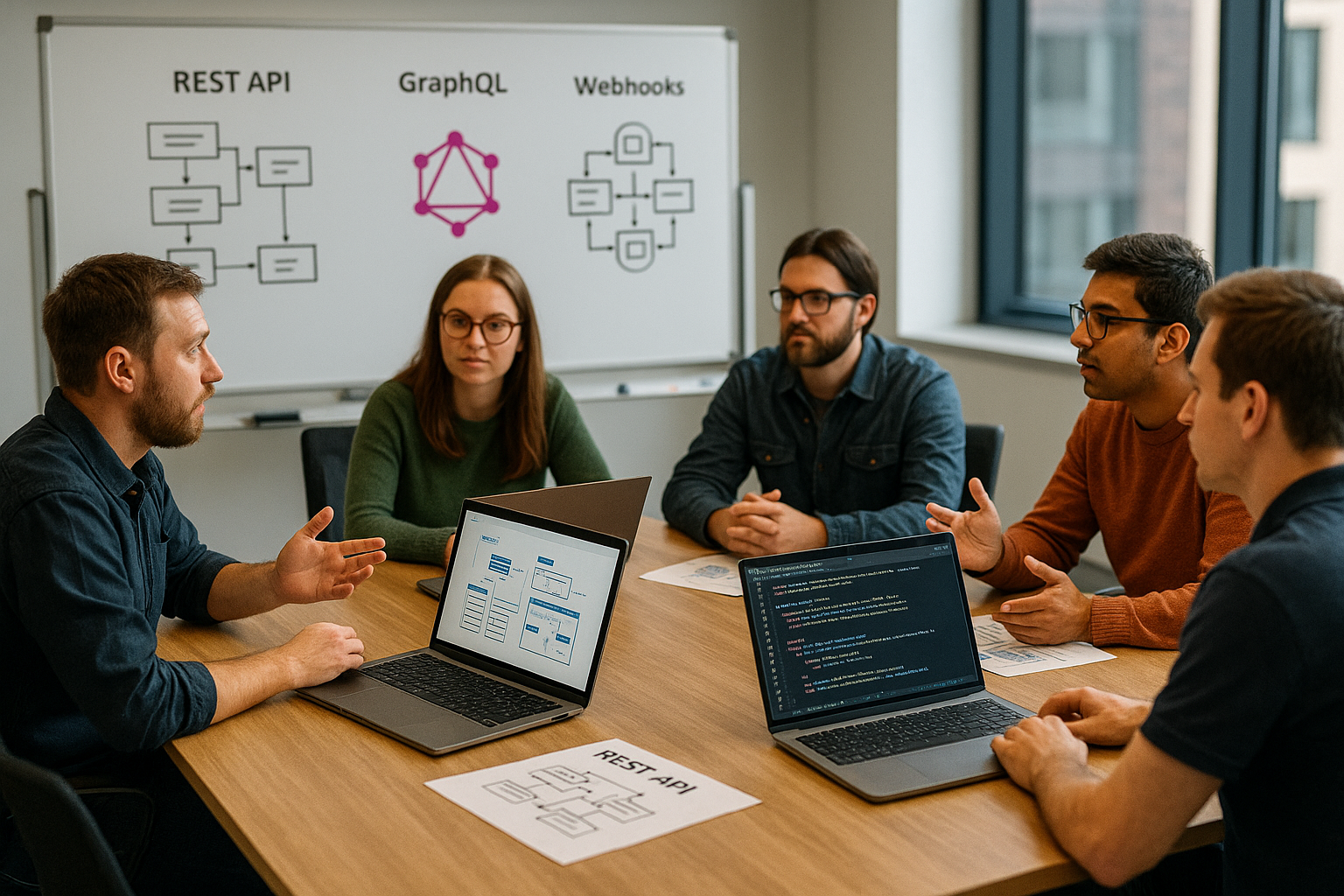
I choose RESTwhen resources are clearly structured and I want to rely on mature caching. For data-hungry frontends with variable views, GraphQL convinces me with its exact fields and low payload. I use webhooks as soon as external services need to react in real time, for example for invoice approvals or status changes. Mobile apps often benefit from GraphQL, while integration platforms work heavily with webhooks. In microservices environments, I combine the patterns very specifically depending on the data flow and latency requirements.
API gateway, service mesh and platform modules
A API gateway bundles routing and authentication for me, Rate Limits and request transformations. It validates schemas early on, enriches headers (e.g. trace IDs) and serves as a central location for caching strategies, WAF rules and canary rollouts. Behind the gateway, a Service Mesh for mTLS between services, automatic retries, timeouts and circuit breakers. This is how I encapsulate network resilience from the business logic. In Kubernetes, I use ingress/gateway controllers for traffic policies and separation by environment. Configurable policies (e.g. for request sizes, header whitelists, response compression) help me to introduce reproducible and secure performance gains without dragging every team into low-level network issues.
CI/CD, rollouts and downward compatibility
In my pipelines, I check OpenAPI or GraphQL schemas for Breaking Changesgenerate artifacts (clients/SDKs) and run tests against an isolated staging environment. Blue/Green- and Canary-I reduce rollouts to a switch; feature flags allow me to decouple releases and activation. I implement database changes with expand/contract patterns (new fields/additive indices first, then switch, cleanup last). For webhooks, I keep event versions synchronized, document field deprecations and support Replaysso that integrations can follow suit securely. The aim is to achieve zero-downtime deployments in which old and new clients work in parallel during a transition phase.
Performance, scaling and caching
I secure Performance via edge caches, HTTP caching headers and CDN delivery. REST particularly benefits from GET caches and ETags, while GraphQL convinces with persisted queries and CDN keys. For webhooks, I scale via queues, backoff strategies and parallel processing. I achieve horizontal expansion with stateless services and centralized authentication. This keeps response times low and load peaks manageable without weakening maintainability.
Security and API governance
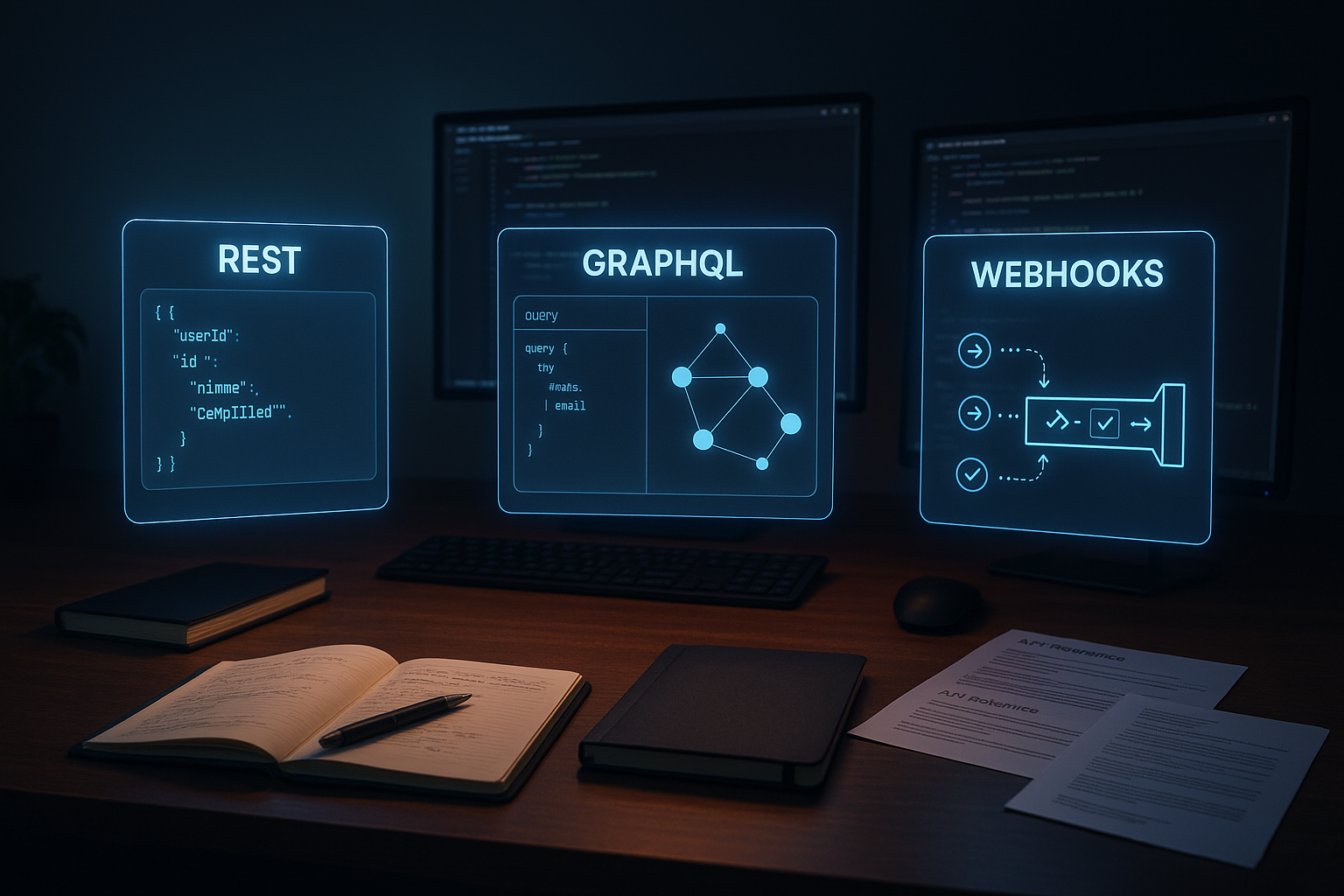
I rely on OAuth 2.0, JWT and mTLS to cleanly secure APIs. Rate limits, quotas and IP filters reduce the risk of abuse. For GraphQL, I monitor query complexity and depth to stop expensive queries. I sign webhooks, check timestamps and use idempotency keys to prevent duplicate processing. I support governance via versioning, deprecation notices and schema policies so that changes can be planned.
Compliance, data protection and multi-region
I am planning Privacy by design with data minimization, clear retention periods and pseudonymization of sensitive fields. Encryption in transit (mTLS) and at rest, key rotation and traceable Audit logs are standard for me. Depending on the customer's location, I rely on Data Residency with region selection and replication, without moving personal data unnecessarily. I keep processes for information and deletion requests automated so that they scale. In multi-region setups, I pay attention to consistent policies, identical schemas and reconcile jobs that recognize drift. This ensures that compliance requirements can be met without slowing down the speed of development.
Monitoring, observability and SLAs
I measure Latencieserror rates and throughput per endpoint. Tracing across distributed systems shows me bottlenecks between services. For webhooks, I log delivery, retries and signature checks with fine granularity. Dashboards and alerts help me to meet SLAs and identify trends at an early stage. I use synthetic tests to keep a constant eye on critical flows and react in good time.

Tests: Contract, load and chaos
In addition to unit and integration tests, I rely on Consumer-Driven Contractsto verify integrators' expectations at an early stage. Mock/sandbox environments with seed data accelerate onboarding and regression testing. For load tests, I simulate realistic traffic mixes (reads/writes, peaks, webhook storms) and analyze saturation points at the edge, gateway, app and database. Chaos experiments (e.g. network latencies, drop of individual nodes, database failover) show me whether timeouts, retries and circuit breakers are working properly. For GraphQL, I validate query cost limits; for webhooks, I test dead-letter handling and manual redeliveries via the interface.
GraphQL Hosting: Schema, Tooling and DX
I maintain the Scheme as a single source of truth and use Codegen for types and clients. Persisted queries reduce payload and protect against abusive queries. Federation helps me to separate domains cleanly and still maintain a uniform API face. For a deeper introduction, I like to use this compact introduction to the GraphQL query language. With schema linting, changelogs and test data, I keep releases predictable and the developer experience high.
Data modeling and error design
I hold Pagination consistent (cursor instead of offset for large amounts of data), provide sorting and filter options and plan stable field names. I solve partial updates via PATCH or clearly defined mutations; I offer batch endpoints for mass operations. I respond to errors in a structured way with code, message, details and Correlation ID for quick analysis. In REST, I use clean status codes and machine-readable problem details; in GraphQL, I define a nullability strategy and pass errors through via extensions including the path. I flag deprecations early on and maintain a transition period in which new and old fields work in parallel.
Consistency and transactions
Distributed systems require Eventual Consistency and robust patterns. I use Sagas for business processes across multiple services and the Outbox patternto reliably publish events from transactions. Idempotency keys prevent duplicate processing for retries (especially for webhooks and POSTs). Read models and rebuild jobs ensure that aggregations are quickly coherent again after incidents. Where "exactly once" is illusory, I document "at least once" and provide clear dedup strategies based on stable event IDs.
Webhooks: reliability, retries and security
I confirm webhooks with 2xx-status quickly and process content asynchronously. Retries with exponential backoff, dead letter queues and idempotency keys prevent duplicates or data loss. I check signatures on the server side and enforce short expiry times. Replay protection with nonces and timestamps further increases security. Documented event contracts strengthen integrations and facilitate tests along entire process chains.

Costs and capacity planning
I am planning Budgets along the egress, compute, database and memory drivers. Caches and persisted queries noticeably reduce origin traffic, DataLoader and batching avoid N+1 patterns in GraphQL. For webhooks, I evaluate the costs of retries and backoffs, especially in the case of foreign time errors. Serverless is suitable for sporadic load, while containers or VMs are more economical for sustained high load. Rate limits on a token bucket basis not only protect systems, but also budgets. I scale capacity with load tests and error budgets in a predictable manner instead of oversizing it with safety margins.
REST APIs: standards, versioning and caching
I hold Standards such as HTTP methods, status codes and consistent resource names. I assign versions sparingly and use semantics so that clients can plan changes cleanly. For caching, I rely on ETag, cache control and conditional requests. I create documentation with OpenAPI and provide clear examples. I get a compact refresher from the REST-API basicswhich I like to consult before reviews.
Developer experience and onboarding
A strong DX for me means: self-service for API keys and scopes, clear examples for all core cases, SDKs from Codegen and clearly defined sandbox environments. I provide sample workflows, test data and collections and document limits, retry policies and event contracts in a comprehensible manner. A well-maintained changelog, migration notes and status pages keep integrations resilient. For webhooks, I offer manual redeliveries, event explorers and signature checks so that teams can isolate problems independently. This keeps the barrier to entry low and productivity high.
Provider comparison: functions at a glance
I pay attention to Performancescaling, security and tooling before I select a hosting platform. For API-First, what counts is how REST, GraphQL and webhooks work together and how monitoring is integrated. Good providers deliver clean protocols, logs and self-service functions for keys and deployments. Support channels and transparent limits save me time in critical phases. The following table summarizes the key points and shows my classification.
| Provider | REST Hosting | GraphQL Hosting | Webhooks Hosting | Performance | Recommendation |
|---|---|---|---|---|---|
| Webhoster.com | Yes | Yes | Yes | Maximum value | 1st place |
| Vercel | Yes | Yes | Partial | Very high | 2nd place |
| DigitalOcean | Yes | Partial | Partial | High | 3rd place |
| AWS | Yes | Yes | Yes | Very high | 4th place |
| RapidAPI | Yes | Yes | Yes | High | 5th place |
| Hostinger VPS | Yes | Partial | Partial | High | 6th place |
| Linode | Yes | Yes | Partial | High | 7th place |
I rate Webhoster.com as a top choice because the interplay of performance, security and flexibility is coherent. REST, GraphQL and webhooks can be used and scaled together without friction.

My brief summary
I rely on API-first hosting because clear Interfaces Making projects predictable and accelerating releases. REST gives me stability, GraphQL delivers data with pinpoint accuracy, and webhooks connect services in real time. Security, monitoring and governance complete the picture and prevent nasty surprises. A coherent provider saves me days in integration and keeps the platform future-proof. Anyone building modern web projects will do very well with this trio of REST, GraphQL and webhooks and remain open to new requirements.