Skip to content
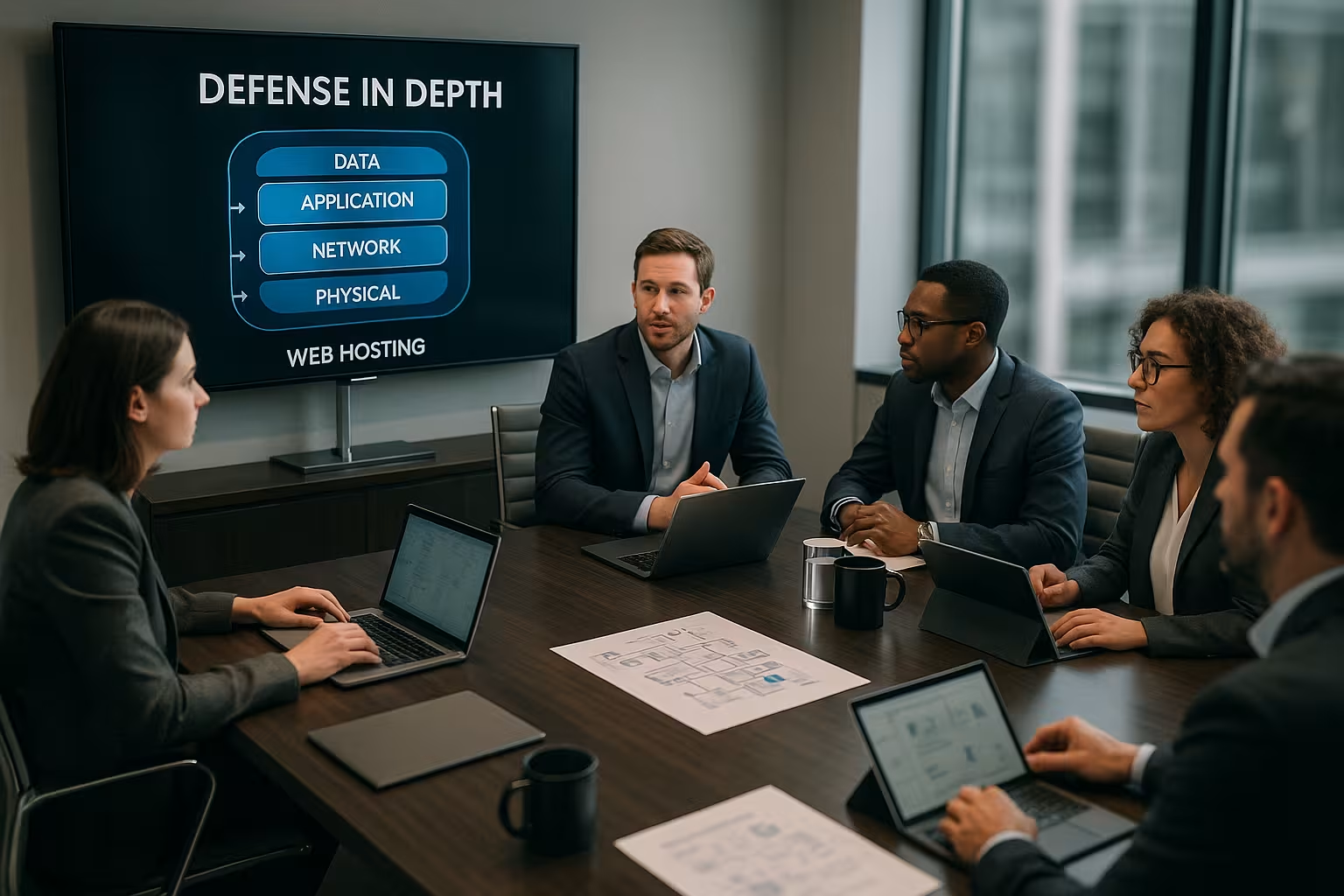
Defense in Depth Hosting combines physical, technical, and administrative controls into a tiered security architecture that limits incidents at every level and mitigates failures. I explain how I methodically assemble this multi-layered protection in hosting environments so that attacks on the edge, network, compute, system, and application consistently come to nothing.
Key points
- multilayer: Physical, technical, and administrative factors interact
- Segmentation: VPC, subnets, and strict zoning
- Encryption: Consistent use of TLS 1.2+ and HSTS
- Monitoring: Telemetry, Alarms, and Incident Response
- Zero TrustAccess only after verification and with minimal rights
What does defense in depth mean in web hosting?
I combine several protective layers, so that a single error or gap does not jeopardize the entire hosting environment. If one line fails, additional layers limit the damage and stop lateral movements early on. This allows me to address risks simultaneously on transport routes, in networks, on hosts, in services, and in processes. Each layer is assigned clearly defined goals, unambiguous responsibilities, and measurable controls for a strong Protection. This principle reduces the success rate of attacks and significantly shortens the time to detection.
In the context of hosting, I combine physical access controls, network boundaries, segmentation, hardening, access control, encryption, and continuous monitoring. I rely on independent mechanisms to prevent errors from cascading. The sequence follows the attack logic: first filter at the edge, then separate in the internal network, harden on the hosts, and restrict in the apps. In the end, what counts is a coherent overall architecture, which I continuously test and refine.

The three levels of security: physical, technical, administrative
I'll start with the physical LevelAccess systems, visitor logs, video surveillance, secure racks, and controlled delivery routes. Without physical access protection, all other controls lose their effectiveness. This is followed by the technological layer: firewalls, IDS/IPS, DDoS protection, TLS, key management, and host hardening. I also emphasize the administrative dimension: roles, rights of access, processes, training, and emergency plans. This triad prevents gateways, quickly detects abuse, and establishes clear Processes fixed.
Physical security
Data centers need powerful access controls with cards, PINs, or biometric features. I straighten aisles, lock racks, and introduce escort duties for service providers. Sensors report temperature, smoke, and humidity so that technical rooms remain protected. Hardware disposal is documented to ensure that data carriers are reliably destroyed. These measures prevent unauthorized access and provide information that can be used later. Evidence.
Technological safeguarding
At the network boundary, I filter traffic, check protocols, and block known attack patterns. On hosts, I disable unnecessary services, set restrictive file permissions, and keep kernels and packages up to date. I manage keys centrally, rotate them regularly, and protect them with HSM or KMS. I encrypt transport and idle data in accordance with standards so that leaks remain worthless. Every technical element receives telemetry to detect anomalies early on. See.
Administrative safeguards
I define roles, assign rights, and consistently apply the principle of least privilege. authorization Processes for patching, changes, and incidents reduce the risk of errors and create accountability. Training courses teach phishing detection and how to handle privileged accounts. A clear incident response with on-call, runbooks, and a communication plan limits downtime. Audits and tests check effectiveness and deliver tangible results. Improvements.
Network edge: WAF, CDN, and rate limiting
At the edge, I stop attacks before they reach internal Systems achieve. A web application firewall detects SQL injection, XSS, CSRF, and faulty authentication. Rate limiting and bot management curb abuse without affecting legitimate users. A CDN absorbs peak loads, reduces latency, and limits DDoS effects. For deeper insight, I use advanced signatures, exception rules, and modern Analytics in.
Firewall technology remains a core pillar, but I am turning to more modern engines with context and telemetry. I explain more about this in my overview of Next-generation firewalls, classify patterns, and cleanly separate malicious requests. I log every rejection, correlate events, and set alarms for real indicators. This way, I keep false alarms low and secure APIs and front ends alike. The edge thus becomes the first protective wall highly informative.
Segmentation with VPC and subnets
In the internal network, I strictly separate levels: public, internal, administration, database, and back office. These zones communicate with each other only via dedicated gateways. Security groups and network ACLs allow only necessary ports and directions. Admin access remains isolated, MFA-protected, and logged. This prevents a breach in one zone from immediately affecting all others. Resources achieved.
The logic follows clear paths: front end → app → database, never across. For a detailed classification of the levels, please refer to my model for multi-level security zones in hosting. I add micro-segmentation when sensitive services require additional separation. Network telemetry checks cross-connections and flags unusual flows. This keeps the interior small, clear, and distinct. safer.

Load balancers and TLS: distribution and encryption
Application Load Balancers distribute requests, terminate TLS, and protect against faulty Clients. I set TLS 1.2 or higher, hard cipher suites, and activate HSTS. I rotate certificates in a timely manner and automate renewals. HTTP/2 and well-set timeouts improve throughput and resilience against malicious patterns. All relevant headers such as CSP, X-Frame-Options, and Referrer-Policy complement the Protection.
I impose stricter rules, strict authentication, and throttling on API paths. Separate listeners neatly separate internal and external traffic. Health checks not only check 200 responses, but also real function paths. Error pages do not reveal any details and prevent leaks. This keeps encryption, availability, and information hygiene in balance and delivers noticeable Advantages.
Compute isolation and auto-scaling
I separate tasks InstanceLevel: public web nodes, internal processors, admin hosts, and data nodes. Each profile receives its own images, security groups, and patches. Auto-scaling quickly replaces conspicuous or burned-out nodes. User accounts on hosts remain minimal, SSH runs via key plus MFA gateway. This reduces the attack surface and keeps the environment clear. organized.
Workloads with higher risk are isolated in a separate pool. I inject secrets at runtime instead of packing them into images. Immutable builds reduce drift and simplify audits. In addition, I measure process integrity and block unsigned binaries. This separation stops escalations and keeps production data away from experimental environments. distant.
Container and orchestration security
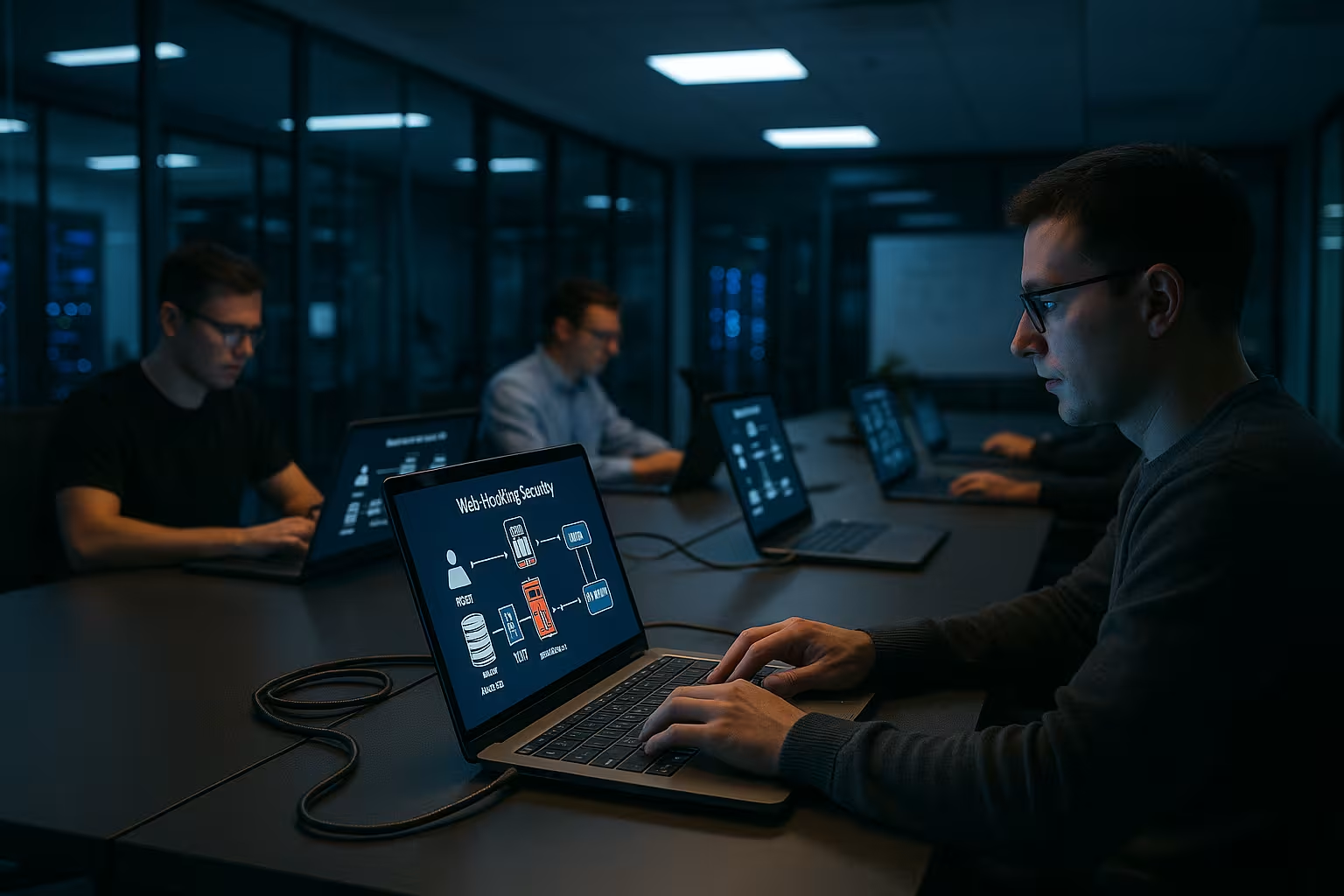
Containers bring speed, but require additional Controls. I rely on minimal, signed images, rootless operation, read-only rootfs, and dropping unnecessary Linux capabilities. Admission policies prevent insecure configurations right from the start of deployment. In Kubernetes, I limit rights via strict RBAC, namespaces, and network policies. I store secrets in encrypted form and inject them via CSI providers, never hard-coded in the image.
At runtime, I check system calls with Seccomp and AppArmor/SELinux, block suspicious patterns, and log in fine granularity. Registry scanning stops known vulnerabilities before rollout. A service mesh with mTLS secures service-to-service traffic, and policies regulate who can communicate with whom. This allows me to achieve robust security even in highly dynamic environments. Insulation.
Operating system and application level: Hardening and clean defaults
At the system level, I disable unnecessary Services, set restrictive kernel parameters, and secure logs against manipulation. Package sources remain trustworthy and minimal. I continuously check configurations against guidelines. I completely block admin routes on public instances. Secrets never end up in the code, but in secure Save.
At the application level, I enforce strict input validation, secure session handling, and role-based access. Error handling does not reveal any technical details. I scan uploads and store them in secure buckets with public blocks. I keep dependencies up to date and use SCA tools. Code reviews and CI checks prevent risky patterns and stabilize the system. Deployments.
Identities, IAM, and privileged access (PAM)
Identity is the new Perimeter-Boundary. I manage central identities with SSO, MFA, and clear lifecycles: Join, move, and leave processes are automated, and roles are recertified regularly. I assign rights according to RBAC/ABAC and only just-in-time; increased privileges are time-limited and recorded. Break-glass accounts exist separately, are sealed, and are monitored.
For admin access, I use PAM: command barriers, session recording, and strong policies for password and key rotation. Where possible, I use passwordless methods and short-lived certificates (SSH certificates instead of static keys). I separate machine identities from personal accounts and systematically keep secrets up to date via KMS/HSM. This keeps access controllable and traceable—except for individual Actions.
Monitoring, backups, and incident response
Without visibility, every Defense blind. I collect metrics, logs, and traces centrally, correlate them, and set clear alarms. Dashboards show load, errors, latency, and security events. Runbooks define responses, rollbacks, and escalation paths. Backups run automatically, are checked and encrypted—with clear RPO/RTO.
I test recovery regularly, not just in an emergency. Playbooks for ransomware, account takeover, and DDoS are ready. Exercises with realistic scenarios strengthen team spirit and reduce response times. After incidents, I secure artifacts, analyze causes, and consistently implement remediation. Lessons learned are incorporated into rules, hardening, and Training back.
Vulnerability, patch, and exposure management
I manage vulnerability management risk-based. Automated scans capture operating systems, container images, libraries, and configurations. I prioritize based on exploitability, criticality of assets, and actual external exposure. For high risks, I define strict patch SLAs; where an immediate update is not possible, I temporarily resort to virtual patching (WAF/IDS rules) with an expiration date.
Regular maintenance windows, a clean exception process, and complete documentation prevent congestion. I maintain an up-to-date inventory list of all Internet-exposed targets and actively reduce open attack surfaces. SBOMs from the build process help me to find affected components in a targeted manner and promptly to close.
EDR/XDR, threat hunting, and forensic readiness
On hosts and endpoints, I operate EDR/XDR, to detect process chains, memory anomalies, and lateral patterns. Playbooks define quarantine, network isolation, and graduated responses without unnecessarily disrupting production. Time sources are unified so that timelines remain reliable. I write logs in a tamper-proof manner with integrity checks.
For forensics, I keep tools and clean chains of evidence preservation ready: runbooks for RAM and disk captures, signed artifact containers, and clear responsibilities. I proactively practice threat hunting along common TTPs and compare findings with baselines. This makes the response reproducible, legally sound, and fast.

Zero Trust as an amplifier of depth
Zero Trust sets per Default Based on mistrust: No access without verification; no network is considered secure. I continuously validate identity, context, device status, and location. Authorization is performed on a fine-grained basis for each resource. Sessions are short-lived and require revalidation. I provide an introduction in the overview of Zero-trust networks for hosting environments that drastically reduce lateral movement limit.
Service-to-service communication runs via mTLS and strict policies. Admin access always goes through brokers or bastions with logging. Devices must meet minimum criteria, otherwise I block access. I model policies as code and test them like software. This keeps the attack surface small and makes identity the central Control.
Multi-client capability and tenant isolation
Hosting often involves several Clients combined in one platform. I strictly isolate data, network, and compute per client: separate keys, separate security groups, and unique namespaces. At the data level, I enforce row/schema isolation and separate encryption keys per tenant. Rate limits, quotas, and QoS protect against noisy neighbor effects and abuse.
I also separate administration paths: dedicated bastions and roles for each client, audits with a clear scope. Cross-client services run in a hardened mode with minimal rights. This prevents cross-tenant leaks and keeps responsibilities separate. clear comprehensible.
Shared responsibility in hosting and guardrails
Success depends on clear division of tasks I define what providers, platform teams, and application owners are responsible for: from patch statuses to keys to alerts. Security guardrails set defaults that make deviations difficult without slowing down innovation. Landing zones, golden images, and tested modules provide secure shortcuts instead of special paths.
Security-as-code and policy-as-code make rules verifiable. I embed security gates in CI/CD and work with security champions in the teams. This makes security a built-in quality feature rather than an afterthought. obstacle.
Software supply chain: Build, signatures, and SBOM
I secure the supply chain from source to Production. Build runners run in isolation and are short-lived, dependencies are pinned and come from trusted sources. Artifacts are signed, and I verify their origin with attestations. Before deployments, I automatically check signatures and policies. Repositories are hardened against takeover and cache poisoning.
SBOMs are generated automatically and travel with the artifact. The next time an incident occurs, I can find the affected components in minutes, not days. Peer reviews, dual-control merges, and protection of critical branches prevent code from being introduced unnoticed. This allows me to reduce risks before they enter the Runtime reach.
Data classification, DLP, and key strategy
Not all data is created equal critical. I classify information (public, internal, confidential, strictly confidential) and derive storage locations, access rights, and encryption from this classification. DLP rules prevent unintentional exfiltration, for example through uploads or misconfigurations. Retention periods and deletion processes are defined—data minimization reduces risk and costs.
The crypto strategy covers key lifecycles, rotation, and separation by client and data type. I rely on PFS in transport, AEAD procedures in idle mode, and document who accesses what and when. This keeps data protection by design practical. implemented.
Implementation steps and responsibilities
I start with a clear Inventory of systems, data flows, and dependencies. I then define goals for each layer and measurement points for effectiveness. A step-by-step plan prioritizes quick wins and medium-term milestones. Responsibilities remain clear: who owns which rules, keys, logs, and tests. Finally, I set up cyclical audits and security gates before releases as fixed internship.
| protective layer | Goal | Controls | test questions |
|---|---|---|---|
| Edge | Reduce attack traffic | WAF, DDoS filter, rate limits | Which patterns does the WAF reliably block? |
| Net | Separate zones | VPC, subnets, ACL, SG | Are there any invalid cross paths? |
| Compute | Isolate workloads | ASG, hardening, IAM | Are admin hosts strictly separated? |
| System | Save baseline | Patching, CIS checks, logging | Which deviations are open? |
| App | Preventing misuse | Input validation, RBAC, CSP | How are secrets handled? |
For each layer, I define metrics such as time to patch, block rate, MTTR, or coverage rate of Backups. These figures show progress and gaps. Safety work thus remains visible and controllable. I link these key figures to the teams' goals. This creates a continuous cycle of measuring, learning, and Improve.
Costs, performance, and prioritization
Security costs money, but failures cost even more. more. I prioritize controls based on risk, damage level, and feasibility. Quick wins such as HSTS, strict headers, and MFA deliver immediate results. Medium-sized building blocks such as segmentation and central logs follow according to plan. I roll out larger projects such as zero trust or HSM in phases and secure milestones for clear Added value.
Performance remains in focus: caches, CDN, and efficient rules compensate for latencies. I test paths for overhead and optimize sequences. I use hardware-accelerated encryption with customized parameters. Telemetry remains sampling-based without risking blind spots. This allows me to maintain a balance between security, utility, and Speed.

Briefly summarized
I build Defense in Depth hosting consists of coordinated layers that work individually and are powerful when combined. Edge filters, network separation, compute isolation, hardening, encryption, and effective processes mesh together like gears. Monitoring, backups, and incident response ensure operation and preserve evidence. Zero trust reduces trust in the network and places control on identity and context. This approach reduces risks, complies with regulations such as GDPR or PCI DSS, and protects digital Values sustainable.
The journey begins with an honest Inventory and clear priorities. Small steps deliver early results and contribute to a coherent overall picture. I measure success, maintain discipline with patches, and practice for emergencies. This ensures that hosting remains resilient to trends and attacker tactics. Depth makes the difference—layer by layer with System.