Skip to content
Whois Privacy Domain protects my contact data in the hosting context by replacing public WHOIS entries with proxy information and forwarding legitimate requests via secure aliases. In this way, I prevent data tapping, spam and doxing-like attacks, while Domain Protection Hosting technical safeguards such as transfer locks.
Key points
- Data protectionWHOIS entries show neutral proxy details instead of real contact details.
- GDPRGDPR requirements for EU persons, closing gaps in gTLDs via privacy service.
- Hosting-Integration: Activation directly in the customer panel, immediate protection.
- SecurityLess spam, lower risk of phishing, protection from being targeted.
- CostsTypically €1-5 per year, high value.
What Whois Privacy Domain actually does in hosting
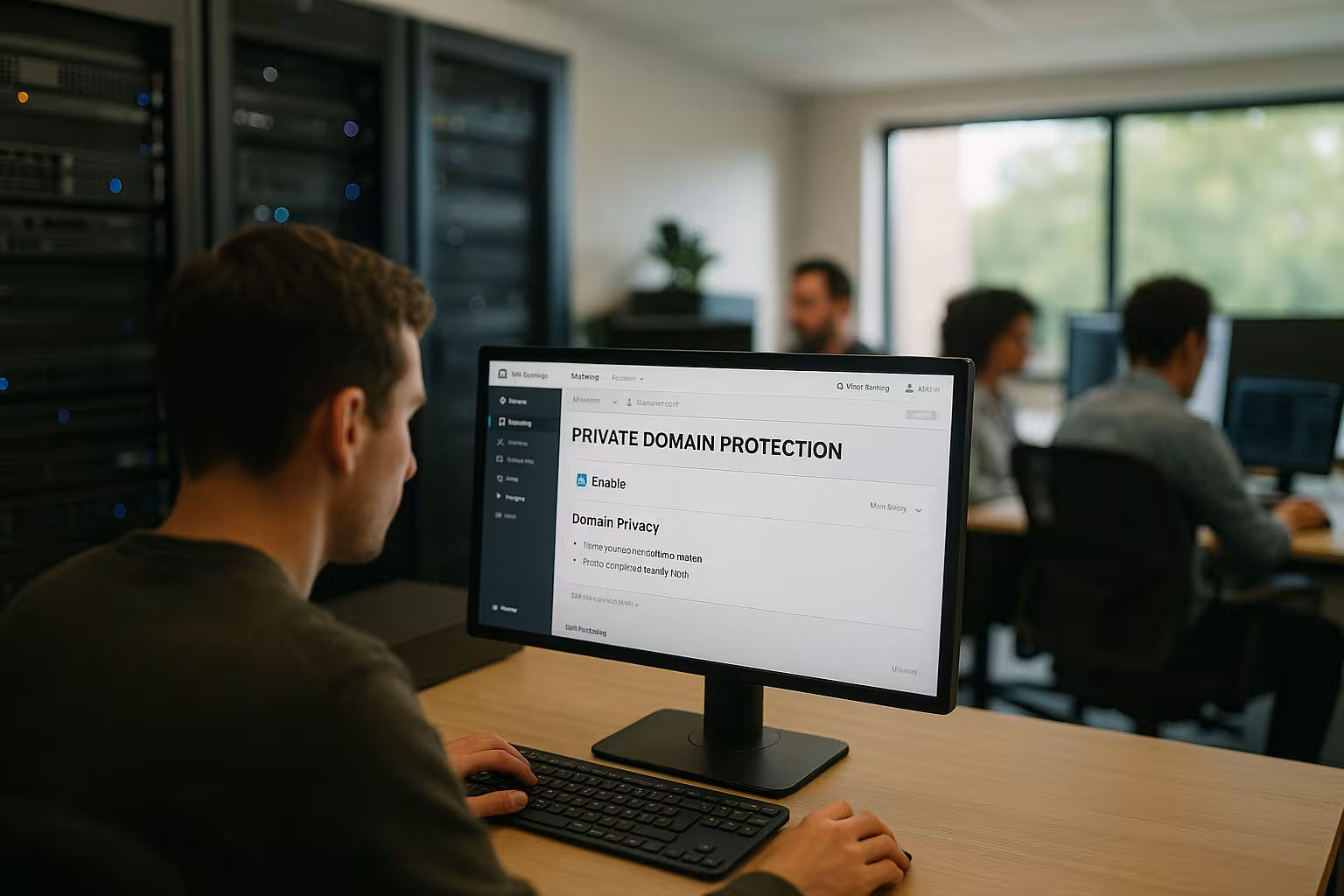
I replace with Proxy-data, the visible WHOIS contacts so that name, address, telephone number and e-mail are not freely accessible. Instead of my information, neutral information from the registrar or a data protection service appears, which sends requests to me via redirects. This proxy solution keeps attackers at bay, drastically reduces spam and makes social engineering more difficult. At the same time, accessibility is maintained, as legitimate contact attempts reach me through filters and forms. In conjunction with Domain Protection Hosting I combine data protection with account protection measures such as transfer lock, which additionally curbs hijacking attempts.
GDPR domain, ccTLDs and gTLDs: how data protection rules apply
I observe the GDPR, which requires anonymization of personal WHOIS data for EU persons and provides for a reduced display for many ccTLDs such as .de anyway. For gTLDs such as .com, .net or .org, I also rely on privacy services, as the standard transparency can otherwise lead to broad data tapping. For companies outside the EU or for organizations with global portfolios, Whois Privacy Domain creates uniform levels of protection across different endings. Newer regulations such as NIS2 increase the due diligence requirements for commercial registrations, which sensibly combines data protection with process security. I therefore rely on GDPR-compliant entries and add a privacy service depending on the ending to reliably close gaps.

Activation at the hoster: just a few clicks, immediate protection
I activate the function in my hoster's domain dashboard, often via a clear switch that transfers proxy data to the WHOIS entry. The changeover usually takes effect within a short time, and email aliases and forms forward serious requests in a structured manner. For the choice of name and legal aspects, I use a brief check in advance, for example via the Domain registration in Germany, to avoid conflicts. I find it important that hosting and registrar functions work well together so that protection, performance and support come from a single process. That way my Privacy while the site remains performant and securely accessible.
Limits and exceptions to Whois Privacy
I take into account that not every registry treats privacy services identically. Some endings only allow privacy for natural persons or stipulate increased transparency for legal entities. Some ccTLDs do not allow privacy at all or require an explicit opt-in/opt-out declaration for the publication of certain fields. In addition, registries differentiate between „redacted“ (blacked out due to GDPR) and „proxied“ (completely replaced by service) - sometimes a brief reference to the organization remains visible in the case of redaction. For sensitive industries, I check the ending rules in advance so that the desired protection can be realistically achieved.
I also take into account that requests from authorities or legal proceedings (e.g. trademark disputes) gain legitimate access to real contact data via regulated channels. Privacy protects against mass, untargeted queries, not formalized investigations. Precise data accuracy may also be required: Implausible data that Privacy is supposed to „cover up“ is risky because registries can suspend on verification obligations. Therefore, I keep original data accurate and up-to-date, but use privacy as an external layer of protection for the public level.
Accessibility and alias management in practice
To ensure that privacy does not become a one-way street, I actively test forwarding: I send a message from an external address to the alias mail visible in the WHOIS/proxy and check whether it arrives reliably and does not end up in spam. I maintain whitelists for frequent senders (e.g. registrars, certificate authorities, payment providers) and set clear filter rules so that UDRP/URS notifications, transfer notices or invoices are not lost. For role addresses (admin@, hostmaster@, legal@), I work with distributed delivery to a small team and redundant mailboxes so that no single person becomes the single point of failure.
I remain flexible for outgoing communication: I do not send replies via the proxy address, but from a controlled, domain-specific mailbox with SPF, DKIM and DMARC alignment. In this way, I keep deliverability high and prevent third parties from misinterpreting my proxy responses. I also document which alias chains are active and note check intervals (e.g. quarterly test emails). In an emergency, small routines of this kind can make the difference between the hours in which a deadline runs.
What threatens without protection: spam, phishing and targeted harassment
Open WHOIS data invites scrapers to harvest email addresses and distribute masses of spam. Attackers use names, addresses and phone numbers for credible phishing lures targeting payment or transfer approvals. Publicly visible data facilitates doxing-like patterns that directly target and intimidate people. There is also the threat of unwanted contact from resellers or questionable „appraisals“, which costs time and nerves. I therefore strengthen the defense with privacy, transfer lock and a look at Domain hijacking, to secure accounts and DNS zones against hijacking, thus protecting the Attack surface decreases significantly.
Legal classification: Imprint, access by authorities, obligations to provide evidence
I make a distinction between WHOIS publicity and legal publications: A possible imprint obligation on websites is not lifted by Whois Privacy. For business-related offers, I keep the required information available there, while I continue to rely on protection in the WHOIS. Access by authorities runs via registrar processes and requires a legitimate basis; this does not contradict privacy, but is part of the regulated information framework.
For compliance purposes, I keep registration documents, invoices, authorization codes (EPP) and correspondence in an orderly manner. This evidence ensures the ability to act in the event of internal audits, provider changes or trademark proceedings. I also check order processing agreements (if offered) and the data processing chain between hoster, registrar and registry to ensure transparency regarding storage locations and responsibilities.
Costs, TLD support and overview of services in practice
I usually budget between €1 and €5 per year per domain for privacy services, which makes a lot of sense in relation to the risks prevented. For gTLDs such as .com, there is often an active additional service, while ccTLDs sometimes already provide reduced ads. The combination of privacy, transfer lock and optional contact filters remains important so that both data and domain status remain protected. In the following, I outline the most common constellations for gTLDs and ccTLDs with information on booking and visibility. The table shows how I assess TLD types and which Expectations are realistic.
| Aspect | gTLDs (.com/.net/.org) | ccTLDs (.de/.eu) | Note |
|---|---|---|---|
| Support | Privacy mostly as an add-on | Partially reduced WHOIS display | Rules vary from registry to registry |
| Costs | Typically € 1-5 per year | Often included or not necessary | Billing via registrar/hoster |
| Standard visibility | Significantly higher without privacy | Mostly restricted | GDPR has an effect on EU persons |
| Special features | E-mail aliases, forms, filters | Observe registry specifications | Combine with Transfer-Lock |
Portfolio and team operations: roles, processes, audits
For multiple domains, I rely on role models: Owner, admin and tech contacts are stored with function-related email addresses that are not tied to individual persons. On/offboarding processes update accesses and 2FA tokens when team members change. I conduct a quarterly mini-audit to verify redirects, contact fields and lock status. For projects with external parties (agencies, freelancers), I use limited access rights and document approvals so that responsibilities remain traceable.
Strategic advantages for brands, projects and start-ups
I separate project structure and owner data in order to plan market launches more discreetly and to avoid feeding competitive analyses with WHOIS traces. Privacy prevents curious people from assigning domains to individuals or companies and thus drawing conclusions about upcoming products. This allows me to actively control communication and decide for myself which data is visible at what time. For research into hidden projects, I also use guidelines such as Buy domain anonymously, to clearly separate ownership, payment method and contact channels. This protection strengthens the Negotiating power in deals because less information gets out.

Transfers, change of registrar and sale
When changing registrars, I make sure that privacy can remain activated without losing accessibility for transfer confirmations. Modern transfer processes are based on authcodes and notifications; however, I verify that my alias address accepts mails from the previous and new registrar. During a domain sale, I maintain discretion by running contact through the privacy channel or dedicated intermediary roles. Only after completion or during a defined due diligence phase do I decide whether real data needs to be temporarily visible for verification purposes. I also keep clean records of purchase receipts, handover protocols and the new contact structure so that there are no gaps.
Technical additions: Transfer-Lock, 2FA, DNSSEC and e-mail filter
I set the registrar lock (ClientTransferProhibited) so that no unauthorized transfer of the domain can take place. I also secure the registrar account with two-factor authentication, which makes password theft less effective. DNSSEC signs zones cryptographically and makes manipulation that leads to fake target servers more difficult. For e-mail, I use SPF, DKIM and DMARC to better detect and punish misuse of my sender. In total, this results in Privacy, Lock, 2FA and DNSSEC to create an effective package that protects WHOIS data and secures core processes at the same time.
Extended protection levels: Registry lock, change locks and monitoring
In addition to the usual transfer lock, some registries offer additional locks such as registry lock, which only allows changes via manual, highly verified processes. I also set update and delete locks where available to block unauthorized contact or name server changes. I rotate authcodes regularly and activate change notifications so that every WHOIS/RDAP-relevant event is noticed immediately. Monitoring at name server and DNS level (e.g. A/MX/NS record diffs) helps to detect manipulation at an early stage. These layers complement privacy in a meaningful way by further restricting the scope of action of attackers.
Activation check: From the order to the WHOIS check
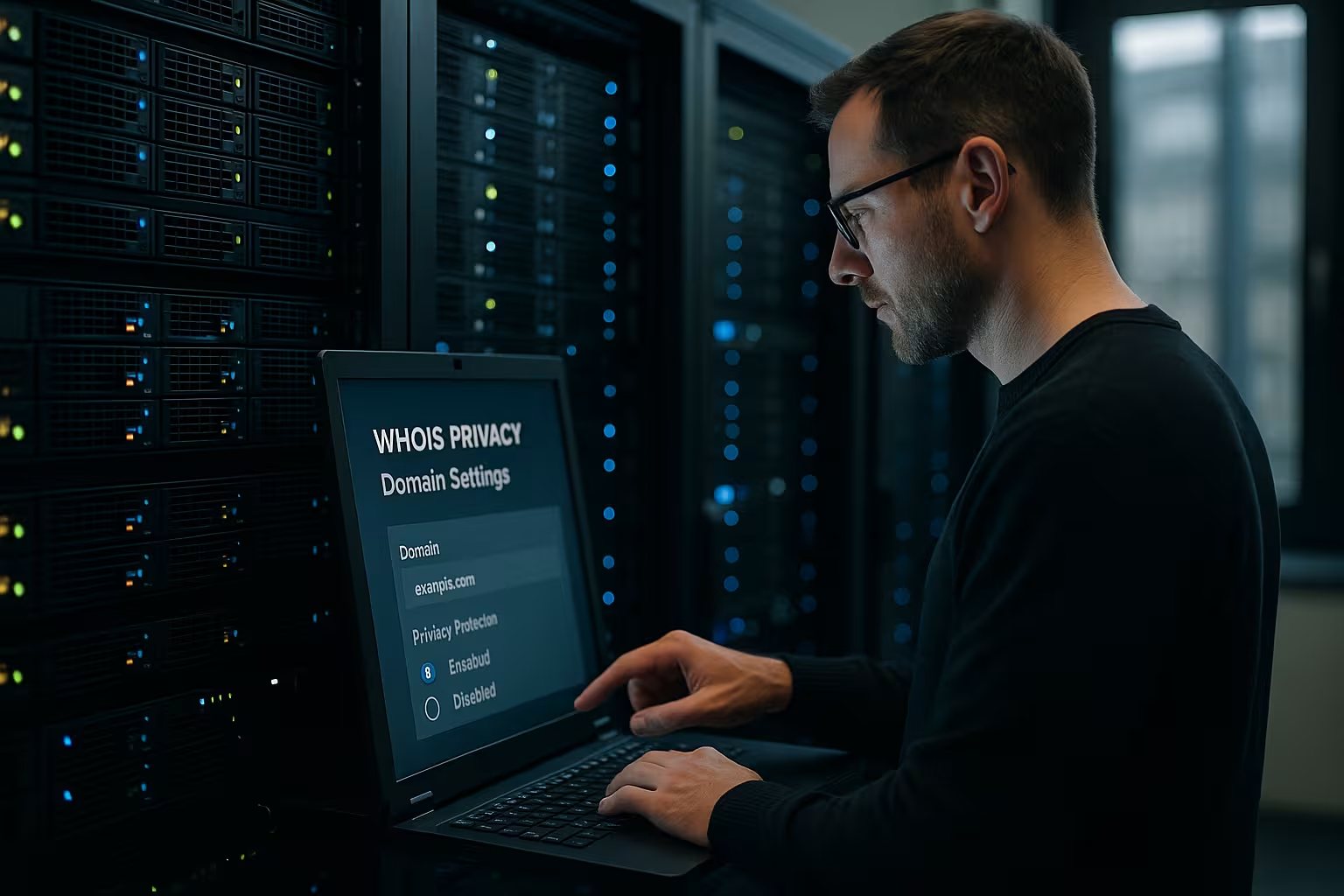
I start by ordering the domain from the hoster and immediately select the privacy option so that there is no gap in the first entry. I then check in the customer panel whether the switch is active and whether e-mail aliases are forwarded correctly. A WHOIS query then shows me neutral contact data, while personal details remain hidden. If necessary, I adjust contacts via the registrar administration so that roles such as Admin or Tech work with suitable alias addresses. At the end, I set a reminder to Extension annually and to keep protection options up to date.

RDAP instead of classic WHOIS: What is changing
Parallel to the classic WHOIS, RDAP is establishing itself as a modern query service. For me, this means structured, machine-readable responses and often stricter access controls. Privacy remains effective, but registries can differentiate which fields are redacted by default and which are visible via authenticated access in the case of legitimate interest. I therefore not only check the previous WHOIS output, but also RDAP results to ensure that there are no unintentional leaks. Rate limits and abuse prevention are often better under RDAP - an advantage against mass scraping.
Frequently asked questions answered briefly
Do I need privacy for .de? DENIC only shows limited data anyway, but I check the display and add alias addresses for contact roles if necessary. Why activate additional privacy for .com? gTLDs provide more extensive information without protection, which is why a privacy service blocks direct avenues of attack. How do I stay reachable? Forwarding and forms pass on legitimate messages, while spam filters filter them out. Is this legal? Data protection services are permitted, and requests from authorities go through regulated channels with the registrar. How do I prevent takeovers? I combine Transfer lock, strong passwords, 2FA and accurate contact management in the registrar account.
Common mistakes and best practices
- Only activate privacy, but do not test aliases: I verify delivery regularly and keep fallbacks ready.
- Inconsistent contact maintenance in the portfolio: I work with role addresses and standardized processes for changes.
- Expired means of payment: check auto-renew, set reminders so that privacy and domain do not end unplanned.
- No change alerts: I set up alerts for WHOIS/RDAP changes, name server switches and zone modifications.
- Weak registrar security: 2FA mandatory, strong passwords, restricted access, regular log checks.
- Missing legal and compliance view: Observe imprint obligation on websites, file documents and evidence in an organized manner.
- Blind trust in „redacted“ instead of „proxied“: I check TLD rules and choose privacy models there that fulfill my target image.
Compact summary for your decision
Whois Privacy Domain replaces open WHOIS contacts with neutral entries, reduces spam, weakens phishing chains and protects those responsible from unwanted contact. I activate the protection directly with the hoster, add Transfer-Lock, 2FA and DNSSEC and check TLD characteristics from .de to .com. For gTLDs, I calculate €1-5 per year, which is very reasonable considering the benefits. Brands, founders and operators of sensitive sites gain leeway because outsiders do not immediately assign projects to individuals. This is how I keep my Identity out of the line of fire and secure the domain holistically.