Skip to content
I will show you step by step how to create a Domain anonymous register, protect your data and avoid typical mistakes. How to start your web project discreetly, reduce spam and keep an eye on legal requirements without having to rely on Comfort to do without.
Key points
- Whois-Privacy replaces personal contact data in the public register.
- TLD rules differ significantly, especially for .de and international endings.
- Costs consist of domain fee plus optional privacy surcharge.
- Legal matters such as imprint obligation can relativize anonymity.
- PracticeSeparate e-mail, payment methods and DNS cleanly.
What does it mean to buy a domain anonymously?
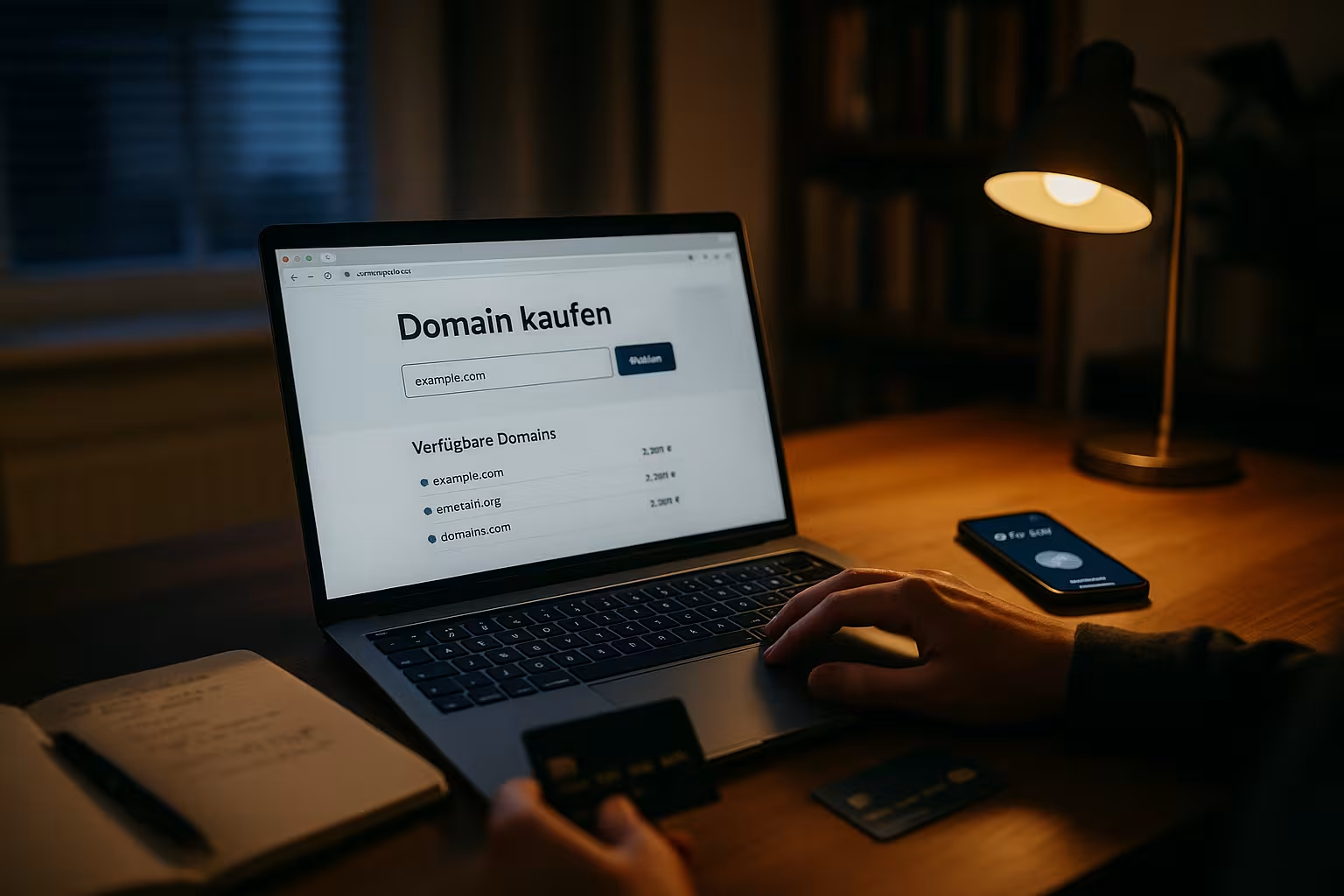
When a domain is purchased, the registry stores contact data in the public WHOIS. Many registrar offers replace your name with service entries from a privacy service so that bots and actors cannot access private data. Data collect. Instead of your address, neutral contact fields appear that filter and forward inquiries. I remain reachable without broadly revealing my identity, which reduces spam and unwanted calls. This shielding protects ideas in the early Phase and reduces the risk of targeted harassment.
Legal situation and limits to privacy
Anonymity ends where laws demand transparency, for example through Imprint for business sites. Providers prohibit privacy for illegal content or sensitive projects in order to prevent abuse. prevent. Law enforcement agencies can also request registration data that is not public but is available to the provider. For companies, a hidden entry often has a counterproductive effect, because trust is built on clear Contacts is created. However, those who start privately benefit noticeably from fewer disruptions and a clear separation of work and private life. Private life.

Privacy, Redaction and RDAP: What's the difference?
I differentiate between two layers of protection: Privacy/proxy services of the Registrar and the Data blanking (Redaction)which registries/bodies have been using more frequently since data protection reforms. With Redaction, personal data in WHOIS/RDAP is shortened for the public, but there often remains a contact or web form via which I can be reached. A Privacy service goes further: it actively replaces my details with service provider data and forwards emails in a structured way. I use Privacy in addition to Redaction because:
- contact forwarding is more reliable than generic web forms,
- non-EU fields (e.g. technical contacts) also remain consistently anonymous,
- no old stocks are leaked during data reconciliation between registrar/registry.
In practice, I not only check WHOIS after registration, but also RDAP-output to check whether the privacy attributes really appear. I also check that the registered owners remains clearly assigned to me despite the proxy (invoices, contract number, export of owner data in the customer area).
Step-by-step: How to set up Whois Privacy correctly
I start with a clear project name that stays short and is easy to remember. memorize leaves. I then check the availability directly with the registrar and make sure that privacy is included as standard or as an option. Add-on must be booked. During the ordering process, I check the box for Whois protection and use a separate e-mail account that does not allow any conclusions to be drawn about my identity. Identity allows. After registration, I check the WHOIS excerpt to make sure that the privacy details are really visible and no real Data leak through. If I already own domains, I activate the protection retrospectively in the customer menu and set a reminder for renewals so that the shielding can be activated. exist remains.
Security functions in the registrar account
I secure my account as if it were a safe deposit box. The important things are:
- Strong 2FA with Authenticator app or hardware token instead of SMS.
- Domain and transfer locks (clientTransferProhibited, Registry Lock) to prevent external transfers.
- Login notifications and IP restrictions, if available.
- Separate user roles for agencies/team members without sharing main access.
- Recovery codes and current emergency contacts in case the 2FA device fails.
This is how I prevent the best privacy settings from being overridden by a simple account hack.
TLDs and their privacy rules
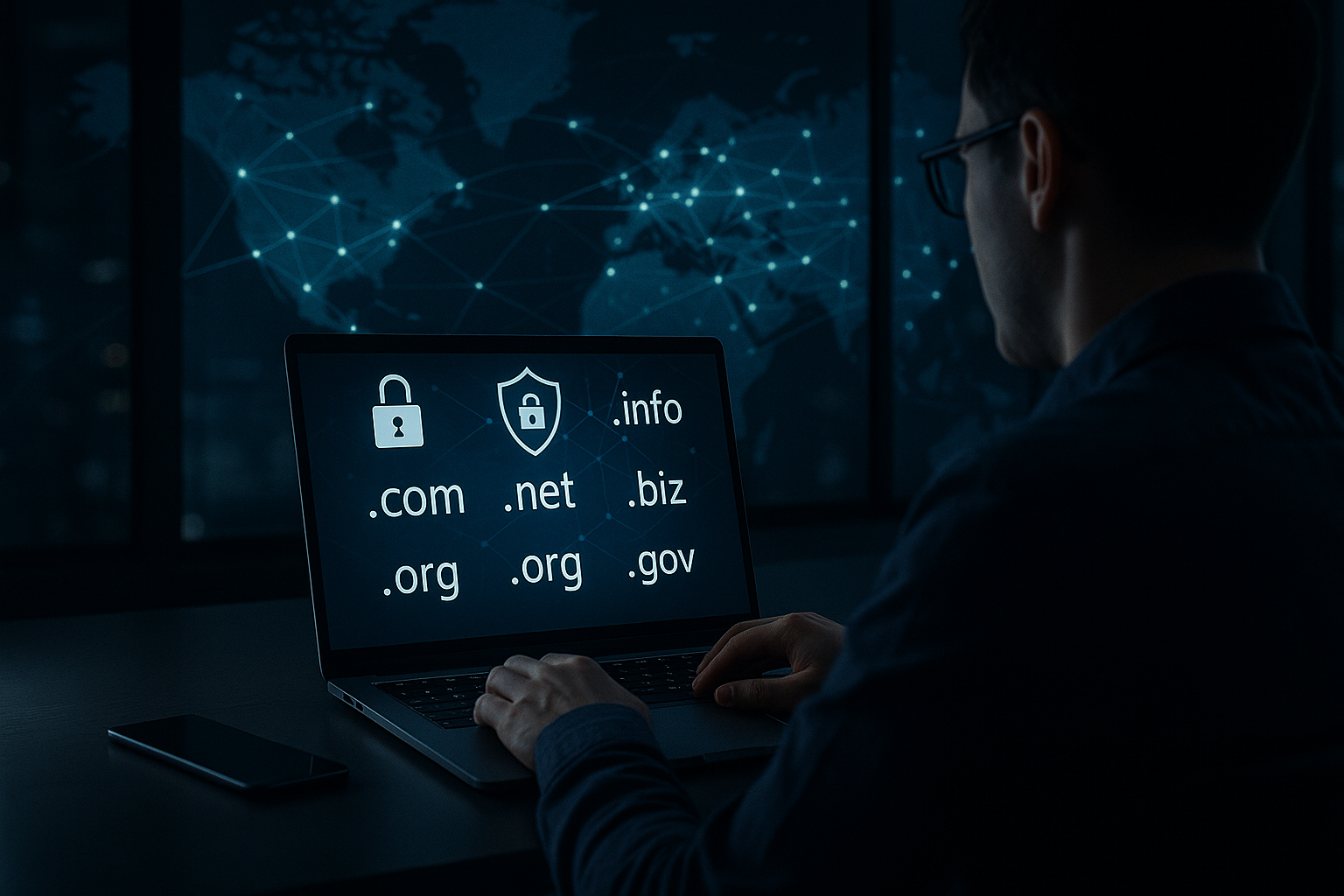
Top-level domains differ greatly in terms of Privacy. International extensions such as .com or .org usually allow full protection, while country-specific TLDs such as .de offer special protection depending on the registrar. Options offer. For German-language projects, I deliberately plan the extension so that registration rules, data protection and brand strategy fit together. A look at the TLD policies saves trouble later and protects Budget. For specific German setups, it often helps to take a look at WHOIS privacy for .deto quickly understand the limits and possibilities.
| TLD | Privacy possible | Special features | Note on costs |
|---|---|---|---|
| .de | Restricted depending on registrar | Partial trustee or proxy entry | Often small surcharge per year |
| .com | Yes, widespread | Quickly available, globally recognized | Privacy often low priced |
| .org | Yes, usual | Suitable for communities | Similar to .com in the price range |
| .net | Yes | Technology-oriented image | Comparable to .com |
| .io | Yes, depending on the registrar | Popular with start-ups | Higher TLD base price |
I decide on the basis of the scope, legal framework and planned Use. Those who later expand internationally often benefit from .com, while local projects with .de gain trust from target groups. build up. A WHOIS check after registration remains important to ensure that the protection is really active. If anything is unclear, registrar support is usually quick to help and explain Details. This way I avoid surprises when I receive contact requests and warnings.
Special cases with .de, proofs and transfers
Some details are special for .de: The former Admin-C is no longer required, but some registrars still require Evidence (e.g. loadable postal address) and retain data internally. I check whether the privacy entry as Fiduciary/proxy and whether I am still clearly documented as the beneficial owner (contract and invoice documents). For provider changes, I plan to use the AuthInfo code in good time and observe the 60-day rules of some gTLDs after owner changes. If a dispute arises, a Dispute entry secure a domain with the registry until the case is resolved. I keep proofs of identity and ownership to hand for this, without unnecessarily scattering them around in day-to-day operations.
Costs and sensible budgets
For a .de, many expect to pay €10-20 per year, while Privacy costs between €1 and €10 per year, depending on the provider. costs. International endings vary more, especially if the TLD itself has a higher Base price has. I always calculate the total amount over 3 years so that renewal fees don't come as a surprise. In bundles with hosting, privacy is already included in some cases, which simplifies administration and makes it easier to manage. Priceadvantages. Those who operate several domains often benefit from package conditions and uniform Extensions.
Hidden costs, premiums and recovery
I take a closer look at where price traps may be lurking:
- Promo prices in the first year, but high Renewals from year 2.
- Redemption/restore fees in the event of late renewal, which are significantly higher than the annual price.
- Premium domains with increased Initial and follow-up fees (not just expensive once).
- Transfer costs and possible privacy rebooking with the target registrar.
- Currency conversion as well as VAT/VAT handling for foreign providers.
I document terms and costs centrally so that no domain slips into grace or redemption status unnoticed.
E-mail, imprint and real identity
For registration, I use a separate e-mail inbox without a clear name so that no digital Fingerprint is created. For business pages, the imprint obligation applies, which is why a privacy entry reduces spam, but does not prevent the disclosure of central data. Data cannot be replaced. Accessibility for legal information remains important, for example through a functioning email address and a clean contact form. If information remains contradictory, mistrust increases and harms the company. Reputation. If you want to understand the differences in German endings, you will find useful information on WHOIS-rules and privacy services provided.

Set up email deliverability and certificates correctly
Privacy is of little use if emails don't arrive or certificates give away secondary data. I consistently use SPF, DKIM and DMARC and pay attention to correct rDNS for outgoing mails so that mailboxes deliver reliably. For TLS certificates I check CAA-entries and plan wildcard/single certificates so that no internal subdomains are unnecessarily included in Certificate Transparency Logs appear. In CSRs, I only use technical contact addresses instead of personal emails. This reduces false positives and prevents metadata from revealing my identity.
Secure payment methods and accounts
I separate payment methods from my main account, for example via virtual cards with limited access. Limit. This separation reduces the risk of data leaks and keeps bookings clear. Where possible, I use one-time cards or dedicated profiles that do not contain any private data. Notes disclose. Ensure that your billing data is correct so that tax obligations are met without entering unnecessary additional information in the customer account. write. This minimizes interfaces where identity becomes unnecessarily visible and retains full control over the Control.
Private individual, company or association?
I decide early on who will be the legal owner: private, company or association. That influences Invoices, VAT issues and the public image. For companies, openness in the imprint pays off in terms of trust, while the domain can remain shielded in the WHOIS. In the event of a later change of name, I plan the Change of ownership clean, so as not to trigger any 60-day blocks or unwanted privacy deactivations. Standardized naming in contracts and invoices prevents misunderstandings in support cases.
DNS, hosting and separation of tracks
I leave privacy active in the WHOIS and decide whether domains and hosting run together or separately should. Many appreciate the bundling with the same provider because SSL, support and administration are easier from one account. Go. If you want to keep tracks more separate, use separate providers for domain, DNS, e-mail and hosting. It remains crucial that name servers, SSL and MX entries are set correctly so that the website is reliable. runs. For name selection and planning, short Tips for buying a domainto avoid misunderstandings in advance.

Shielding the infrastructure: CDN, Origin and DNSSEC
Those who also use the Infrastructure uses a reverse proxy/CDN and hides the origin. I set the origin server to an unresolvable hostname/IP combination and only let the proxy appear publicly. Direct A-Records on the Origin, I test for leaks (e.g. via orphaned subdomains) and separate mail to my own IPs. DNSSEC I activate it to make manipulation more difficult and add CAA-entries so that only selected CAs issue certificates. This ensures that the domain is not only well protected in the register, but also operationally.
Protective measures against spam and warnings
Privacy dampens spam, but does not replace clean Processes. I use contact forms with captcha and filter bot requests on the server side so that requests arrive in a targeted manner and there is no flood that ticket systems can't handle. blocked. For legal notices, I have a dedicated e-mail that is not publicly linked but is still reliable. arrives. Imprint and data protection page remain clear so that visitors gain trust and compliance requirements are met. stay. Anyone using logos or trademarks should check conflicts at an early stage to avoid costly warnings and Reputationdamage.
Aftermarket, backorder and anonymous domain purchases
If the desired domain is taken, I use Backorder-services or buy from the aftermarket. For discretion I rely, where possible, on Broker and fiduciary handling so that my identity is not revealed in the negotiation process. I check the history before a purchase, Blacklistings (spam/phishing), brand risks and unusual backlink profiles. During the takeover, I make sure that Privacy remains seamlessly active at the target registrar and no transfer events temporarily release sensitive data. A clear payment and Escrow process prevents misunderstandings and provides evidence for the transfer of ownership.
Compliance and documentation
I keep documents organized: Invoices, contract confirmations, transfer logs and privacy status. For Germany I pay attention to Retention periods and ensure that tax-relevant data is recorded correctly but sparingly. With regard to service providers, I minimize the Data specifications to the required level and update outdated contact fields so that no letters/mails go nowhere. I take a structured approach to requests for information/deletion without unnecessarily disclosing security-relevant details.
Monitoring, extension and transfer
I activate Domain-Lock, set Expiry-Reminder and store a second domain. Address for notification if a mailbox fails. I also monitor DNS changes and certificates so that no manipulation goes undetected. remains. If you want to move, plan the auth code, transfer lock and privacy status in advance so that the shielding is maintained seamlessly. remains. It's handy to have a fixed date in the calendar when I check registrars, credit cards and contact details. You can regularly check the status of your names via Check domain availability and thus extensions or transfers in good time steer.
Operating and emergency processes
I define in advance what happens if an account is blocked, a card expires or a team member leaves. This includes a Emergency mailboxalternative payment methods, documented recovery steps and a contact path to registrar support. For sensitive projects, I keep a short Runbook checklist ready: Check accounts, verify locks, test certificates and MX, view logging, log changes. In this way, the project remains capable of acting even under pressure and anonymity remains intact.
Practical example: Anonymous registration in 10 minutes
I choose a short name, check it with the registrar and activate the Whois protection in the order step. I then book SSL, set nameservers or DNS records and test mail delivery via the separate P.O. Box. I then check the WHOIS extract and the visibility of the legal notice and privacy page. A short to-do list in the password manager provides the next steps and reminds me of Extensions. This means that the domain is set up quickly, remains discreet and can be connected to websites, stores or landing pages without losing time. connect.
Briefly summarized
Anonymously registered domains protect identity, curb spam and give projects more control in the early stages. Rest. The TLD rules, correctly activated Whois protection and a clear line for e-mail, payment methods and DNS. I comply with legal requirements, use clean contact channels and maintain renewals carefully. A coherent provider, suitable extension and a structured approach save time and money. Costs. If you take these points to heart, you can start discreetly, safely and remain operational at all times. capable of acting.