Skip to content
Chatbot websites automate customer dialog, ensure immediate responses and increase the conversion rate. They provide users with relevant information, relieve support teams and enable personalized communication - around the clock. Due to the increasing importance of digital customer contact, chatbots are now often the first point of contact on websites to provide information and improve the user experience. Modern technologies such as artificial intelligence, machine learning and natural language processing (NLP) give chatbots a natural and contextual way of expressing themselves, which further increases acceptance among visitors. Companies from a wide range of industries benefit from the short waiting time offered by a chatbot and direct access to real-time information.
Key points
- 24/7 availability improves accessibility and customer loyalty.
- Automated consulting reduces costs and increases efficiency.
- Personalized answers significantly increase user satisfaction.
- Data-based insights continuously optimize digital offerings.
- Simple integration in CMS such as WordPress is easily possible today.
All of these points make it clear that chatbots have become an integral part of modern websites. With the help of advanced learning algorithms, the virtual assistants constantly adapt to user behavior and thus provide increasingly precise answers. This means that even more complex topics or recurring questions can be answered in the best possible way without the need for an employee to be on duty around the clock. This not only relieves the burden on support teams, but also has a positive effect on customer experience and the conversion rate. Nowadays in particular, users often use mobile devices and expect fast, intuitive solutions. A chatbot that is immediately responsive is exactly where this comes in.
How do chatbots work on websites?
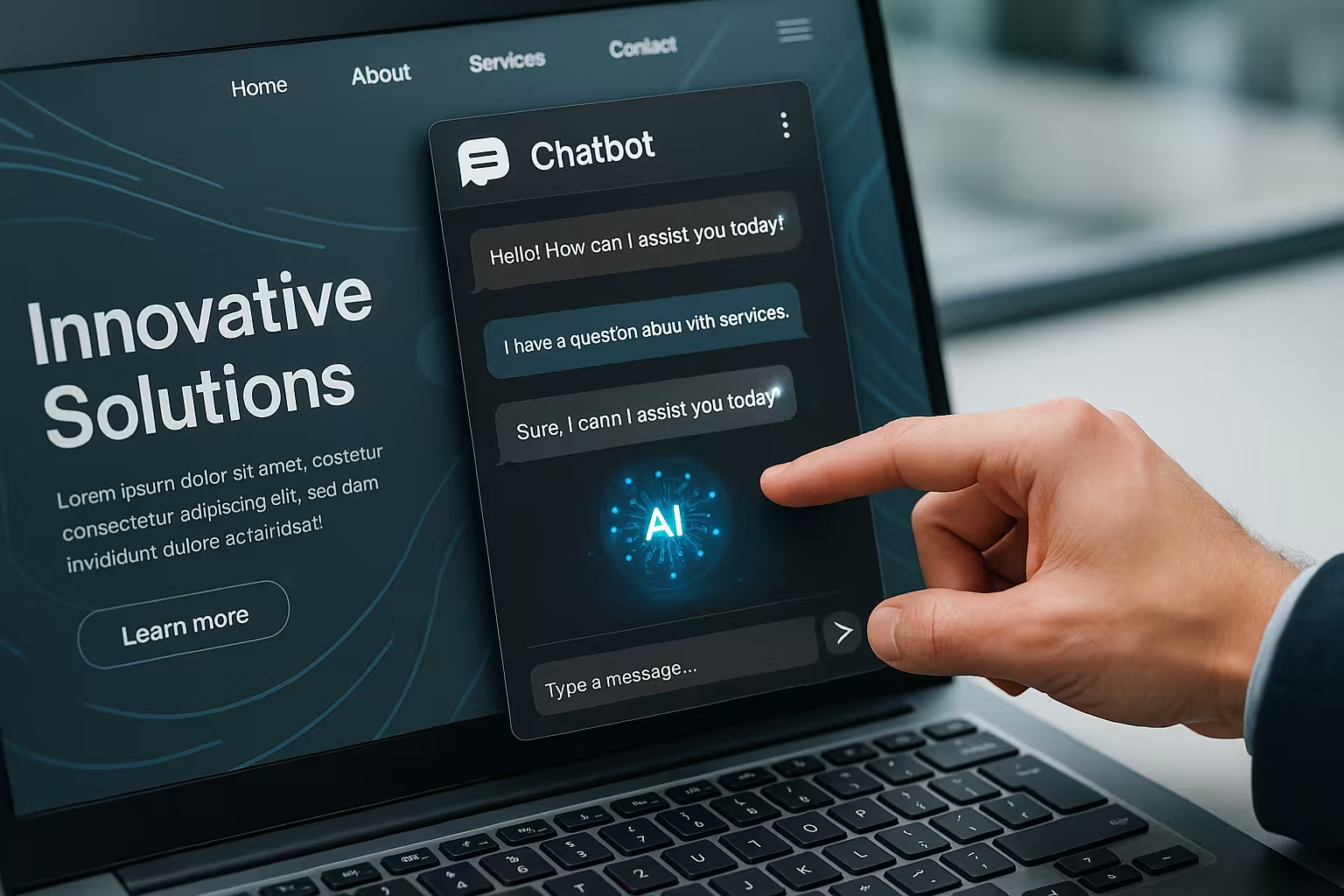
A chatbot is a digital assistant that is integrated directly into a website and automates conversations. Thanks to Artificial intelligence natural language and interpret user questions in a matter of seconds. Using so-called NLP (Natural Language Processing) methods, the bot reacts in dialog like a human employee. Chatbot software is often connected to other systems, such as CRM or e-commerce platforms, via APIs.
The user asks a question in the chat window and receives an answer immediately - either from predefined content or through learning-based systems that draw conclusions from previous conversations. This means there is no idle time for the user and information is available at all times. In addition to purely text-based exchanges, modern chatbots can often also provide media content such as images, links or videos. When providing product advice or in online stores in particular, it makes sense to integrate visual elements in order to make the chat as vivid as possible.
Many chatbot developers are now working on improved modules for voice analysis and voice output. Voice-enabled bots are particularly suitable for mobile applications in which users prefer to work with voice commands. The integration of such technologies can increase accessibility and open up new user groups. Voicebots are an attractive alternative, especially for people who need to access information on the move or want to have a quick conversation.
Why do so many companies use chatbots?
Through chatbots shortens the reaction time in response to customer inquiries. For companies, this means a direct customer benefit with low ongoing costs. Users receive quick answers to standard questions - from delivery status and opening hours to returns. At the same time, chatbots collect valuable data on recurring requests, interaction frequencies or problem areas.
The scalability of such systems acts like a second support team that never sleeps, especially for high-traffic websites. Since customers have been communicating with brands online several times a day, chatbots have become the tool of choice to ensure the usual quality of service at all times. But chatbots are not only helpful in the support area: marketing and sales also benefit because they can continuously capture and qualify leads. Potential customers are guided step by step through the sales process without the need for an employee to intervene.
Companies that opted for chatbots at an early stage often report significantly reduced customer service costs. At the same time, the company can deploy personnel resources specifically for more complex tasks, as routine questions are taken over by the bot. This redistribution of personnel capacities has a positive long-term effect on employee motivation and development - and therefore increases the overall quality of service.
Advantages of a chatbot on your website
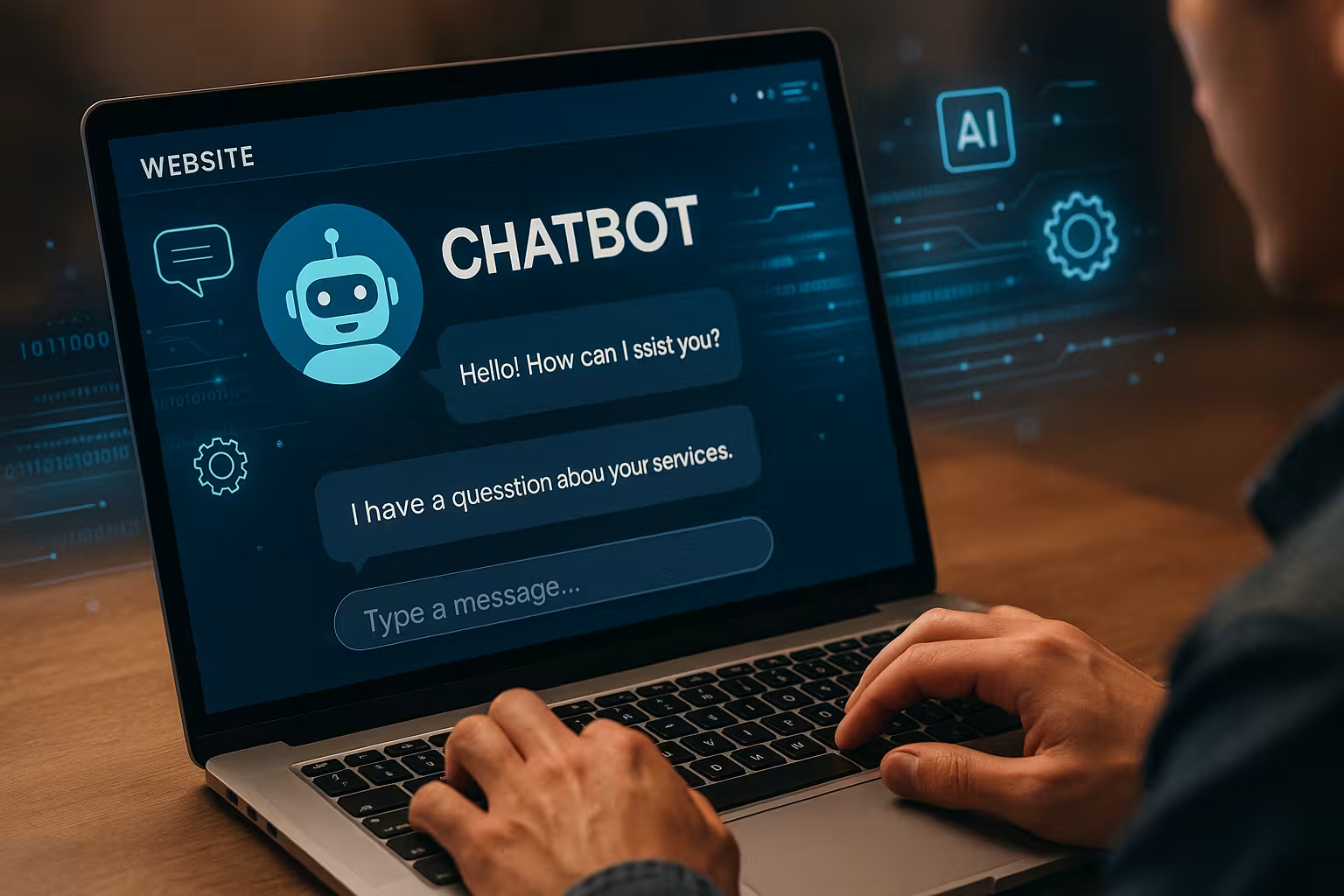
The benefits of chatbots go far beyond simple automation. With the right setup, they offer real User Experience-improvements. Modern chatbots are interactive tools that create trust, answer questions and guide customers through more complex funnels.
Many companies report reduced support times and rising conversion rates. Speed also plays a key role - visitors appreciate receiving the right information within seconds. The more useful the chatbot is, the longer users stay on the website. This has a positive effect on SEO and strengthens the customer relationship in the long term.
Another plus point is the ability to play out personalized content. Thanks to data analysis and CRM integration, a chatbot can make specific product suggestions or give individual recommendations based on previous interactions. This increases the likelihood of a purchase, especially in online retail. Chatbots also support customer loyalty by showing targeted upselling opportunities or pointing out relevant blog articles and resources.
The use of chatbots also makes it possible to obtain feedback and customer opinions in real time. Users can express their satisfaction or make suggestions for improvement directly during the conversation. This provides the company with constant new impetus to improve its website and offerings. The interplay of data collection and continuous optimization creates a clear competitive advantage in dynamic markets.
Suitable fields of application for chatbots Websites
Chatbots can be used almost anywhere where information is provided or transactions are initiated. These applications in particular work reliably:
- Immediate support for queries about products or services
- Automated distribution through lead qualification and contact data capture
- Order help in the online store including recommendation systems
- Making an appointment and calendar management for service pages
- Customer surveys for satisfaction or suggestions for improvement
Chatbots are also increasingly being used in internal processes. For example, employee questions on HR topics, IT problems or other organizational processes can be intercepted via an internal chatbot. In this way, the bot not only relieves the external support team, but also internal departments.
In the education sector, chatbots can also act as learning assistants by setting exercises, giving learning tips or referring to further reading. At the same time, the increasing integration of chatbot functions into social media platforms is opening up completely new opportunities to reach target groups - often beyond the company's own website.
How to integrate a chatbot into your website
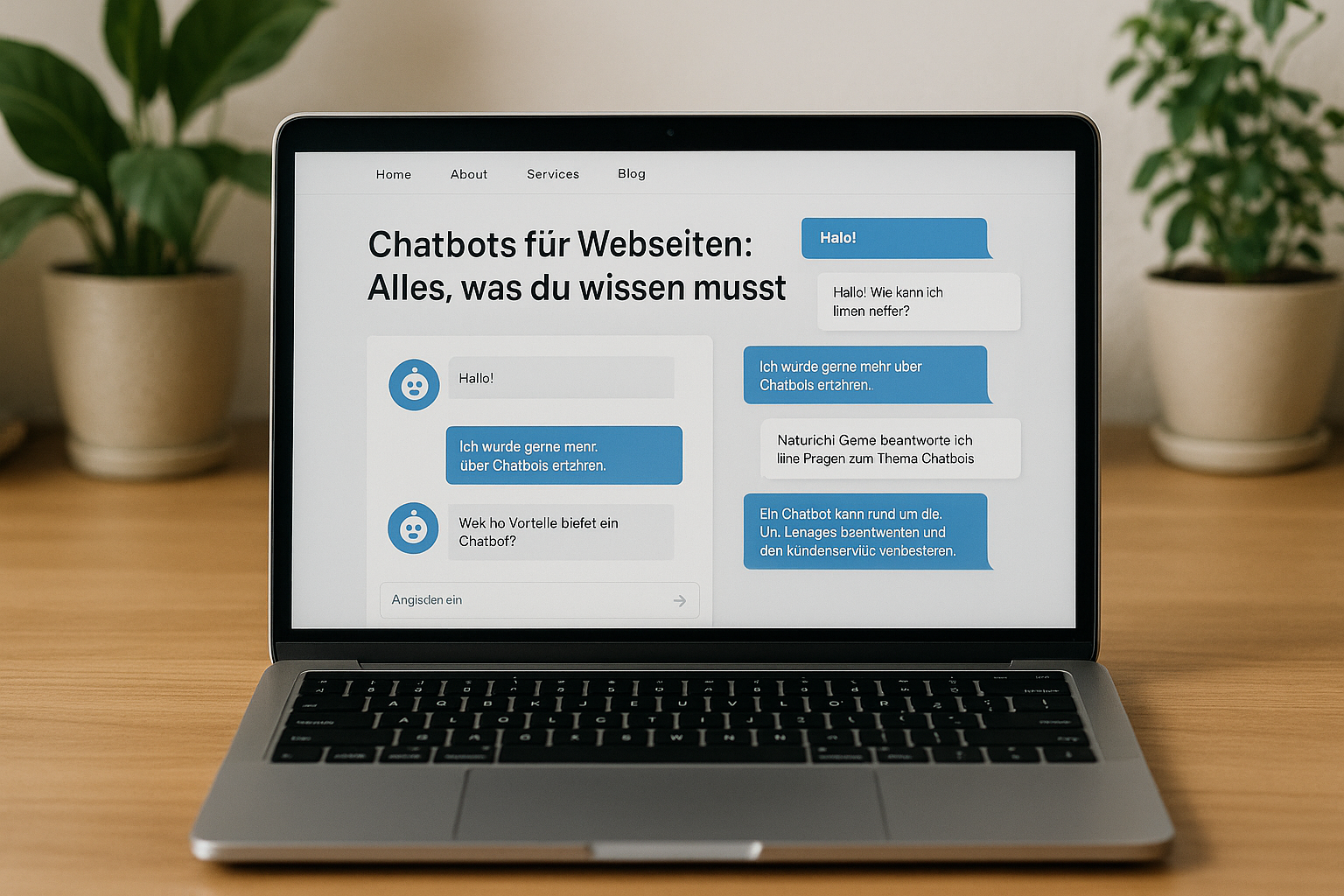
Thanks to CMS plugins and kits, technical integration is now relatively straightforward. WordPress in particular offers numerous solutions that allow you to activate chatbots without any programming knowledge. When making your selection, you should pay attention to Compatibility, range of functions and data protection options.
Many external providers enable integration via JavaScript snippet or API. Depending on your needs, you can display a visually customized chat box directly at the bottom of the screen or activate a pop-up using a button. The content can be personalized based on user actions. In many cases, an extension via workflow builder is also possible in order to define specific conversation sequences. For example, the chatbot can offer a direct route to the CRM system if required and automatically create customer data.
Depending on the complexity of the desired functions, you should check carefully whether the chosen provider supports multimedia content or payments in addition to text responses, for example. In e-commerce in particular, it can make sense to partially automate the entire purchasing process. For example, the chatbot not only guides you to the right items for product questions, but also initiates the purchase directly or offers the option of registering for a newsletter. This keeps your visitors in the right place in the sales process.
Integration step by step - every website benefits from this
A chatbot is more than just a gimmick. For your digital assistance system to be effective, you need a structured approach. This includes a clear objective and a customizable flow of conversation:
- Determine use case: Support, consulting or sales?
- Select provider: Check tools with AI, API and GDPR compatibility
- Define questions/answers: Which concerns should be covered?
- Carry out integration: Insert plugin or HTML snippet
- Start tests: Collect user feedback and optimize content
Especially in the test phase, it is advisable to observe and evaluate real interactions. Pay particular attention to where the chatbot may not be able to help. There should be an escalation path to live chat or telephone support so that the user is not left out in the cold. Well thought-out error handling avoids frustration for the user and conveys a sense of responsibility.
Once the chatbot has gone live, it is worth creating detailed reports at regular intervals. Note which questions occur particularly often and where users may drop off. This allows you to fine-tune the dialog flow and make continuous improvements. The chatbot continues to learn with every update.
What makes a good chatbot?
An outstanding chatbot is approachable at all times, responds in an understandable way and fits visually into the page layout. It should adaptive interact with your CMS and have simple controls. Also pay attention to high response quality, short loading times and regular updates. Data protection friendliness has top priority.
The following table gives you an overview of what you should look out for when making your choice:
| Criterion | Recommendation |
|---|---|
| Compatibility | Optimized for WordPress & common CMS |
| System integration | API connections to CRM/live chat |
| Speech recognition | NLP via AI modules |
| Security | GDPR-compliant with data encryption |
| User friendliness | Intuitive user interface for users & admins |
In addition to the technical criteria, the human component is also crucial. A natural, friendly writing style and clearly understandable navigation within the chat ensure a pleasant user experience. If your chatbot is based on AI, it is important that common expressions, dialects and industry jargon are included. This avoids misunderstandings in the conversation. In many cases, it is also worth giving the chatbot its own "personality" that matches the brand identity. In this way, it not only acts as a service tool, but also actively strengthens the brand image.
A coherent UX concept also keeps an eye on the overall appearance of the website: Where is the chat window positioned, what colors and fonts are used and how does the bot integrate into the corporate design? Such details contribute significantly to increasing user acceptance.
How does hosting affect chatbots?
A High-performance server environment ensures that your chatbot responds in real time. Stable hosting is essential, especially with many simultaneous requests. Pay attention to reliable loading times and security features such as SSL certificates. Go for providers that keep your website performing even with high traffic.
Smooth chatbot integration is only really effective if the technical foundation is right. That's why it's not just the bot itself that counts, but also a customized hosting package with high availability and short response times. Scalable cloud solutions that can flexibly adapt their resources often help here. This cushions a sudden increase in traffic without causing long response times or even downtime.
You should also check whether your provider provides regular backups and updates. In particular, security-relevant patches for your CMS or chatbot software must be implemented promptly to avoid data leaks. Solid hosting is therefore a key element for a sustainably successful chatbot strategy.
Avoid typical errors during implementation
Many chatbots fail due to overloaded communication, incomplete databases or missing escalation paths. If a bot always provides the same answer to several questions, the user quickly loses trust. Give your system flexible rules - for example, when it makes sense, to the customer service department.
Careful maintenance is crucial for sustainable quality. The more frequently you interact with users and analyze their behavior, the better the answers will be - and the higher your completion rate. In addition to the dynamics mentioned above, it is particularly important to recognize sources of error at an early stage. Analyze chat histories regularly to identify recurring comprehension difficulties. Coupled with a feedback function - such as "Was this answer helpful?" - you can actively take countermeasures and train the AI accordingly.
Another aspect is overloading the chatbot with irrelevant information. Sometimes companies tend to pack everything possible into the chatbot, which leads to confusion. Instead, focus on the user's core questions and expand the data pool step by step if necessary. Also create clear conversation structures: a bot that sends its users into endless menu queries instead of quickly leading them to a solution quickly causes frustration.

Practical examples: How companies use chatbots successfully
In practice, there are numerous examples of how chatbots improve customer dialog and save resources at the same time. E-commerce companies are integrating chatbots to answer product questions immediately and provide suitable product recommendations. A fashion retailer, for example, could suggest suitable items of clothing with just a few questions about the desired size, color preference and price range. This makes the customer feel personally advised without having to spend time in the store or on hold.
In the service sector, chatbots help to automate standardized processes such as making appointments. For example, a hairdressing salon can automatically request free time slots and book them directly in exchange. This significantly reduces queries by phone or email and increases customer satisfaction, as they have access to current availability around the clock. Insurance and financial companies, on the other hand, use chatbots to transmit forms, clarify frequently asked questions about policies or account models and thus lower the inhibition threshold for making contact.
Chatbots are also increasingly being used in public administration. Citizens can get quick information on opening hours, application forms or legal bases without having to make long phone calls or appear in person. Thanks to modern AI functions, chatbots are also able to grasp more complex issues and present them in an understandable way. The target group, which is often looking for fast, reliable information, benefits equally as much as the administration, which reports a reduction in the workload of its employees.
Trends and future potential
Chatbots are constantly evolving. In the future, conversational AI, which can filter out even more context from the conversation, will be increasingly used. This will make communication more fluid and natural. Multimodal approaches are also coming into focus, with chatbots combining text, images, video and even augmented reality to create an even more immersive user experience.
As a result, chatbots could, for example, offer live product demonstrations, provide step-by-step repair assistance or even integrate voice and gesture recognition. At the same time, the ongoing development in the field of machine learning is changing the training process for chatbots: instead of manually entering data, the bots are increasingly learning independently which answers are appropriate in which context. This not only shortens the implementation time, but also makes the chatbot more efficient in the long term.
Another exciting area is the interaction between chatbots and other AI applications such as voice assistants (e.g. Alexa, Google Assistant). In the future, users may be able to navigate the website by voice command and retrieve information directly from the chatbot. Harmonious interaction between different AI services could redefine the user experience in many areas of life. For companies, this means adapting to such developments at an early stage and designing the chatbot architecture accordingly.
To summarize: Why every website would benefit from a chatbot
Chatbot websites increase efficiency, are responsive and deliver relevant content in seconds. They automate repetitive processes, save resources and encourage interaction. Nowadays, users expect a dialog experience on digital platforms - chatbots deliver it at all times. With well-structured implementation, you can integrate this technology easily and effectively.
Whether you want to filter inquiries, initiate orders or collect feedback - the chatbot is your reliable assistant. As long as you pay attention to data protection and user-friendliness, it brings benefits for users and operators alike. Thanks to AI and continuous training opportunities, the digital assistant will get better and better over time, while your team is relieved and your website becomes more professional. Those who position themselves for the future in this area will create greater customer satisfaction in the long term and strengthen their own competitive position.