Skip to content
CI/CD pipelines in modern hosting environments automate builds, tests, deployments and Rollbacks - This allows me to deliver changes faster and more reliably. Who ci cd hosting consistently saves time, reduces errors and keeps services available during updates.
Key points
- Automation reduces human error and speeds up releases.
- Test security through unit, integration and E2E checks as a gate.
- Rollbacks via Blue/Green or Canary for quick return.
- Standardization with containers and Terraform/Ansible.
- Monitoring and logging for clear root cause analysis.
What exactly does CI/CD mean in web hosting?
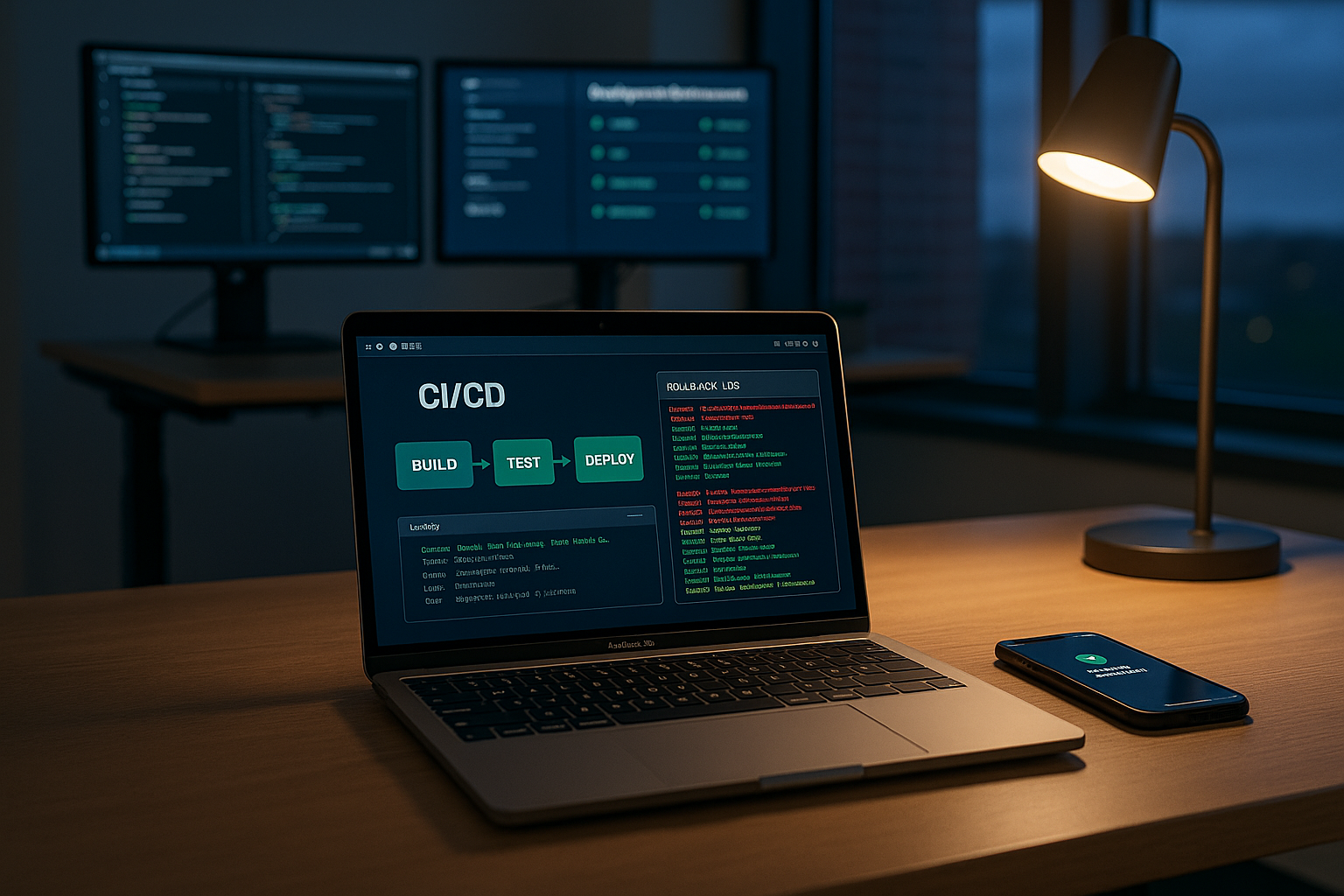
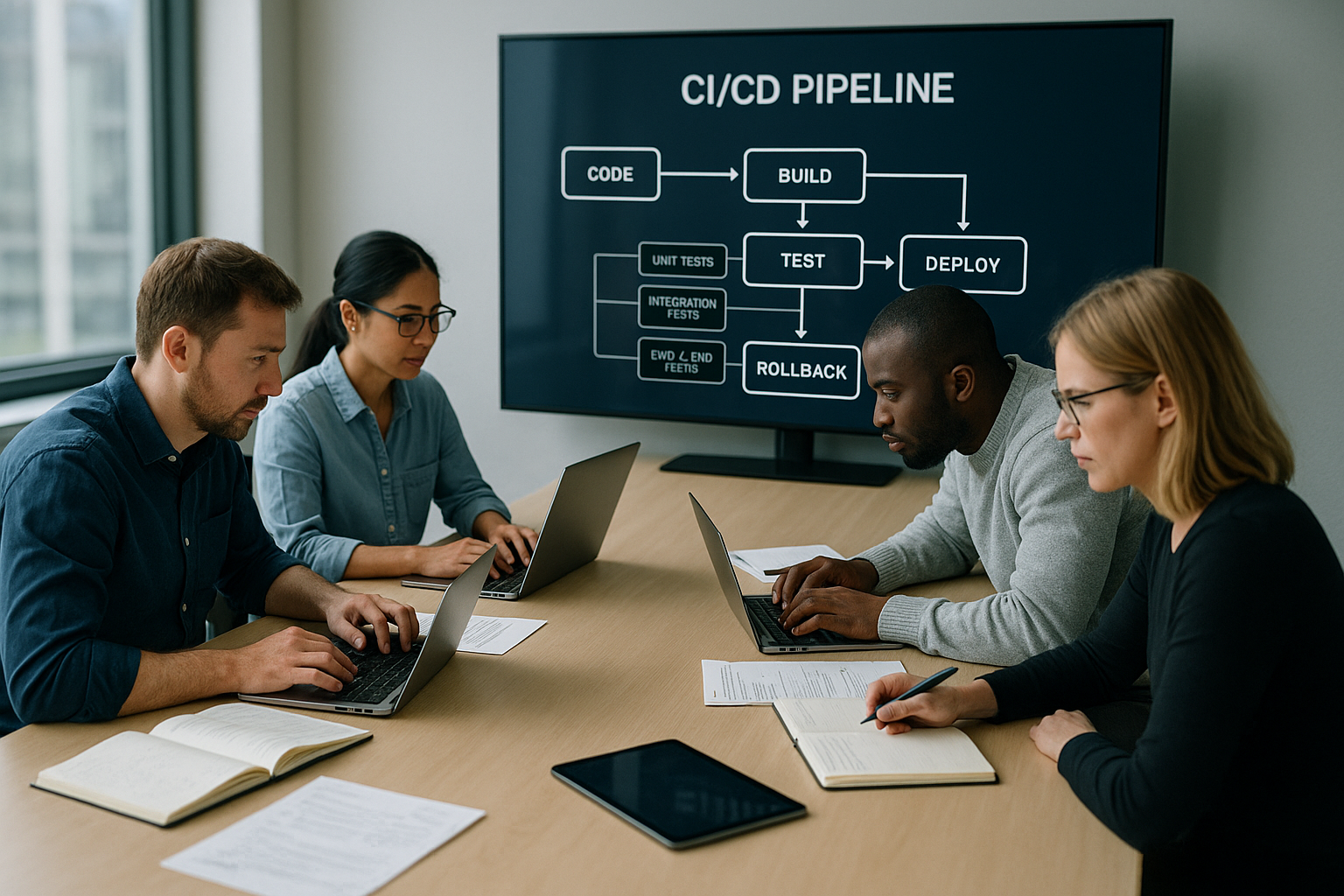
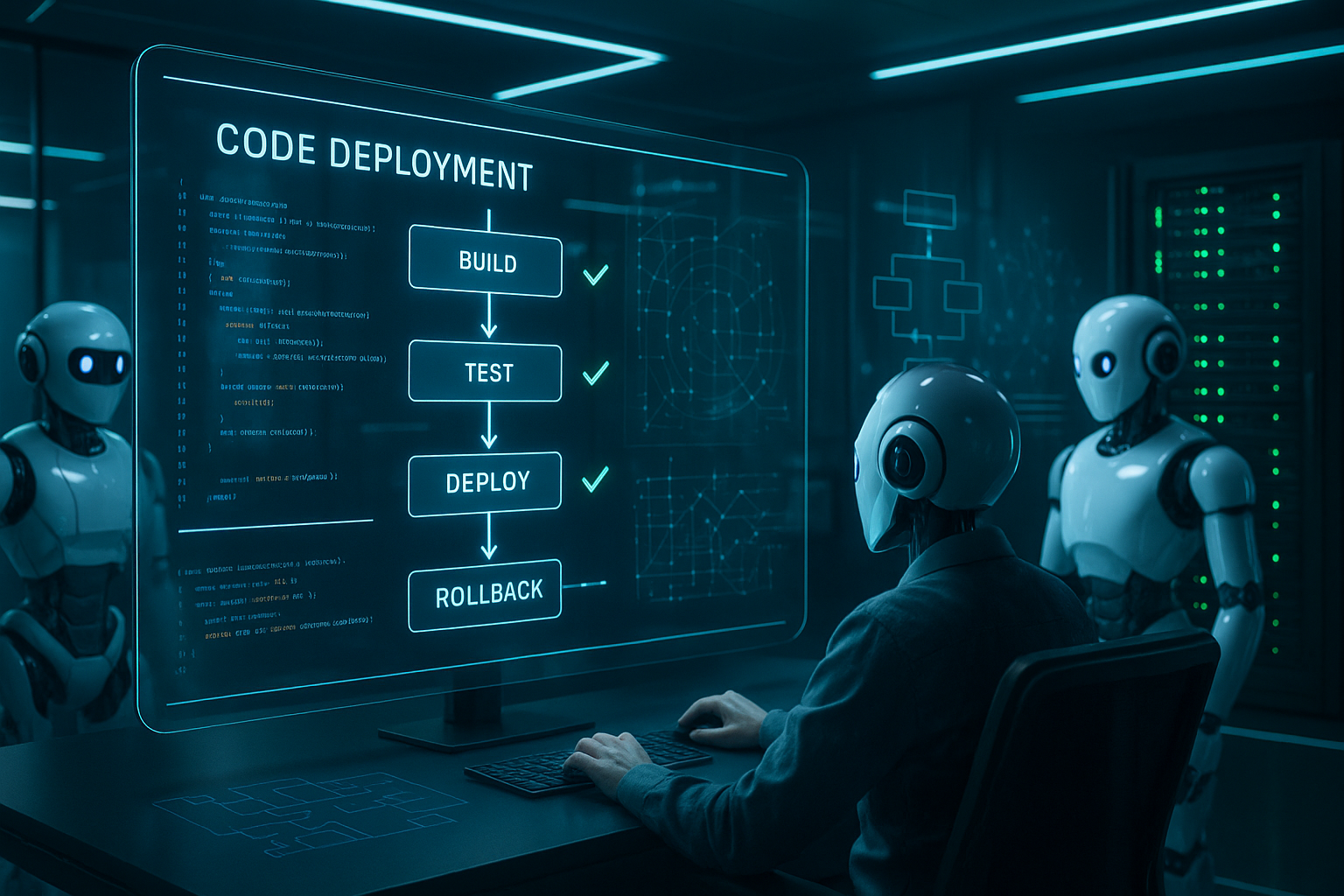
I see CI/CD as an automated Sequence, which makes every code change traceable from commit to go-live. After check-in, the pipeline builds an artifact, installs dependencies and packages the application for testing and delivery. Automated tests then start to check quality and function before a deployment updates the staging or production environment. I also integrate code reviews, security checks and performance analysis to keep releases consistent and predictable. This clear chain of build, test, delivery and possible Rollback keeps releases lean and predictable.
Branching and release strategies that scale
I rely on pragmatic branching models that suit the team and don't hinder the flow. Trunk-based development with short feature branches, small merges and feature flags gives me the highest speed. I use Gitflow where longer release cycles and hotfix paths are mandatory - but then with clear rules so that the complexity doesn't explode.
- Promotion pathsCode moves automatically from dev via staging to production - identical artifacts, checked configurations, traceable releases.
- Release versioningI use semantic versioning and automate changelogs so that stakeholders understand changes immediately.
- Merge cuesSequence and tests are deterministic, merges only happen when the cue is green - this dampens flakiness and race conditions.
- Manual GatesFor sensitive systems, I use defined manual releases with an audit log without slowing down automation.
Automation of build, tests and deployment
I automate every recurring step in order to shorten release times and reduce sources of error without Transparency to lose. Unit tests check functions, integration tests secure interfaces, end-to-end tests validate business flows - only when all gates are green is the pipeline allowed to deploy. Caching, parallel jobs and reusable pipeline steps save minutes per run and bring measurable time savings over weeks. Artifact repositories archive builds so that I can roll out reproducible packages at any time. For the rollout itself, I use containers or packages that contain the Consistency between staging and production.
Secure delivery of database changes
Databases are often the sticking point for zero-downtime releases. I plan changes according to the expand/contract principle: first extend schemas, then convert the application, then dismantle old structures. This keeps old and new versions running at the same time, which makes rollbacks much easier.
- Versioned migrations run as independent pipeline jobs with backups beforehand and health checks afterwards.
- Cross-country migrations (index builds, backfills) are split into incremental steps or run asynchronously in off-peak times.
- Dual writes and read fallbacks help with structure changes: I temporarily write twice and prioritize reading from the new schema.
- Rollback pathsPreserved snapshots plus reversible migrations give me RPO/RTO that also pass audits.
Plan rollbacks without downtime
I keep rollbacks so simple that a switch to the last Version takes a few seconds. Blue/green deployments allow me to build a new version in parallel and only go live after a final check. With canary releases, I roll out gradually, monitor metrics and stop in good time in the event of anomalies. Versioned database migrations, feature flags and unchangeable artifacts reduce the risk of structural changes. If you want to delve deeper, you will find helpful strategies in my article on Zero downtime strategies, which makes rollbacks and switching paths tangible.
Infrastructure that really supports CI/CD
I prefer hosting plans that offer flexible Resources and simple integrations. API and CLI accesses automate deployments, secrets management protects credentials, and separate staging/production slots ensure clean handoffs. Containerized environments align local development, testing and live operations, eliminating surprises. I scale virtual servers and cloud nodes according to load, for example for time-critical builds or E2E test runs. The following help me in my day-to-day work SSH, Git and automation, to control recurring steps directly at the hosting and to facilitate audits.
Runner, build and cache strategy
My runners are as short-lived as possible so that builds remain reproducible and don't drag side effects. Ephemeral runners with minimal rights, isolated networks and clear image versions offer me security and stability.
- Deterministic buildsLockfiles, pinned compilers/toolchains and unchangeable base images prevent „works on my machine“ effects.
- Layer and dependency cachesI use Docker layer caching, Node/Composer/Python caches and artifact reuse specifically per branch and commit.
- ParallelizationTest sharding and matrix builds speed up runtimes without sacrificing coverage.
- Artifact flowClearly defined handovers (build → test → deploy) prevent other artifacts from ending up in the deployment than were tested.
Secrets management and access control
Secrets never belong in the code. I encapsulate access data per environment, rotate it regularly and use short-lived tokens with a minimal scope. Policies as code ensure that only approved pipelines are granted access.
- Least PrivilegeDeployment identities are only allowed to do what they have to - separated by staging/prod.
- Short-Lived CredentialsTemporary tokens and signed access reduce the risk of leaks.
- Secret scanningPull/Merge requests are checked for accidentally checked-in secrets; findings block the merge.
- Masking & rotationLogs remain clean, rotations are part of the pipeline routines.
Best practices that work in practice
I start small, do my first projects Automated and then scale step by step. A clear folder structure, versioned configurations and reproducible pipeline steps create order. Security checks such as SAST/DAST, dependency scans and secret scanners are included in every merge request. I keep documentation concise but up-to-date so that everyone understands the process immediately. Rollback checks, health endpoints and defined releases form my safety net for productive deployments with Reliability.
Security, compliance and observability right from the start
I anchor security directly in the pipeline so that errors early become visible. Every change receives traceable artifacts, logs and metrics, which I collect centrally. Dashboards with latency, error rate, throughput and SLOs show me trends instead of just individual events. Traces with correlations connect build and runtime data, which greatly accelerates root cause analyses. Audit logs, policies as code and regular reviews ensure compliance and give me Control about the status.

Observability and metrics in the pipeline
I measure pipeline quality just as consistently as production metrics. DORA key figures (deploy frequency, lead time, change failure rate, MTTR) form my compass, supplemented by CI-specific SLOs:
- Queue and runtimes per job and stage to identify bottlenecks.
- Success rates per test suite and component, including flaky index and quarantine traces.
- Retry and rerun quotas, so that I don't conceal stability with repetitions.
- Cost per run (time, credits, compute) to prioritize optimizations.
I tie alerts to error thresholds and SLO violations - so teams react to facts instead of gut feeling.
Tool stack: CI/CD server, container and IaC
I choose the CI/CD system according to the project scope, Team size and integrations. GitLab CI/CD, GitHub Actions, Jenkins, Bitbucket Pipelines or CircleCI provide mature ecosystems with many templates. Containers and orchestration standardize processes and ensure reproducible builds. With Ansible and Terraform, I form infrastructure declaratively, which makes changes much more traceable. Ephemeral runners and build containers keep environments clean and save me time. Maintenance.
Cost and resource control in CI/CD
Performance is only half the battle - costs are just as important. I consciously limit parallelism, break off obsolete pipelines and only start what is really affected by the change.
- Path filterChanges to docs do not trigger full tests; frontend updates do not have to start DB migrations.
- Auto-Cancel for subsequent commits in the same branch saves compute and time.
- Time window for heavy E2E runs avoid load peaks; light checks run continuously.
- Cache strategies with clear TTLs and size limits prevent memory sprawl.
Test suite: fast, meaningful, maintainable
I use a test pyramid as a guide so that fast Unit tests form the basis and supplement expensive E2E runs in a targeted manner. I manage test data deterministically, mocking reduces external dependencies and contract tests secure APIs. Code coverage serves as a guard rail, but I measure quality by sensible error prevention. Flaky tests are thrown out or quarantined so that the pipeline remains reliable. A clear report for each run shows me the duration, bottlenecks and hotspots for targeted Optimization.
CDN, edge and asset deployments
Static assets and caches are a lever for speed in web projects. I build assets deterministically, provide them with content hashes and deliver them atomically. Deployments only invalidate affected paths instead of emptying the entire CDN. I version edge functions like any other component and roll them out with canary patterns so that I can see regional effects early on.
- Atomic ReleasesOnly when all artifacts are available do I switch over - so there are no mixed states.
- Cache busting using file-based hashes prevents old assets from slowing down new pages.
- Prewarming critical routes keeps time-to-first-byte low, even shortly after rollout.
Provider comparison 2025: CI/CD in the hosting check
I rate hosting platforms according to their level of integration, Performance, data protection and support for automation. Native CI/CD integrations, APIs, separate slots, secrets handling and observable deployments are crucial. The following table summarizes a compact comparison and shows what is important to me in day-to-day business. For newcomers, I also link a guide to the Implementation in hosting with a focus on smooth transitions. This is how I find the platform that gives my projects real Speed brings.
| Place | Provider | Special features |
|---|---|---|
| 1 | webhoster.de | High flexibility, strong performance, comprehensive CI/CD integrations, GDPR-compliant, ideal for professional DevOps pipelines and automated deployment hosting |
| 2 | centron.de | Cloud focus, fast build times, German data centers |
| 3 | other providers | Various specializations, often less depth of integration |
Monorepo or polyrepo - influence on CI/CD
Both repo models work if the pipeline understands them. In the monorepo, teams benefit from uniform standards and atomic changes across services. This requires a pipeline that only builds and tests affected components. In Polyrepo-Island, I avoid coupling, clearly separate responsibilities and orchestrate releases via version dependencies.
- Change detectionI determine dependency graphs and only trigger necessary jobs.
- Context-specific runnersSpecialized images per component save setup time.
- Separate release cadenceServices deploy independently, I secure joint contracts with contract tests.
Avoid typical stumbling blocks
I see weak Test coverage as the most frequent cause of late errors. Non-standardized environments create friction because everything works locally, but not on staging. Pipelines that are too nested slow teams down if there is a lack of documentation and ownership. Without monitoring, timing problems or memory spikes remain undetected until users report them. A clear rollback concept, measurable pipeline goals and clean metrics keep my business running Reliable.

Team process, onboarding and governance
Tools solve little if processes are unclear. I keep onboarding compact: one page with „This is how a release works“, plus a runbook for faults and rollbacks. Pairing for pipeline errors accelerates learning and reduces repetition errors. Approval rules are based on risk: minor changes run fully automatically, high-risk changes via defined approvals with a clean audit trail.
- Documentation as codePipeline and infrastructure changes are made via pull/merge requests.
- ChatOpsImportant actions (promote, rollback, freeze) can be triggered from the team chat in a traceable manner.
- Release windowCritical deployments take place at times when those responsible are highly available.
Briefly summarized
I use CI/CD in hosting to make changes safe and get it live quickly. Automated tests serve as a quality gateway, rollbacks via Blue/Green or Canary give me peace of mind during releases. Standardized environments with containers, IaC and secrets management keep deployments traceable. Monitoring, logs and traces provide me with the facts I need to make informed decisions. With the right hosting partner and a clean pipeline strategy, I pay less training fees and increase the Delivery speed sustainable.