Skip to content
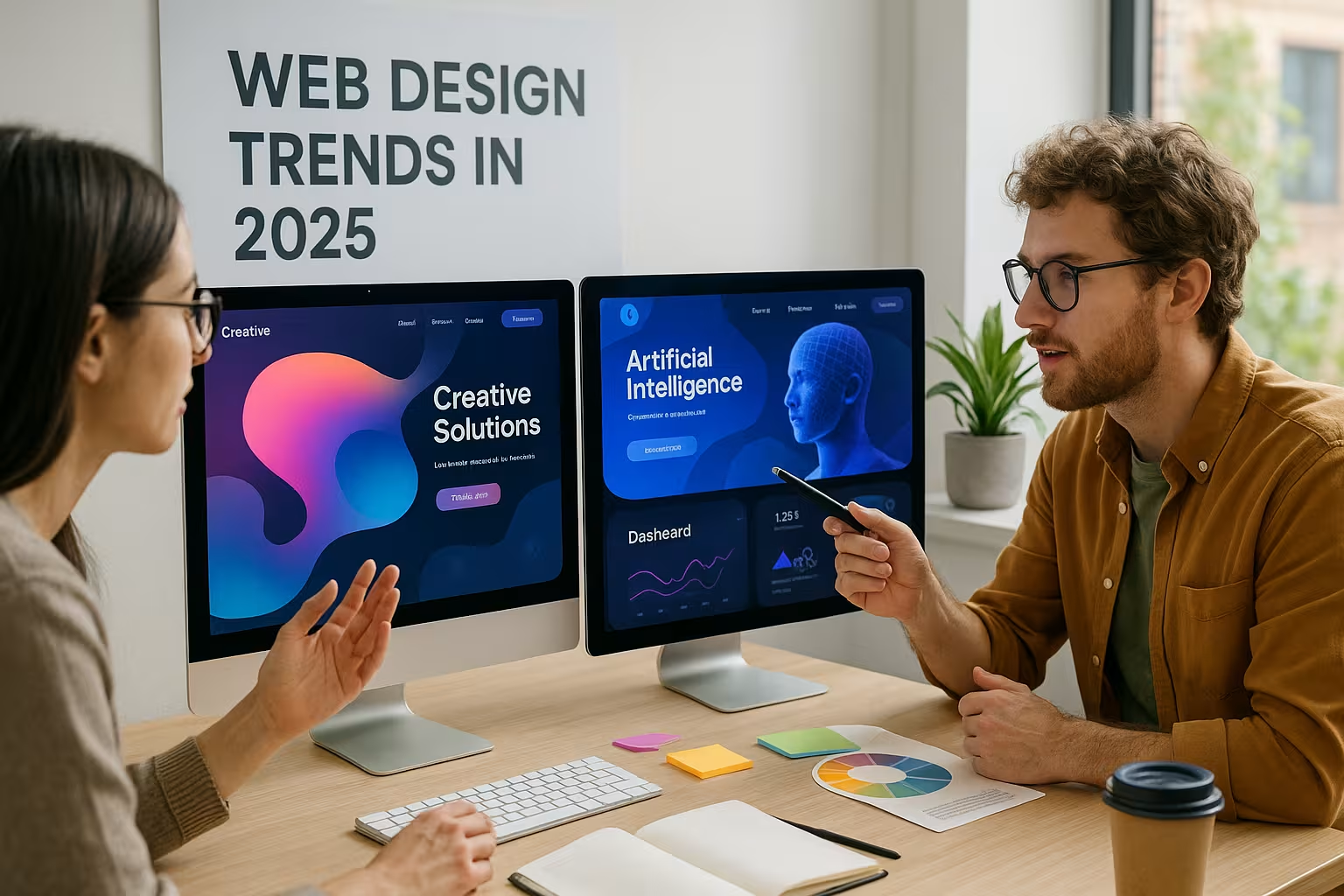
The Web design trends 2025 clearly show that technological innovations, sustainable thinking and aesthetic diversity are shaping the appearance of the digital space more than ever before. User-friendliness, technical performance and emotional communication strategies are merging to create a new web design standard that combines function and inspiration.
Key points
- Artificial intelligence in creative web design saves resources and generates personalized experiences.
- Minimalism remains popular - in its radically reduced form, it ensures clarity and short loading times.
- Mobile First is no longer an option, but crucial for visibility and conversion.
- Emotional design with dopamine palettes and animated typography creates recognizability.
- Sustainable technologies reduce CO₂ emissions and strengthen brand perception.
Artificial intelligence as a design driver
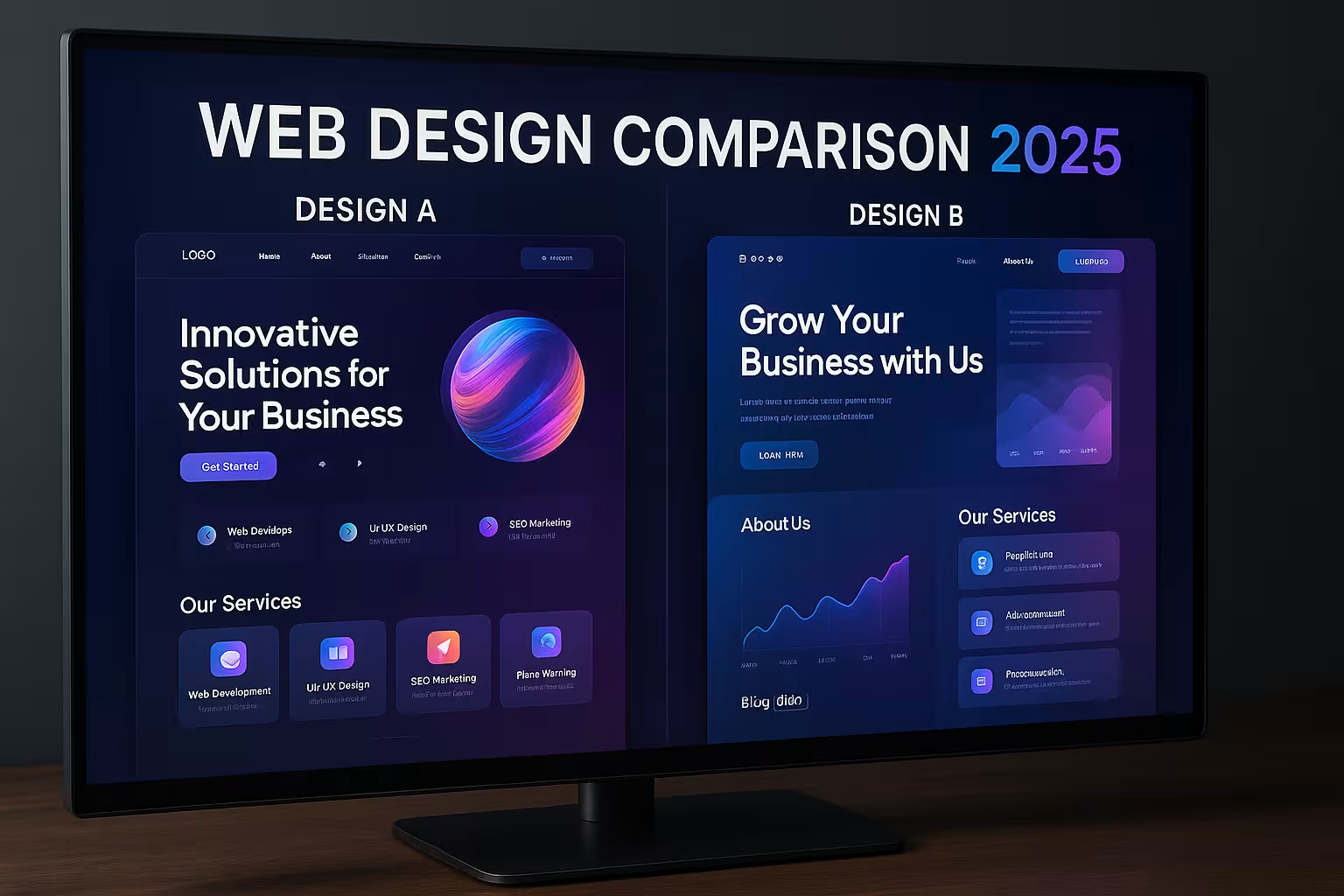
2025 dominates Automation web design - especially thanks to AI. Tools such as GPT-based image generators or automated wireframes enable even small teams to create impressive designs. Visual content in particular benefits: Graphics, logos or color palettes are created faster and in a more targeted manner. At the same time, AI models can analyze user data and generate design suggestions from it. The challenge lies in balancing originality and efficiency. If you want to remain creative, you should use AI as a source of inspiration, but continue to actively control it.
Personalization is becoming mandatory: dynamically generated content and chatbots create an individual experience on demand. Those who combine these technologies with a low-barrier design offer future-proof web interfaces that actively involve and guide users.
Minimalism: the quiet statement on the web
Design through reduction continues to gain in importance. The Super-minimalism consistently relies on white space, clear lines and simple typography. This increases attention, facilitates orientation and reduces loading times. Websites are increasingly dispensing with unnecessary elements in order to bring the content to the fore. These designs are particularly easy to implement with CMS such as WordPress. If you are curious about how efficient websites can be developed, you can find out more about Web design with WordPress in detail.
However, there is also the risk of a lack of stimuli: too few visual signals can deter or bore visitors. This can be remedied with moving images, scroll animations or typographic highlights - without overloading the form.
Mobile first is mandatory: radically optimize content
More and more users are consuming content on mobile devices. This is why websites need to position themselves for the future - with a focus on Responsiveness instead of adaptation. Large clickable areas, high-performance loading times and logically structured content will be the focus in 2025. For Google, mobile first has long been the basis for good rankings. If you want to keep up technically, you should keep loading times under 2 seconds and regularly test layouts on mobile devices.
The trend towards mobile simplification is also evident in applications and forms. A clear structure, supporting icons and short scrolling paths make pages more attractive. Our guide provides in-depth insights into Responsive design and its current developments.
Typography as a visual statement
Moving letters and unusual font hierarchies set strong accents in 2025. Kinematic typography gets content moving and draws targeted attention to headlines or call-to-actions. This works particularly well in combination with dark mode or bold colors. Bold designs quickly stand out from the crowd, but also run the risk of limiting readability.
Sustainable web design has a multidimensional effect
Energy efficiency and CO₂ reduction also affect digital products. Websites 2025 consume fewer server resources and rely on climate-friendly hosting. Less code ballast, smaller image files and optimized database structures not only improve the environmental balance: loading speed and user satisfaction also increase measurably. Providers such as webhoster.de are setting new standards here with environmentally conscious solutions.
Sustainability is also reflected in the design. Less visual distraction means more conscious communication and an enhancement of key content. The trend combines design, technology and ethical action into a strategic overall approach.
Interactive experiences and 3D technologies
Scrollytelling and 3D elements transform static pages into visual storytelling. Immersion increases dwell time and promotes interaction. There are new opportunities for real-time experiences, particularly in the product or education sector. AR elements or virtual tours make content tangible, without real boundaries - provided the technical requirements are right.
However, this design requires in-depth technical know-how. Loading times, browser compatibility and responsive behavior of the graphics are key factors that should not be underestimated during planning.
Contrasts, light mode and user requests
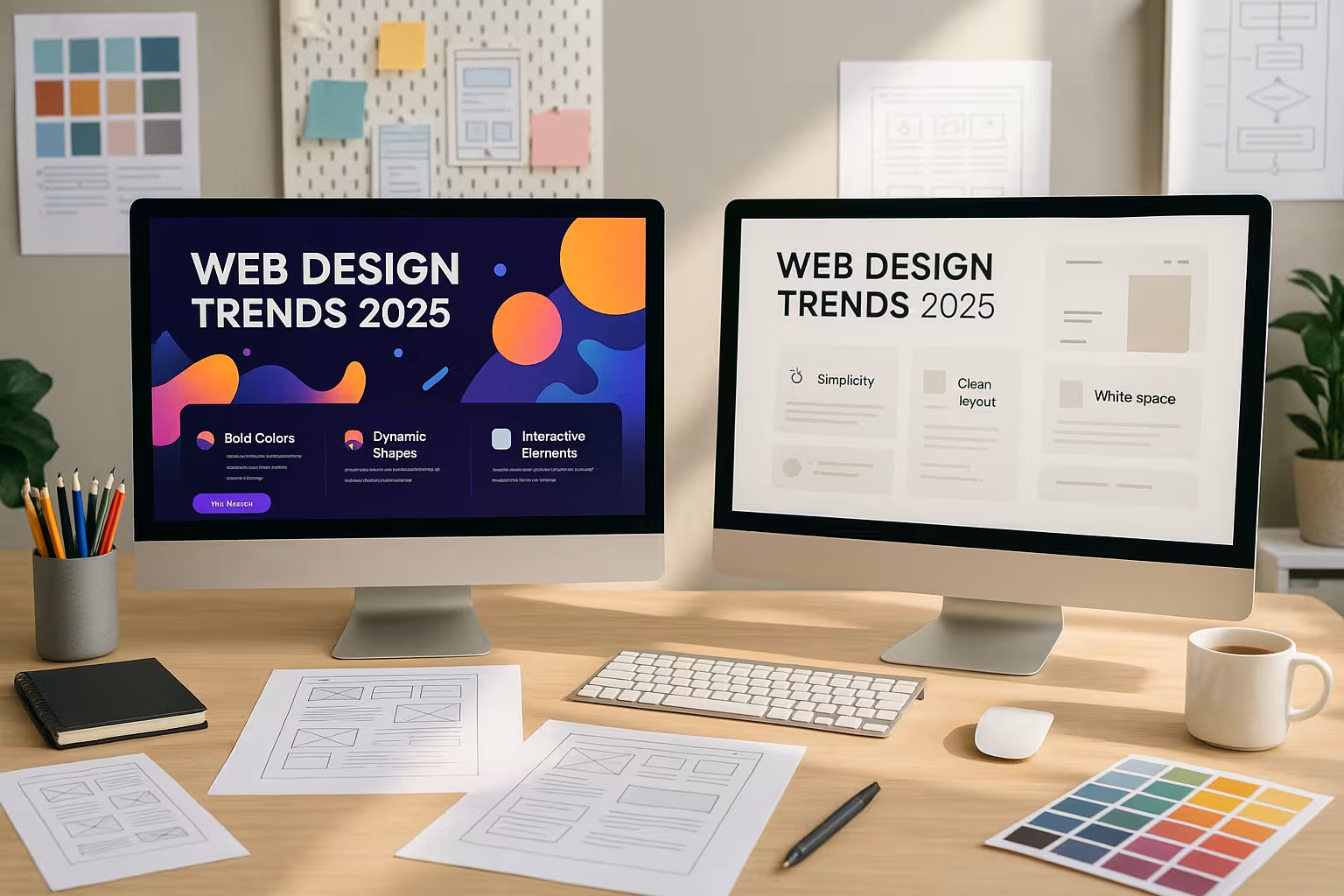
Another feature of modern websites is the choice between different color modes. Dark Mode is easy on the eyes and looks elegant, while light mode remains classic and is preferred for text-heavy content. The option for the user to change the mode supports the need for control and personalization.
Design systems must remain consistent: Color contrasts, legibility and UI elements must work in both modes. The effort is worth it - users demonstrably spend more time on pages whose appearance they can determine themselves.
Accessibility & inclusion: mandatory, not optional
Barrier-free websites promote the Digital participation and enlarge the target groups. High-contrast colors, scalable font sizes, text alternatives to images and a meaningful hierarchy in the source code not only improve usability - they also send a strong signal for more accessibility. For search engines, an accessible architecture is also a rating plus.
Development teams should not see accessibility as an additional task, but as an indispensable part of modern web design. This also includes screen reader compatibility and optimized keyboard handling.
Voice interfaces and screenless design
In 2025, the boundaries between web design and voice-based applications will become increasingly blurred. Voice assistants such as Siri, Alexa and Google Assistant have long since arrived on the mass market and their use continues to grow. A Screenless Design means that websites and online services are developed in such a way that they can also be used without a graphical user interface. This brings Natural Language Processing and user-centric dialog structures. One aim is to carry out complex search queries or ordering processes by voice alone.
The most important task for designers and developers is to precisely define the interaction sequences. Users give commands such as "Show me my orders" or "Find me the nearest restaurant that offers vegetarian dishes". To do this, websites need to optimize their content so that voice assistants can access it more easily. The technical foundation - for example via structured data - is becoming increasingly important in order to provide the right information efficiently. In addition, the tonality of the answers must also be consistent with the brand image. A relaxed, informal tone or a more serious, formal approach? The voice, the rhythm of speech and the response texts are part of the individual branding.
Accessibility takes on a new dimension here: people with impaired vision or motor disabilities have easier access to online products. However, a voice-based interface can also save time and increase user loyalty for everyday use. If the user experience is right and the voice flow is concise but precise, the result is a real win-win situation. The focus is on filtering relevant content and delivering it in clear, understandable units. Voice interfaces are therefore not a niche trend, but a contemporary addition to web design.
Microinteractions and gamification
In a world in which almost every digital offering is vying for the attention of its visitors, it is possible to Microinteractions contribute significantly to making experiences unique. This refers to tiny, often barely perceptible moments of interaction, such as an animated symbol when clicking on a button, a gentle vibration of the smartphone when submitting a form or a clever hover effect that reveals information about the product. These micro-moments not only increase user-friendliness, but also bring a dose of joy into the otherwise often sober everyday life of a website.
A new quality of these microinteractions awaits us in 2025: thanks to advanced technologies such as Real-time rendering and optimized JavaScript code, animations become smoother and more adaptable. Building on this Gamification additional accents. Instead of offering pure product information, playful elements encourage users to try out and discover. Examples include progress bars, reward systems or small quizzes that guide the user through the content in an entertaining way. The learning effect increases, the time spent on the page increases and brand loyalty intensifies.
However, microinteractions and gamification should not become an end in themselves. A balanced dramaturgy that supports the content is crucial. Too much animation or overly playful applications distract from the actual goal. On the other hand, those who focus on coordinated details promote intuitive operation and increase the enjoyment of surfing. Especially in areas such as eCommerce, eLearning or product launches, microinteractions can shape a distinctive brand image that clearly stands out from the competition.
User experience testing and iterative processes
With the help of continuous User experience (UX) tests web designs can be continuously adapted and refined. Instead of only asking for feedback once a quarter, agile working methods will prevail in almost all web projects in 2025. Short development cycles, combined with continuous A/B testing and user interviews, ensure that design decisions are based on real data rather than assumptions. This creates a closer link between user needs and technical possibilities.
Tools for heatmap analysis and session recordings play a special role here. They provide insights into which areas of a page are particularly heavily frequented and where users may bounce. Eye-tracking studies are also easier to carry out thanks to improved hardware. However, to avoid being flooded with data, development teams should first define clear questions: What content is essential for our visitors? How can loading times be reduced even further? Where do users want more interaction?
Iterative processes view design as something dynamic. If you create your web layout once and then leave it unchanged for years, you lose relevance. It is much more important to pick up on trends, test technologies, integrate feedback and continue to improve the finishing touches. However, this also requires courage: Not every idea will work. A learning team also accepts failures in order to learn from them for the future and develop the design into the optimal user experience.
Comparison of web design trends at a glance
The following table shows the differences between the trends and how they can specifically support companies:
| Trend | Focus | Advantages | Challenges |
|---|---|---|---|
| AI design | Automation, personalization | Fast, efficient, individual | Loss of originality, ethics |
| Minimalism | Reduction, overview | Focus, loading times, clarity | Visual underload |
| 3D/Animation | Immersive experiences | Interaction, attention | Technical effort |
| Dark/Light Mode | Flexible look | Personalization, readability | Consistency in design |
| Mobile First | Performance, range | SEO, Usability | More complex implementation |
| Sustainability | Efficiency, environmental awareness | Good image, performance | Technical understanding |
| Typography/Anti-Design | Creativity, expression | Recognition, dynamics | Balance required |
| Accessibility | Inclusion | New target groups | Initial outlay |
Review with outlook
The web design trends 2025 stand for more individuality, technological intelligence and emotional clarity. Websites will not only be more functional, but also more personal and sustainable. Those who rely on interactive, high-performance and inclusive web interfaces today will not only secure visibility, but also the loyalty of informed target groups.
Those who want to further develop digital user experiences benefit from platforms such as Naturevolve & Co. - as a source of ideas for bold and sustainable web concepts with future impact.