Skip to content
I show how Kubernetes Hosting reliably orchestrates container workloads in web hosting, scales them automatically, and elegantly handles failures. This allows container hosting, Docker, and Kubernetes to be combined into a high-performance platform that efficiently provides microservices, CI/CD, and hybrid clusters.
Key points
- Scaling in seconds thanks to auto-scaling and HPA
- Automation for rollouts, rollbacks, and self-healing
- Portability between on-premises, cloud, and hybrid
- Efficiency through optimal use of resources
- Security via policies, isolation, and DDoS protection
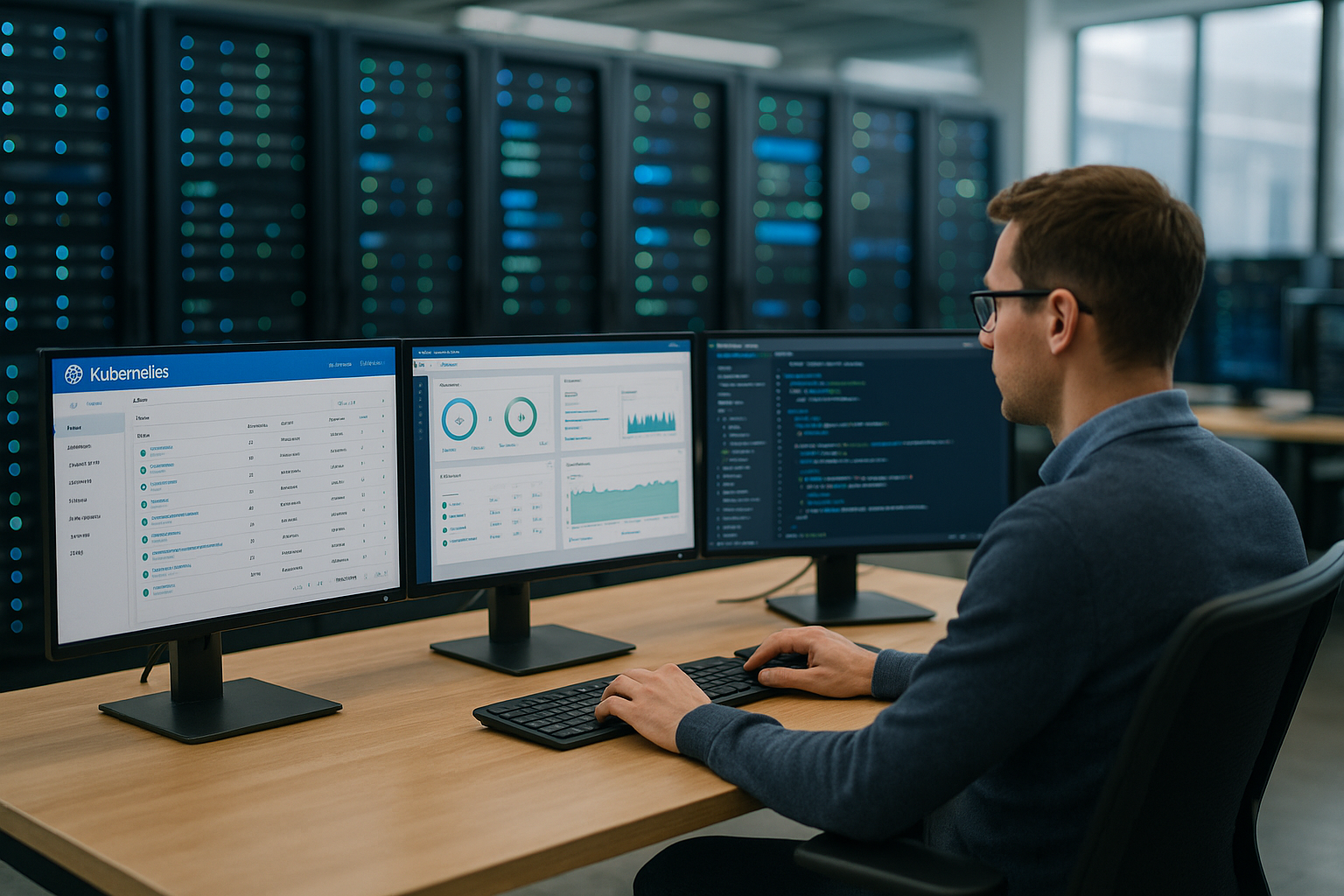
Container hosting: explained briefly and clearly
Containers bundle the application, runtime, and dependencies into a portable package that can run on any host with the engine; these Portability Reduces typical „only works for me“ effects. I start containers in seconds, clone them for peak loads, and delete them again when the load subsides. This allows me to use CPU and RAM much more efficiently than with traditional VMs because containers have less overhead. For web projects, this means fast deployments, predictable builds, and repeatable releases. Once you have cleanly structured container images, you will benefit permanently from consistent Quality.
Why Kubernetes dominates orchestration
Kubernetes automatically distributes containers across nodes, monitors their status, and replaces faulty pods without manual intervention; these Self-healing prevents downtime. Horizontal Pod Autoscaler scales replicas based on metrics such as CPU or user-defined KPIs. Rolling updates replace versions step by step while services continue to forward traffic without interruption. Namespaces, RBAC, and NetworkPolicies allow me to separate teams and workloads cleanly. A practical introduction to Container orchestration helps to establish initial clusters in a secure and structured manner and to Control system to understand.
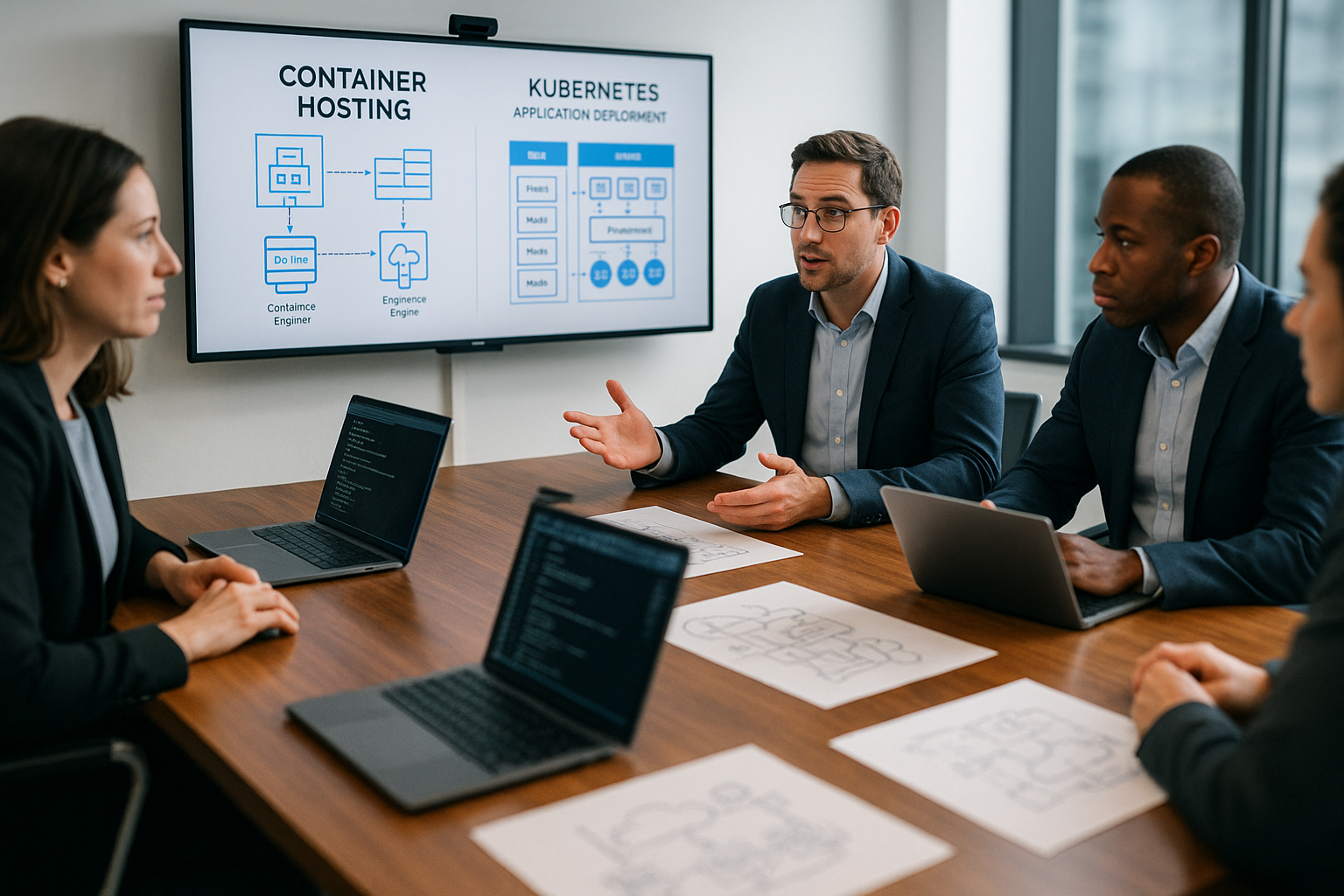
Kubernetes hosting on the web: typical scenarios
Microservices benefit greatly because I deploy, scale, and version each service separately; the Decoupling reduces risk and speeds up releases. E-commerce shops scale frontend and checkout independently, which saves costs and absorbs peaks. APIs with traffic fluctuations receive exactly the capacity they need at any given time. In hybrid setups, I dynamically shift workloads between my own data center and the public cloud. For teams with CI/CD, I connect pipelines to the cluster and deliver automatically to higher steps from.
Scaling, self-healing, and updates during daily operations
I define requests and limits per pod so that the scheduler and HPA make the right decisions; these Limit values are the basis for reliable planning. Readiness and liveness probes check status and automatically replace pods if necessary. Rolling and blue-green updates reduce deployment risks, while canary releases gradually test new features. PodDisruptionBudgets protect minimum capacities during maintenance. For web applications, I combine Ingress with TLS termination and clean Routing, so that users always see accessible endpoints.

Architecture: designed from node to service
A cluster comprises control plane and worker nodes; deployments generate pods, services expose endpoints, and ingress bundles domains and routes; these Levels keep the structure clear. Labels and selectors link resources in a traceable way. For greater efficiency, I pack pods with affinity rules specifically onto nodes with suitable hardware such as NVMe or GPU. Namespaces isolate projects, while limit ranges and quotas prevent misuse. If you want to delve deeper into container-native hosting gets involved, plans early on how teams will handle workloads and Rollers separate.
Plan storage and networking wisely
For persistent data, I use PersistentVolumes and appropriate StorageClasses, taking into account latency, IOPS, and data protection. Criteria determine real app performance. StatefulSets maintain identities and assign stable volumes. In the network, I rely on ingress controllers, internal services, and policies that only open necessary ports. A service mesh can provide mTLS, retries, and tracing as microservices grow. For DDoS protection and rate limiting, I combine edge filters and cluster-proximal Rules.
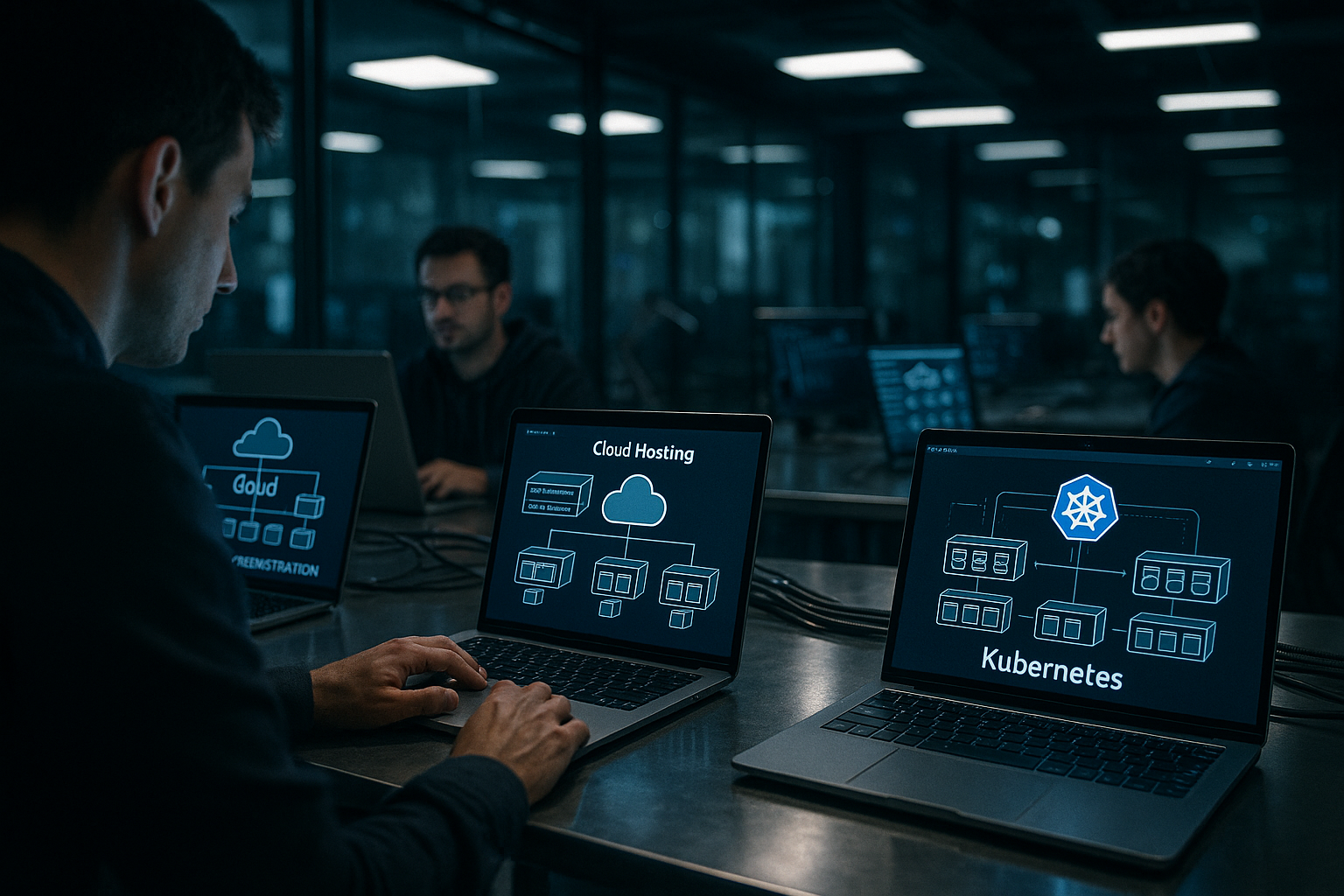
Managed or self-operated? Costs and control
I like to compare effort and influence: Managed offerings save operating time, while in-house operation gives me full Control. For many teams, a managed service is worthwhile because 24/7 operation, patching, and upgrades are already covered. Those with special requirements benefit from in-house operation, but must be able to provide reliable personnel, monitoring, and security. Rough estimates in euros, which make the ongoing costs visible, help to provide guidance. In addition, I read background information on Managed Kubernetes and plan the Life cycle realistic.
| Model | Operating expenses | Running costs/month | Control | Application profile |
|---|---|---|---|---|
| Managed Kubernetes | Low (provider takes over control plane, updates) | From approx. €80–250 per cluster plus nodes | Resources (policies, nodes, deployments) | Teams that want to save time and scale reliably |
| Own operation | High (setup, patches, 24/7, backup) | From approx. €40–120 per node + admin capacity | High (full access to control plane) | Special requirements, full customizability, on-premises clusters |
Monitoring and security in everyday cluster operations
Measurements make capacities visible, which is why I use Prometheus, Grafana, and log pipelines; this Monitoring Identifies bottlenecks. Alerts notify you of latency spikes or crash loops. For security, I enforce least privilege via RBAC, secrets, and signatures for images. Network policies limit east-west traffic, while ingress requires security headers and TLS. A DDoS-protected edge and clean patch process keep the attack surface small. small.

Performance tuning for web stacks
I start with requests/limits per pod and measure real load; these Baseline Prevents overprovisioning. HPA responds to CPU, RAM, or user-defined metrics such as requests per second. Caching in front of apps and databases reduces latency, while pod topology spread ensures distribution across zones. Node sizing and appropriate container images reduce cold starts. With PGO for PostgreSQL or JVM flags, services achieve greater Performance from.
Choosing a provider: what I look for
I check availability, I/O performance, network quality, and support hours; these Criteria ultimately determine the user experience. Taking a look at DDoS protection, private networking, and backup options prevents surprises later on. Good providers offer a clear pricing structure with no hidden fees. For web projects with peak loads, I am impressed by offers with 99.99%+ uptime, automatic scaling, and genuine 24/7 support. In comparisons, webhoster.de ranks highly due to its strong performance and reliability. Availability far ahead.
Seamlessly integrate CI/CD and GitOps
To ensure consistently high quality, I link build, test, and deploy steps as repeatable Pipelines. Images are created deterministically from tags or commits, signed, and stored in a private registry. The cluster only pulls approved artifacts. With GitOps, I describe the desired state declaratively; an operator synchronizes changes from Git to the cluster and makes every adjustment. comprehensible. Branch strategies and environments (dev, staging, prod) ensure clean promotion paths. Feature flags allow releases to be decoupled from feature activation—ideal for canary rollouts with controlled Riskcurve.
Infrastructure as Code: consistent from cluster to service
I record infrastructure, cluster add-ons, and app manifests as code. This creates reproducible Surroundings for new teams or regions. I use declarative tools for basic components, while Helm or Kustomize structure the application level. I encapsulate parameters such as domains, resources, or secrets per environment. This separation prevents „snowflake“ setups and speeds up reconstruction after changes or disasters.
Day 2 operations: Upgrades, maintenance, and availability
I plan upgrades with version skew and API deprecations in mind. I test new releases in staging, activate Surge-Rollouts and use maintenance windows with PDBs to protect capacity. The Cluster Autoscaler adjusts node pools while drain and pod eviction run cleanly. Regular backups of etcd data and critical persistent volumes belong on the calendar; restore samples validate that recovery plans are practical. function. For zero-downtime maintenance, I distribute workloads across zones and keep critical services geo-redundant.
Security in depth: Supply chain, policies, and runtime
Security starts with the build: I scan base images, create SBOMs, and sign artifacts; the cluster only accepts trustworthy Images. Pod security standards, restrictive pod security contexts (runAsNonRoot, readOnlyRootFilesystem, seccomp), and minimalist service accounts limit permissions. NetworkPolicies and egress controls prevent data leakage. Admission policies enforce conventions (labels, limits, immutable tags). During runtime, eBPF-based sensors monitor system calls and network paths to detect anomalies. I encrypt secrets at rest in the control plane and rotate them according to Specifications.
Cost optimization and FinOps in clusters
I reduce costs using three levers: the right sizes, high utilization, and targeted pricing models. I select requests so that HPA can scale cleanly without causing CPU throttling; I only set limits where necessary. necessary The Vertical Pod Autoscaler assists with tuning, while the Cluster Autoscaler removes unused nodes. I use taints/tolerations to separate critical workloads from opportunistic ones; the latter run on inexpensive, short-lived capacities. Topology spread and bin packing strategies increase the Efficiency. Cost labels (team, service, environment) make consumption transparent; this allows me to prioritize optimizations based on data rather than saving „by feel.“.

Databases and state: making pragmatic decisions
Not every state belongs in the cluster. For highly critical data, I often rely on managed Databases With SLA, automatic backups, and replication, app workloads remain agile in Kubernetes. When I use StatefulSets, I explicitly plan storage profiles, snapshot strategies, and recovery. Anti-affinity and Topology Spread reduces the risk of zone failures. Clear responsibilities are important: Who performs backups, who tests restores, who monitors latency and IOPS? Only with answers to these questions can state in the cluster become truly viable.
Observability and SLOs: from measurement to control
Measurability includes metrics, logs, and Traces. I supplement metrics with request and DB latencies to see the real user experience. Based on defined SLOs (e.g., 99.9% success rate, P95 latency), I define alerts that contribute to error budgets. These budgets control tempo and Risk My releases: Once they are exhausted, I prioritize stability over feature hunger. This keeps scaling and innovation in balance.
Practical checklist for the start
- Keep container images lean, maintain base images, automated Scans activate
- Define namespaces, quotas, and RBAC per team/service, enforce policies from the outset
- Requests/Limits as Baseline set, introduce HPA, PDBs for critical services
- Equip Ingress with TLS, security headers, and rate limiting; DDoS protection at the edge
- Test backups for etcd and persistence; include restore samples in the maintenance schedule
- Establish GitOps for declarative deployments; clearly document promotion paths
- Set up monitoring with metrics, logs, and traces; derive SLOs and alerting
- Use cost labels, check utilization regularly review, Optimize node pools
Compact summary
Kubernetes hosting brings Scaling, automation, and high availability to your web hosting and makes container workloads portable. With Docker for packaging and Kubernetes for orchestration, you can build fast releases, resilient deployments, and efficient resource utilization. Those who operate microservices, APIs, or e-commerce gain flexibility, shorter release cycles, and transparent costs. Choose between managed and self-operated based on effort, control, and budget in euros. With smart architecture, clean monitoring, and tight security, the Performance Constantly high – today and tomorrow.