Skip to content
CyberPanel in focus: With cyberpanel openlitespeed and the server-side LSCache, I set up high-performance web hosting for demanding projects - including HTTP/3, QUIC and efficient caching. The combination delivers short loading times, simple administration and an interface that handles SSL, email, DNS and backups in just a few clicks.
Key points
- OpenLiteSpeed: Event-based architecture, low latency, .htaccess-compatible
- LSCacheCaching at server level, ideal for WordPress, Joomla, Magento
- CyberPanelIntuitive administration, SSL, e-mail, DNS, backups, REST API
- PerformanceHTTP/3, QUIC, Brotli, several PHP versions in parallel
- PracticeOne-Click-Setup, WP-Autoinstall, Redis/Memcache-Options
What distinguishes CyberPanel with OpenLiteSpeed
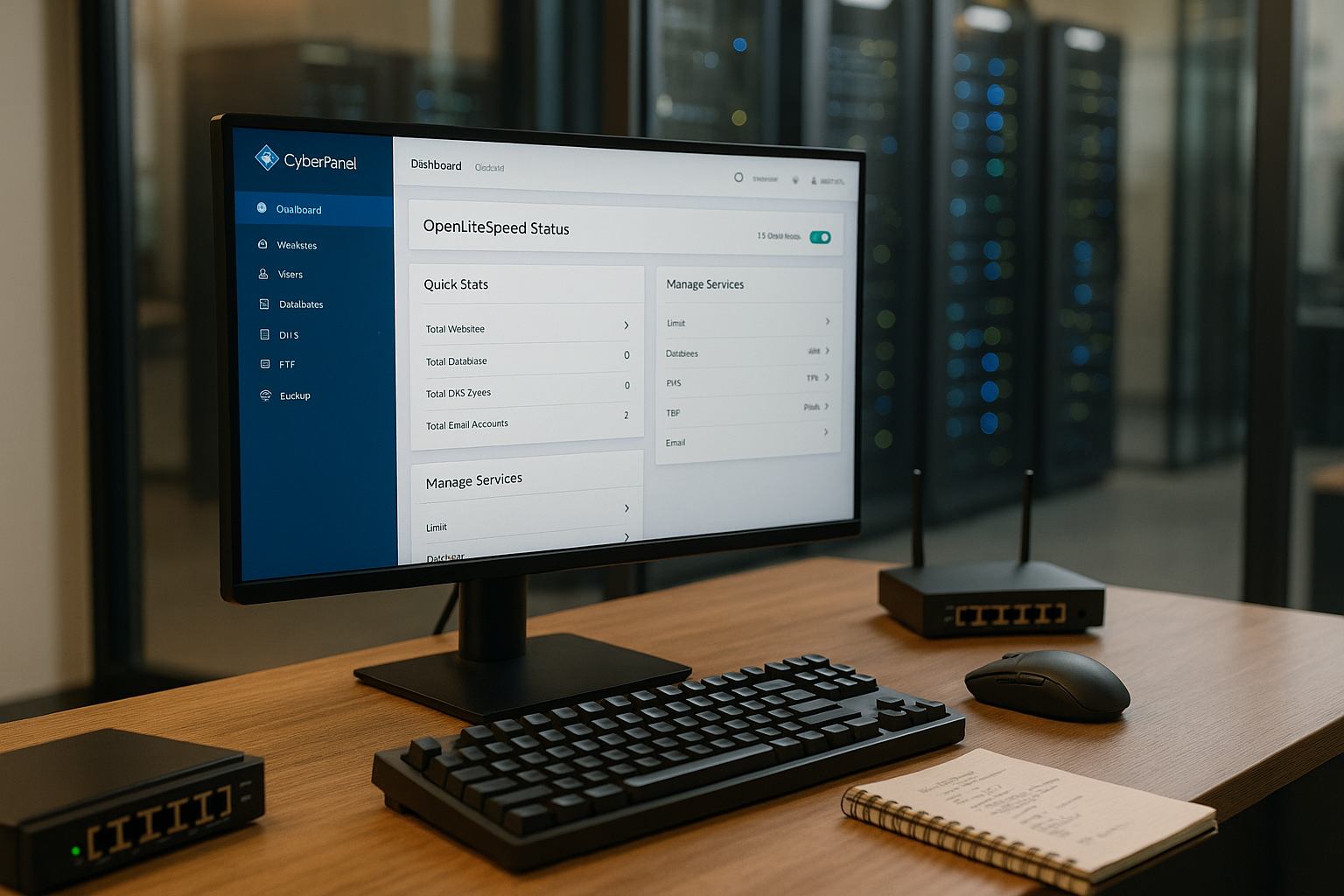
OpenLiteSpeed provides an event-based architecture that efficiently handles a large number of simultaneous requests and thus noticeably accelerates dynamic websites. Thanks to the compatibility with .htaccess rules, I can migrate projects without tedious conversions, which makes it possible to plan changes. CyberPanel complements the setup with a clear interface, which I use to set up domains, SSL certificates, e-mail inboxes and DNS in just a few steps. I run several PHP versions in parallel, which makes testing and rollouts much easier. For me, this results in a fast stack that reacts constantly to growing visitor numbers and at the same time streamlines daily administration.
LSCache: Server-side turbo for CMS
LSCache places dynamic content directly on the server in the cache, reduces PHP calls and brings the time-to-first-byte down noticeably. For WordPress, activating the plugin is often enough, after which I ensure consistent results via cache TTLs, exceptions and object cache. ESI (Edge Side Includes) helps with personalized or mixed pages so that individual blocks remain dynamic while the rest runs cached. In combination with HTTP/2 and HTTP/3, the web server transports content quickly to the browser and minimizes latencies, even on mobile networks. If you are interested in the latest plugin innovations, take a look at LSCache 7.0 and plans upgrades with tests on a staging instance before the customizations go live.

Set up in just a few minutes
CyberPanel on Ubuntu or AlmaLinux with a one-click script and I'm up and running in no time. After logging in, I add a website, activate SSL via Let's Encrypt and set the desired PHP version for each project. The WordPress auto-installation saves me time, as the LSCache plugin is automatically included and the basic configuration is ready to go. For backups, I define local or external destinations, set intervals and test restores to avoid failures. With this process, I build a reliable foundation that takes updates, security and performance into account right from the start.
Performance stack and HTTP/3
HTTP/3 and QUIC speed up connections, especially in the event of high latency or packet loss, making pages feel faster. Brotli and GZIP compression reduce the data volume, which additionally shortens the transfer and saves traffic at the same time. I activate object caching via Redis or Memcache, which eliminates recurring database queries and dynamic pages respond faster. For media, I work with WebP delivery and a suitable cache strategy so that images arrive in good quality with a moderate file size. Together, this results in a string of measures that reduces both first byte and full load time.

Comparison: OpenLiteSpeed versus Apache and NGINX
OpenLiteSpeed integrates LSCache deeply into the web server, while Apache often requires external tools such as Varnish. This native coupling reduces overhead, simplifies rulesets and delivers predictable results during traffic peaks. In benchmarks, a properly configured OLS/LSCache setup often performs significantly better with dynamic pages, especially with high parallelism. Those who are familiar with typical Apache bottlenecks will benefit from shorter response times with OLS thanks to the event loop and efficient PHP handling. For a classification of the differences in tuning and architecture, take a look at LiteSpeed vs. Apache before fixing migration steps.
Hosting recommendations for professionals
WordPress runs particularly smoothly with OLS/LSCache if the hoster prepares the stack properly and activates HTTP/3. I prefer providers who already activate LSCache, choose sensible PHP defaults and provide monitoring. This saves me time with every new project and allows me to concentrate on content, tracking and conversion. Ticket support, SSH access and reproducible staging workflows are also important for teams so that releases go live without surprises. The following table shows a compact overview that I use to make my selection.
| Place | Provider | Special features |
|---|---|---|
| 1 | webhoster.de | Fast WordPress hosting, premium support, LSCache preconfigured |
| 2 | Provider B | Good Performance, fewer functions |
| 3 | Provider C | Standard setup, hardly any turbo optimization |

Security and updates in CyberPanel
Security in CyberPanel in just a few steps: I apply for SSL certificates automatically, renew them on time and enforce HTTPS. I strictly configure the server firewall, only allow required ports and monitor logins using Fail2Ban mechanisms. I keep regular updates for OLS, PHP and LSCache consistently up-to-date so that known gaps are closed quickly. A web application firewall and rate limits also protect projects from common attack patterns. I test backups on a monthly basis via restore, because a backup only counts if the restore works quickly.
Administration and automation
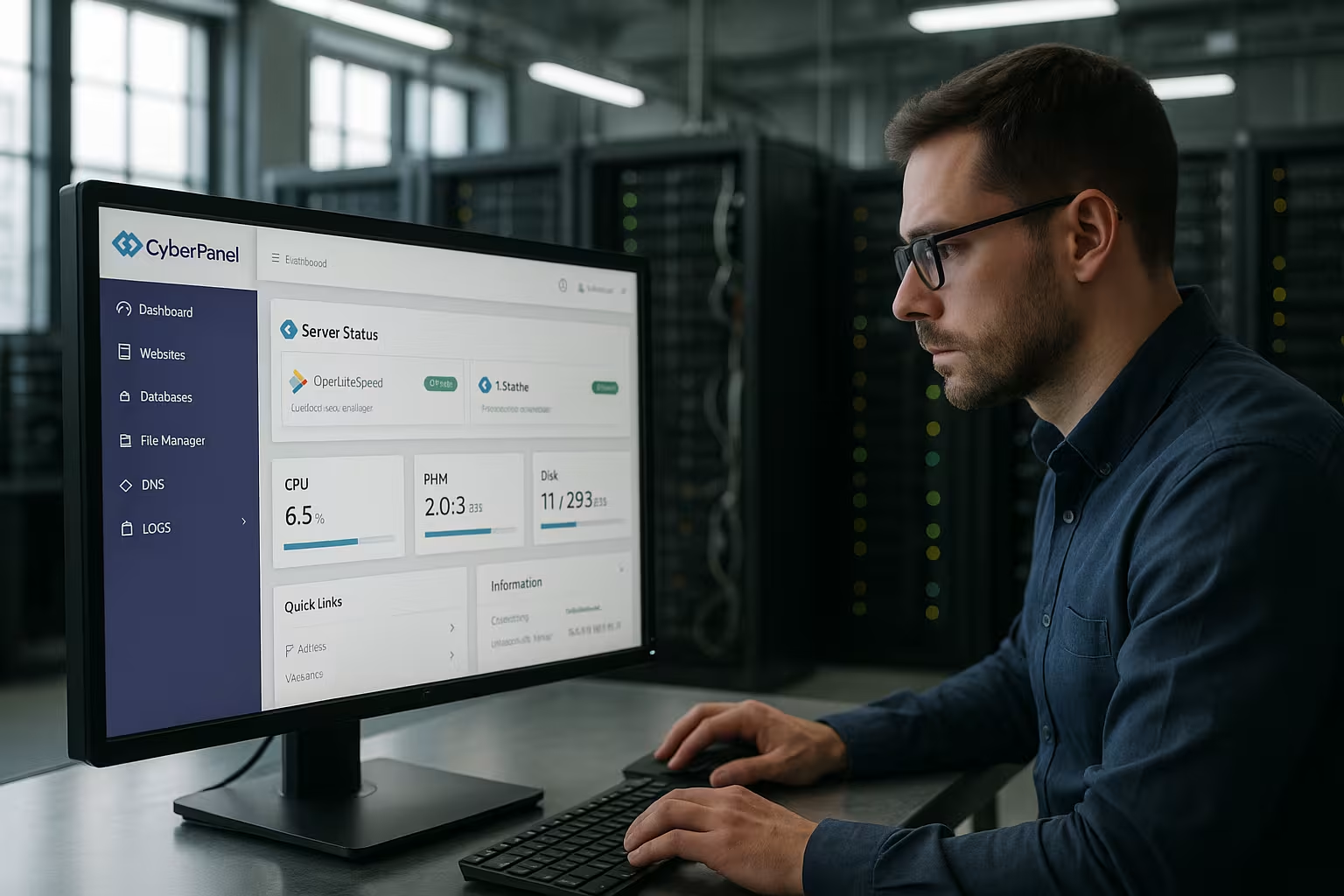
CyberPanel makes my everyday life easier because I can control users, websites and resources centrally and see clear metrics in the dashboard. For recurring tasks, I use the REST API and scripts that trigger deployments, cron jobs and maintenance. Logs and real-time statistics help me to identify bottlenecks and take targeted action before visitors notice anything. I use separate accounts to separate projects, set limits and keep responsibility transparent. This allows me to manage many instances without losing track or slowing down processes.
Practice: WordPress at its best
WordPress by activating the LSCache plugin, setting sensible default rules and only loading required add-ons. For e-commerce, I use cache exclusions for the shopping cart, checkout and user accounts so that personalized content appears correctly. I deliver images as WebP, minimize HTML/CSS/JS and load critical resources early. Object Cache with Redis increases efficiency with many dynamic page sections and saves computing time. If you are weighing up between OpenLiteSpeed and LiteSpeed Enterprise, you can find more information at OpenLiteSpeed vs. LiteSpeed useful key points for the decision.
Ecosystem for developers and agencies
Development benefits from parallel PHP versions, server-side debugging and the ability to separate staging and production cleanly. With CI/CD, I integrate deployments, execute migration scripts and validate caching rules automatically. Since OLS understands .htaccess, I save on adjustments to rewrite rules and reduce the risk of hidden errors. Separate environments per customer facilitate rights management, billing and clean handovers to teams. This structure keeps projects predictable, even when requirements grow or short-term releases are pending.
DNS and e-mail deliverability in practice
E-mail stands and falls with a clean DNS configuration. In CyberPanel, I create SPF, DKIM and DMARC for each domain and check whether the records have been rolled out correctly. For reverse DNS (PTR), I work together with the provider so that outgoing mails do not get stuck in filters. Rate limits for outgoing SMTP traffic, greylisting and solid spam filters reduce the risk of reputational damage. I monitor the mail queue, set up bounce handling and ensure consistent sender domains so that newsletters, system mails and contact forms are delivered reliably. For IMAP/POP3 and SMTP, I only use TLS, require strong passwords and recommend the use of app passwords for external clients. This keeps communication stable and trustworthy.
Monitoring, logs and error analysis
Transparency is the basis for fast troubleshooting. I evaluate access and error logs, monitor TTFB, cache hit rates, response codes and peak loads. The slow log for PHP shows where bottlenecks occur, while real-time statistics in CyberPanel and OLS reveal conspicuous routes and IPs. Logrotate keeps the files lean without losing historical data. I define clear alarms for high 5xx rates, increasing latencies, low cache hit rates or unusual outgoing mail spikes. If caching problems are suspected, I check response headers (e.g. cache flags), cookie-vary rules and purge events. This allows the causes to be narrowed down precisely and measures to be prioritized - from rule fine-tuning to capacity expansion.
Database and PHP optimization
Databases benefit from clean schema design and meaningful indices. I keep the InnoDB buffer size appropriate to the amount of data records, use slow query logs and remove orphaned plugins that leave unnecessary tables behind. For recurring, complex queries, object caching via Redis helps to noticeably reduce the DB load. On the PHP side, I rely on OPcache with sufficient memory size, reduce autoloader overhead and deactivate unnecessary extensions. In OLS, I tune LSAPI parameters so that there are enough workers without blowing up the RAM. Running PHP versions in parallel allows me to bring forward compatibility tests and minimize upgrade risks. The result is consistent response times and stable resource profiles - even during traffic peaks.
Scaling, high availability and CDN strategies
Scaling I plan step by step: Vertically, I increase CPU/RAM, optimize caching and offloading; horizontally, I distribute load across multiple nodes with load balancing and sticky sessions when sessions are critical. For static content, I use a CDN and pay attention to cache headers so that edge nodes work efficiently without swallowing up dynamic areas. Purge mechanisms and tag-based invalidations prevent outdated content during releases. HTTP/3/QUIC harmonizes well with edge sites, especially for mobile users. For reliability, I rely on regular snapshots, checked restores and, where appropriate, a standby instance. This keeps the stack resilient, even if one part fails or there is a massive increase in traffic at short notice.
Migration, staging and rollback strategies
Migrations I prepare reproducibly: I lower DNS TTLs, secure the source, test for staging, check rewrite rules and activate LSCache with conservative TTLs. After switching over, I warm up the cache with sitemaps or important URL lists and monitor logs closely. In the event of problems, toggle options for individual optimizations (e.g. minify, combination, ESI) help to quickly find the culprit. For rollbacks, I keep a current backup and database dumps ready and plan the rollback including DNS. Blue/green deployments with clear switching points make releases predictable. This allows large launches to be realized with little risk and without long downtimes.
Security in depth: Headers, hardening and rights
Hardening goes beyond firewalls. I consistently use security headers such as HSTS, X-Frame-Options and Content-Security-Policy to reduce attack surfaces in the browser. In CyberPanel, I work with separate system users per project, set restrictive file permissions and use SSH keys instead of passwords. Two-factor authentication for panel logins and regular key rotation increase the level of security. Rate limits on sensitive endpoints, bot blocklists and geo-rules reduce disruptive traffic. I also schedule regular security scans, keep PHP and plugin versions up to date and document changes. Security thus becomes a process, not just a one-off tick on the checklist.
Costs, licenses and decision-making aids
OpenLiteSpeed scores with its open source license, modern protocols and close integration with LSCache - ideal when flexibility and cost efficiency are required. LiteSpeed Enterprise also offers an extended range of functions and support options, which can be an argument in regulated environments or for business-critical projects. I weigh up how important guaranteed manufacturer support, certain enterprise features and SLAs are in a specific project. I often start with OLS, measure under load and then decide whether a change makes economic sense. The goal remains the same: stable, short response times, predictable behavior during peaks and an administration interface that simplifies everyday life.
Summary: Why this combination is convincing
CyberPanel, OpenLiteSpeed and LSCache give me a setup that combines speed, management and security. The event-based architecture of OLS, the deep cache integration and modern protocols deliver short loading times even under load. CyberPanel saves me time every day because I can operate SSL, backups, email and DNS without detours and roll out changes quickly. For WordPress, the trio regularly shows top results in tests and projects, especially when object cache and HTTP/3 are added. If you want to set up a fast, easily controllable hosting environment today, you will find a solution here that has proven itself in practice and will calmly cushion future requirements.