Skip to content
I compare dump snapshots as backup methods for databases and show when a Dump or a Snapshot makes sense. The text provides clear criteria for speed, consistency, memory and a practicable restore strategy.
Key points
- SpeedSnapshot in seconds, dump takes time
- ConsistencyDump via DB engine, snapshot with lock/freeze
- PortabilityDump independent, snapshot volume bound
- RestorationSnapshot fast, dump flexible
- HybridCombine both for RTO/RPO
How a database dump works
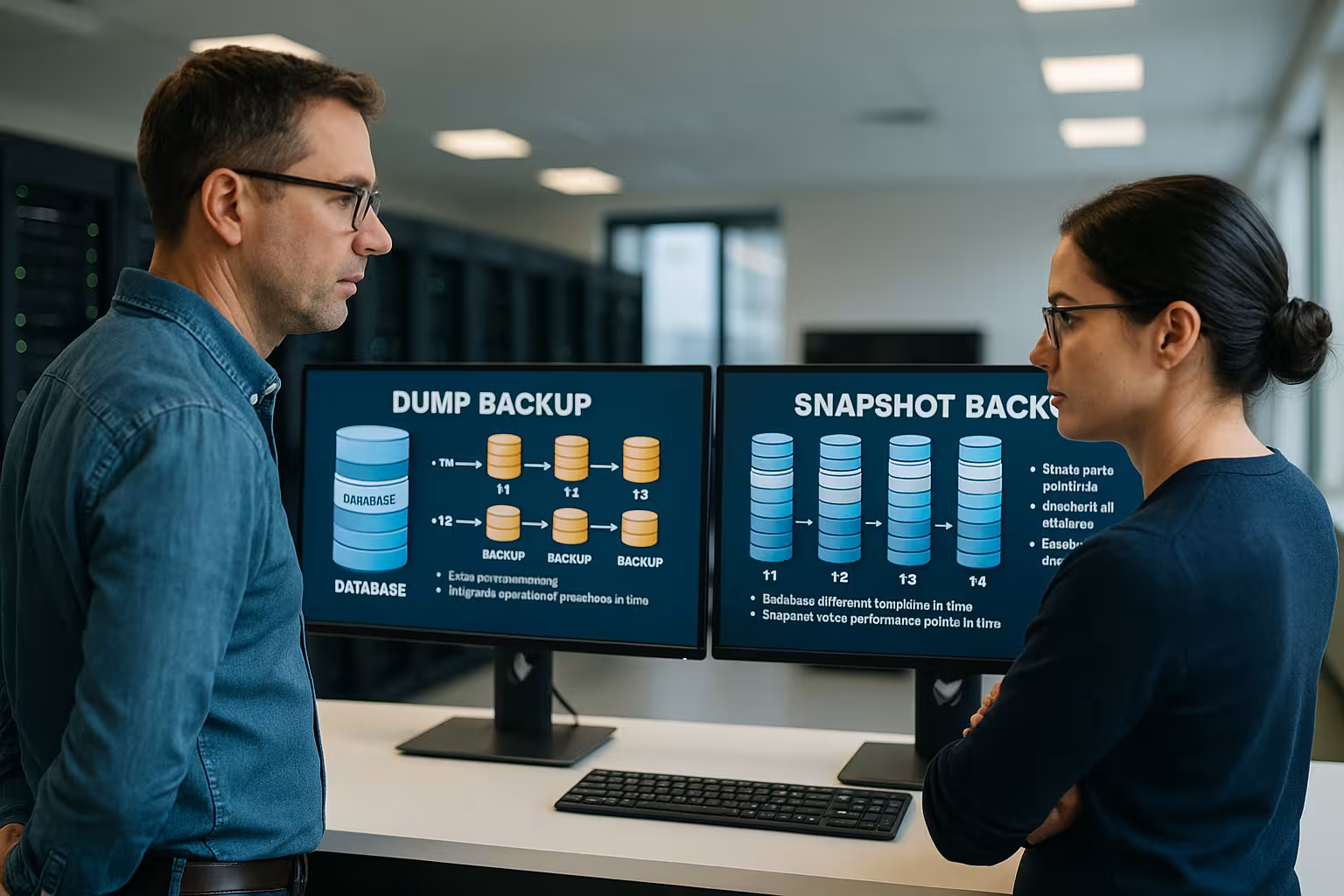
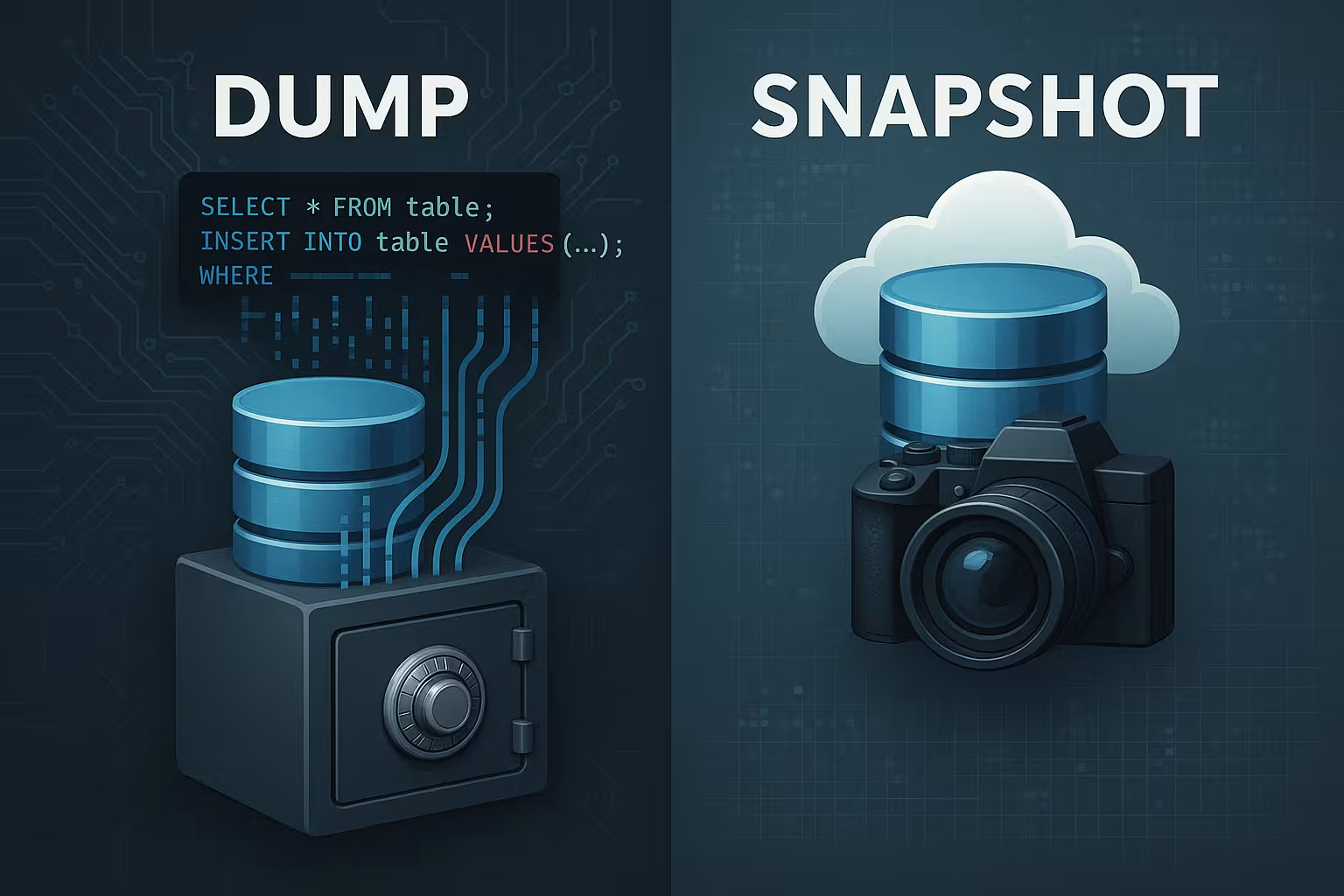
I export the entire database with a dump via the DB Engine and receive a portable file. Tools like mysqldump or pg_dump write out definitions and content table by table. For consistency, I briefly pause write accesses in MySQL or activate transaction snapshots. This method puts a strain on CPU and I/O because the engine processes every data record. A dump is suitable for archiving, migration and targeted recovery of individual data records. tables.
How a snapshot works
A snapshot freezes the state of the database files Volume-level. Storage uses copy-on-write or redirect-on-write and only saves changes since the snapshot time. I create the snapshot in seconds and keep the effect on running Workloads low. For clean states, I signal a short freeze to the database or use Filesystem-Freeze. Snapshots help with quick rollbacks, but they remain tied to the original database. Storage system bound.

Dump vs Snapshot in direct comparison
For a clear choice, I look at Speed, consistency, storage requirements, portability and restore targets. I structure the most important differences in a compact table with practical criteria. I decide on the basis of RTO/RPO, change rate and infrastructure. The table emphasizes when a portable Dump and when the ultra-fast snapshot shines. Both approaches cover different requirements and complement each other perfectly.
| Criterion | Database dump | Snapshot |
|---|---|---|
| Creation time | Minutes to very long depending on volume | Seconds to a few minutes |
| Memory requirement | Close to 100% of the dataset | Delta-oriented, changes since inclusion |
| Independence | Portable, system-independent | Bound to source volume or storage |
| Restoration | Fine granularity, individual objects possible | Very fast, mostly entire volume |
| Utilization horizon | Long-term archive, offsite | Short-term, fast rollbacks |
Restore strategy: hybrid for short RTO and reliable RPO
I combine quick snapshots for day-to-day operations with regular Dumps for offsite archiving. Before making risky changes, I take a snapshot and then additionally back up using a dump for portability. For MySQL, I briefly pause write accesses, create the snapshot and then start the dump from the frozen state. For PostgreSQL, I use consistent exports and supplement them with file system-based recordings. In this way, I ensure speed during rollback and retain the Depth of recovery for individual cases.
Performance and cost aspects in hosting
Depending on the platform, backups influence the Server load and therefore loading times. Snapshots avoid long I/O peaks, while dumps are computationally intensive and can generate peaks. I therefore schedule dumps in off-peak times or throttle jobs running in parallel. If you want to understand website effects, read about the Influence of backups on websites. This way I keep costs for memory and CPU under control and preserve the Availability.
Ensure consistency and data integrity
I guarantee consistency by checking the database before a Snapshot briefly. For file systems, I use freeze/thaw mechanisms or, if necessary, read locks on tables. Binlogs or WALs supplement the dump for point-in-time recovery and increase the Data security. Automated pre/post hooks set locks, create recordings and release them again. This creates consistent backups without blocking the application for a long time.

Practical guide: MySQL and PostgreSQL
For MySQL I use mysqldump --single-transaction or for total fuses --all-databases and carefully save parallel threads. With LVM or ZFS, I first create a consistent Snapshot, mount it read-only and start the dump without load on the production instance. I export PostgreSQL with pg_dump or pg_basebackup for physical copies including WAL. I summarize additional tips for secure MySQL backups in this compact MySQL backup instructions together. This allows me to keep the process, consistency and restore paths at all times. controllable.
Automation and monitoring
I automate dumps and snapshots with cron, systemd timers or pipeline jobs. Delete old retention policies Fuses and only keep defined generations. Checksums and test restores regularly verify recoverability. Metrics on duration, size and change rate help me to adjust time windows and priorities. Alarms inform me of failures so that I can immediately can intervene.

Common mistakes and how to avoid them
I avoid inconsistent snapshots by using the Database quiesce beforehand. I correct missing offsite copies with encrypted dumps in separate storage accounts. I quickly clean up snapshot chains that are too large to reduce runtime and risk. I treat untested restores as a problem and practise restores on staging. Insufficient Documentation I compensate for this with clear runbooks and checklists.
Decision support according to use case
I prefer to back up small databases with a Dump per day and simple increments. Large, transaction-heavy systems receive hourly snapshots plus daily dumps for offsite archiving. Before upgrades and schema changes, I always take a fresh snapshot and keep a current dump ready. If you are looking for a compact basis for decision-making, you will find it in this article about Backup strategies in hosting. This means that the restore strategy remains closely aligned with RTO/RPO, budget and Risk oriented.
List of criteria for selection
I check rates of change, RTO/RPO targets, available Storage technology, network paths and compliance. High change rates speak for frequent snapshots with short retention periods. Strict audit requirements demand dumps with clear versioning and encryption. Tight maintenance window? Then I back up using snapshots and then export from the image with ease. Portability remains a strong argument for Dumps in heterogeneous environments.
Consistency levels: Crash- vs application-consistent
I make a clear distinction between crash-consistent and application-consistent fuses. Crash-consistent means: The state corresponds to a sudden power failure. InnoDB and PostgreSQL can often start cleanly thanks to Redo/WAL, but there remains a residual risk with very active transactions or engines without journaling. I achieve application consistency by briefly quiescing the DB: For MySQL, I set FLUSH TABLES WITH READ LOCK or switch to read-only, separate log rotations and then trigger the snapshot. For PostgreSQL I initiate a CHECKPOINT or use a CHECKPOINT during pg_basebackup integrated coordination. At file system level fsfreeze (Linux) for a precisely frozen image. This short coordination significantly increases reliability without causing significant downtime.
RTO/RPO tangible planning
I define RTO as the maximum time until recommissioning, RPO as the maximum tolerated data loss. With snapshots at short intervals (e.g. every 15 minutes) I reduce the RTO, with dumps plus binlogs/WAL I secure the RPO to almost zero.
- Low change rate, small DB: daily dump, hourly snapshots, binlogs/WAL for fine granularity.
- High change rate, large DB: snapshots every 5-15 minutes, nightly full dump, additional binary logs for point-in-time.
- Regulatory: longer dump retention (months/years), snapshots short (hours/days) for fast rollbacks.
I regularly measure the actual restore time. This results in a realistic RTO value, which is incorporated into the planning of time windows and priorities. I validate the RPO with test restores to an exact target time.
Using cloud and virtualization snapshots correctly
In cloud environments, I rely on volume snapshots with consistency groups if data and logs are stored on separate disks. This creates atomic images across all volumes involved. I note that local NVMe/instance stores are not snapshot-capable and plan alternative paths there (dump, replica). Replication of snapshots to other zones/regions increases resilience, but incurs costs. For VM backups, I use the hypervisor's quiesce mechanisms to ensure application consistency.
Replicas, clusters and high availability
To minimize the production load, I prefer to create dumps from a replica. I check lag beforehand and make sure that the replica has caught up. With MySQL I draw with --master-data or GTIDs in order to be able to replicate cleanly later. With PostgreSQL, I check the timeline and LSN before I start the backup. In Galera or Group Replication, I can briefly decouple a node (desync) in order to back up consistently. Physical backups must be version-compatible - for major upgrades I stick to logical dumps or test migrations separately.
Cost optimization and storage strategies
I compress dumps by default (e.g. using Gzip/Zstd), which significantly reduces storage and transfer costs. For large PostgreSQL systems, I use the directory format and parallel jobs to shorten the runtime and make restores flexible. In MySQL environments, parallel dumpers and incremental approaches (e.g. using tools on a table/chunk basis) help as long as consistency is maintained. I thin out snapshot chains (hourly → daily → weekly) to limit memory consumption. On storage with deduplication, it is worth keeping identical patterns (e.g. zero blocks) instead of transforming unnecessarily. I keep staging storage small: I stream dumps directly to the target backup repository if possible and delete local artifacts immediately.
Security and compliance in the backup process
I encrypt dumps consistently and separate key management from the storage location of the backups. I rotate keys regularly, regulate access strictly according to the need-to-know principle and log them in an audit-proof manner. In staging environments, I mask sensitive data in order to comply with data protection regulations. I set retention periods in such a way that legal requirements are met but no unnecessary data pool is created. When deleting data, I ensure that old backups are securely removed and that historical access rights are decoupled. Signatures and checksums protect against silent corruption and undetected manipulation.

Practicing recovery: procedures and metrics
I regularly test two paths: the quick rollback via snapshot and the fine-grained recovery via dump (including point-in-time). For snapshots, I document the mount/attach, start sequence of the services, any recovery of the DB and validations. For dumps, I note decryption, import format, sequence of schemas/extensions, import of binlog/WAL from the correct position and integrity checks. I measure time-to-detect, time-to-restore and time to application release. These key figures flow into SLOs and show whether I am really hitting RTO/RPO - even when offsite retrieval or network bandwidth are limiting.
Special cases from practice
- MySQL MyISAM/Memory: Short locks before the snapshot are mandatory for consistency; transaction snapshots alone are not enough.
- Long transactions: Delay consistent dumps and increase WAL/Binlog. I plan windows without long-runners and end old sessions before the backup.
- Large objects (PostgreSQL LO/TOAST): I explicitly verify their export/import and plan enough time for restore validations.
- Snapshot overhead: With a high change rate, copy-on-write costs increase. I limit the number of parallel snapshots and postpone write-heavy jobs.
- Versions and upgrades: Physical backups are often not cross-version compatible. I also back up schema migrations with logical dumps.
- Replication slots/archiving: In PostgreSQL I prevent hanging slots and ensure that archives do not fill up.
- Thin provisioning: I monitor used vs. provisioned storage to avoid surprises with compressed/incremental backups.
Secure storage and offsite strategy
I store dumps separately from the primary system and use versioning with clear Retention periods. Encryption with separate key management protects against unauthorized access. I keep snapshots close to the workload and replicate them if the platform supports this. For offsite redundancy, I rely on regular transfer of dump files. I then randomly check the Restoration on a test environment.
How to formulate a restore checklist suitable for everyday use
I document step sequences from mounting a Snapshots until the services are started. For dumps, I record commands, parameters, decryption and import sequence. Validations check checksums, application health and data consistency. Error paths and rollback scenarios speed up decision-making under time pressure. With clear roles, notifications and logs, I reduce the Downtime noticeably.
Briefly summarized
A dump provides me with Portability and fine restore points, a snapshot gives me speed when rolling back. I achieve short RTOs with snapshots and secure RPOs with regular dumps plus binlogs or WAL. For hosting setups, I plan load windows, test restores and automate cleanup and verification. Three questions are often decisive: how quickly do I have to go back, how far back can I go, and how independent should the backup be? If you can answer these questions, you can combine dump and snapshot to create a strong restore strategy.