Skip to content
Domain comparison 2025 shows clear differences in prices, performance and support, which I make measurable for real projects. I explain which providers will be ahead in terms of value for money, additional functions and service in 2025 and how I can recognize cost traps early on.
Key points
- Total costs check: Starting prices, extensions, transfers
- Performance counts: SSL, e-mail, DNS tools, speed
- Support as a factor: accessibility and solution quality
- Technology secure: Whois protection, DDoS protection, auto-renew
- Packages evaluate: Bundle domain + hosting sensibly

Prices 2025: boarding, extension, transfer
I first look at the Total costs over two to three years, not just on the deal in the first year. Many providers lure you in with cent amounts for .de or .com, but then increase them significantly when you renew. I factor in transfer fees, WHOIS protection and e-mail inboxes so that the bill is right in the end. Providers such as Checkdomain, which clearly state the conditions and already include SSL, are transparent. For a quick overview, I use a Price comparison 2025so that I can see surcharges for add-ons early on. That way I can plan the annual sum and avoid expensive surprises.
Performance & extras that count
A strong domain registrar delivers more than just the registration: I expect SSL included, reliable e-mail functions and a clearly structured DNS panel. A live domain query with alternative suggestions saves time, especially with occupied names. Unlimited subdomains, fast name server updates and clear protocols make everyday life easier. I make sure that the user interface is logically structured and works even without admin knowledge. If you also need a construction kit, web space or staging, you will benefit from providers with good combination tariffs.

Support in everyday life: speed and quality
I rate support according to availability, resolution time and competence in the first contact, because 24/7 means little if answers seem interchangeable. Checkdomain relies on teams that are available around the clock, while Dogado impresses with its personal approach. Major brands offer a hotline, chat and email, which helps with transfers, name server changes or special DNS cases. I always test a specific request for new projects to check the response time and depth of help. If you want to work productively, good support saves you many minutes, sometimes hours, every month.
Technology: DNS, Whois, Security
I check the DNS-Management in seconds: everything can be changed quickly and clearly documented. Whois protection must be available for suitable endings so that contact details are not freely available online. Automatic renewals prevent accidentally expired domains, which protects brands and SEO. For me, clean infrastructure with DDoS defense is part of the basic equipment to ensure accessibility. Those planning international projects also benefit from anycast name servers and fast updates.

Security & governance in the domain account
In addition to the pure product features, I secure the account myself. I activate 2-factor authentication (app or security key), check roles and rights for team access and work with API keys with minimal rights. A good registrar offers Account activity logsIP restrictions and notifications of critical changes (name server changes, contact updates, transfers). At domain level, I set status flags such as clientTransferProhibited and - if possible Registry Lock for important brands. DNSSEC is mandatory for me, provided the TLD and the setup allow it. These measures significantly reduce the risk of hijacking and are quick to set up.
DNS strategy: TTL, DNSSEC, Anycast in practice
DNS performance is often underestimated. For releases and moves, I lower the TTL (e.g. from 3600 to 300 seconds) 24-48 hours in advance to enable rollbacks without long waiting times. I design root domain setups with ALIAS/ANAME when I need CNAME-like flexibility. I prefer providers with Anycast-name servers, zone versioning and logs so that I can undo changes. DNSSEC I activate it after tests to avoid signature errors. For enterprise environments, I plan split DNS (internal/external) to reduce latency and separate administrative access. These small decisions make all the difference when it comes to outages and global latency.
Transfer & life cycle: Timing without failure
I plan domain transfers with a view to Auth codetransfer locks and the 60-day blocking periods after contact changes. For .de domains, the process is slightly different from gTLDs like .com; I therefore expect 1-7 days depending on the extension. I check the Grace Periodsso that domains do not run into the expensive redemption status. When moving, I create identical DNS zones with the target provider in advance and switch the DNS change outside of peak times. This keeps accessibility stable, even if registry processing is delayed.
Realistically calculate premium and special prices
With nTLDs I pay attention to Premium labelsSome names are affordable in the first year, but have permanently higher renewal prices. I explicitly check whether the premium status also applies to subsequent years. In addition, I plan for spelling variations and brand defense (e.g. singular/plural) to avoid later buyouts. If budgets are tight, I prioritize core markets and check annually whether expansions make sense. This keeps the portfolio lean and affordable.
Provider profiles in a quick check
IONOS delivers very good value for money and many extensions, which IONOS interesting for beginners and professionals. United Domains shines with a huge selection of TLDs and easy administration, ideal for projects with many endings. STRATO remains price-conscious and is suitable for small projects with clear cost control. Dogado scores with personal support, which simplifies many things for initial setups. Checkdomain offers 950+ endings, free SSL integration and shows alternatives for occupied names, which speeds up the search. Easyname focuses on fair, transparent prices without frills.
Domain + hosting in a package: when it pays off
Anyone who wants to obtain everything from a single source pays attention to availability, storage technology and data protection in addition to the Domain. In the big comparison, webhoster.de stands out with 99.99 % availability, NVMe SSDs, GDPR compliance and genuine 24/7 support. This saves coordination between multiple service providers and keeps setups lean. For stores, content projects and corporate sites, a strong package delivers speed, security and clear scaling. I also check backup frequencies and upgrades so that growth does not require a move. The following table summarizes the most important key data.
| Place | Provider | Domain price (from) | Additional services | Support |
|---|---|---|---|---|
| 1 | webhoster.de | from 1,99 €/month | NVMe SSD, SSL, flexible tariffs, GDPR | 24/7 hotline |
| 2 | IONOS | from 1,00 €/month | DDoS, web construction kit, SSL | Phone/Online |
| 3 | United Domains | from 1,50 €/month | Many TLDs, simple administration | E-Mail/Contact |
| 4 | Checkdomain | from 0,07 €/month | 950+ endings, SSL, fast registration | 24/7 chat/phone |
| 5 | STRATO | from 0,10 €/month | Web hosting packages, SSL | Phone/e-mail |
Note: Entry prices can vary depending on the ending or tariff; I therefore always calculate the period of 24-36 months with.

Performance: Metrics that I really measure
In order to compare providers objectively, I measure specific key figures: Time until the first Nameserver propagation after zone change, duration until SSL is issued, DNS response times (globally averaged) and the initial response of support in technical cases. I also check whether the provider Zone exports and imports so that I can migrate quickly if necessary. Whoever convinces me here will save me the most time later with releases and malfunctions.
Organize portfolios and teamwork efficiently
For multiple domains I use Bulk managementCollective search, collective registration, tagging and templates for DNS records (e.g. SPF/DKIM). I separate production and test domains into their own folders and assign differentiated rights. Automatic reminders for renewals, export of expiration dates and a simple API help me to automate processes. A reseller or partner program is attractive for agencies if there are clean billing processes, sub-accounts and white labeling.
Email & deliverability: details that are often missing
For reliable e-mail, I rely on SPF, DKIM and DMARC with reporting, separate marketing and transactional emails on my own subdomains and set up correct PTR/rDNS entries if I use my own servers. BIMI can strengthen brand perception in the inbox if the conditions are right. I avoid catch-all mailboxes to reduce spam and plan for sufficient mailbox sizes. I use email forwarding sparingly to avoid falling into spam traps.
Legal & compliance: creating a clean basis
Before registration, I check trademark and naming rights so that there are no conflicts later on. I make sure that Domain holder and invoice recipients are recorded correctly, especially for customer projects. Providers with clear GDPR implementation, order processing contracts and transparent storage locations simplify audit requirements. For international projects, I document the data flows (DNS, email, hosting) in order to be able to answer compliance questions quickly.
International projects, IDN & umlaut domains
For target groups in several countries, I plan redirect matrices and consistent spellings. Umlaut domains (.de) I only use as a supplement and secure the Punycode-variant and the ASCII spelling. For SEO, I define a canonical main domain and use hreflang structures for language versions. In support and sales material, I use the simplest, error-resistant spelling to avoid typos and scatter loss.
Monitoring & emergency plans
I actively monitor domain expiration dates, name server availability and critical DNS records. For important zones I consider Regular backups and document a runbook for restores, registrar changes and contact changes. Test alarms at intervals ensure that notifications are received. A clear escalation path with support priority saves valuable minutes in real incidents.
Practice: How to decide in 3 steps
First I define the project goal and duration so that the Selection of the extension and the cost perspective fit. I then check the start, renewal and transfer prices, including add-ons such as Whois protection and email. In the third step, I evaluate the support and DNS panel using a real test scenario. For details and provider checks, the guide to where to buy domainsso that I avoid blind spots. This sequence prevents wrong decisions and saves me having to move later.
Clearly recognize cost traps
I check the Extension first, because this is where the big differences often arise. A look at the price list shows whether SSL, e-mail or Whois protection will cost extra later on. For transfers, I clarify the EPP code, deadlines and any lock periods in good time. I also plan additional domains for test environments to keep the structure clean. With a reminder for the next renewal, I remain capable of acting if I want to change providers.
TLD choice: .de, .com or nTLD?
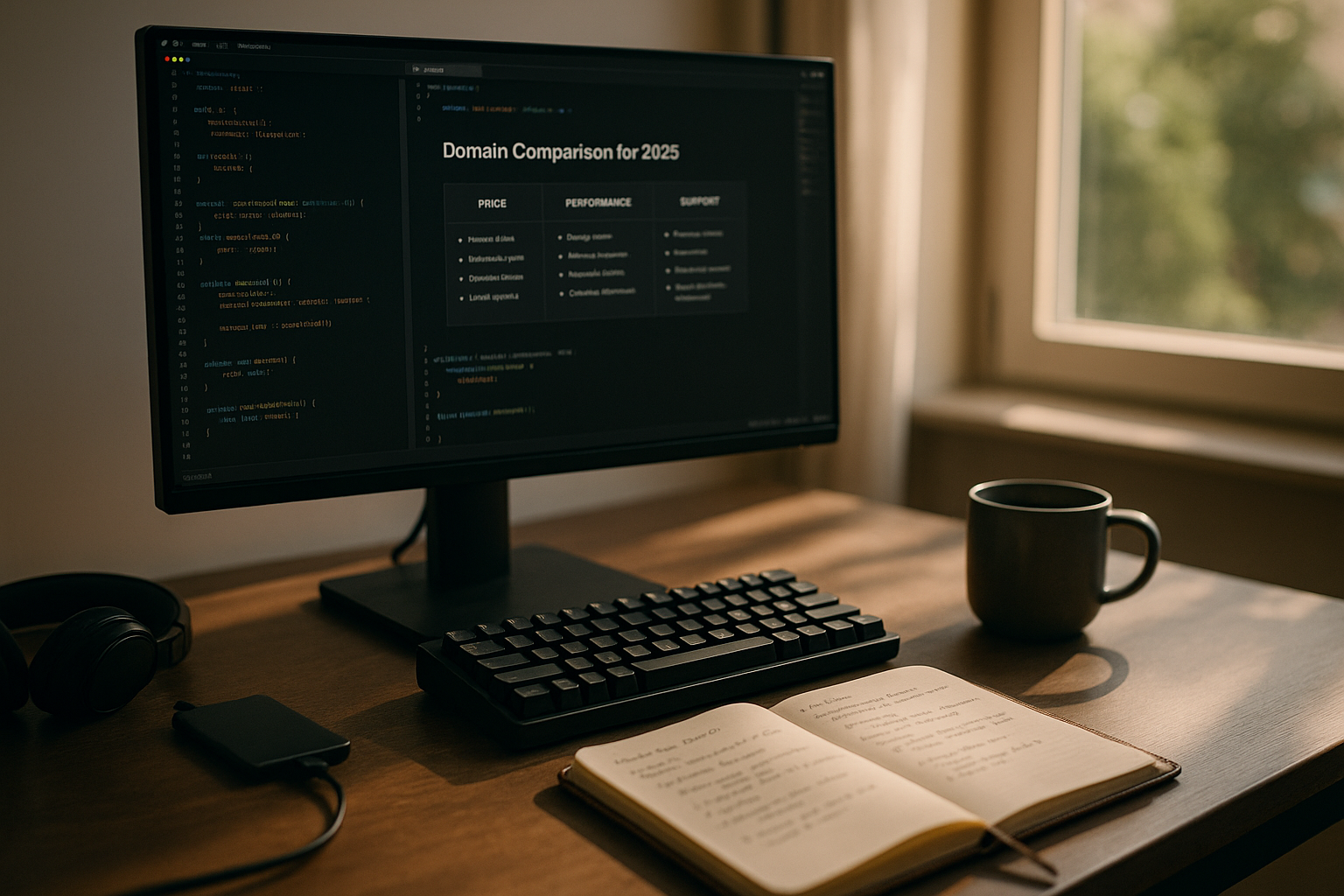
I choose the TLD according to target group, trust and brand image. For Germany, .de provides short, clear signals, while .com looks familiar internationally. Thematic endings can strengthen branding if users understand them immediately. For multiple markets, I secure core endings early so that social and print campaigns remain consistent. Simple spelling and clear pronunciation prevent losses due to typos.
Clean implementation of registration
I define the name servers, activate SSL immediately and check DNS-entries. I then set up email addresses and test SPF, DKIM and DMARC for good deliverability. A short documentation saves time later when making changes. If you want to go even deeper, get clear Registration tips and checks processes once dry. I use auto-renew and notifications to keep the domain secure in the long term.
Brief review 2025: How to make the best choice
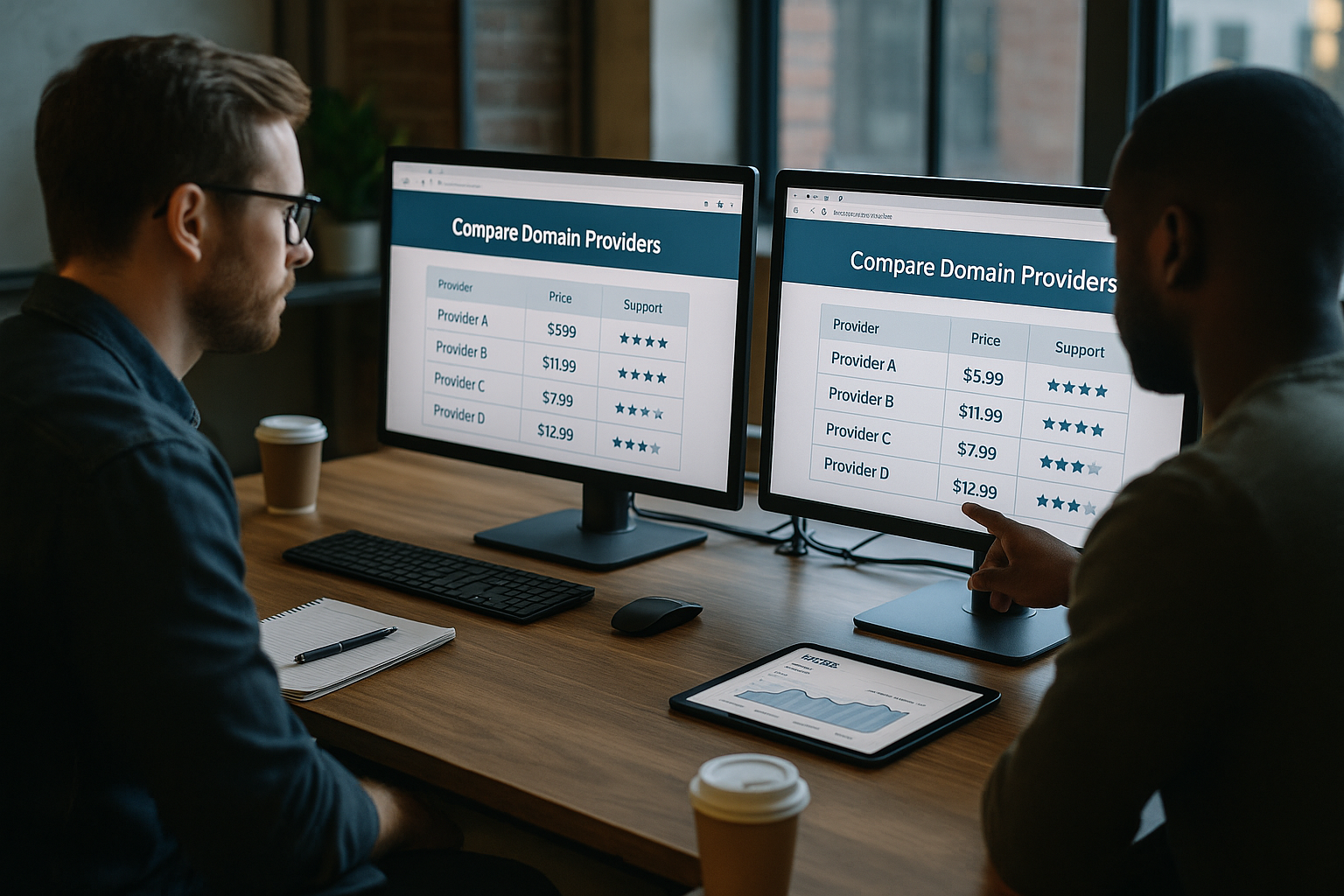
For projects with a focus on hosting speed, data protection and support, I rely on a strong provider with Complete package like webhoster.de. For low starting prices or large TLD bandwidth, I take a close look at Checkdomain and United Domains. IONOS, STRATO, Dogado and Easyname cover different profiles, which gives me leeway in terms of budget and service level. I compare prices over the planned term, test support with a real request and check DNS tools before registration. This way, Domain Comparison 2025 fits my project goal and saves me time, money and nerves over the years.