Skip to content
Green Hosting 2025 shows which criteria make a truly climate-friendly provider and how I check the electricity mix, efficiency and cooling. I use concrete key figures, actively ask for transparency and evaluate data centers according to their Real consumption and their CO₂ footprint.
Key points
Before I make a decision, I will set out the following key aspects and weight them according to their impact on climate and costs.
- Energy sourceProportion of genuine renewable energies and guarantees of origin
- EfficiencyPUE value, waste heat utilization, load management
- CoolingCold aisle containment, WUE, water-saving systems
- CertificatesISO 14001, Blue Angel, credible reports
- Location: strict standards, short latency, data protection
I evaluate these points in a structured way, set priorities and then make a clear decision. Decision by climate effect and Budget.
Renewable energies: Origin and proofs
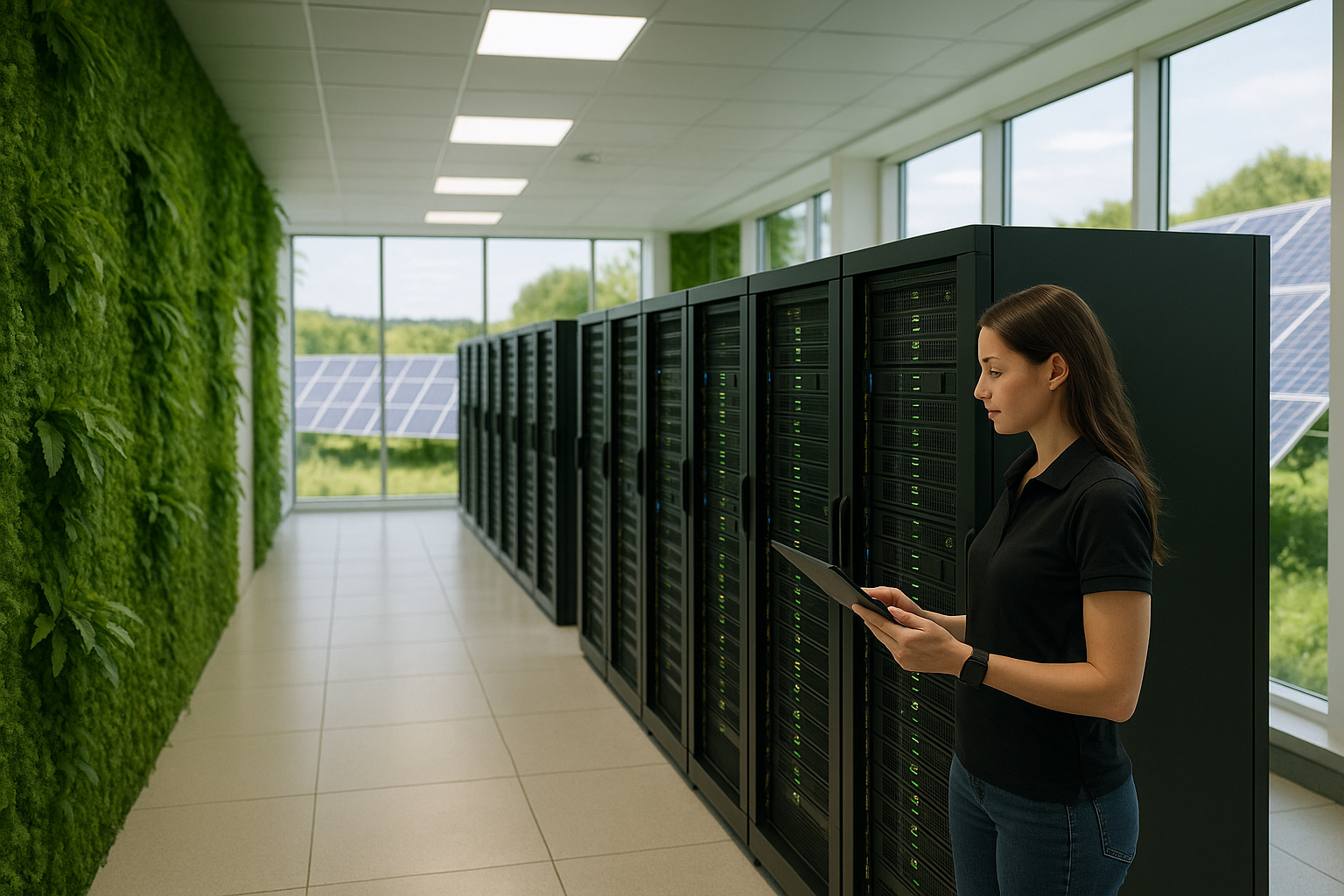
I first ask how much electricity from Wind, Sun or water and how the provider proves it. Many data centers today cover large parts of their requirements with clean energy, but I don't rely on marketing platitudes. I demand concrete evidence such as certificates of origin and annual electricity mix reports. I also check whether offices, warehouses and service areas also run on green electricity so that there are no hidden emissions. For a more in-depth overview, I also use content on Sustainable data centers and compare my checklist with it.
I also evaluate the Long-term nature of energy contracts because stable green electricity supplies ensure predictability. Own solar or wind parks indicate serious investment. I check whether the provider uses load shifting to obtain electricity at times of high generation. In this way, a data center reduces emissions and costs at the same time. This results in measurable benefits for the climate and Price.
Measuring energy efficiency: Understanding PUE, WUE and CUE
I rely on clear key figures and actively ask for published PUE-values, supplemented by WUE (water) and CUE (CO₂). The PUE value indicates how much additional energy is required for cooling, power supply and lighting. Values close to 1 mean that almost all of the electricity is used by IT. WUE describes how much water is consumed per kilowatt hour, which will become more important in 2025 due to periods of drought. CUE roughly shows how emission-intensive the operation is, depending on the electricity mix and capacity utilization.
I use explanatory pieces like the PUE value, to classify key figures correctly. Transparency about the measurement method, time period and location remains crucial. A good provider openly explains deviations between locations. I also check whether energy management systems are running in accordance with ISO 50001. This enables me to recognize how seriously the continuous Optimization and the Control are meant.
Key figures at a glance
The following table helps me to make offers comparable and not to overlook any key figures.
| Key figure | Description | What I pay attention to |
|---|---|---|
| PUE | Ratio of total energy to IT energy | Measurement period, location, seasonal Fluctuation |
| WUE | Water consumption per kWh IT load | Type of cooling, closed circuits, Region |
| CUE | CO₂ emissions per kWh of IT load | Electricity mix, guarantees of origin, Reporting |
| Utilization | How well resources are used | Virtualization, orchestration, Autoscaling |
| Waste heat | Recovered energy for heating purposes | Partner network, year-round Use |

Intelligent cooling: cold aisle containment and water-saving systems
I am specifically asking about cold aisle containment, because it separates cold and warm air and thus allows up to 30 % saves cooling energy. Without separation, air mixes, the system has to work harder and consumes more electricity. Good suppliers document the air routing with photos, plans and measured values. I also check whether free cooling is running at low outside temperatures. This reduces the need for energy-hungry Compressors.
Water will come more into focus in 2025. Evaporative cooling can consume millions of liters, so I'm looking for closed loops and adiabatic systems with recovery. I ask about WUE and local water stress indices. The drier the region, the more important water-saving concepts become. This protects resources and reduces the long-term Dependence.
Circular economy: use hardware for longer, recycle correctly
I look at how long servers remain in productive use and how old devices are reused. Refurbishing and spare parts procurement extend runtimes and save money Raw materials. A good provider has clear processes for testing, data erasure and resale. I ask for proof of certified data destruction so that no risks arise. I also assess whether the enclosures, cables and racks are environmentally friendly. Materials use.
I ask about repair rates, spare parts logistics and supplier criteria. Anyone who offers transparency about product origin and recycling channels is serious. This indirectly saves me CO₂ because new hardware has to be purchased later. That makes all the difference for large fleets. Sustainability is particularly measurable here and practical.
Choice of location: Environmental standards, latency and data protection
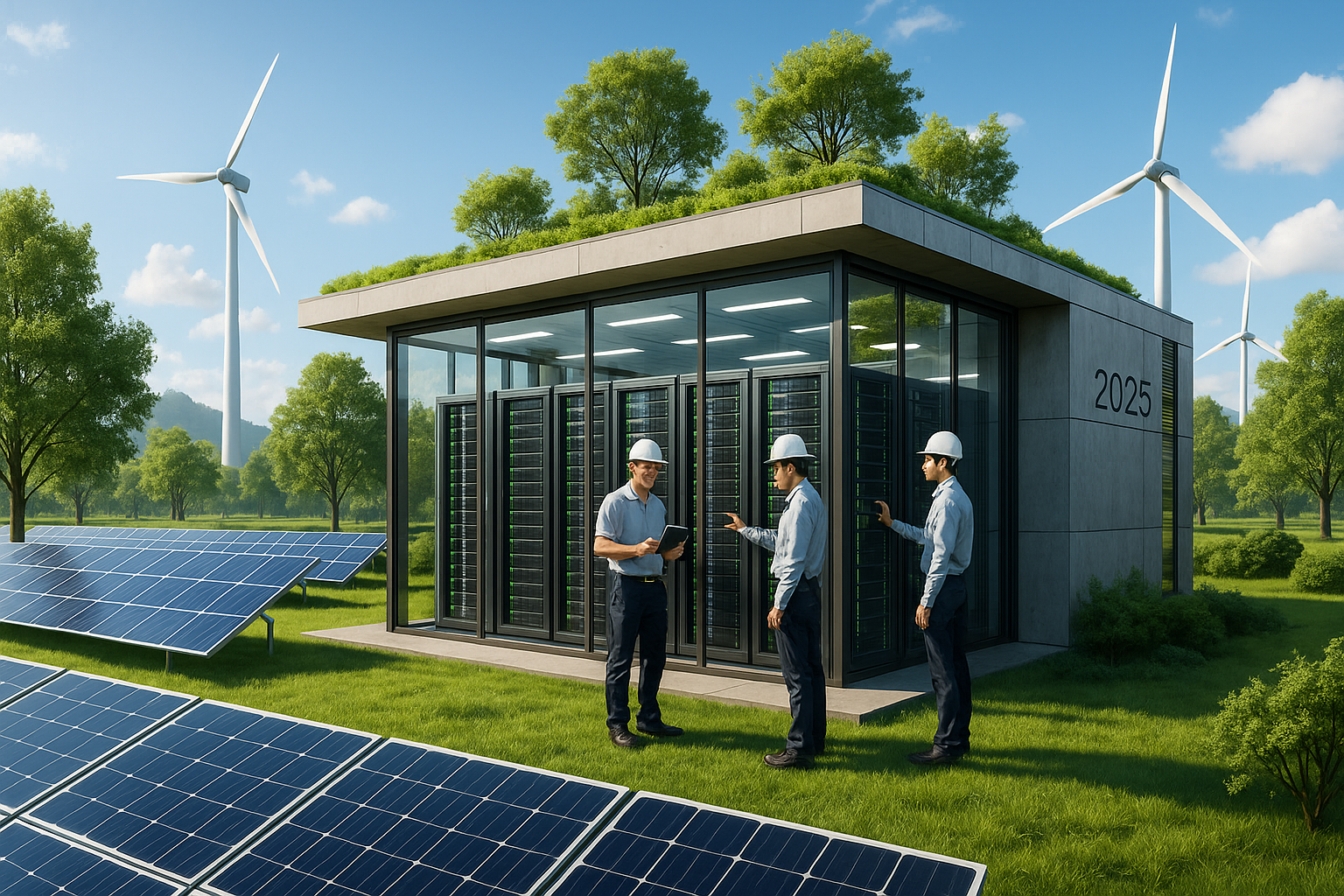
I prefer locations with strict Specifications for energy, waste heat and security. Germany scores points with its clear rules and good network infrastructure. Shorter distances reduce latency, which significantly supports the user experience and SEO. At the same time, familiar legal frameworks facilitate compliance. This saves time during audits and protects the Nerves.
I assess the site's grid connection, redundancies and flood risks. The local district heating network is also important if waste heat is to be used all year round. The denser the network, the higher the recovery rate. This means that sustainability measures pay for themselves more quickly. This increases the chance of long-term stable Prices.
Transparency, certificates and credibility
I demand annual sustainability reports that clearly present key figures, measures and targets. Certificates such as ISO 14001 or the Blue Angel create trust if they are documented and up-to-date. A separate section on the supply chain, recycling and water says a lot about the supplier's culture. For better orientation, I use overviews such as Certifications in comparison. I can quickly recognize how serious a provider is. Climate targets and Test standards takes.
I pay attention to concrete roadmaps up to 2030 and beyond. Short-term offsets are not enough for me, I want real emission reductions. Waste heat projects, solar roofs and power purchase agreements with wind farms are convincing. Those who disclose progress and setbacks earn trust. Transparency strengthens my Judgment and the later Binding.
Calculating a clean emissions balance: location values, time reference and additionality
I examine how emissions are accounted for: location-based (real grid electricity mix) and market-based (with guarantees of origin and PPAs). Both perspectives are important. Location-based shows how „clean“ the grid electricity actually was. Market-based shows which contracts are intended to reduce emissions. I prefer providers who disclose both and also specify the time reference: Is electricity covered simultaneously (24/7) with renewable generation or only netted annually? Timely coverage prevents gaps in hours with little wind and sunshine.
I ask AdditionalityDo PPAs finance new plants or are only certificates from existing parks purchased? Genuine additional impact improves the carbon footprint in the long term. I also have emission factors, measurement limits (Scopes 1-3) and the methodology explained to me in accordance with current standards. Uniform principles make providers truly comparable.
F-gases, refrigerants and leakage management
In addition to energy, I also start with the refrigerant. I ask about the refrigerant used and its GWP-value (Global Warming Potential). Lower GWP alternatives and strict leakage management reduce climate risks. I require inspection protocols, leakage tests and recovery processes for maintenance. If you work carefully here, you reduce hidden emissions away from the electricity meter.
UPS, batteries and emergency power: thinking efficiency through the infrastructure
I rate the UPS efficiency in the partial load range because servers rarely run permanently at 100 %. Eco modes and modern topologies save a significant amount of power here. I ask whether lithium-ion systems or other efficient storage systems are used and how their life cycle is documented. I also check emergency power concepts: optimized test runs, economical load tests and clear emissions data. Anyone evaluating alternative fuels must provide me with a comprehensible life cycle assessment. The aim is reliable resilience with a minimal additional burden on the climate and budget.
Efficient network and data traffic design
I look at energy use not just in the rack, but along the entire path. Efficient Peering strategies, short distances to important nodes and modern optics save electricity. Anycast, edge caching and content strategies reduce transmissions. I check whether HTTP/2 or HTTP/3, compression, image formats and caching headers are used consistently. Lightweight pages and efficient APIs reduce the energy per request and at the same time improve the Performance.
I also count on network efficiency in the data center itself: port bundling, sleep modes, clean segmentation and virtualization avoid unnecessary hardware. Transparent reporting of latencies and packet losses helps me to optimize software and routing paths in a targeted manner.
Hardware architecture: Performance per watt as a guard rail
I ask about the platform strategy: energy-efficient CPUs, suitable accelerators and an architecture that matches the workload. Containerization and modern orchestration increase the workload without compromising stability. I ask for benchmarks per watt and check whether high-density concepts interact with the cooling strategy. With storage, I pay attention to the balance between power requirements, durability and energy consumption - and to functions such as deduplication and compression that reduce the real IO load.
Legal framework and reporting obligations
I check whether the provider has current Reporting obligations and efficiency requirements. This includes transparency regarding energy indicators, waste heat concepts and clear processes for quality assurance. I have them explain to me how these requirements are translated into internal audits, monitoring and the supply chain. Reliable compliance takes the pressure off my own audits, avoids surprises and increases the predictability of Investments.
Measurement accuracy, audits and verification
I ask about meter calibration intervals, the granularity of the measurement points (rack, room, location) and independent testing. A consistent measurement plan and regular Audits create trust in the database. I have people explain to me how anomalies are handled, whether outliers are commented on and how corrections are documented in a comprehensible manner. This care determines whether key figures reliably support decisions.

AI-supported optimization: increase capacity utilization, reduce energy
I assess whether AI shifts workloads according to time of day and weather forecasts. High utilization noticeably improves energy efficiency per user request. Models predict cooling requirements and reduce Load peaks. They also help to detect broken fans or hotspots at an early stage. This reduces failures and saves Costs.
I check whether telemetry data is continuously evaluated. This includes temperature, humidity, electrical circuits, pumps and fans. Good dashboards show trends and anomalies. I demand insight into benchmarking between locations. This allows me to see whether AI delivers real added value and is not just a Buzzword remains.
Water and waste heat: thinking twice as sensibly
I first ask about the local water situation and the WUE. Closed circuits, rainwater utilization and dry coolers reduce consumption. At the same time, I assess how much waste heat is fed into the grid. Schools, swimming pools and residential areas benefit directly from this. In this way, energy is used twice and increases the Efficiencies per used kWh.
I have partnerships with municipal utilities explained to me. Contracts, temperatures and annual profiles show how mature the solution is. A reliable feed-in strengthens the local energy transition. Data centers thus become part of regional infrastructures. This creates acceptance and real Added value for the Municipality.
Data lifecycle, backups and green software
I reduce data volumes by critically examining retention periods and avoiding unnecessary full backups. Incremental processes, deduplication and compression reduce storage requirements and energy consumption. On the software side, I demand efficient database queries, caching and economical serialization. Every query saved reduces the energy requirement in the entire stack - from the client to the network to the storage.
Minimize the risks of greenwashing
I ask specific questions: Are there time-matched green electricity receipts? Are emissions reported on a site and market basis? Are there independent audit reports? Are there roadmaps with interim targets, budgets and responsibilities? Vague promises without measurement points are not enough for me. I assess providers according to how specifically they document measures, progress and setbacks.
Thinking security and sustainability together
I check whether security concepts take energy efficiency into account without increasing risks. Modern access controls, cameras and early fire detection work much more economically today. Virtualized firewalls and segmented networks save additional hardware. I demand proof of regular tests and audits. This keeps the infrastructure secure, efficient and thrifty at Operation.
Backup strategies also influence the balance sheet. Unnecessary full backups bloat storage, differential procedures save capacity. I check retention periods, deduplication and location distribution. The aim is to achieve a good balance between risk, costs and climate impact. This strengthens resilience and protects Resources at the same time.
Migration roadmap: change pragmatically, limit risks
I plan the move in stages. First, I define targets for energy, emissions and costs. Then I start a pilot with representative workloads and measure before and to the change. In the third step, I optimize together with the provider: Caching, autoscaling, storage profiles. Then I scale up, document results and adjust contracts. Finally, I ensure governance: clear KPIs, reporting frequency, escalation paths and an annual Renegotiation in the event of changed framework conditions.
Key figure targets: realistic benchmarks instead of wishful thinking
I formulate target corridors instead of rigid limit values. PUE will fluctuate seasonally - what is important is the trend and the justification. With WUE, I demand water savings without risky side effects. For CUE, I aim for a clear reduction with real green electricity and sensible load shifting. I also introduce internal metrics: energy per request, per user minute or per transaction. This view combines technology, costs and climate in day-to-day business.
Balancing costs, contracts and performance
I compare prices fairly, because good efficiency reduces operating costs and creates scope for Euro-savings. I check whether tariffs take peak loads into account and whether auto-scaling is available. If I only pay for what I actually use, energy wastage is reduced. I pay attention to contract terms, price escalation clauses and electricity cost shares. This helps me to understand which factors will Invoice drive.
Performance remains important: SSD generations, CPU efficiency, network and caching determine speed. Good technology also delivers better energy efficiency per request. I demand measured values, not just promises. SLAs, response times and status pages make decisions comprehensible. This is how I combine speed, reliability and Sustainability sensible in a Package.
AI-supported optimization: increase capacity utilization, reduce energy
I assess whether AI shifts workloads according to time of day and weather forecasts. High utilization noticeably improves energy efficiency per user request. Models predict cooling requirements and reduce Load peaks. They also help to detect broken fans or hotspots at an early stage. This reduces failures and saves Costs.
I check whether telemetry data is continuously evaluated. This includes temperature, humidity, electrical circuits, pumps and fans. Good dashboards show trends and anomalies. I demand insight into benchmarking between locations. This allows me to see whether AI delivers real added value and is not just a Buzzword remains.
Water and waste heat: thinking twice as sensibly
I first ask about the local water situation and the WUE. Closed circuits, rainwater utilization and dry coolers reduce consumption. At the same time, I assess how much waste heat is fed into the grid. Schools, swimming pools and residential areas benefit directly from this. In this way, energy is used twice and increases the Efficiencies per used kWh.
I have partnerships with municipal utilities explained to me. Contracts, temperatures and annual profiles show how mature the solution is. A reliable feed-in strengthens the local energy transition. Data centers thus become part of regional infrastructures. This creates acceptance and real Added value for the Municipality.
In a nutshell: My decision path for Green Hosting 2025
I start with the question: How green is electricity really, measured in terms of guarantees of origin and published Odds? Then I evaluate PUE, WUE and CUE over at least one year, ideally over several locations. The cooling strategy must combine cold aisle containment, free cooling and water-saving processes. Circular economy, repairability and certified data erasure all count in my assessment. In the end, I choose the provider that offers the best climate effect, reliability and Costs best balanced.
For the finishing touches, I look at contracts, SLAs and monitoring access. A transparent sustainability report with clear targets up to 2030 makes the audit easier. The choice of location brings additional points for latency and data protection. This is how I implement green hosting measurably and effectively. My goal remains: fewer emissions, reliable performance and real Plannability over many years.