Skip to content
HestiaCP explains: I will show you how the modern Vesta fork hestiacp bundles server administration, e-mail and DNS on Linux in such a way that beginners can get started quickly and professionals can fine-tune their settings. With its clear interfaces, active maintenance and strong security features, this vps-panel clearly different from older solutions.
Key points
- Modern forkFresh UI approach, mobile operation, active maintenance.
- Security2FA, restrictive PHP FPM rights, Fail2Ban.
- Multi-PHPSet the appropriate version for each domain.
- BackupsAutomatic, manual, simple recovery.
- DNS & MailZones, accounts, spam and virus filters integrated.
What is HestiaCP?
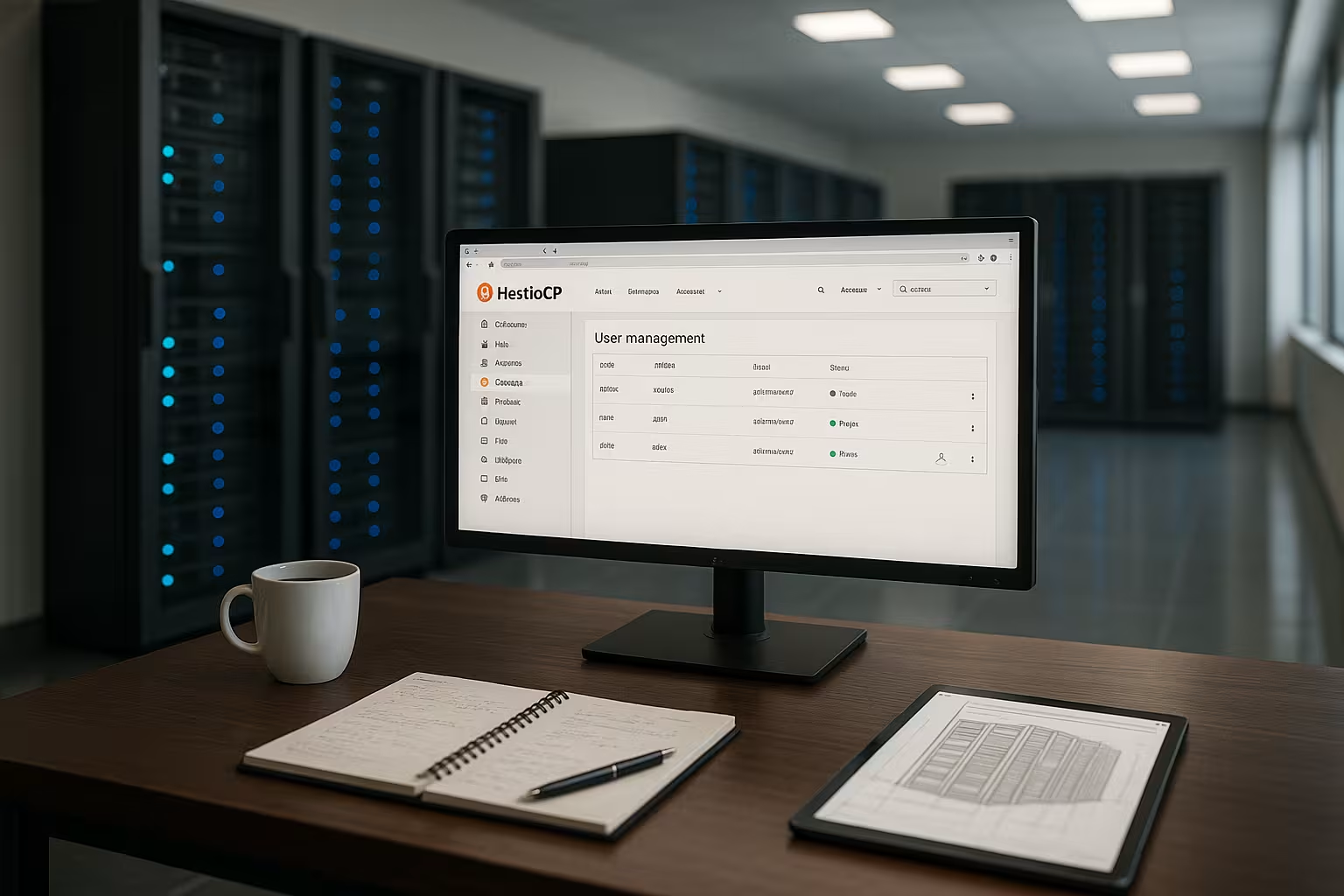
I describe HestiaCP as a free, open source Server panel for Ubuntu and Debian, which takes up the idea of VestaCP and implements it in a contemporary way. The panel is aimed at beginners who want a clear interface and advanced users who want to touch every screw in the stack. I use it to control websites, mail accounts, databases and DNS zones without a terminal marathon. This saves time on routine tasks, speeds up error analysis and creates order on VPS and dedicated systems. Thanks to active maintenance, I receive prompt Updates and safety corrections.
HestiaCP vs. VestaCP at a glance
Many people ask me whether HestiaCP is just a new coat of paint or whether it brings real benefits. I see clear progress in the interface, security, backup functions and community size. Especially the mobile-friendly UI and the choice of different PHP versions per domain make daily work easier. I also benefit from restrictive permissions in PHP-FPM and convenient two-factor authentication. This is how I keep my System slim and safe.
| Feature | HestiaCP | VestaCP |
|---|---|---|
| User interface | Modern, mobile-friendly | Older, less intuitive |
| Updates | Regularly, actively maintained | Rare, limited care |
| Security | 2FA, restrictive PHP-FPM rights | Basic functions |
| Backup | Advanced tools | Basic functions |
| Community | Bigger, helpful | Smaller, less active |
| Price | Free of charge, open source | Free of charge, open source |
The bottom line is that I use HestiaCP wherever I need fast operation and the latest technology. The integration of Nginx, Apache, MariaDB and PostgreSQL helps me to cover many scenarios without extra tinkering. I appreciate the transparency of logs and services. This saves me time during tests and migrations. So my Stack maintainable.

Functions that make everyday life easier
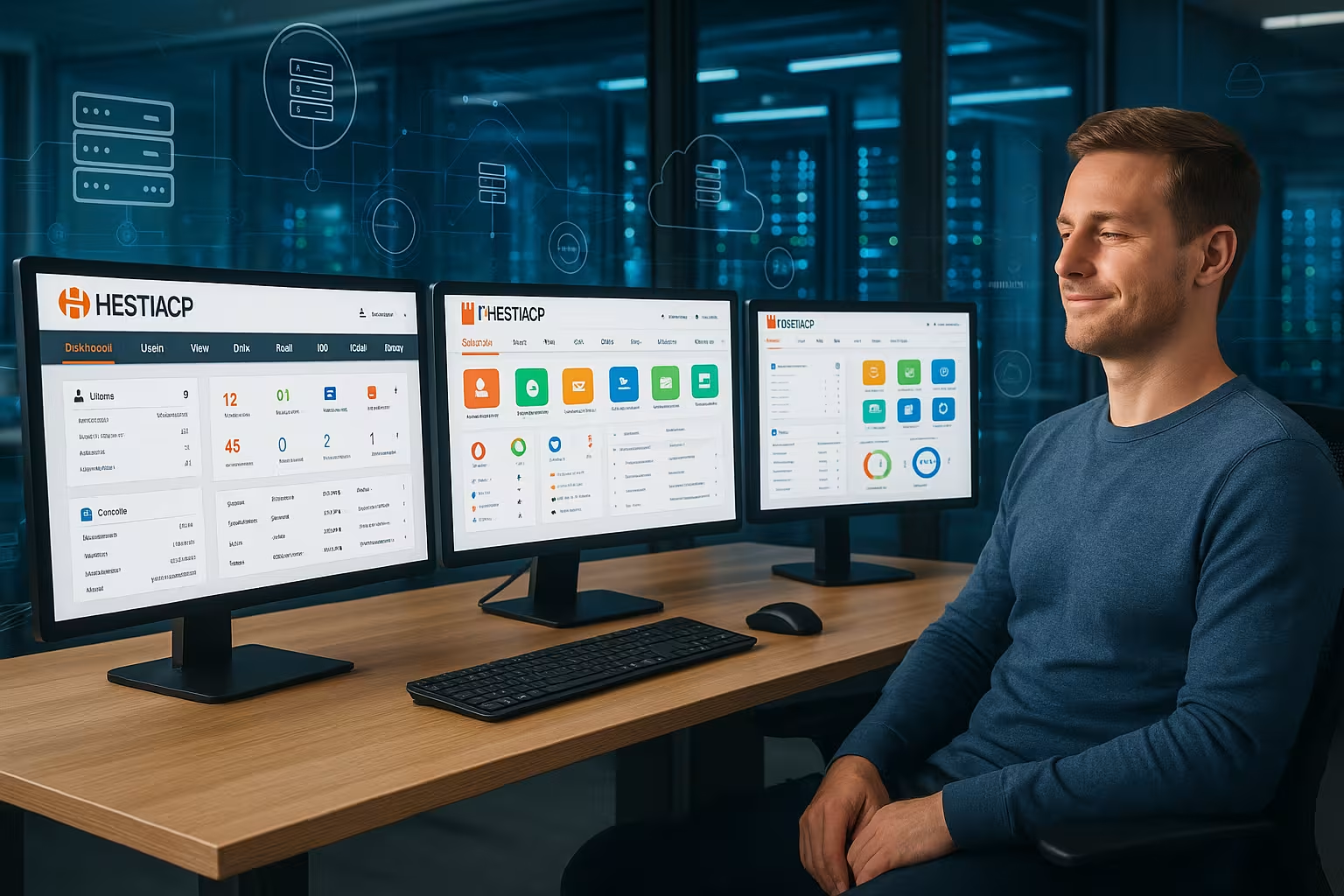
The dashboard gives me a clear overview of websites, databases, email and DNS. I can change PHP versions per domain with just a few clicks and keep legacy applications separate from current projects. The file manager saves me having to use the SFTP client in many cases. For WordPress and common apps, I use quick installers that save me setup time. I schedule backups on a daily, weekly or on-demand basis, and I restore them as needed, which is great for Projects is worth its weight in gold.
Installation and requirements
I start on Ubuntu or Debian and provide at least 1 vCPU, 1 GB RAM and 10 GB storage. I then update the system with apt update && apt upgrade -y. I load the installation script with wget and call it with bash hst-install.sh on. After a brief setup, I log in to the browser and assign secure access data. This is how I set a VPS productively in about 15-20 minutes.
Practice: Typical application scenarios
I operate several websites on one VPS and separate projects via users, domains and databases. Agencies distribute customer sites to their own accounts and retain control through roles and limits. Developers test new versions in parallel without jeopardizing productive instances. Private individuals host blogs and mails and thus build up independence. In all these cases, I benefit from a clear operation and short click paths.
Safety in practice
I enable two-factor authentication for all admin logins and use strong passwords. Fail2Ban blocks repeated failed attempts and reduces the attack surface. I use restrictive PHP-FPM rights to encapsulate websites from each other. I keep the system fresh with regular updates and remove unused services. With these steps, I strengthen the Defense clearly.

Performance and stack: Nginx, Apache, MariaDB, PostgreSQL
I combine Nginx as a reverse proxy with Apache if I need maximum compatibility, or use pure Nginx for lean setups. Caching and HTTP/2 ensure short loading times if I configure them properly. MariaDB provides me with solid performance for WordPress and stores, while PostgreSQL scores highly for data-intensive applications. The multi-PHP function helps me not to slow down older projects, while new ones run on the latest versions. This is how I keep the Server efficient and flexible.
Alternatives and classification
I like to compare HestiaCP with larger suites and lean panels in order to meet requirements cleanly. This overview helps me to think outside the box: Plesk vs ISPConfig. This shows when commercial tools score with convenience and when open source panels do the job just as well. HestiaCP already provides all the necessary functions for many projects. If you need features such as reseller modules, staging workflows or special integrations, weigh up the Priorities from.
When a lightweight panel fits better
I use a very slim panel when every megabyte of RAM counts and I only host a few sites. If you're curious, you can check out the Froxlor comparison and check where minimalism brings advantages. HestiaCP nevertheless remains efficient and provides more convenience for e-mail, backups and multi-PHP. So I decide according to project type, resources and desired interface. This way I avoid ballast and ensure Speed.
Email stack and DNS tools
I use Exim and Dovecot for sending and retrieval and activate SpamAssassin and ClamAV as a layer of protection. I set up SPF, DKIM and DMARC properly so that emails are delivered reliably. I edit DNS zones directly in the panel and document changes promptly. I cover aliases, forwarding and autoresponders in just a few clicks. As a result, mailboxes run stably and I keep the Delivery at a good level.
Backups and restoration
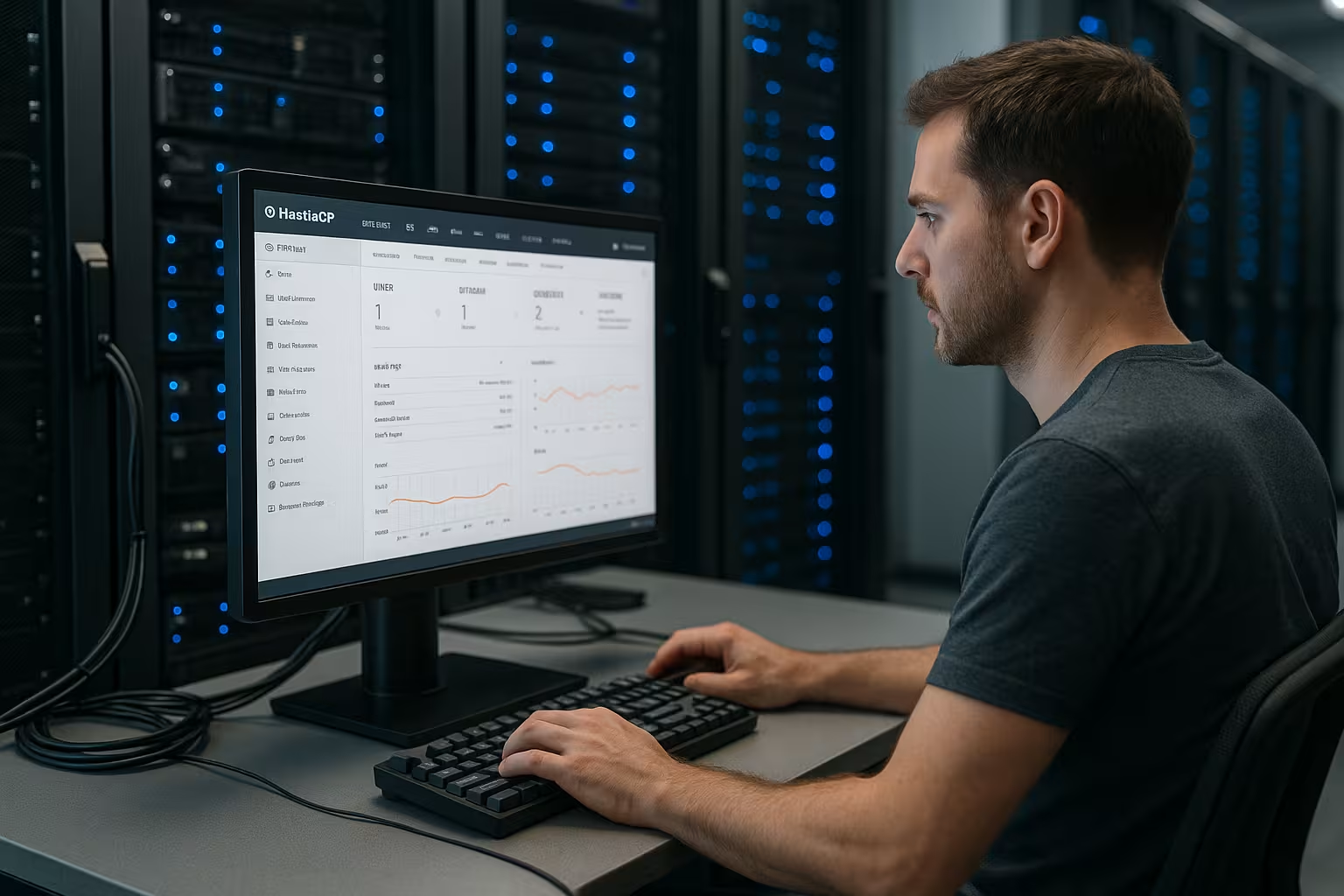
I plan daily backups at server level and outsource weekly statuses externally. I use additional dumps for individual websites to finely control rollbacks. I start the restore specifically for each domain, database or email inbox. Before major updates, I create manual backups so that I can quickly roll back in the event of problems. I use this routine to reduce downtime and protect Data.
Hosting recommendation and practical values
To make HestiaCP shine, I choose a provider with solid I/O performance, fair limits and good support. In many projects, webhoster.de has provided me with reliable performance for productive websites and test environments. I appreciate short response times and flexible upgrades when load peaks increase. This allows me to scale without rushing and keep projects online. This gives me peace of mind Growth.
| Place | Provider | Performance | Support | Functions |
|---|---|---|---|---|
| 1 | webhoster.de | Very good | Top | Modern features |
| 2 | ... | ... | ... | ... |
| 3 | ... | ... | ... | ... |
I rely on monitoring, notify myself of load peaks and regularly check the backup recovery. I also measure load times after changes and gradually adjust PHP and web server settings. This iterative approach keeps instances running smoothly without risking live traffic. This keeps my hosting predictable and my Service reliable.
Free panels in check
Open source panels cover many use cases and save license costs. If you want to compare options, the compact overview of Keyhelp vs aaPanel useful tips. I check support quality, update frequency, security functions and expandability. HestiaCP provides me with a well-rounded mix of operation, features and speed. This is how I make a well-founded Choice for every project.
First steps and best practices
After the setup, I create an admin user with 2FA and create separate accounts for each project. I then add domains, activate Let's Encrypt and select the appropriate PHP version for each site. For WordPress, I use caching, image compression and HTTP/2. Initially, I evaluate logs daily to find bottlenecks early on. With a few simple steps, I ensure stability and Speed.
Roles, quotas and multi-client capability
I work with clearly separated accounts: Each user has their own webroots, mailboxes, databases and DNS zones. I use limits for storage space, bandwidth, domains and emails to keep resources in check and prevent outliers. I use role-based access for teams so that developers only see the areas they need. This keeps the server clear and I maintain clean client separation.
- Resource limits per user: web space, traffic, databases, mailboxes
- Clean separation through separate system users and separate PHP-FPM pools
- Delegation: Assigning individual domains/services to a user
Automation: CLI, API and hooks
I appreciate the scripting capability of HestiaCP. About the v-*-commands, I create domains, databases and mail accounts, export backups or roll out restores. This saves me clicks for recurring tasks. For integrations, I use the API and event hooks to execute my own scripts after certain actions (e.g. domain creation). This allows me to seamlessly integrate deployment, configuration or notifications.
- CLI for mass tasks: Create user/domain, set SSL, start backups
- Hooks for automation: pre-/post-events to customize the workflow
- API for tools and portals: user and project creation from an external perspective
SSL, domains and DNS details
I activate Let's Encrypt for each domain with one click. For complex setups, I work with additional SANs (www, subdomains) or use wildcards via DNS challenge if the provider allows this. I consistently redirect HTTP to HTTPS and use HSTS if all resources run cleanly via TLS. In DNS, I keep templates ready for frequent configurations and add AAAA records for IPv6. This ensures consistent, modern delivery.
- Automatic certificate renewal, check error alarms at an early stage
- Activate HSTS with caution (test phase, then consider preload)
- Activate IPv6 in the system and consistently maintain DNS records
Email deliverability in practice
In addition to SPF, DKIM and DMARC, I pay attention to clean PTR entries (rDNS) with the hoster and a plausible HELO hostname. I limit sending rates per domain to protect my reputation and monitor bounce logs in the panel. For restrictive providers, I optionally schedule an SMTP relay. I train SpamAssassin via the Ham/Spam folder and keep ClamAV up to date. This is how I reduce false positives and keep delivery stable.
- Set rDNS: Hostname and PTR must match
- Enforce rate limits and auth, avoid open relays
- Mailbox quotas and automatic junk/trash cleanup
Cronjobs, deployments and developer workflow
I manage cron centrally in the panel and keep jobs separate for each project. For applications, I use separate PHP binaries for each version so that tasks match the app. I connect Git deployments via hooks or panel functions and write build steps (composer, assets, cache warm) as required. This way, releases end up reproducibly in the right web root without me having to intervene manually.
- Separate cron jobs per user with their own environment
- Git deployment in the webroot, optionally with post-deploy scripts
- Zero downtime through symlink strategy or maintenance window
Monitoring and troubleshooting
For the analysis, I first look at the Nginx/Apache domain logs, PHP FPM logs and the mail logs. In the panel, I recognize the status of services and can restart services. For performance issues, I check CPU, RAM and I/O as well as database queries. Error logs provide me with quick information on rights, paths or missing modules. I keep a small checklist ready to speed up repetitions.
- Systematically check web server logs per domain (access/error)
- PHP-FPM: Max Children, Process Manager, Monitor Opcache status
- View mail queue, interpret bounce codes, verify DKIM signature
Updates, migration and maintenance
I plan operating system and panel updates with backups and maintenance windows. I install minor security updates promptly, function updates only after a short test. When migrating, I move projects individually: Files, databases, configurations and mailboxes. Vesta/Hestia backups are easy to import; I migrate from other panels in a structured way using import and tests. I keep old servers in read-only mode for a short time until all checks are green.
- Before updates: Create snapshot and panel backup
- Read upgrade notes, check incompatibilities (PHP/modules)
- After migration: lower DNS TTL, orchestrate switchover
Scaling and performance tuning
I start lean and scale in a targeted manner. For PHP-FPM, I adapt processes to load and RAM, activate Opcache with an appropriate size and regularly clean up caches. For databases, I optimize buffer pools, slow query logs and indices. For high-traffic sites, I use Nginx caching or a dedicated cache backend. Where it makes sense, I separate services (database or external mail) to reduce the load on I/O.
- PHP: Opcache, realpath-cache, suitable memory limits
- Nginx/Apache: compression, keep-alive, serving static assets efficiently
- Databases: query optimization, sensible connection limits
Security hardening beyond the panel
In addition to 2FA and Fail2Ban, I secure SSH with keys, deactivate password login and restrict root access. The integrated firewall blocks unnecessary ports and I log administrative actions. For web applications, I set strict file permissions, separate write directories from code and keep dependencies up to date. Regular security scans and restore samples round off the protection.
- SSH hardening: keys instead of passwords, limited users, clear rules
- Firewall: Open only required ports, services behind Fail2Ban
- Web app hygiene: separate uploads, only allow execution where necessary
Summary
HestiaCP provides me with a lean, clear and secure control center for Linux servers. I benefit from multi-PHP, solid mail and DNS functions, predictable backups and an active community. Compared to VestaCP, I have noticeable advantages in terms of UI, security and maintenance. For beginners, the hurdle is lowered, for professionals the efficiency increases. This allows me to implement projects faster and keep my Server under control.