Skip to content
By renting a hetzner root server, you are opting for full control, dedicated resources and clear responsibility for the operation and protection of your own systems. I will show you which hardware and software options make sense, how you can secure your system properly and which cost traps you can avoid when ordering and operating so that your project is a success right from the start. stable is running.
Key points
- Hardware: Correctly dimension CPU, RAM, NVMe
- SecurityFirewall, updates, SSH keys
- AdministrationInstallimage, Robot, Monitoring
- Network1-10 Gbit/s, vSwitch, IPs
- CostsMonthly price, setup, backups

What is a root server and when is it worthwhile?
A root server gives me full administrative access, so that I can control the system myself from kernel to service and adjust every setting independently. determine. Dedicated hardware provides exclusive CPU, RAM and I/O resources, which brings clear advantages for peak loads and parallel processes. Projects with databases, virtualization or streaming benefit from consistent latencies and high IOPS performance. Anyone running special software stacks or implementing strict security guidelines gains measurable flexibility thanks to this freedom. For simple blogs or small sites, a managed or cloud offering is often sufficient, but for maximum control, a dedicated Root Server.
Advantages of a Hetzner Root Server
Hetzner combines the latest AMD or Intel CPUs, plenty of RAM and fast SSD or NVMe drives with a fast connection of 1 to 10 Gbit/s, which makes applications noticeably more efficient. accelerated. The data centers are ISO-certified and physically secured, which provides additional peace of mind during operation. I am free to choose my operating system, define security rules and adapt services precisely to my workloads. Upgrades such as additional drives, more RAM or additional IP addresses can be booked flexibly. Transparently calculable monthly costs with no minimum term make tests, migrations and project-related Scaling.

For whom is a root server really worthwhile?
I rent a root server if I want to run several applications in a consolidated manner, manage databases with many transactions or plan virtualization with a clear separation of resources and consistently achieve these goals. track. Individual software, special ports or kernel modules can be used regardless of shared environments. If you run a single WordPress blog or a simple landing page, it's usually cheaper and easier with a managed or cloud offering. If you want the full range of functions and the best price-performance ratio per core and storage, it is worth considering cheap root server often starting with small setups. The decisive factor is that you actively take over administration, security and updates so that performance and uptime are maintained in everyday life. vote.
Selection: CPU, RAM, memory, network and IPs
For CPU, I decide according to workload: Many threads help with virtualization and parallel processes, high clock speed brings advantages with single-thread loads and ensures short response times in the Front end. For web applications, 16-32 GB RAM is often sufficient, for container hosts, databases and VM hosts I plan 64-128 GB or more so that caching and buffers work efficiently. NVMe drives deliver very high IOPS and low latencies, which significantly benefits stores, APIs and logging. I rely on RAID mirroring to protect against drive failures and also back up externally because RAID has no backup. replaces. A 1 Gbit/s port is sufficient for many projects, while 10 Gbit/s creates clear buffers for streams, backups or large data pipelines; I separate additional IPs cleanly according to services or virtualization.
Operating system and administration: Installimage, Rescue and Robot
I install Linux distributions such as Debian or Ubuntu via installimage, test in the rescue system and, if necessary, set up the OS again within minutes, which makes iterations enormous. shortened. I set up services such as NGINX, PostgreSQL, Redis or KVM reproducibly using automation tools. I use the administration interface to manage reboots, reverse DNS, resets and monitoring centrally and respond more quickly in the event of faults. For more in-depth processes relating to reboots, hardware information and IP management, the overview in the Robot surface. This combination of install image, rescue environment and robot saves time, reduces errors and keeps my change process efficient.
Security and backups: basic protection that stays
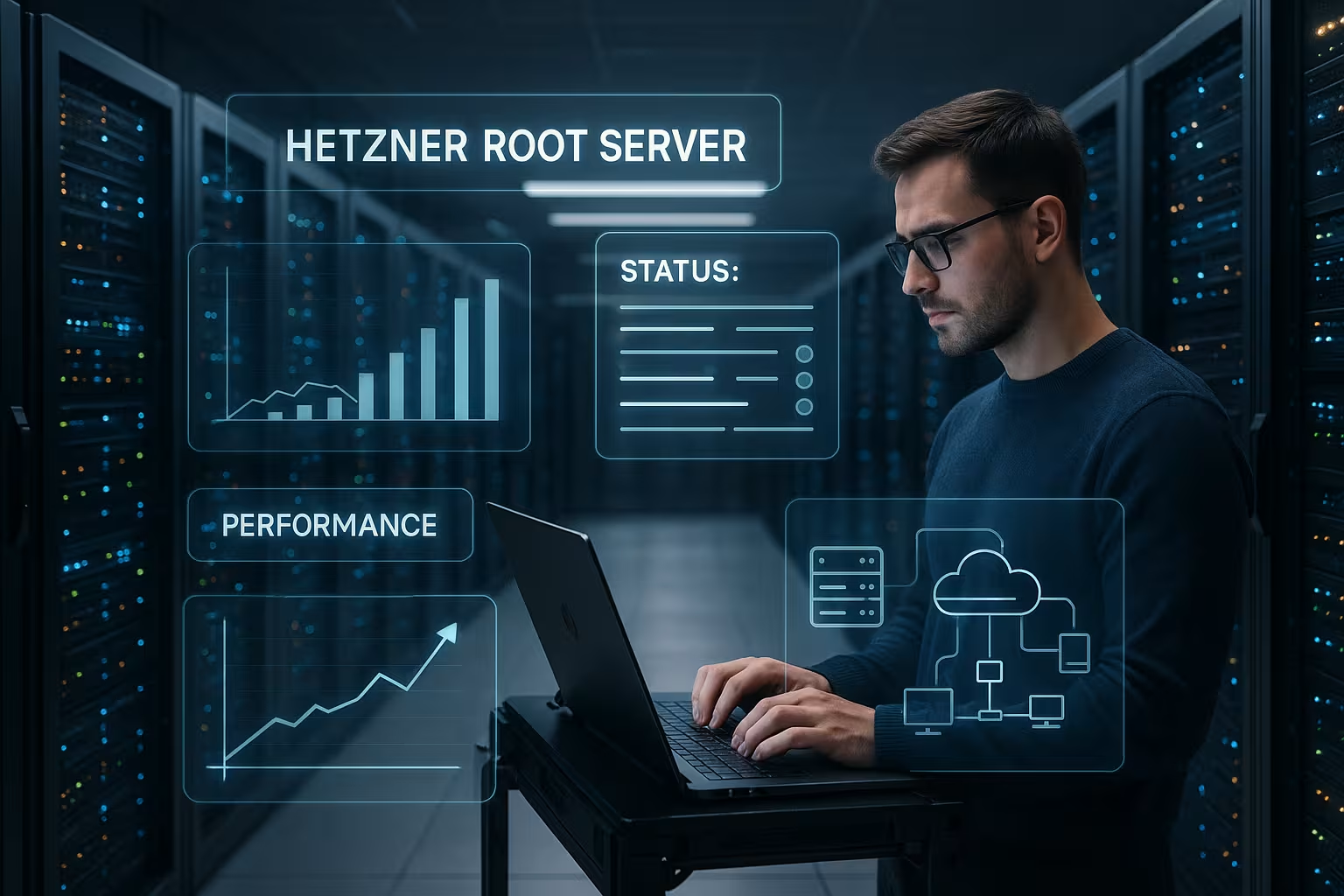
I block unnecessary ports, only allow SSH by key, activate 2FA, set rate limits and keep all packages consistently up to date so that attack surfaces are not compromised. shrink. Services such as Fail2ban and a hardening concept per role (web, DB, cache) create reliable basic rules. I plan versioned and automated backups, with rotation and regular restore tests to ensure that restores are successful. External backup storage and snapshots improve RPO/RTO and help with quick rollbacks after faulty deployments. If you want to delve deeper, you will find Safety guide further tips to make the protective measures resilient in everyday life. stay.
Monitoring, alarms and malfunctions
I actively monitor CPU, RAM, I/O, network, number of processes, certificates and important latencies so that trends are visible early on. become. Heartbeats, downtime checks and log warnings via email, Slack or pager reduce response times. SMART values of the drives and ZFS/mdadm status show risks in good time. In the event of hardware defects, the provider acts quickly, while I secure the configuration and data integrity responsibly. Regular restore tests and incident response playbooks make the difference when every minute counts. counts.

Support, responsibility and admin effort
With dedicated systems, I take care of services, updates, backups and hardening myself, which means I can maintain the environment exactly to my specifications. lead. The provider replaces faulty hardware quickly, while software issues remain in my hands. If you don't have much time for administration, managed offers are more relaxed and predictable. For demanding setups, the personal responsibility pays off because I control every adjustment screw myself. The decisive factor is to plan the maintenance effort realistically and to set fixed budgets for maintenance. to plan.
Costs, contract model and additional options
I expect a basic monthly price in euros, optional set-up fees for special deals and ongoing costs for additional IPs, backup storage or 10 Gbit/s so that there is no gap in the budget arises. For projects with fluctuating loads, I remain flexible thanks to monthly terminability. I take power consumption, traffic limits and possible upgrades into account before the go-live. A clear plan for backup volumes, offsite targets and storage classes prevents bottlenecks later on. In the end, what counts is an honest cost-benefit analysis that combines technology, time and risk. thinks.
Comparison: Dedicated providers 2025
For a better classification, I have summarized the most important strengths of the common providers and focused on price-performance, selection, service and internationality. focused.
| Place | Provider | Special features |
|---|---|---|
| 1 | webhoster.de | Very good performance, excellent support, high flexibility |
| 2 | Hetzner | Strong price-performance ratio, large selection of configurations |
| 3 | Strato | Good availability, broad portfolio for different projects |
| 4 | IONOS | International orientation, flexible pay-as-you-go models |
I not only evaluate list prices, but also support availability, hardware generations, bandwidths, additional functions such as vSwitch and the quality of the admin tools, so that the choice is a long-term one. carries.
Practice: First steps after ordering
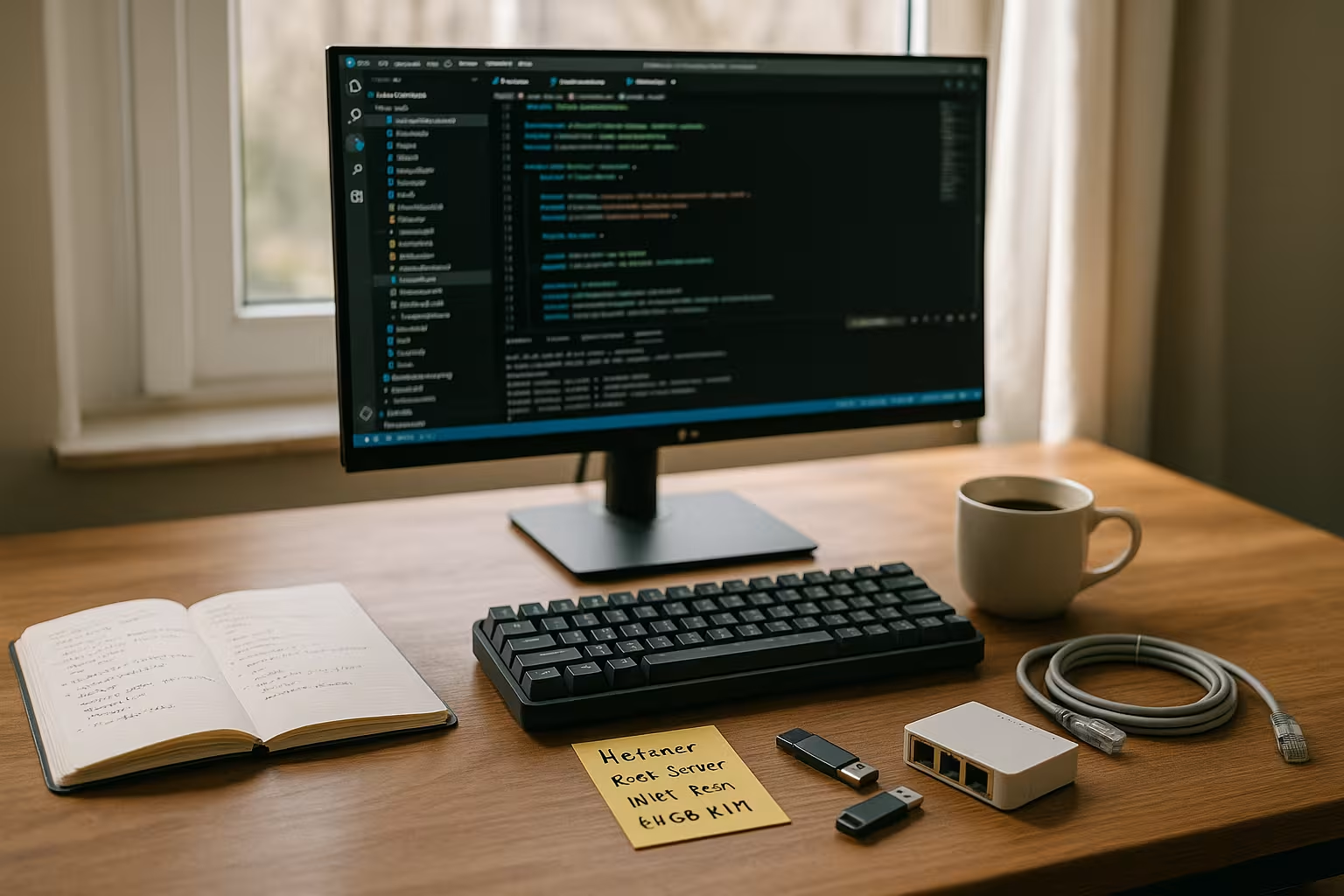
After provisioning, I log in with the supplied SSH access data and immediately set a new, long password and SSH keys so that access is possible from minute one. sits. Immediately afterwards, I install the desired OS via the install image, install basic updates and deactivate password login. A minimal firewall blocks everything except the required ports, while I cleanly define user roles and sudo. I then make a fresh full backup outside the server to have a clear reset point. Only then do I install applications, set alarms and document the steps so that later changes are traceable. stay.
Planning virtualization and containers sensibly
For virtualization, I rely on KVM-based hypervisors because they work close to bare metal and offer a good balance of performance and isolation. offer. I check CPU features (virtualization extensions) and activate IOMMU if I want to pass through PCIe devices such as NVMe controllers or network cards in a targeted manner. For homogeneous microservices, I use containers, isolate workloads using cgroups and namespaces and separate sensitive services into their own VMs to minimize attack surfaces. stay. On the network side, I choose bridging or routed setups depending on the architecture, set security groups at host level (nftables/ufw) and deliberately fine-tune east-west traffic between VMs instead of releasing everything across the board. On the storage side, I calculate IOPS per VM, create caches sensibly and plan quotas so that individual guest systems do not use up the entire host volume. block.
Storage design and file systems in detail
With two NVMe drives, I usually mirror using RAID1 to combine read advantages and reliability; with four drives, RAID10 becomes interesting because IOPS and redundancy are balanced supplement. If you need flexible volumes, LVM and separate logical volumes for OS, data and logs are a good way to separate growth cleanly. For copy-on-write, snapshots and checksums, I rely on ZFS depending on the use case; alternatively, ext4 or XFS deliver solid, simple performance with low overhead. I pay attention to 4k alignment, suitable mount options and sufficient free space (20-30 %) for wear leveling and garbage collection so that NVMe drives can be used permanently. constant perform. I encrypt sensitive data with LUKS, keep the key handling process lean and document boot and recovery paths so that maintenance windows do not interfere with the decryption workflow. fail.
Network design: IPv6, rDNS and segments
I consistently activate IPv6 and plan address spaces cleanly so that services can be reached dual-stack and modern clients have no fallback latencies. have. I assign reverse DNS (PTR) correctly, especially when mail services are involved: Appropriate rDNS entries, SPF/DKIM/DMARC and clean delivery paths reduce the bounce rate. I use additional IPs for clean separation according to roles or tenants, while I use a vSwitch to create internal segments in which replication, databases or admin services are located without exposure to the public network. run. For cross-site coupling, I rely on VPN tunnels and clear ACLs, limit management access to fixed source networks and keep security groups as narrow as possible. QoS and rate limits help with spikes, while for the front end I use caches, TLS offload and keep-alive settings for consistently short response times. vote.
Automation, CI/CD and reproducibility
I describe the target configuration as code and set up the server in a reproducible way so that changes can be tracked and rollbacks can be made. Reliable are. Playbooks install packages, harden basic settings and deploy services idempotently. Cloud-init or similar mechanisms accelerate baseline provisioning, while secrets are strictly separated and managed in encrypted form. For deployments, I use blue-green or rolling strategies, decouple build and runtime and treat configurations as versions that I can make backwards compatible. plane. I automate tests up to the smoke test after each rollout; in the event of errors, I stop the rollout automatically and roll back to the last known, stable status.
Compliance, logs and encryption
I check at an early stage whether personal data is being processed and conclude the necessary data processing agreements to ensure legal certainty. given is. I record logs centrally, write them in a tamper-proof manner and define retention periods that reflect technical and legal requirements. I encrypt data at rest as well as data transfers; I store key material separately, rotate it regularly and document access. I implement access concepts on a need-to-know basis, separate admin accounts from service identities and secure sensitive operations with 2FA and restrictive sudo policies. For emergencies, I maintain a minimalist break-glass procedure that can be documented, audited and immediately deleted after use. dismantled is.
Performance and load tests: making bottlenecks visible
I start with basic metrics (CPU steal, load, context switch, I/O wait) and check whether there are any bottlenecks on the CPU, RAM, storage or network side. lie. I simulate real load profiles before the go-live so that caches, connection limits and pool sizes work correctly. For databases, I monitor queries, locks and buffer hit rates; for web servers, I pay attention to TLS parameters, keep-alive and compression. I measure read/write patterns separately, as NVMe reacts differently under mixed load than in synthetic individual tests. It is important that I compare measurements over time and only ever roll out changes in small, controlled steps in order to clearly identify effects. allocate to be able to.
Migration, updates and rollback strategies
For migrations, I plan cutover time windows with clear checklists: freeze or replicate data, switch services, lower DNS TTLs, check health checks and clean up if in doubt Roll back. Zero downtime is not a coincidence, but the result of replication paths, queues and feature flags that decouple schema changes. I document every step, test it in the rescue or staging setup and keep snapshots until new statuses are proven. stable are. I use maintenance windows for kernel and OS updates, plan reboots deliberately and keep a remote console ready so that I can regain access immediately in the event of boot problems. have.
Common stumbling blocks and how to avoid them
I calculate a reserve for backup storage and growing log volumes so that I don't run out of capacity and budget months later. run away. On the network side, I check bandwidth options and potential limits so that large syncs or offsite backups don't take a surprisingly long time. When sending emails, I take reputation, rDNS and authentication entries into account instead of activating productive delivery at the last minute. For licenses (e.g. proprietary databases or OS), I keep an eye on compliance and document assignments per host. I also avoid single points of failure: I plan redundant power supply units, switch connections, DNS and secrets backends so that the failure of one component does not disrupt the entire operation. meets.
Summary: Who benefits from the Hetzner Root Server
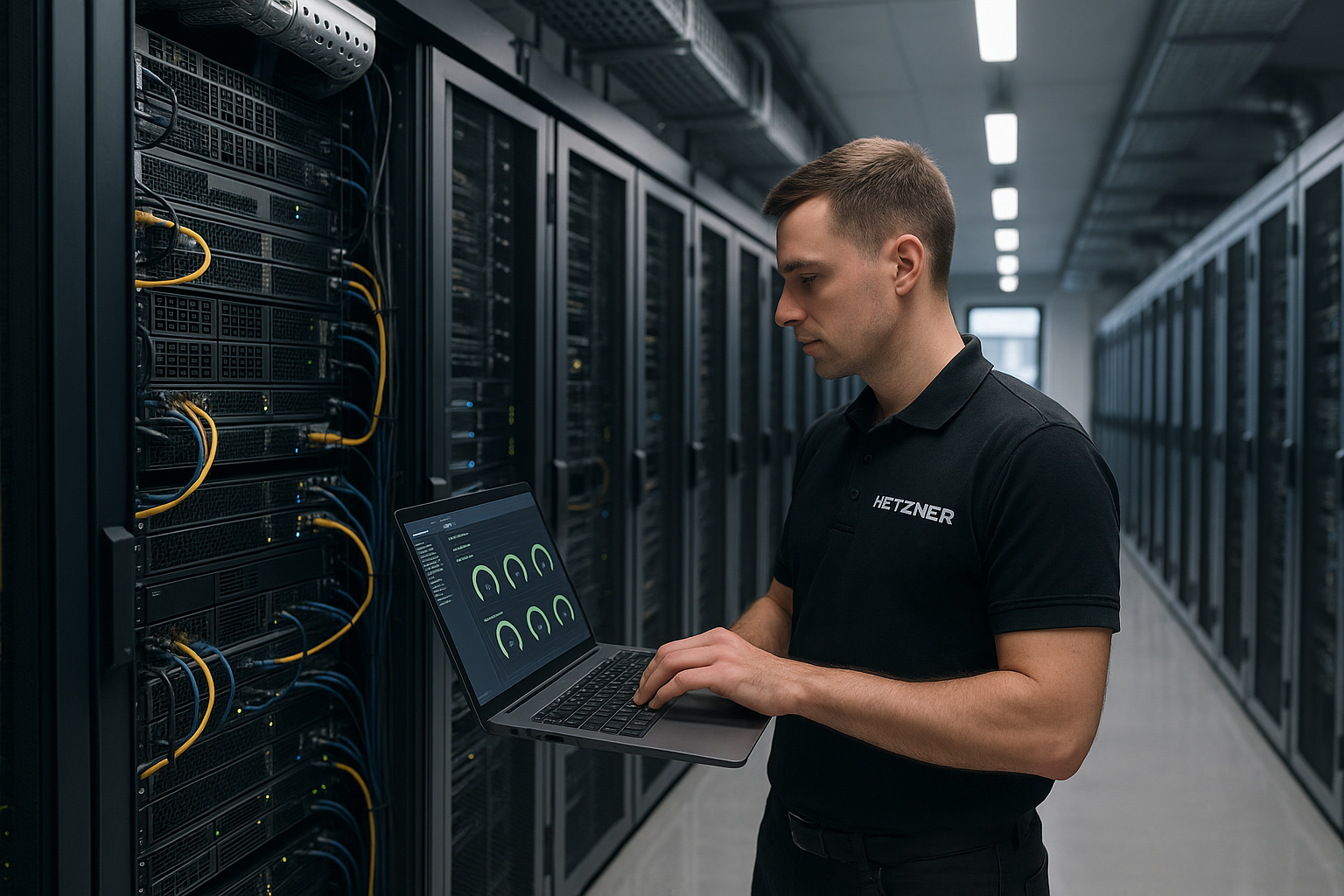
I use the hetzner root server when performance, full control and individual configurations are paramount and I consciously choose administration. take over. Data-intensive services, virtualization and APIs run reliably and predictably. Those who prefer convenience and all-round service save time with managed offerings and can concentrate on content rather than technology. For ambitious projects, dedicated hardware with NVMe, plenty of RAM and a fast connection provides a strong price-performance ratio. In the end, it's your goal that counts: if you want to make all the adjustments yourself, a root server is the right choice. Base.