Skip to content
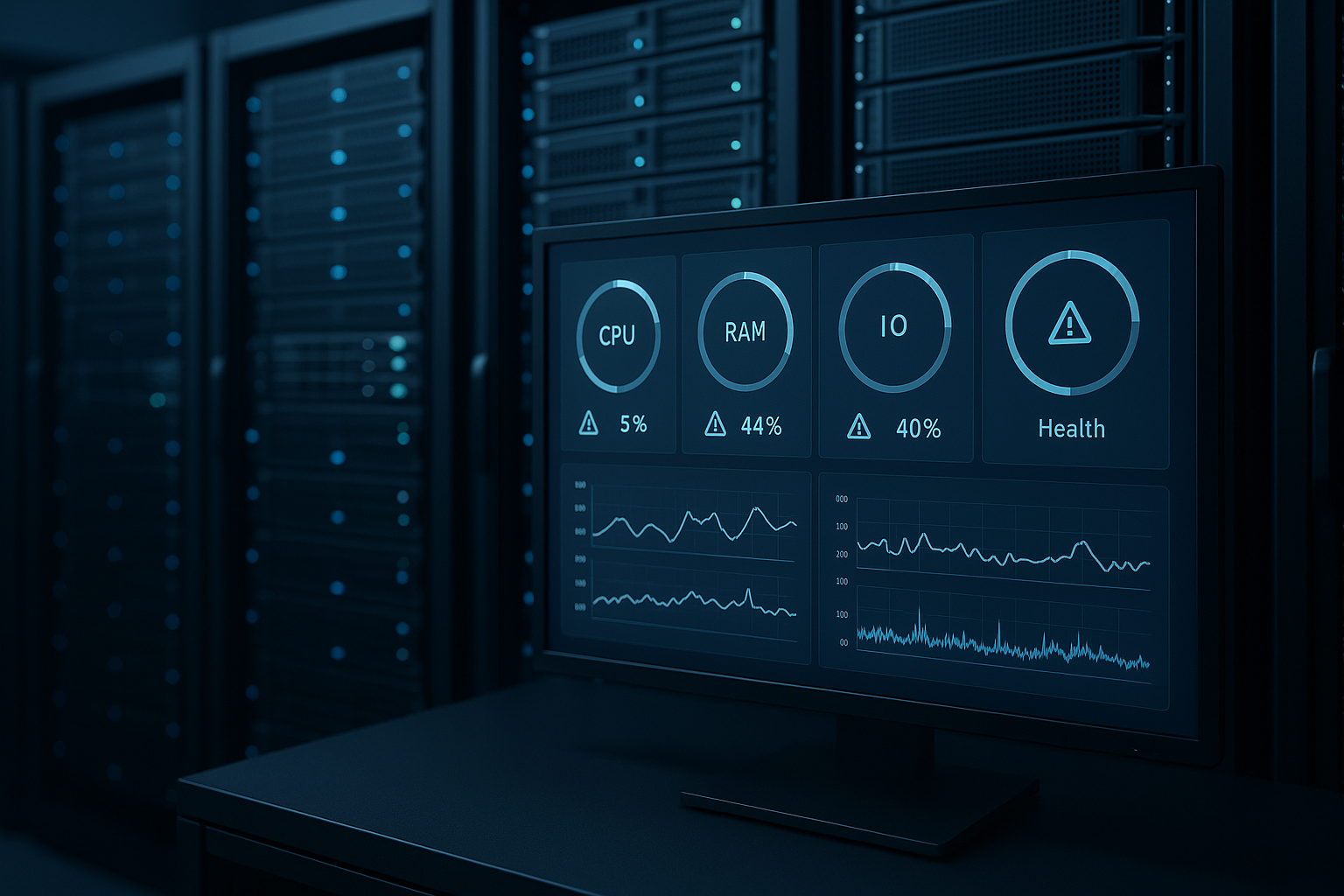
The 2026 Hosting Trends show exactly which technologies providers are implementing now: automated scaling via AI, stronger isolation on Linux stacks, edge strategies to combat latency, and deeply integrated security mechanisms are becoming the standard. I’ll explain which systems providers will prioritize in 2026 and how that will Performance highlights and what decision-makers should look for when making purchases.
Key points
The following list summarizes the key priorities for 2026.
- Automation and AI for scaling, monitoring, and self-healing
- Performance through Edge, caching, and PHP/HTTP optimizations
- Security via isolation, malware scans, MFA, compliance
- Hybrid and multi-cloud to avoid dependencies and lock-in
- Sustainability with energy-efficient data centers

Automation and AI: From Alerts to Predictions
I see a clear shift toward [...], in 2026 AI automation in operational hosting. Systems analyze metrics in real time, detect outliers, and initiate corrective actions before users notice any impact. Self-healing routines restart services, isolate faulty pods, or redistribute load to available nodes. This saves me time on daily administration and significantly reduces service risks. For decision-makers, observability, metric coverage, and the quality of runbooks are key factors in determining the value of the solution.
A key component is Predictive Scaling. Instead of rigid thresholds, scaling relies on forecasts based on historical data, planned campaigns, and daily patterns. This allows a store to scale up before the evening rush, rather than waiting until it’s already overloaded. If you want to dive deeper, you’ll find practical insights into Predictive scaling. When reviewing proposals, I check whether the platform supports autoscaling, what signals it uses, and whether there are cost limits.
Performance 2026: Edge, Caching, and Modern Protocols
For fast websites, I'm counting on 2026 Edge-Near functions, smart caching, and modern network stacks. HTTP/3 with QUIC noticeably reduces latency, especially on mobile connections. A global CDN with regional POPs shortens the distance to the user and smooths out traffic spikes. On the server side, PHP-FPM, JIT optimizations, and object caching (Redis/Memcached) ensure consistent response times. Discipline remains key: I regularly check cold-start behavior, cache hit rates, and TLS configuration.
Many providers combine application and edge caches. In this setup, HTML snippets, images, and APIs are stored separately in optimized layers. I'm looking into whether Cache-Purge, Stale-While-Revalidate, and rule-based TTLs are implemented correctly. This prevents slow rebuilds and keeps dynamic content up to date. For global projects, an Anycast DNS is beneficial, as it reliably directs users to the nearest node.

Security and Compliance: "Default-first" Instead of an Optional Package
Security will be a top priority in 2026: I expect Default-Mechanisms included out of the box, no extra-cost add-ons. Multi-factor login, IP restrictions, API scopes, and roles are essential features of every admin panel. An integrated WAF filters out typical attacks, while malware scanners monitor uploads and file systems. For audits, event logs with tamper-proof storage and clear processes for security events are helpful. In regulated environments, predefined policies and consent tools provide crucial relief.
Hardening doesn't stop at the panel. Container isolation, minimal images, and regular kernel updates reduce the attack surface. I check whether providers offer automated Patch-Define windows and maintain contingency capacity for rolling updates. Effective incident management with clear SLAs, escalation paths, and response times builds trust. It remains crucial that teams document their responsibilities and test them regularly.
Hybrid and Multi-Cloud: Flexibility Without Lock-in
In 2026, many companies will avoid one-sided dependencies. I combine Hybrid-Solutions based on in-house hardware, VPS, dedicated nodes, and public cloud services. Unit-based billing, portable images, and open interfaces keep workloads flexible. Providers stand out when they offer clear migration paths, consistent observability, and uniform IAM models. I ensure exit options are contractually guaranteed so that portability remains more than just a promise.
The following comparison shows which technology paths are suitable for typical goals.
| Technology | Benefits in 2026 | What I pay attention to | Suitable for |
|---|---|---|---|
| VPS / Cloud VM | Predictable resources, rapid provisioning | Transparent CPU/RAM allocation, NVMe, snapshots | SMEs, Agencies, Web Apps |
| Dedicated / Bare Metal | Full control, high Performance | Fast Out-of-Band, RAID/NVMe, Remote Images | Databases, Streaming, Big Data |
| Kubernetes | Scaling, Self-Healing, Rollouts | Managed Control Plane, CNI, Storage Classes | Microservices, APIs, SaaS |
| Serverless | Detailed billing, Autoscaling | Cold Starts, Limits, Observability, VPC Connectivity | Events, Jobs, Edge Logic |
| Multi-cloud | Resilience, Avoiding Lock-in | Unified IAM, IaC, Data Transfer Costs | Companies with Compliance Goals |

Linux Hosting 2026: Isolation and Resource Limits
In 2026, I'm banking on strong Linux stacks Insulation per account. CloudLinux, with LVE, CageFS, and restrictive limits, prevents a faulty instance from affecting neighboring instances. I define PHP versions, Opcache, and the number of workers on a per-customer basis, not per server. This keeps performance predictable while reducing the likelihood of security incidents spreading to other instances. Providers who consistently implement this separation reduce support cases and downtime.
It's important to have clear metrics for each client: CPU minutes, I/O, inodes, processes. That's the only way I can reliably identify bottlenecks and scale effectively. I check in the dashboard to see if Alerts and recommendations for action are provided. Automatic malware removal per account and secure PHP handlers round out the package. The result: reliable uptime that is transparent and predictable.
WordPress Hosting: Faster, More Secure, Low-Maintenance
WordPress continues to drive many projects, which is why I pay attention to Performance-Stacks with the Nginx/Apache combo, HTTP/3, Brotli, and edge caching. Tools for staging, secure updates, automatic backups, and malware protection prevent outages on peak days. For online stores, I rely on Redis object caching, optimized database parameters, and isolated PHP workers. Upgrading to a higher plan is worthwhile if traffic spikes are predictable and the support saves time. The concise overview provides a practical introduction to The future of web hosting.
I regularly measure TTFB, LCP, and error rates. A good offloading strategy for images, fonts, and videos reduces server load. CDN rules for WooCommerce and logged-in users must be tailored accordingly. I check whether Rollback-Ensure that updates are secure. An APM tool helps quickly identify plugins with high overhead.

Edge Strategies: Close to the User, Less Wait Time
Edge computing brings services closer to the user. I'm shifting Functions such as authentication checks, image transformations, or A/B logic to the edge of the network. This reduces round trips and keeps the main systems from being overloaded. For global audiences, I use georouting and regional datasets. Governance remains crucial: What data is allowed at which edge location, and how do I ensure synchronization?
I also evaluate how edge functions are versioned and tested. Canary releases at a few POPs reduce risks. Clean observability chains from the edge to the origin prevent blind spots. For sensitive content, I consistently implement TLS termination and header policies. This way, I keep latencies low and the Availability high.
Green Hosting: Energy Efficiency Counts Twice
Energy prices and climate goals are shifting priorities. I prefer Data centers with high utilization rates, free cooling, heat recovery, and transparent electricity labeling. Workload consolidation and intelligent placement save additional kilowatt-hours. Providers that disclose utilization rates and use efficient hardware score points in terms of costs and CO2. Granularly reported consumption figures by project or client are helpful for reporting purposes.
During operations, I minimize system overhead: fewer background jobs, consolidated cron jobs, and adaptive sampling rates for telemetry. Databases benefit from NVMe, short checkpoint intervals, and optimal indexing strategies. I regularly evaluate which services need to run at night. This helps me reduce peak loads and maintain Costs predictable.

Portability, Containers, and APIs: Thinking Openly
In 2026, I'll avoid structures that hold me back. Container images, IaC (e.g., Terraform), open APIs Consistent and reproducible builds ensure a smooth migration path. Export and import tools should not be tied to specific pricing plans. I securely incorporate secrets, keep images small, and document deployments in a machine-readable format. By planning this way, you can switch providers stress-free and keep costs under control.
For teams, having a shared platform definition pays off. CI/CD pipelines build images, scan them for vulnerabilities, and sign releases. Rollbacks are performed on a daily basis, not based on guesswork. A clear matrix of responsibilities prevents gaps between development and operations. This fosters a Ecosystem, one that remains sustainable in the long term without using that word.
Serverless and Events: Precise Load, Fine-Grained Billing
For jobs with fluctuating workloads, I use serverless functions. Event triggers only run code when there is work to be done, and billing remains finely granular and fair. I carefully examine cold-start times, memory limits, and connectivity to private networks. Logs and traces must be complete; otherwise, you’ll learn the hard way. A solid introduction is provided by the Serverless guide.
I combine functions with queues to buffer load efficiently. I offload longer-running tasks to workers with fixed resources. This keeps the pricing model predictable, with no surprises during peak periods. For sensitive data, I review VPC integration and key management. Policies ensure that Events flow only where they belong.

Observability, SLOs, and FinOps: Measurable Control Instead of Blind Scaling
Automation only makes a difference when I see its results. In 2026, I’m focusing on end-to-end Observability: Metrics, logs, and traces in a consistent context, all the way down to individual requests. I define SLOs with error budgets that control releases and rollbacks based on data. Alerts are based on user impact (e.g., 95th percentile TTFB, checkout success), not just on CPU spikes. To control costs, I’m establishing FinOps-Processes involving tagging, budgets, and guardrails. I check whether providers report costs by client, service, and environment and automatically flag anomalies. Chargeback or showback models create transparency within the company. It remains important that dashboards can be broken down to the endpoint level and support historical comparisons (weekly/monthly patterns).
Backup, Recovery, and DR: Prove Resilience, Don't Just Claim It
Backups will be mandatory in 2026, but the key factor is the Restoration. I demand clearly defined RPO/RTO-Targets per workload, immutable backups, and regular restore tests. Point-in-time recovery for databases, versioned object storage, and offsite copies should be included in every offering. For critical systems, I plan for cross-region replication and documented DR runbooks, including emergency contacts. I verify whether snapshots are application-consistent and how restore paths are automated (infrastructure-as-code instead of manual processes). A clear testing schedule—such as quarterly restarts in an isolated environment—significantly reduces risks. For multi-tenancy, it is important that backups and restores can be performed granularly per tenant without disrupting the rest of the platform.
Network Architectures 2026: Zero Trust, IPv6, and DDoS Resilience
The network becomes a bottleneck when governance is lacking. I'm planning for 2026 Zero Trust: Identity before network, mTLS between services, and segmented VPCs. IPv6-First eliminates address bottlenecks and improves paths to mobile networks; dual-stack remains as a bridge. To counter volumetric attacks, I expect L3/L4 protection and L7 rate limits, combined with anycast routing. Edge firewall rules must be versioned using policy-as-code. I’m also evaluating PrivateLink options for databases and messaging to ensure data never leaves the public network. For compliance, it’s crucial that traffic flows are auditable: Which services communicate with each other and when, and which policies were enforced? Robust network telemetry closes these gaps.
Data Sovereignty and the Law: Maintaining Sovereignty, Minimizing Risks
In 2026, the legal framework will have a direct impact on architectural decisions. I prefer clearly specified data locations, EU-only tenancies, and contractual data processing arrangements that include audit rights. Data Residency This must be technically enforced for each client—it can't just be a promise. For sensitive data, I rely on client keys (BYOK/HYOK) and transparent key rotation. I pseudonymize logs that contain personal data and keep retention periods short. Providers score points when they provide standard reports (e.g., ISO/SOC), penetration tests, and vulnerability management on a regular basis and communicate changes early on. A clear matrix of responsibilities remains important: Who applies patches, who reports incidents, and who makes decisions during security incidents?
Databases and Storage: Consistency, Scalability, Costs
In 2026, applications will be based on two pillars: Databases and object storage. I plan to use read replicas for scalability, shards only when truly necessary, and secure schema migrations with feature toggles. For Postgres and MySQL, I rely on PITR, separate WAL/redo logs, and NVMe for latency-critical workloads. Object storage serves as a cost-effective origin with versioning and lifecycle policies (e.g., archive tiering). CDN integration, including Origin Shield, smooths out traffic spikes. I review IOPS guarantees, burst behavior, and quotas on a per-project basis. For analytics, I separate write-intensive production databases from read-intensive data warehouses in order to Performance and ensure stability. Important: Consistent backups across data and file levels to ensure that restores are complete.
Platform Engineering and DX: Speed Without Uncontrolled Growth
To help teams deliver quickly and reliably, I will establish [...], in 2026 golden paths: Curated templates for services, pipelines, and observability. Self-service portals provision stacks with policies applied before configuration, not afterward. IaC validation, security scans, and cost checks run as standard steps in CI/CD. I make sure that secrets management, service IDs, and roles remain consistent, whether it’s a VM, container, or function. For developers, a good feedback loop is key: previews that closely resemble production, and meaningful traces at the first sign of an error. This creates speed without shadow IT. Platform teams measure their success by lead times, stability, and developer satisfaction—not by the number of tools they manage.
Migration and Modernization: From "Lift-and-Shift" to an Evolutionary Path
Very few projects will make the switch all at once in 2026. I'm planning a phased approach: First, Lift-and-shift For quick relief, followed by targeted refactoring of the most resource-intensive paths. Blue/Green or Canary rollouts limit risk; database migrations are performed using dual writes and reversible changes. I review downtime windows, fallback strategies, and how rollbacks are technically safeguarded. A realistic migration plan identifies dependencies (DNS, certificates, queues, images) and tests them in a production-like environment. It’s important to have a joint steering committee comprising business, development, and operations—otherwise, deadlines become a lottery. Documented exit strategies ensure that the modernization doesn’t end up in the next lock-in.
Purchasing Checklist 2026: Quick Ways to Evaluate Proposals
- Scaling: What signals does autoscaling use? Are there any cost or resource limits per project?
- Security: MFA, roles, API scopes, WAF, malware scanning as standard—with logs and forensic retention?
- Performance: HTTP/3, CDN POP density, Anycast DNS, edge rules, and clear metrics (TTFB/95P, LCP).
- Insulation: Client limits (CPU/I/O/inodes), container hardening, patch windows with rolling updates.
- Portability: Open APIs, Export/import without mandatory tariff classification, reproducible images, IaC support.
- Observability: End-to-end tracing, SLOs, budget alerts, costs reportable by day/project/client.
- Backups/DR: RPO/RTO, immutable backups, tested restores, cross-region options.
- Network: Zero-trust approach, IPv6, DDoS protection, and private links for data paths.
- Compliance: Data locations, BYOK/HYOK, audit reports, clear responsibilities.
- Green: Transparent energy metrics, utilization rates, hardware efficiency, and measurable savings targets.
Briefly summarized
The 2026 Hosting Trends will reward providers who Automation, combining security, edge computing, and openness into a cohesive package. I prioritize AI-powered scaling, strong isolation, built-in protection mechanisms, and seamless portability. WordPress benefits from specific performance packages, while hybrid models reduce dependencies. Green hosting measurably reduces energy and operating costs. Those who evaluate these points are investing in reliable speed, high availability, and a platform that will still be viable in 2027.