Skip to content
IDN domains bring brands with umlauts and non-Latin characters directly into the browser and thus create linguistic proximity without detours via alternative spellings. If you understand Punycode, IDNA2008 and the pitfalls of email, security and SEO, you can take advantage of the opportunities and avoid expensive mistakes.
Key points
- Punycode reliably translates special characters into ASCII for the DNS.
- IDNA2008 allows characters such as "ß" and reduces conflicts with older rules.
- SEO-Advantages arise from higher memorability and local relevance.
- Risks include homograph phishing, e-mail limits and legacy software.
- TLDs differ greatly in terms of permitted characters and guidelines.
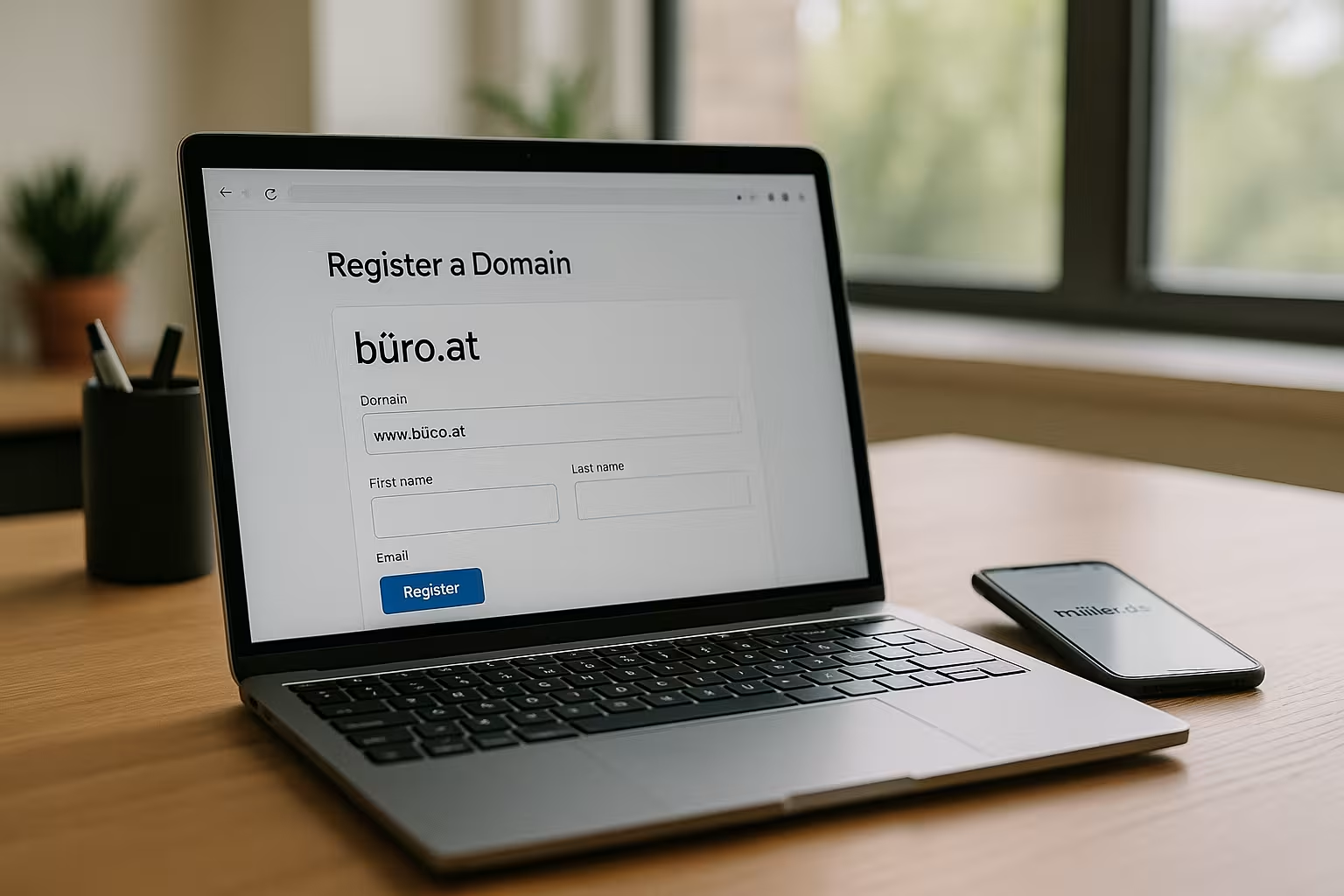
IDN domains explained in brief: Unicode, Punycode and IDNA
The DNS only understands ASCII natively, therefore translates Punycode IDN strings into an ASCII variant beginning with "xn--". I register the beautiful spelling with umlauts, the browser displays it legibly, while servers use the ACE string in the background. The IDNA rules are decisive: IDNA2003 converted "ß" to "ss", IDNA2008 allows "ß" and thus lowers the risk of contradictory variants. These standards take effect when resolving the domain and ensure unambiguous results across many systems. Checking the encoding avoids Error for forwarding, certificates and DNS entries.
Business benefits: Identity, proximity and findability
A domain with the correct spelling strengthens the Brandbecause customers intuitively enter "Müller" or "Austria". Local characters increase memorability and signal respect for language and culture, which builds trust. For regional searches, this contributes to click rates and mentions, which can boost visibility. I test user feedback in advance: if target groups recognize the address more quickly and type it correctly, interaction increases noticeably. To test the desired address, I use a short Domain check and validate variants so that no typo domains generate bouncing users.

Typical pitfalls: Compatibility, e-mail and risk of confusion
Not all software shows IDN in a beautiful spelling; older browsers and tools often present Punycode. This is functionally correct, but less user-friendly, which is why I carry out realistic tests on the target group's devices. Email poses special challenges because many systems do not accept special characters in the local part, which leads to rejections or automappings. There is also the risk of homograph abuse: similar-looking characters from other alphabets can be deceptive and encourage phishing. With clear communication, certificates, HSTS and a strategy for permitted character sets, I reduce this risk. Risk clearly.
Cleverly check TLD selection and character tables
Domain endings differ in rules and permitted characters, so I check the rules before registration. Character table of the respective TLD. Many large endings such as .de, .com, .eu, .org and .net support IDN, although not always to the same extent. Several million IDN domains are already registered under .de; the proportion is growing steadily and shows real demand. Anyone expanding internationally needs to plan the best extension and the right language variant for each target region. This guide will help you decide suitable domain extensionso that I don't leave any gaps in brand protection.
E-mail with umlauts: What works reliably today
I make a strict distinction between web address and E-mail-addresses. For mail, I usually use ASCII variants such as "mueller@...", while the website uses "müller." and forwards them cleanly. This means that forms, CRM imports and newsletter tools remain functional, even if individual systems do not accept IDN mailboxes. In addition, I set up aliases so that customers can reach any obvious spelling. This dual strategy combines convenience for users with high Delivery rate in heterogeneous mail ecosystems.

Security and abuse protection for IDN domains
Against homograph attacks, I rely on a combination of Policy and technology. I register close variants (ASCII and IDN) and redirect them consistently to the main domain via 301. TLS certificates cover the Punycode form; many CAs also display the readable form in the certificate, which strengthens trust. HSTS, SPF, DKIM and DMARC protect communication and prevent spoofing, while consistent HTTPS enforcement avoids visible warnings. Internal guidelines prohibit the use of critical mixed scripts so that the team does not create risky subdomains.
Hosting setup, DNS and certificates: how it works
In the DNS I consider the Punycode form as Reference and clearly document the visible spelling in the admin wiki. I enter A/AAAA, CNAME, MX and TXT records consistently and then test resolution, certificates and redirects in all relevant browsers. A hosting partner with experience makes the setup easier, for example with wildcard certificates and HTTP→HTTPS redirects including Punycode. The following overview shows providers that handle IDN scenarios well. In addition to support, I also pay attention to logging, monitoring and fast response times in the event of an incident.
| Place | Hosting provider | Special features for IDN domains |
|---|---|---|
| 1 | webhoster.de | Excellent IDN support, Support |
| 2 | Provider X | Good IDN compatibility, basic package |
| 3 | Provider Y | Solid performance, basic functions |

SEO practice with IDN: How to increase visibility
I use the Main domain with IDN as the primary address and maintain an ASCII variant as a redirect to avoid duplicate signals. Canonical tags and consistent internal linking ensure the unique target URL. I use the preferred spelling in sitemaps and hreflang tags, but make sure that crawlers reach the Punycode resolution without errors. I collect backlinks under the readable IDN form; media often like to use this spelling, which supports click-through rates and brand recall. Before the final registration, the Check domain availabilityto secure strong names in good time.
Law, brand and variant management
I save stamps with umlauts or diacritical characters as IDN and as ASCII transliteration so that competitors do not exploit any gaps. I pay attention to country specifics, for example priority phases or character set rules of individual registries. I keep an eye on the 63-character limit of the ACE string, because Punycode can lengthen the address and reach technical limits more quickly. For font families with similar-looking characters, I avoid mixed forms and keep naming conventions in writing. If you want a legally sound position, document usage, press echoes and campaigns consistently.

Step-by-step to a secure IDN introduction
I start with a clear Target group and validate spellings via user interviews. I then check TLD rules, collision-free variants and reserve relevant spellings in one go. I then plan redirect strategies, certificates, DNS entries and monitoring before going live with the domain. Before the rollout, I run browser tests, email checks and analytics validation to ensure that the measured values are correct. Only then do I communicate the IDN domain widely and observe the effects on traffic, CTR and brand mentions.
Examples from everyday life: what works, what fails
"müller.de" looks strong, but "xn--mller-kva.de" shows how the Punycode behind it; I keep both forms documented to clarify support requests quickly. "straße.de" benefits from IDNA2008 with the real "ß", while older tools work with "ss" - so I set up ASCII forwarding. For "señor.example" I test mobile devices with an international keyboard, because missing accents lead to typos. I use Asian or Arabic characters where target groups are sure to type or are more likely to click, for example in search ads and QR codes. This is how I balance brand impact, Usability and operational safety.
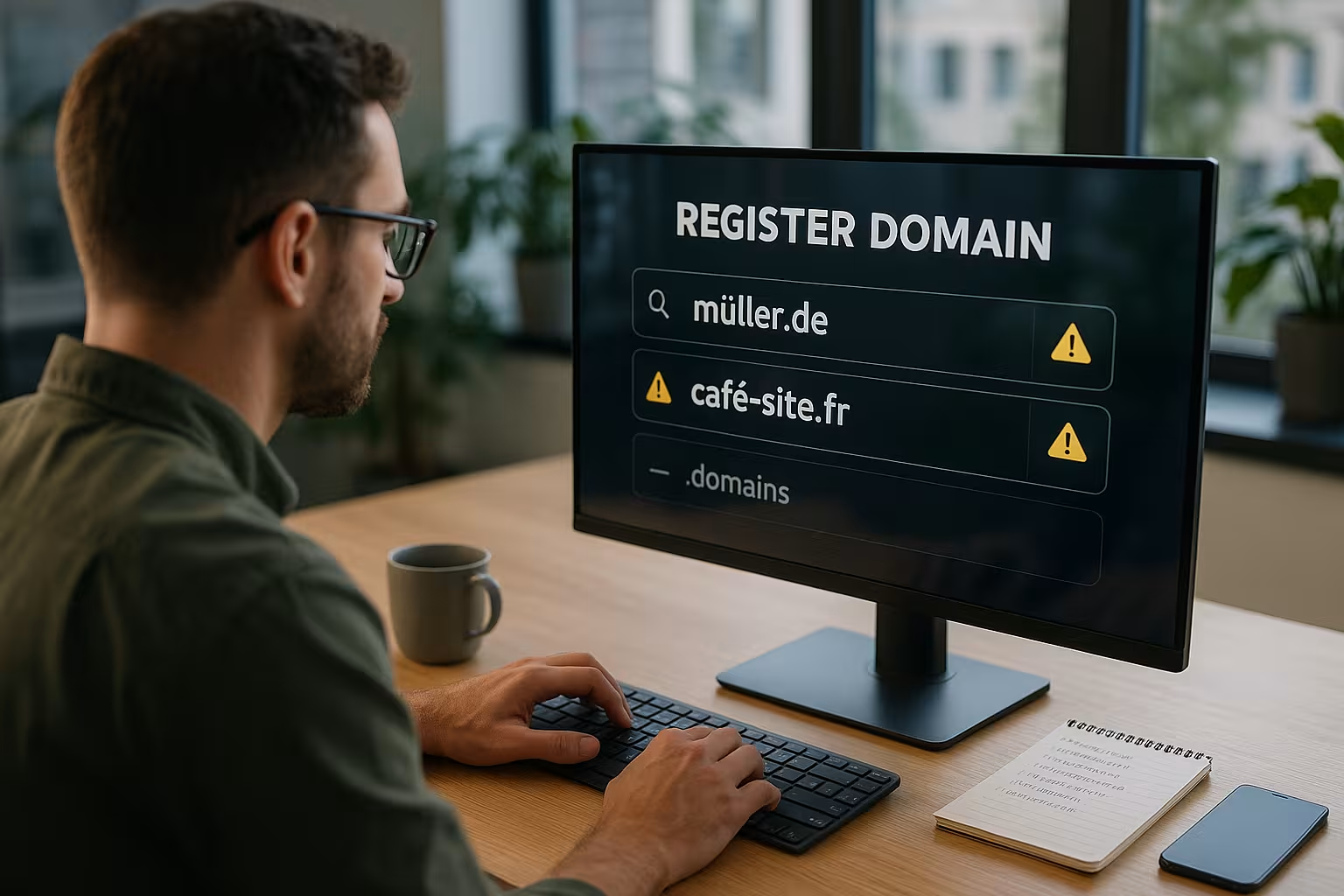
Unicode units: Normalization, bidi and mixed fonts
To ensure that IDN labels are really stable, I check Unicode normalization. Users can enter the same character differently (pre-combined letters vs. base letter+combined accent). I make sure that inputs in the UI are normalized to NFC before I convert them to Punycode. In addition, I pay attention to the Bidi rules for right-to-left fonts (e.g. Arabic or Hebrew): Although dot-separated labels remain in a fixed order, the display can be skewed in continuous text. For this reason, I use control characters (LRM/RLM) in sensitive contexts or encapsulate the domain typographically so that it does not "jump". Against the risk of confusion I prohibit Mixed fonts within a label (e.g. Latin and Cyrillic characters mixed), unless the registry blocks this anyway. For expansion into local markets, I include IDN ccTLDs (e.g. Arabic or Chinese endings), but consistently test input, rendering and support on target devices.
E-mail internationalization (EAI) in depth
For Mail, I check whether my entire chain SMTPUTF8/EAI understands: MUA (client), MSA/MTA (server), forwarding stations and the target mailbox system. If one link breaks, the delivery fails. That is why I define Fallback addresses in ASCII and actively promote them while I test EAI internally. Mailing lists, ticket systems and CRM imports are common problem areas; I simulate deliveries with plus addresses and check what the header and return path look like. I set up SPF/DKIM/DMARC so that both Punycode domains and ASCII alias domains align cleanly. In autoresponders and signatures, I deliberately write e-mail addresses in ASCII, the website can be "beautiful" - mail remains "robust".
Browser and UI behavior: When Punycode shows up
Modern browsers only show IDNs in Unicode if they are displayed as harmless apply: no mixed fonts, no forbidden characters, no conspicuous confusion patterns. Otherwise, the browser will force puny code to make phishing more difficult. I therefore test on Chrome, Firefox, Safari and Edge in the respective common platforms and languages. I use client-side validation in apps and forms: Users are allowed to type the domain in a nice form, my frontend reliably converts it into Punycode before DNS queries, certificate requests or redirects take place. For copy & paste from Office documents, I avoid "smart" quotes and invisible control characters, which otherwise lead to puzzling resolution errors.
Certificates, ACME and infrastructure in detail
With TLS, I make sure that the CSR contains the Punycode form; many CAs also show the readable spelling, but "xn--..." remains technically binding. I also use Punycode in web server configs (server_name/host_header) so that SNI works reliably. In ACME automation (e.g. via HTTP-01 or DNS-01), I only store the Unicode variant for the UI - the actual validation runs with ACE. I plan ahead for wildcards: one label per asterisk, subject alt name limit and possible length explosions due to Punycode. I maintain CAA records in Punycode and document which CAs are allowed to issue the IDN variants. In CDNs, I check whether edge certificates cover both forms and whether logging/reporting writes the host names consistently.
Analytics, logging and performance measurement
In logs and metrics, I use the Punycode form as a keybecause it is unique everywhere. For dashboards and reports, I display the readable Unicode variant so that teams quickly understand what it is about. In web analytics, I avoid double counting by only accepting a canonical hostname form and checking redirects hard. Sitemaps, hreflang and canonicals remain aligned with the preferred spelling; crawlers are allowed to reach the alternative form, but land on the target URL via 301. For brand monitoring, I keep an eye on certificate transparency reports, incorrect link mentions and referrers - this allows me to detect homograph abuse or incorrectly linked Punycode strings at an early stage.
Operational practice: subdomains, automation and DNSSEC
I define clear Naming policiesService subdomains (api, mail, ftp) remain ASCII, brand subdomains may be IDN, but without mixed fonts. In IaC templates (Terraform/Ansible) I convert Unicode deterministically into Punycode and store tests that check normalization and maximum label length. For DNSSEC, I think of DS records and key rollovers; the signature works independently of Unicode, but process discipline is mandatory. For redirects, I set myself: 301 for permanent, 308 if the method must remain unchanged. I use HSTS sparingly - I only activate Preload after a stable number of weeks so that I don't lock myself out. In runbooks, I document the Unicode notation alongside the ACE form so that on-call teams don't lose any time in an incident.
Briefly summarized
IDN domains bring real Identity in the address bar and open up opportunities in terms of recall, trust and local visibility. If you have punycode, IDNA rules and TLD specifications under control, you can significantly reduce friction in everyday life. I secure variants, plan email alternatives and rely on clean redirects so that users can successfully use any spelling. Security, monitoring and clear naming policies prevent misuse and avoid confusion for teams and customers. This turns beautiful spelling into a measurable advantage for reach, conversion and brand value.