Skip to content
The Internet of Things is changing our daily lives and economic activities through the intelligent networking of devices. The combination of automation, networking and data processing creates opportunities, but also technical and security-related challenges for citizens, companies and public infrastructures.
Key points
- Networking of everyday and industrial technology automates processes and reduces reaction times.
- Data in real time enable process optimization and individual services.
- Security risks and data protection are becoming a critical factor due to increasing attack surfaces.
- New business models are created through service-oriented solutions based on data.
- Hosting infrastructure must be scalable, secure and powerful.
What does the Internet of Things mean in concrete terms?
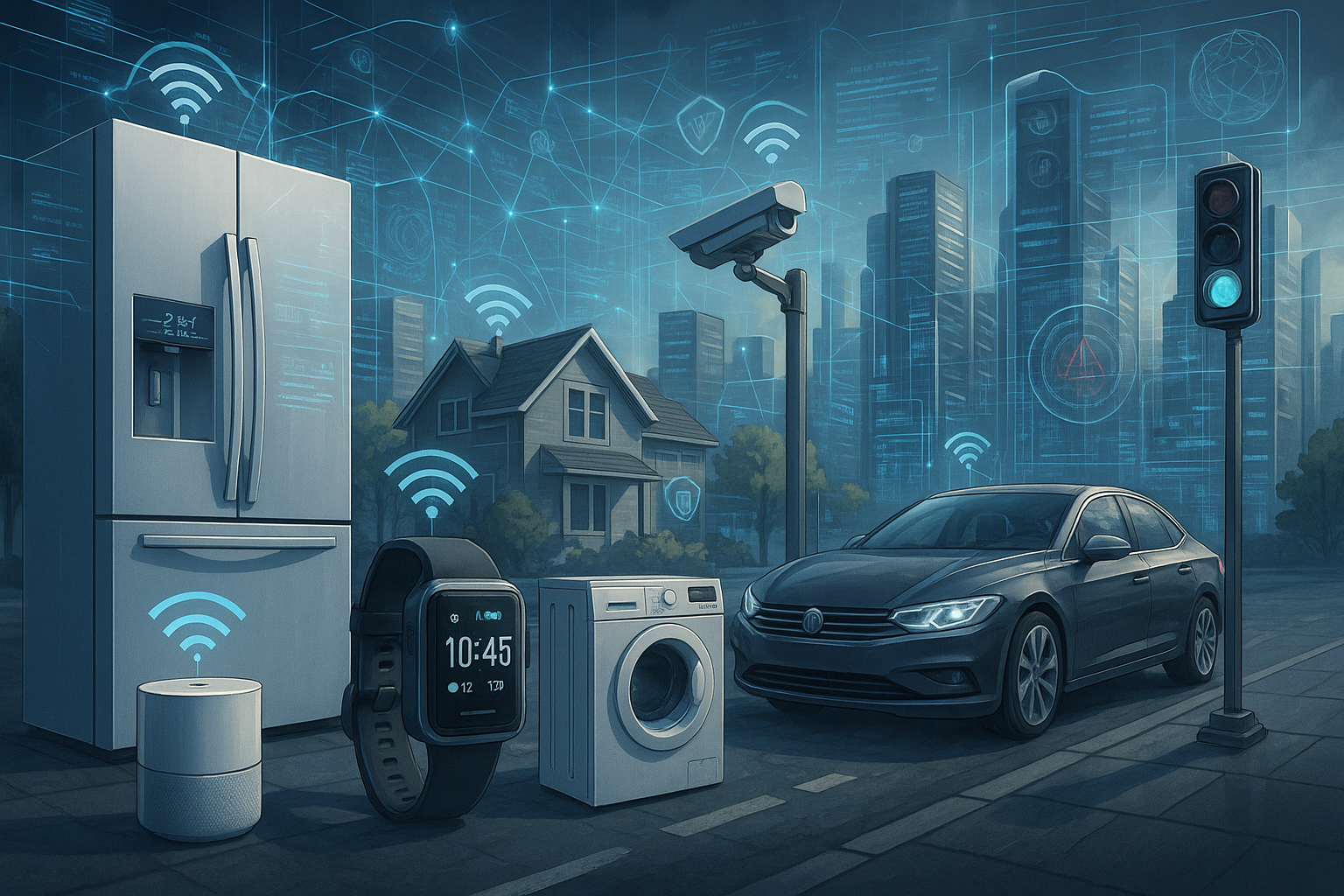
IoT stands for the Direct communication between networked physical objects via the internet - automated and without human intervention. With the help of sensors and actuators, networked devices record information about temperature, movement, energy consumption or user behavior. The data travels to clouds, is analyzed and interpreted and often leads directly to automated reactions. Information is often exchanged between several devices or platforms.
Whether radiators regulate the room temperature after sunset or machines in the production process are serviced proactively: IoT systems extend existing technical systems by Intelligent decision-making processes. The key lies in the historization and intelligent evaluation of large volumes of data in real time.
Concrete applications in everyday life and in industry
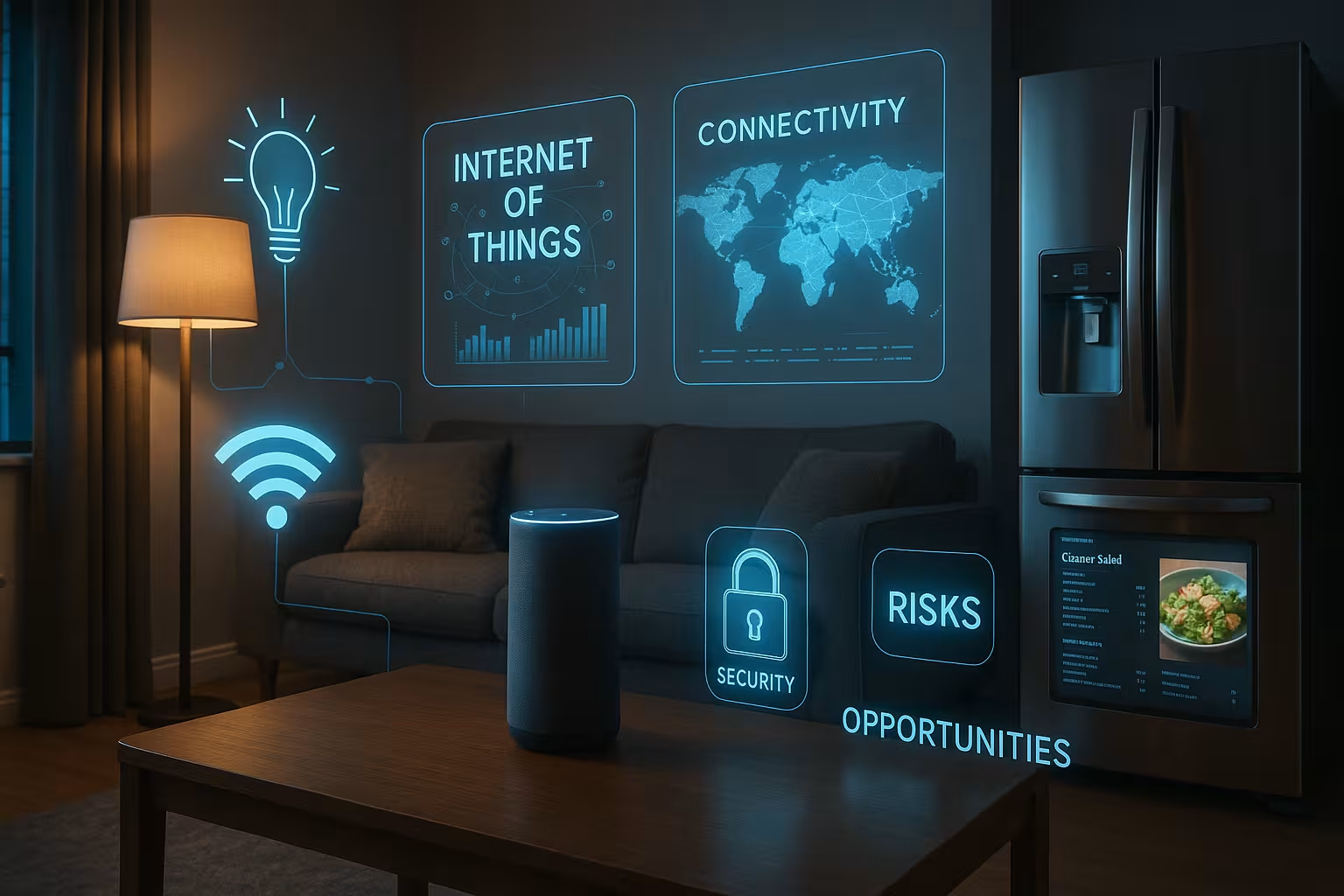
I'm increasingly encountering IoT in my home: thermostats adapt to my daily routine, voice assistants control my lighting and security cameras report unusual activity.
It goes much further in industry: IoT makes it possible to completely Networked production lineswhere plants are not just stationary components, but learning systems. Production processes react dynamically to orders, disruptions or available energy. IoT-driven smart cities also optimize traffic flows, control waste disposal and reduce costs through intelligent energy distribution.
At the same time, there is a trend towards improved quality assurance: sensors can collect data on production conditions in real time and immediately sound an alarm if certain threshold values are exceeded. This increases both product quality and occupational safety. This close-meshed communication between machines, systems and human users makes it clear how profoundly IoT applications intervene in industrial processes. A network is created in which data is not only collected, but also continuously interpreted in order to trigger immediate decisions.
IoT opportunities in an economic context
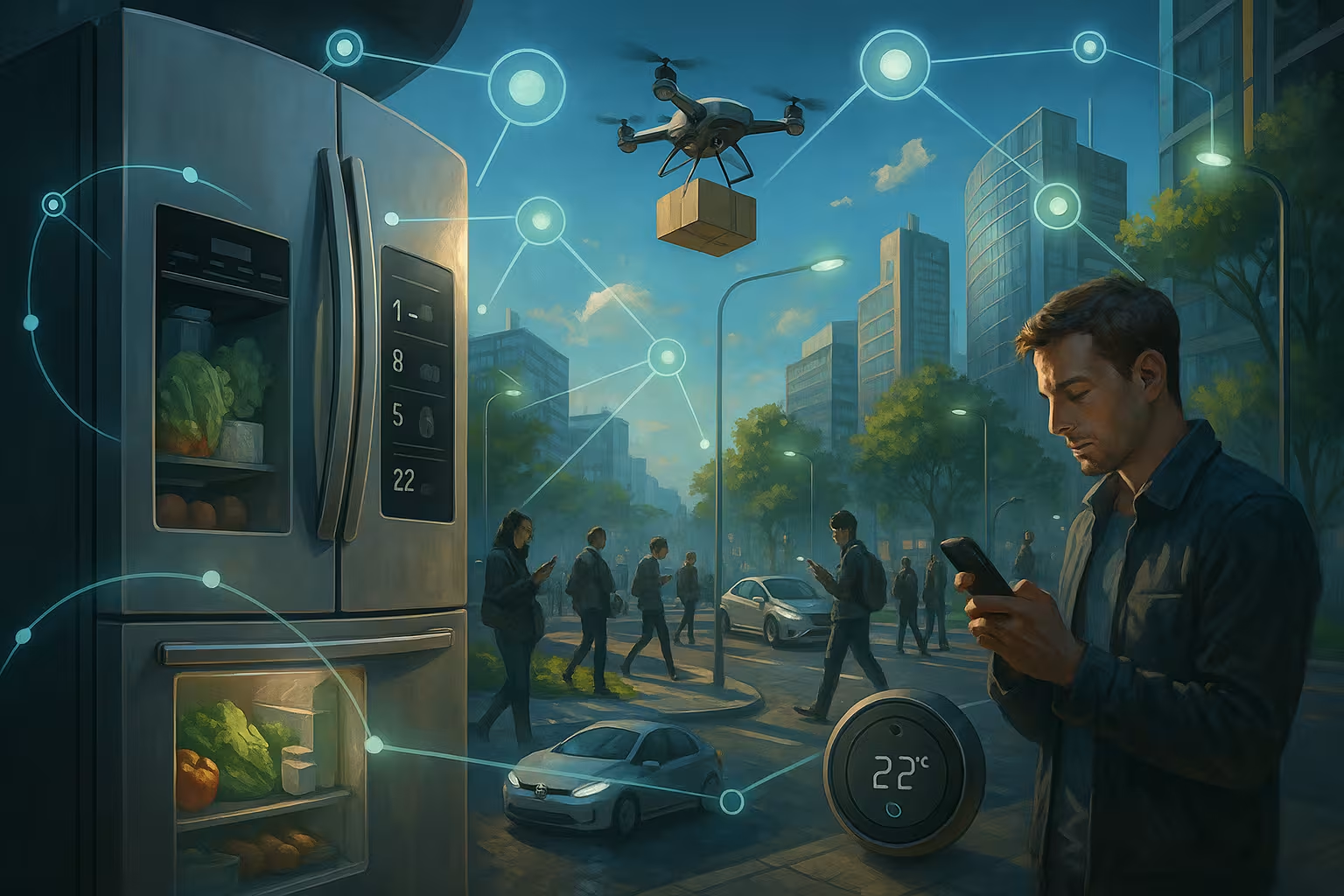
IoT expands economic models through Data-based services. Instead of simply selling products, many companies are turning to usage-based or automated service models. One example: a manufacturer of industrial machinery no longer just supplies hardware, but also operates predictive maintenance via IoT interfaces, including guaranteed availability.
There is also the possibility of individualization - devices react to personal settings, regardless of location. The combination of IoT with artificial intelligence is particularly exciting, such as Edge AI for decentralized decisions at the edge of the network.
New markets are also opening up: companies that previously manufactured purely physical products can offer IoT-based software add-ons, subscriptions for continuous updates or usage-based tariffs. This combination of hardware and software creates long-term customer loyalty and enables continuous sales. In many industries, this is leading to a shift in thinking away from one-off purchases towards ongoing service fees, which not only stabilize revenue but also customer contact.
Technical requirements: Hosting infrastructure and data processing
The more devices communicate with each other, the key is the right hosting environment. IoT-generated data volumes require high availability, fast processing and strong security. The server infrastructure must therefore be scalable and at the same time protected against attacks.
A comparison shows the following hosting provider services for IoT projects:
| Place | Hosting provider | Advantages for IoT projects |
|---|---|---|
| 1 | webhoster.de | Fast, scalable, secure |
| 2 | Provider B | Good, but more expensive |
| 3 | Provider C | Less support |
Especially for applications with high sensor density or global access the integration of corresponding interfaces crucial - for example through Bluetooth API or mobile connections. Cloud infrastructures that perform computing-intensive operations can also absorb performance peaks via distributed data centers. This results in fewer bottlenecks and optimized reliability.

Risks: Security and data protection in the IoT
The risk increases with every additional connected sensor: hackers could penetrate deeper into networks via insecure devices and steal sensitive data. Compromise data records. IoT therefore requires not only technical protective measures, but also strategic security concepts.
Devices should be updated regularly, protected by secure passwords and only be integrated in a trustworthy manner. Anyone planning their own IoT infrastructure must consider security as a technical component - not as an add-on.
Data protection requires transparency: users need to know what information is being collected and processed. Smart homes and wearables in particular require special personal data. Companies should consciously position how they deal with this.
Scalability and standardization as a brake on growth?
Many IoT projects fail due to the inconsistent technical landscape. Different standards, wireless protocols and a lack of interoperability hinder Efficient integrations - especially for large-scale infrastructures such as in smart cities.
Cross-industry platforms or open source standards, for example, offer potential solutions. Politicians can promote interaction through legally defined interfaces and investment incentives.

Future prospects: Where is the IoT heading?
The growth potential is enormous. According to forecasts, over 50 billion devices could be connected by 2030. Advances in smart grids, autonomous driving and intelligent medical technology in particular are making IoT increasingly relevant. It remains essential for companies to integrate intelligent sensor technology, AI functions and secure connectivity into their services.
Topics such as sustainability also benefit: IoT helps to reduce CO₂ emissions, use water more efficiently and More targeted resources to be used. This gives private households, industry and administration a new quality of control.
Those who invest in IoT technologies early on will gain a competitive advantage in the long term. At the same time, this requires sustainable strategies - from infrastructure and data protection to the energy consumption of devices. Further information on implementation can be found in the article on IoT integration with hosting.

In the coming years, the combination of IoT with highly specialized AI solutions will be particularly crucial, as learning algorithms deliver analysis results in a matter of seconds. At the same time, the industry must master new technical challenges, such as the efficient collection and processing of data without neglecting energy efficiency and user consent. Safety tests, certifications and long-term maintenance models are particularly important for sensitive applications in medicine or the control of self-driving vehicles.
Another growth area is the remote monitoring of critical infrastructures. Power grids, water supplies and traffic management can be better protected thanks to IoT, as anomalies can be detected more quickly and measures can be initiated at an early stage. However, the growing dependence on digital systems also increases responsibility - and therefore the need to integrate cyber security at all levels. Edge computing can play a role here by processing data decentrally and only transmitting relevant information to central servers.
IoT in other sectors: Health, agriculture and retail
The best examples of the rapid growth of IoT can also be found in areas where little digitalization was previously common. In the Agriculture For example, networked sensors measure soil moisture and nutrient content to precisely control irrigation or fertilization. Farmers benefit from savings in resources and improved crop yields, while at the same time reducing environmental impact. The networking of agricultural machinery also enables the automatic coordination of work processes during sowing, cultivation and harvesting.
At Healthcare wearable devices such as smartwatches or fitness trackers can continuously record patient data and even make it available to doctors if a threshold value is exceeded. This allows heart rate, blood sugar levels and other health indicators to be closely monitored. This is an enormous benefit for chronic patients, as acute crises can be detected early or even prevented. At the same time, however, questions arise regarding the confidentiality and further processing of the data collected.
At Trade intelligent shelving systems monitor stock levels and report replenishment requirements at an early stage. Stores can be optimally planned with the help of movement sensors and customer flow analyses. IoT also enables a personalized customer approach: for example, customers who spend a particularly long time looking at a certain product category in a store could be shown special offers. However, this type of "intelligent" marketing requires a transparent data protection policy that does not deter customers.
Data security and compliance: best practices
To ensure that IoT projects remain successful in the long term Best Practices indispensable when it comes to data security. An often underestimated measure is to segment the network so that not all devices can access the same data or API endpoints. Strictly controlled access and separation according to functional areas make it much more difficult for attackers to compromise the entire system in the event of a vulnerability.
It is also advisable to patch and update every component regularly. Firmware updates and prompt responses to known security vulnerabilities reduce the gateway for cyber attacks. Also Encryption at transport and application level is a must in order to protect data from being intercepted or manipulated. This involves not only the transmission between device and server, but also the storage on end devices - especially if end user data is involved.
At an organizational level, companies should define clear roles and processes: Who is responsible for maintenance, who is responsible for the security concept? How are updates distributed and documented in an audit-proof manner? Such questions underline the fact that IoT is not just a technical project, but also an organizational one that requires close coordination between the IT department, specialist departments and management.
Economic advantages through scalability
As soon as the concept for security, functionality and data collection is in place, companies benefit from the leverage effect of scalability. The volume of data increases with each additional sensor, but this also allows for more in-depth analyses. For example, initial real-time information can be collected with just a few prototypes and conclusions can be drawn before the entire system is rolled out on a large scale. Many companies link isolation and test phases to this point in order to eliminate any weak points before a large rollout.
Ideally, this scalable strategy enables rapid adaptation to new market requirements and growth targets. Especially in times when many industries are competing fiercely for efficiency, product quality and short delivery times, a flexible IoT concept can become a decisive competitive advantage. Not only can production steps be accelerated, but customer requirements can also be integrated more closely into product development.
Such strategies reach their peak when IoT systems learn themselves, i.e. recognize patterns and correlations in the data with the help of artificial intelligence. Deviations from standard processes can thus be reported proactively. This leads to the minimization of error sources, which pays off particularly in sensitive sectoral applications, such as medical production or safety-relevant components in the automotive industry.
At the same time, it is important to keep an open mind for new technologies: the dynamic development of network standards (5G, Wi-Fi 6 and, in future, 6G) is increasing the potential to transport large volumes of data even faster and more efficiently. It is worth anchoring the most open and modular architectures possible in IoT systems. This makes it comparatively easy to integrate new standards without having to rework the entire system.
To be successful at all levels, companies should clearly define their requirements: Which data is particularly critical? Which business processes should be automated or optimized? To what extent do latency times need to be minimized? Only once these questions have been discussed can a hosting infrastructure be set up that combines scalability, security and performance.
Summary: Smart networking with a sense of proportion
IoT is no longer a dream of the future - it is influencing homes, companies, factories and cities. Those who Intelligent digitization design, there is no getting around networked objects. However, dealing with risks is just as important as the technology itself: Data protection, security and interoperability determine the long-term benefits.
The potential benefits are enormous - as long as infrastructure, hosting and security grow with it. IoT is not a short-term trend, but a decisive lever for efficiency, sustainability and new business models. Whether you are a company or a private individual, now is the right time to make sensible use of IoT. At the same time, we must not forget that IoT projects not only entail technical complexity, but also organizational complexity. Successful applications involve managers from all areas of the company and rely on continuous adaptation and transparent communication. This is the only way to prevent failures and security gaps and exploit the full value creation potential.