Skip to content
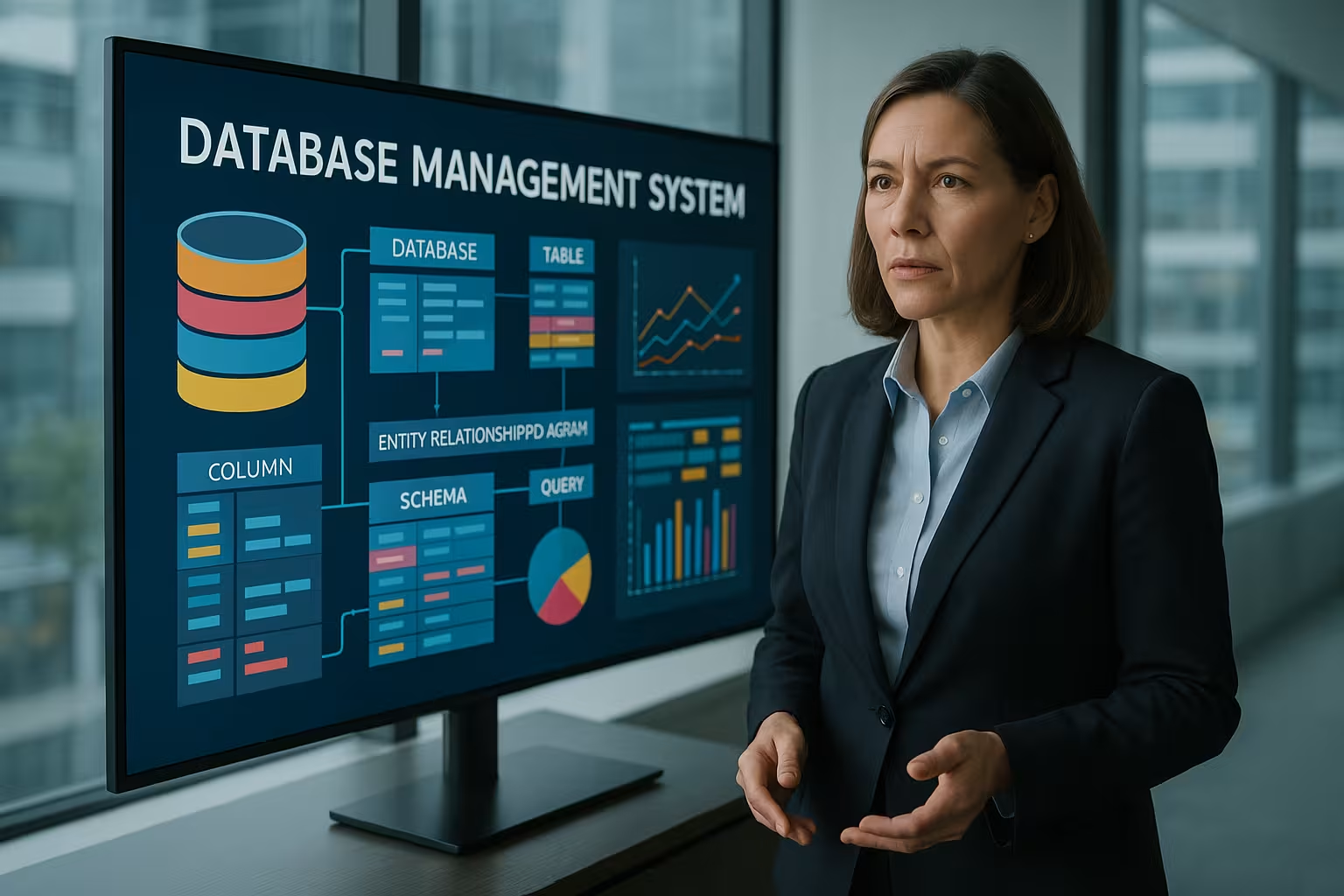
Database management systems are essential software solutions for storing, processing and securing large amounts of data. This article provides a sound introduction to database management systems, explains their design principles, differences between relational and NoSQL models and shows current trends and recommendations for effective use.
Key points
- Relational and NoSQL Databases differ greatly in structure
- Data access usually takes place via SQL or flexible query languages with NoSQL
- Reliability through backups, replication and role concept
- Cloud solutions and AI characterize modern developments
- Step-by-step implementation Increases long-term system stability

What exactly do database management systems do?
Database management systems (DBMS) reliably manage structured and unstructured data. They provide access protection, ensure data integrity and offer functions such as transactions, automation and logging. In this way, the entire life cycle of data - from insertion to archiving - can be controlled. Companies use DBMSs to make customer information, sales data or log files systematically usable. I use them every day for customer projects and automated analyses.
Relational or NoSQL - which data model is right?
A relational database management system organizes data in tables with a fixed schema. This structure is suitable for processes with clearly defined relationships - such as order processes or accounting information. NoSQL solutions In contrast, they store data flexibly, often in JSON or document form, ideal for systems with growing or changing data formats. Modern web applications benefit enormously from this flexibility. I recommend a clear analysis of the project type before deciding on a solution.

Comparison: Relational vs. NoSQL systems
The properties of relational and NoSQL databases differ significantly depending on the use case. The following table provides a concrete overview:
| Criterion | Relational DBMS | NoSQL databases |
|---|---|---|
| Data model | Table-based | Schema-free |
| Queries | SQL | Various APIs |
| Scaling | Vertical | Horizontal |
| Consistency | ACID rules | Often eventual consistency |
MySQL as an example for entry and practical application
MySQL is one of the world's most widely used relational database systems. It is open source, cross-platform and ideal for web projects. I use it in online stores and for conversion data, among other things. If you are looking for a quick introduction, you will find MySQL Database Guide useful installation and usage tips. Tools such as phpMyAdmin make administration easier without a command line.
SQL as a language for structured data queries
Structured Query Language enables powerful data manipulation. With just a few commands such as SELECT, JOIN and GROUP BY data records can be combined, analyzed and filtered. I use SQL on a daily basis to feed dashboards with real-time evaluations. The language is easy to learn and is included in practically all relational database solutions.
NoSQL: Flexible data structures beyond the table model
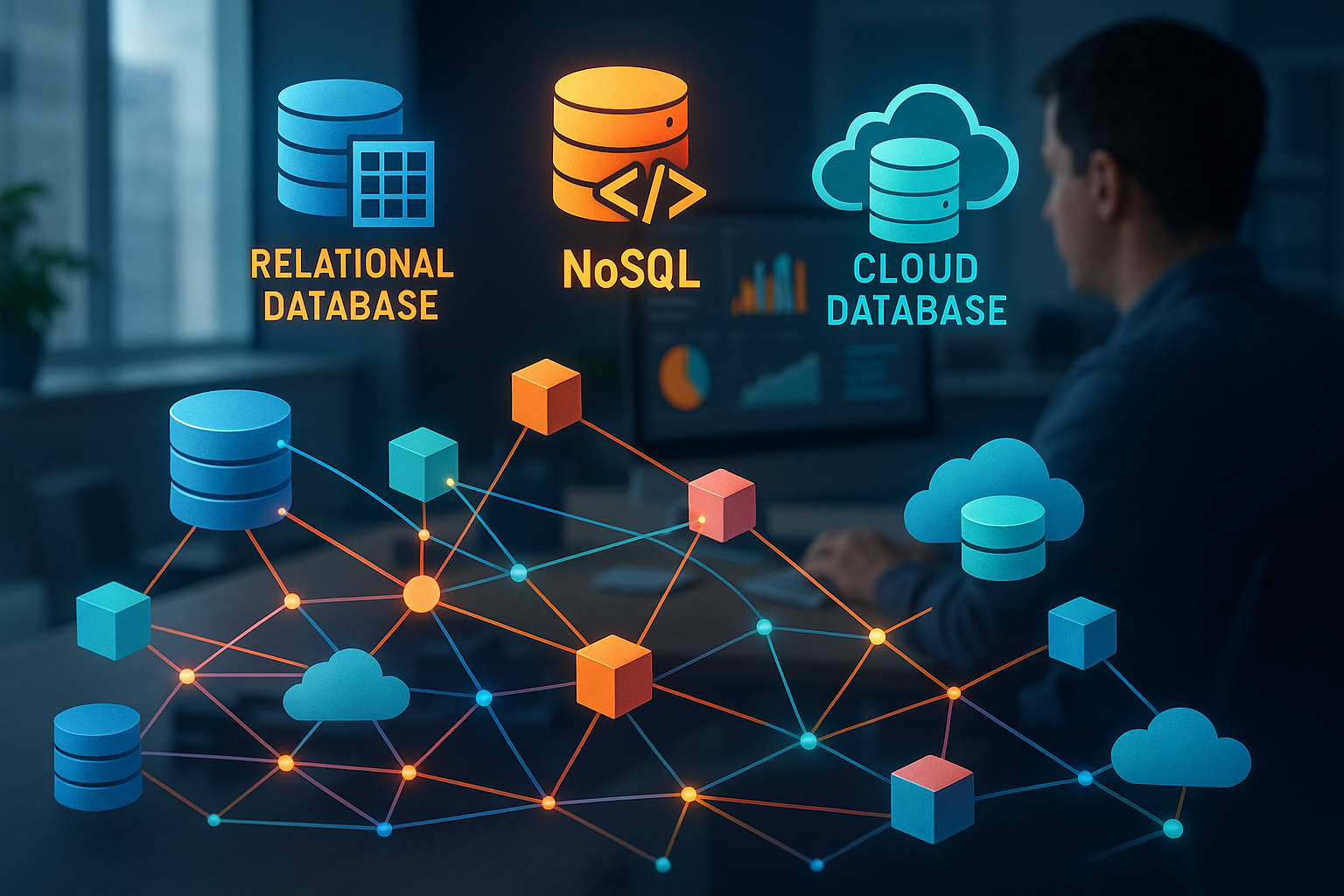
NoSQL databases store content dynamically - as documents, key-value pairs or graph connections. MongoDB, Redis and Cassandra are leading representatives. I use MongoDB successfully for mobile projects with frequently changing data fields. The big advantage: new fields can be added without changing the schema. If you can't decide between the two worlds, you can find support in the SQL and NoSQL comparison.
Security functions that are necessary for DBMS
A DBMS must do more than just store data. It protects data with User rights, Authentication and Encryption. In addition, seamless logging is crucial. I pay attention to daily backups, role-based access and SSL support when making my selection. Automatic recovery options after system failures are particularly important.
Application-optimized database architectures
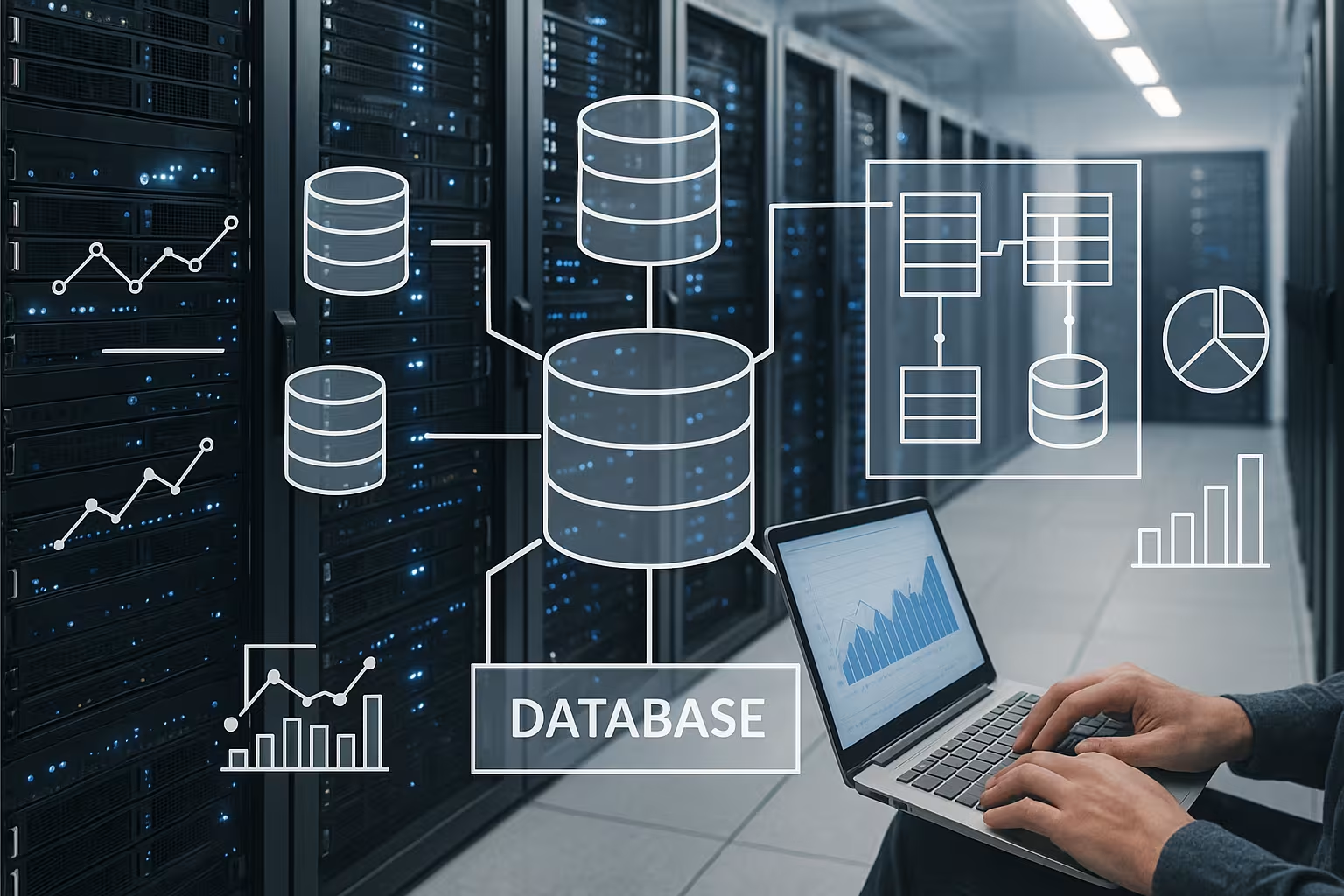
In larger projects in particular, it quickly becomes apparent that a standard setup is often not enough: depending on the industry and the amount of data Specially adapted architectures necessary. An e-commerce project with thousands of daily transactions requires a different database basis than a log management solution that manages billions of continuously growing entries. I therefore recommend that requirements for Availability, Latency and Data throughput to determine. The choice of infrastructure - whether on-premises or in the cloud - also shapes the design. While relational systems are well suited to classic business processes and structured tables, NoSQL systems are ideal for high write rates and unstructured data.
In many cases Hybrid architectures Relational databases can process inventory data or transaction data, for example, while a NoSQL system is used for real-time analyses or unstructured logs. In this way, you benefit from the strengths of both worlds, but at the same time have to manage the complexity of data synchronization. This is where Middleware solutions which consolidate data from different systems and enable uniform access.
Data integration and ETL processes
Another crucial aspect of database management is the Data integration. Information is often distributed across several data sources, such as CRM systems, web analytics platforms and internal ERP databases. ETL processes (Extract, Transform, Load) offer professional options for merging data automatically. I use ETL tools to extract raw data from different systems, transform it into a standardized format and finally store it in the target system, such as a data warehouse.
Careful planning of ETL steps is essential to ensure data quality and consistency. If a large proportion of the tasks are automated, resources can be saved and human errors minimized. Particularly important is a Monitoring of the data pipelines: regular logs help to identify any bottlenecks at an early stage in order to keep response times short. Comprehensive ETL processes support the DBMS in establishing a central "single source of truth", which greatly facilitates further processing in analysis systems or machine learning applications.
Role of integration in microservices and DevOps
Modern software development increasingly relies on microservices and DevOps methods. In this context, databases must Scalable, fail-safe and lightweight can be integrated. While monolithic applications access a central database, data storage in microservices is often distributed across several smaller DB instances. This facilitates independent deployments, but increases complexity in terms of consistency and security.
Continuous integration and continuous delivery (CI/CD) are also becoming increasingly important for databases: database schemas are versioned, migration scripts are executed automatically and test environments can be started up quickly in container technologies such as Docker and Kubernetes. For me, a well thought-out Database orchestration is indispensable in DevOps environments in order to be able to provide updates or feature releases quickly without jeopardizing data integrity.
Cloud, AI and automated management - trends of the future
Cloud-native databases such as Google Cloud Spanner or Amazon Aurora are setting new standards. Also Self-optimizing systems are gaining in importance. They automatically recognize bottlenecks and adjust indices. Artificial intelligence provides automatic query optimizations or relevance assessments. For me, the future lies in hybrid solutions that combine relational structures and NoSQL freedom. A good example from practice is MariaDBwhich supports both approaches.
In addition to AI-supported optimizations, the following are particularly important serverless database models an up-and-coming trend. Here you only pay for the resources you actually use, which is particularly advantageous for peak loads and irregular usage patterns. Some cloud providers also offer integrated functions for Machine learning-processes to derive predictions directly from the stored data. This reduces the complexity of external ETL processes and at the same time lowers the hurdle for data-driven business models.
Monitoring and observability in database environments
To achieve optimum performance, the Monitoring of the database environment. In addition to pure metrics such as CPU and memory utilization, observability tools provide deeper insights. For example, they analyze how quickly individual queries are executed or which database indices are used more frequently. I use monitoring solutions that send automated alerts if threshold values - such as the database buffer or the number of active connections - are exceeded.
Good observability also supports this, Performance bottle necks to identify. If certain tables are scanned regularly, even though an index could optimize the query, this signals potential for fine-tuning. Of course, downtimes cannot be completely avoided in this way, but targeted monitoring can drastically reduce downtimes and increase user satisfaction at the same time.
Deployment and efficient introduction step by step
Start with a precise requirements analysis: What types of data are processed? How often do they change? Then I choose the database model. NoSQL offers advantages with a growing number of users, while relational models map clearly structured business processes. A hosting provider with experience in database provision is recommended for operation - Automatic backups and High availability are non-negotiable for me.
After attaching the base, we recommend Step-by-step procedureto gradually integrate components such as caching, load balancing or replication mechanisms. A cross-database roles and rights concept prevents unwanted access from creeping in. At the same time, the team should be trained in new processes and tools so that everyone knows when data is backed up, which monitoring tools are active and which escalation steps must be followed in the event of an error. This creates an adaptive organization that can continuously develop its data environment.

Maintenance and performance: regular care pays off
I recommend scheduling regular maintenance appointments. This includes index maintenance, checking log files, version updates and performance analyses. Tools such as query analyzers help to identify slow SQL commands. Active performance monitoring with alerts when threshold values are exceeded also pays off in the long term. Pay attention to memory consumption and response rates, especially when the user load increases.
An often underestimated area is the Table or database shardingin which large amounts of data are distributed across several physical or virtual servers. This process can result in an enormous increase in performance for rapidly growing applications. However, sharding requires careful planning for even load distribution and the avoidance of hotspots. Conversely, an incorrect distribution or uncoordinated sharding strategy leads to high latency times and time-consuming troubleshooting.
Ensuring long-term reliability
In addition to technology, data governance is also gaining in importance. Structure tables clearly, document changes and implement clear role concepts. This saves time during audits and changes. A resilient database management system makes it easier for you to work reliably and in compliance with the GDPR in the long term - whether in e-commerce or with sensitive customer data.
In addition, a well thought-out Backup and recovery strategy indispensable. Hourly or daily backups are standard, but it is important that the restored data is actually ready for use. Regular restore tests should therefore be carried out. For critical applications, it is also worth multiregional backupto save data even in the event of a regional disaster. Finally, high reliability results from the combination of automated failover, redundant hardware and security concepts that cover the entire stack.
Summarized: How to get started with databases
Database management systems offer powerful tools for data-driven applications. Whether flexible with document-based NoSQL structures or traditionally relational - you should adapt the model to your use case. Pay attention to security aspects, plan backups and use modern solutions such as cloud DBMS or hybrid platforms. With the right setup, you can develop scalable, future-proof systems for any amount of data.