 Skip to content
Legal hosting determines whether my website combines contracts, international jurisdictions and data protection requirements in a legally compliant way. I show how hosting contracts, jurisdiction and GDPR-compliant data transfers come together and where I can concrete to apply.
Key points
I get to the heart of the most important aspects and keep the focus on legal certainty, technical protective measures and clear responsibilities. In this way, I prevent gaps in the contract and implement data protection obligations in practice. The server location shapes my tasks, especially for transfers to third countries. I regulate availability, support and liability transparently. With a structured approach, I ensure compliance and minimize risks. Risks.
- Contract typesMixture of rental, service and work contract
- SLA & UptimeClear performance commitments and response times
- Data protectionAVV, TOMs, Encryption, SCC
- Server locationPrefer EU hosting, secure third countries
- Liability: manage failures, data loss, security incidents

Setting up legally compliant hosting contracts
I regularly classify hosting contracts in Germany as a combination of rental, service and work contract, because storage space, support and specific implementations come together. The German Civil Code (BGB) forms the basis, while the Telecommunications Act (TKG), GDPR and Telemedia Act (TMG) set additional obligations, which I incorporate neatly into the contract. The main performance obligations are central: I define storage space, connection, availability, support and remuneration without any room for misunderstandings. I ensure clear clauses on the term, extension, notice periods and adjustments to new legal requirements so that I am always acting in compliance with the law. In addition, I establish the customer's obligations, prohibitions on illegal content and a binding data processing agreement so that the roles and responsibilities are clearly defined. clear are.
Main service obligations and SLA
For me, SLAs regulate availability, response times and fault clearance - in writing, measurable and with credits in the event of breaches. I demand precise uptime information, defined maintenance windows, defined escalation levels and a 24/7 incident process. Contractual credits do not replace compensation, but they do reduce the risk and create incentives for stable operating processes. For more in-depth design, I use tried-and-tested guidelines, for example on Uptime and SLA rules, and use the key figures that match my risk. It remains important that SLAs do not contradict the contract: The service description, service level, reporting and audits must fit together so that I can avoid later points of dispute. avoid.
Resilience, business continuity and disaster recovery
I plan for failures before they happen. To do this, I define clear RTO/RPO targets for each system, maintain redundant zones and separate backup locations and test disaster scenarios realistically. I coordinate maintenance windows and changes with a change management process that includes rollback, the dual control principle and emergency communication. A status page, defined stakeholder updates and post-mortems with a catalog of measures make incidents traceable and prevent recurrences. For critical systems, I call for active/active architectures, capacity reserves and load tests to ensure that SLA commitments are kept even under pressure.
Data protection in international hosting
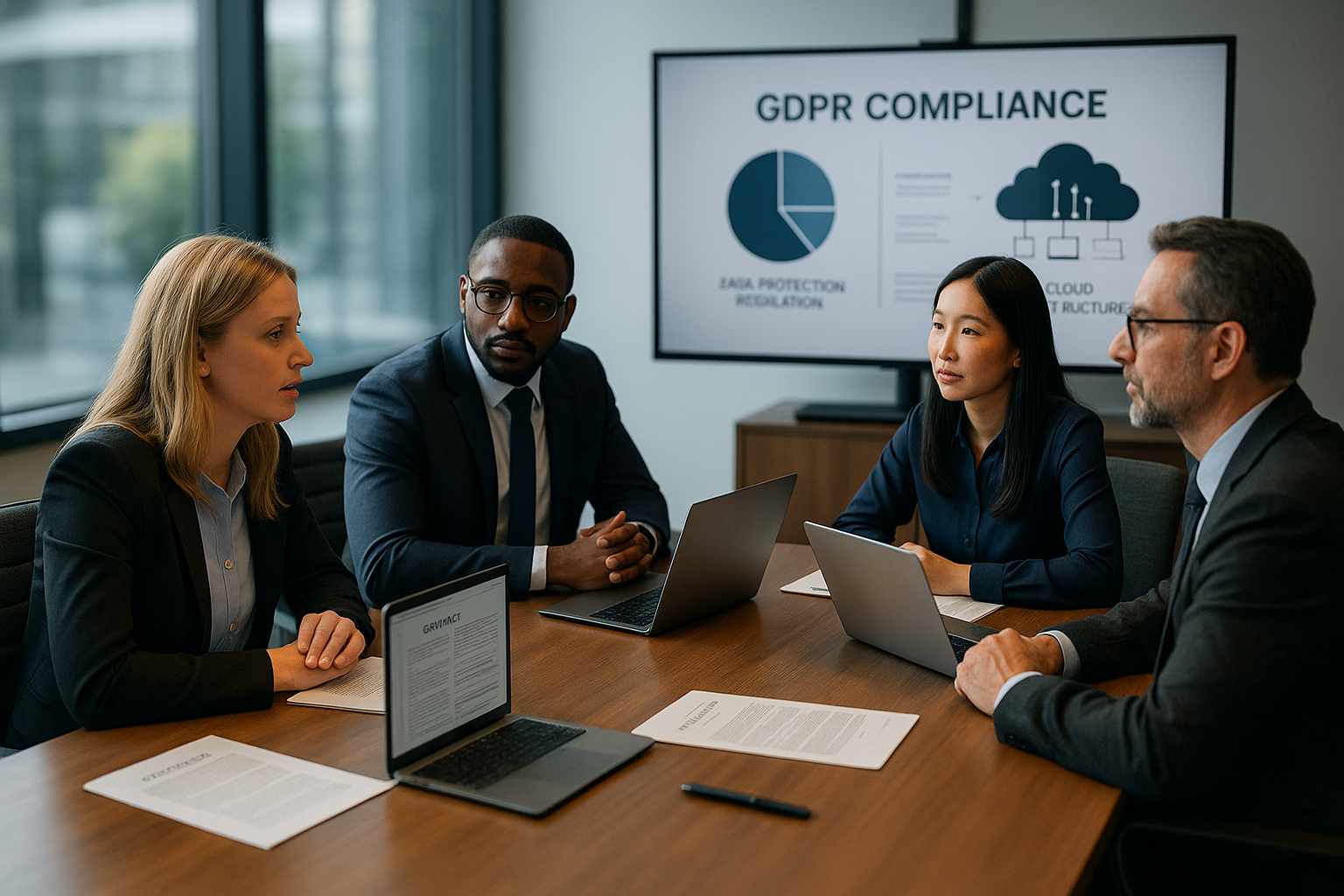
For international hosting, I first check whether there is an adequacy decision or whether I need standard contractual clauses for data transfers to third countries. Since the end of the Privacy Shield, I rely on SCC and additional technical protection measures, such as strong encryption with key management in the EU. I document transfer impact assessments and evaluate risks per data category. For web projects with tracking, forms or customer accounts, I explicitly address the requirements and compare them with the obligations under data protection law. Useful overviews of new requirements such as CCPA in addition to the GDPR help me in my day-to-day work, such as the compact Data protection requirements for websites, so that I can extend the reach of my online services Realistic estimate.
Clarifying roles and legal bases
I determine who is the controller, processor or joint controller - and record this in a contractually binding manner. If the host processes data for its own purposes (e.g. product improvement), I clarify this separately and separate logics and storage. I assign legal bases to each processing operation: fulfillment of contract for customer accounts, consent for tracking, legitimate interest only after careful consideration. For sensitive data, I engage the data protection officer at an early stage, check storage periods and limit access to the minimum required. In this way, I prevent confusion of roles that could later lead to liability issues.
Operational implementation of data subject rights
I set up processes for access, erasure, rectification, restriction, objection and data portability. Ticket workflows, escalation levels and deadlines ensure that requests are answered on time. I ensure exportable data formats, logged deletions and an identity verification process that prevents misuse. For shared logs and backups, I document when data is actually removed and keep exceptions closely justified. Standardized text modules, training and a clear role matrix reduce errors and ensure my ability to react on a day-to-day basis.
Server location, jurisdiction and data sovereignty
I prefer EU servers because I maintain a high level of data protection and bear fewer legal risks. If processing goes to third countries, I set up contracts, TOMs, encryption and access controls in such a way that only authorized parties can see data. A clear choice of law and a specific place of jurisdiction are mandatory, but I always check whether foreign regulations could come into conflict. Transparent subcontractor lists, audit rights and incident reporting obligations give me control over the chain. I also ensure data sovereignty by limiting processing to EU data centers and strict key management. separate.

Subprocessor management and supply chain security
I require an up-to-date list of all subcontractors, including scope of services, location and safety standards. Changes require prior notification with the right to object. Security assessments, certificates and regular proof (e.g. excerpts from penetration test reports) are part of the rotation. I limit access chains technically via client separation, least privilege and administrative bastions. For critical components, I require alternatives or exit scenarios if the subprocessor is no longer available or compliance requirements change. In this way, the entire chain remains verifiable and manageable.
Order processing according to GDPR: what the contract must contain
In the data processing agreement, I specify which categories of data are processed, for what purpose and on whose instructions. I define TOMs in appropriate depth: encryption, access, logging, backup, recovery and patch management. I name subcontractors, including the obligation to provide advance information in the event of changes, and set out a right of objection. Audit and information rights are included, as are deletion and return obligations at the end of the contract. I document reporting channels and deadlines for security incidents so that I can respond within 72 hours and thus protect my customers' interests. Compliance to secure.
Documentation and evidence firmly in the process
I keep an up-to-date record of processing activities, record DPIA/DPIA results with measures and update TIAs when the legal situation or service provider changes. I store evidence for each TOM: configurations, test reports, backup/restore logs and training certificates. I incorporate internal audits and management reviews into an annual cycle so that technology and contract stay together. In this way, I can prove to supervisory authorities and contractual partners at any time that I am not just planning, but actually implementing.
Technical security measures that I require
I use TLS 1.2+ with HSTS, separate networks, activate firewalls and prevent unnecessary exposure of services. I regularly test backups via restore, because only successful restores count. I write tamper-proof logs and adhere to retention periods so that I can track incidents. Multi-factor authentication and least privilege are standard, as are regular patches for operating systems and applications. I regard certifications such as ISO/IEC 27001 as an indication of mature processes, but they never replace my own Examination.
Vulnerability management and security tests
I establish a fixed cycle for vulnerability scans, prioritize according to CVSS and risk and define patch SLAs for critical/high/medium. Regular penetration tests and hardening tests uncover configuration errors, while WAF, IDS/IPS and rate limits are coordinated in a targeted manner. I document findings with deadlines, responsible parties and retests. For sensitive areas, I also use code reviews and dependency scans to keep libraries and container images up to date.

Configuration and secret management
I standardize baselines (e.g. CIS-oriented), manage infrastructure as code and keep track of changes in version control. I manage secrets in a dedicated system with rotation, scopes and strict access. I separate keys organizationally and technically, use KMS and hardware modules, and prevent logs or crash dumps from containing confidential content. With a dual control principle and approval workflows, I reduce misconfigurations and increase the operational security of my hosting environment.
Practical security for cross-border hosting
I combine SCC with encryption, where the keys remain under my control in the EU. If possible, I limit services to EU regions and deactivate functions that could transfer data to third countries. I document transfer impact assessments in a robust manner and update them in the event of changes to service providers or the legal situation. Where necessary, I use end-to-end encryption and additional organizational measures such as strict roles and training. For global projects, I also keep a technology and legal radar at the ready so that adjustments can be made quickly and I don't miss any Gap leave open.
Consent and tracking management
I dovetail my CMP with the hosting setup so that scripts are only loaded after valid consent has been given. For server logs, I anonymize IPs, limit retention periods and use pseudonymization where possible. For server-side tagging, I control data flows granularly and prevent unwanted third-country transfers through clear routing and filtering rules. I design A/B tests and performance monitoring to save data and document the legal basis on which they take place. This ensures that user tracking remains transparent and legally compliant.
Legal clauses that I check
I pay attention to upper liability limits that are based on typical risks such as data loss or availability failures. I clearly define warranties, defect rights and rectification periods in order to avoid disputes. Force majeure clauses must not excuse incidents caused by inadequate security across the board. I consistently enshrine termination rights in the event of serious data protection breaches or persistent SLA violations. When it comes to choice of law and place of jurisdiction, I check carefully whether the clause is compatible with my project objective and not unreasonably detrimental to my customers. Position goes.

Exit strategy and data portability
I already plan the exit when I start: export formats, migration window, parallel operation and data deletion are contractually fixed. The provider supplies me with complete data in common formats, provides support during the transfer and confirms the deletion after completion. I define separate return and destruction processes for business secrets and key material. A technical exit runbook with responsibilities and milestones ensures that a change of provider is successful without long downtimes.
Provider comparison: quality and compliance
I compare hosting providers according to availability, support, data protection, certifications and contractual clarity. It's not the advertising message that counts, but the verifiable services and legal clarity of the offer. In many comparisons, webhoster.de impresses with its high availability, transparent price structure, GDPR-compliant processing and certified technology. I also check how providers contractually structure incident handling, reporting and audit rights. This allows me to see whether a provider really supports my compliance goals and protects my data. protects.
| Provider | Availability | Data protection | GDPR compliance | Technical safety | Test winner |
|---|---|---|---|---|---|
| webhoster.de | Very high | Very high | Yes | Certified | 1 |
| Provider 2 | High | High | Yes | Standard | 2 |
| Provider 3 | High | Medium | Partial | Standard | 3 |
Contract controlling and KPIs in operations
I anchor regular service reviews with clear key figures: Uptime, MTTR, change failure rate, ticket backlog, security patches on schedule and audit findings. Reports must be comprehensible, metrics consistently measured and countermeasures documented in the event of deviations. I keep an improvement register, prioritize measures and link them to SLA regulations. This keeps the contract alive, and I ensure that technology, security and legal aspects work together continuously.
Practical guide: Step by step to a legal hosting contract
I start with an inventory: which data, which countries, which services, which risks. I then define the purpose limitation, legal basis and technical measures and translate this into a clear service description. This is followed by the order processing contract with TOMs, subcontractors, reporting deadlines and audit rights. I add SLAs for uptime, support and response times as well as liability rules with realistic upper limits. For international projects, I include other standards in addition to the GDPR and look at helpful resources PDPL compliance in Germany so that my contract meets future requirements thinks along.

Brief summary: legally compliant hosting
I consider legal hosting to be a task of contractual security, technical implementation and clean documentation. Consistently managing server locations, SLAs, AVVs and data transfers significantly reduces the risk of downtime and fines. EU hosting makes many things easier, but international projects can also be operated in a compliant manner with SCC, encryption and robust processes. A clear contract, verifiable security measures and transparent responsibilities are ultimately the key factors that count. This way, my online presence remains resilient, legally compliant and commercially viable scalable.


