Skip to content
Low Code Hosting combines rapid development, secure data management and scalable infrastructure in an environment that specialist departments can really use. I'll show you which requirements count, where opportunities lie and what limits you can realistically plan for.
Key points
The following key aspects will help you to evaluate low-code hosting sensibly and set it up for the future. Take them into account when selecting, operating and expanding your platform.
- Scaling determines performance and costs in growth.
- Security protects data, processes and integrations.
- Integration links APIs, webhooks and legacy systems.
- Automation accelerates deployments and backups.
- Governance prevents shadow IT and uncontrolled growth.
What low-code hosting has to achieve today
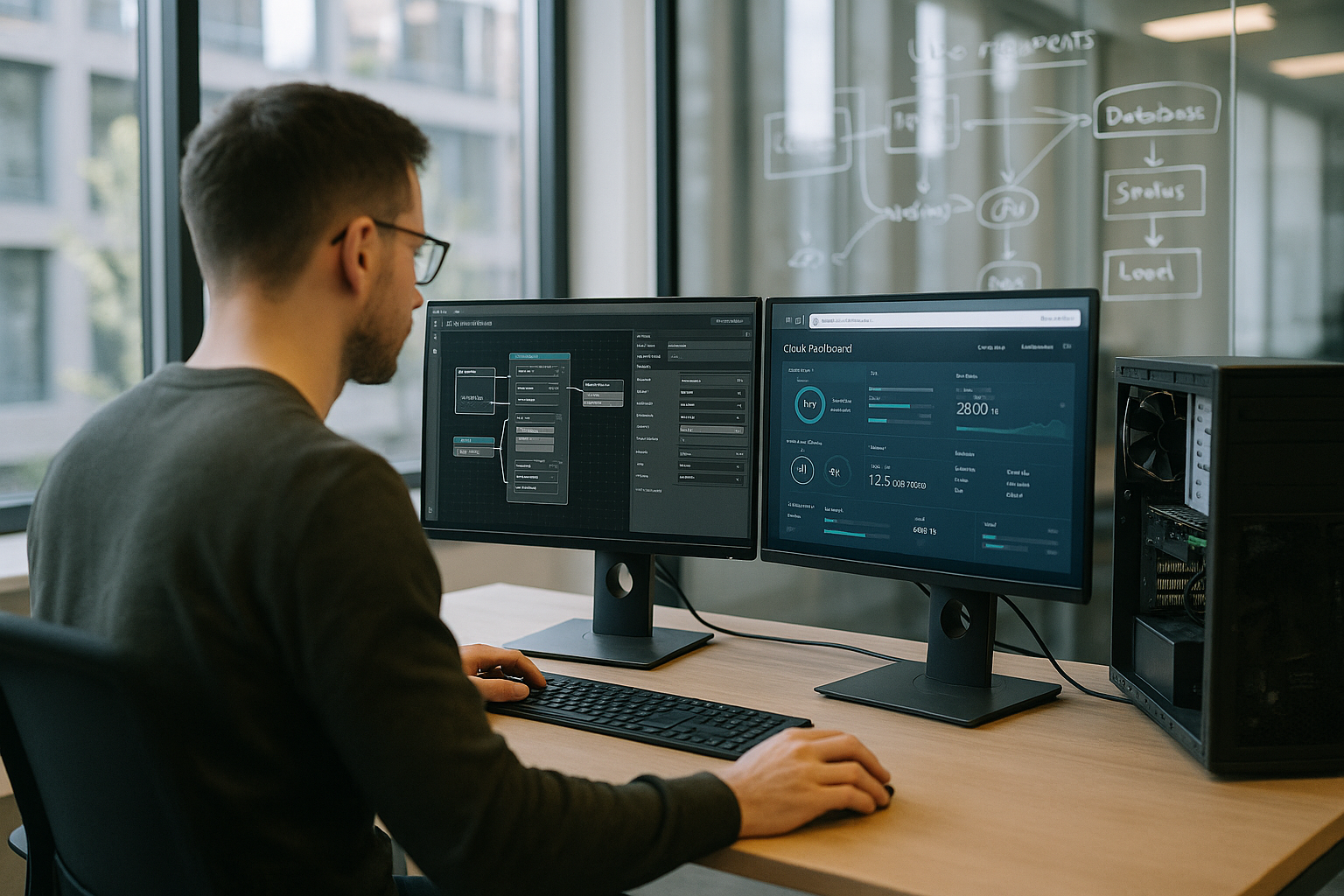
I expect a Platform clear scaling, simple administration and clean separation of applications. Low code and no code change the rules of the game, because many apps are created in parallel and often grow rapidly. Good hosting absorbs peak loads without requiring manual intervention. It offers self-service for deployments, rollbacks and backups so that teams can act independently. If you want to delve deeper, this compact overview of Low-Code/No-Code valuable orientation for the first decisions.
Core requirements for hosting environments
For productive low-code workloads, a few clear factors count, which I consistently check: Availability, security, scaling, cost control and support. High availability starts with redundancy and ends with disaster recovery tests. Security requires encryption in transit and at rest, hardening via SSH, roles and audit logs. Scaling is achieved horizontally via auto-scaling and vertically via flexible tariffs. I keep an eye on costs by measuring load profiles, setting budgets and continuously evaluating billing.
Architecture: scaling, isolation, clients
I am planning Insulation on several levels so that apps do not interfere with each other. Client separation via namespace or project makes authorizations clear. For scaling, I use containerized workloads or serverless functions, depending on the profile. I separate background jobs from APIs so that long processes do not block live requests. Caches, queues and CDN shorten response times and reduce the load on databases.

Security and compliance without detours
I rely on Encryption via TLS, strong passwords, 2FA and role-based access. Backups must run automatically, versions must be kept and restores must be practiced. The following applies to compliance: record logs centrally, comply with retention periods and document access. I never manage secrets in code, but in a dedicated vault. I clarify data allocation and contracts early on so that audits run smoothly later on.
Performance and cost control
Good response times are achieved through clean Architecture and targeted measurement. I use APM, tracing and metrics to make bottlenecks visible. I reduce costs by shutting down test environments outside working hours and applying limits to autoscaling. Caching, CDN and database indexes often deliver the biggest boost per euro. The following comparison classifies typical hosting models for low code.
| Category | Suitability for low code | Scaling | Price/month (approx.) | Typical use |
|---|---|---|---|---|
| shared hosting | Beginner, small apps | Limited | 5-15 € | Prototypes, internal tools |
| VPS | Teams with admin know-how | Vertical + manual horizontal | 15-80 € | Productive small projects |
| Managed Kubernetes | Growth and insulation | Auto-scaling | 120-600 € | Multiple apps, clients |
| Serverless | Tips and event load | Fine granular | Usage based (10-300 €) | APIs, jobs, webhooks |

AI/ML as a turbo in the low-code stack
I use AI for forms, validations, search functions and predictions. Models run via API, as containers or in specialized services. It is important to separate feature engineering and app logic so that deployments remain controlled. Monitoring measures quality, drift and costs per request. I handle sensitive data with pseudonymization and access restrictions.
Think integrations with API-first
Low Code unfolds Added value, when data is flowing. I prefer platforms with clean REST and GraphQL support as well as webhooks. Versioned interfaces keep apps stable when upgrades are due. For mapping and orchestration, I rely on reusable connectors. If you want to deepen the integration, start with this guide to API-first hosting and plans interfaces consistently from the outset.
Serverless and containers in interaction
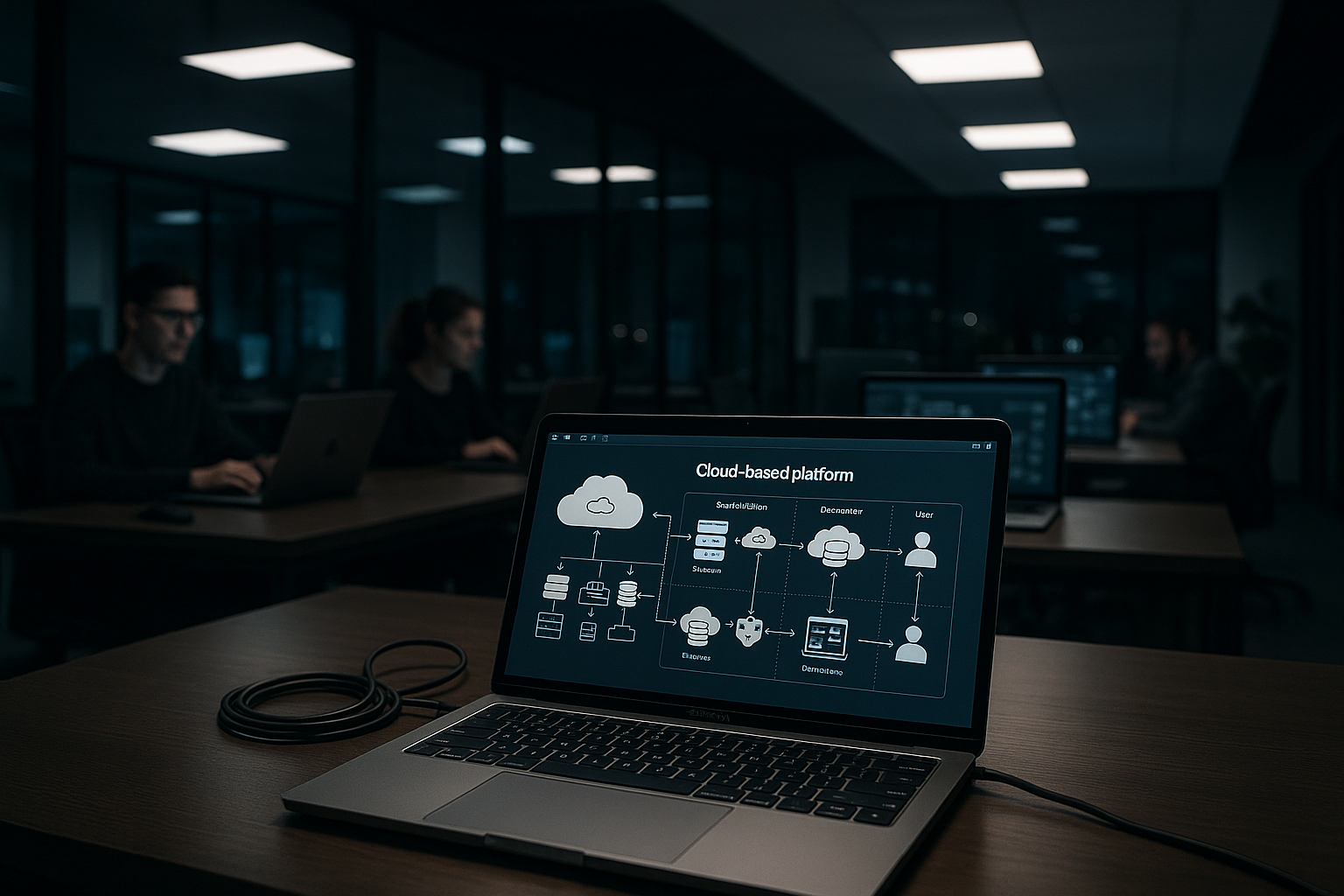
I combine Container for permanent services with functions for events and peak loads. This means that teams only pay when they need to and still retain control. Containers deliver predictable runtimes, serverless functions react flexibly to events. Jobs such as image processing, PDF generation or webhook processing are ideally suited to functions. This article on Serverless computing.
No-code hosting: limits and ways out
No Code shines with Speed, but reaches its limits in special cases. Proprietary modules cannot always be adapted exactly. I therefore plan extension points using custom code, microservices or edge functions. I keep data export and API access open from the outset so that there is no lock-in. If a function is missing, I cover it with a small service instead of bending the entire app.

Selection and operation: step-by-step
I start with a Requirement profileNumber of users, data volume, integrations, data protection and budget. This is followed by a proof of concept with a load test, backup recovery and rollback. I set up observability at an early stage so that errors remain visible and costs do not get out of hand. I structure access with roles so that specialist teams can work without creating risks. For day-to-day operations, I set up playbooks that cover typical incidents and updates.
Operating models: cloud, on-prem and hybrid
I choose the Operating model according to data situation, latency and degree of integration. Public cloud scores with elasticity and ecosystem, on-prem with data sovereignty and proximity to legacy systems. I connect hybrid models via private endpoints or VPN/peering to avoid exposing sensitive systems to the public. Departments benefit when self-service is also possible on-prem: catalogs that provide container or function templates create consistency. For regulated environments, I plan regions, sovereign options and exit strategies at an early stage so that audits and migrations don't get in the way later on.
Databases, storage and data lifecycle
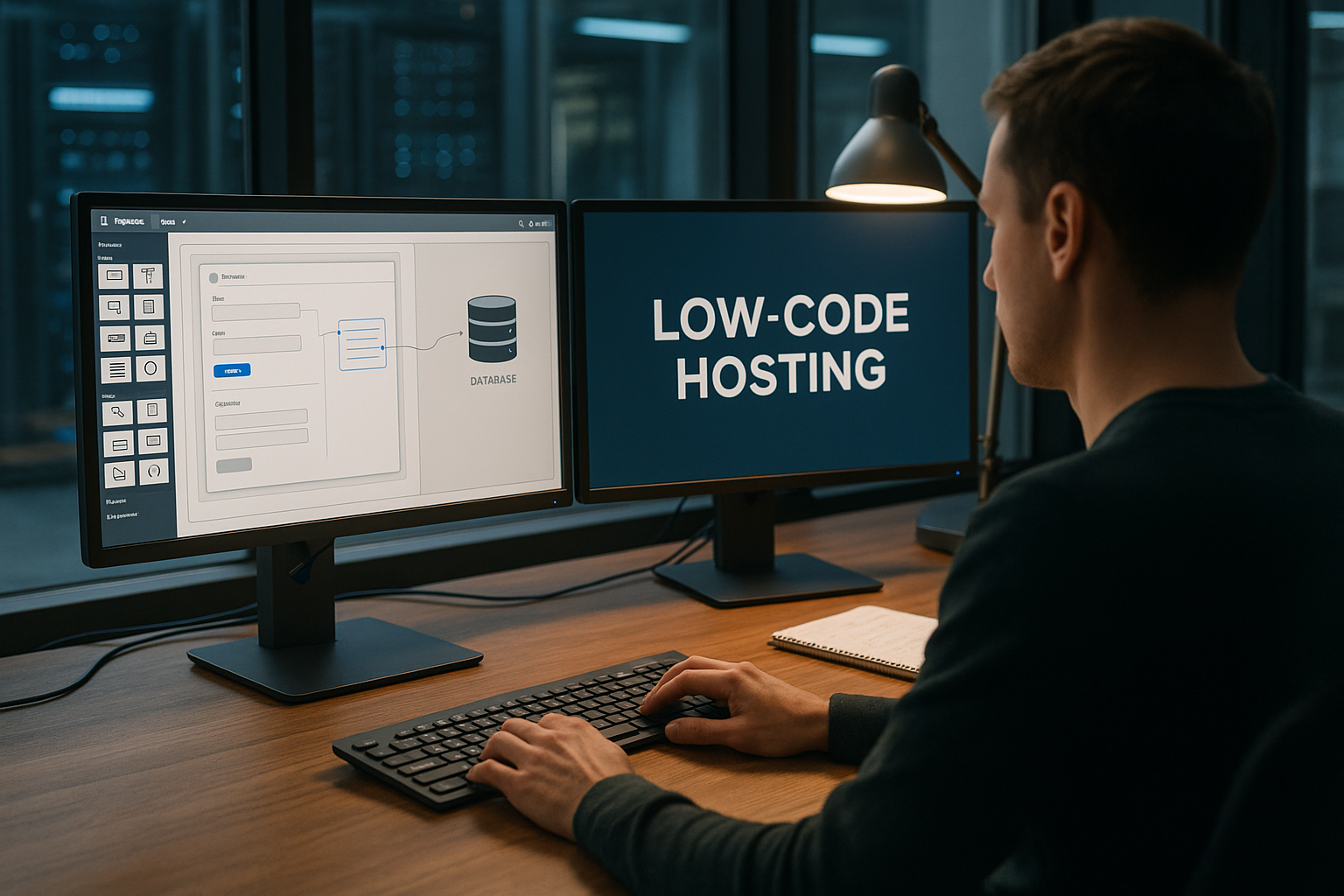
I decide between relational and NoSQL based on transaction needs, query profile and growth. I provide multi-tenant apps with separate schemas or databases to minimize noise and risks. I anchor RPO/RTO contractually and test restore paths regularly. For reporting, I use read replicas or a separate analytical store so that OLTP load does not slow things down. I version schema changes and automate migrations so that deployments remain reproducible. I map archiving and deletion to business rules so that retention periods are adhered to.
CI/CD and configuration management
I build Pipelines, that carry low-code metadata and custom code together through the environments: development, testing, staging, production. I export versioned changes, check them automatically and deploy them via approvals. I keep configuration declarative so that UI changes do not lead to drift. I describe secrets, policies and infrastructure as code; templates make new apps consistent. Artifacts end up in a registry or package repository, rollbacks remain a click instead of a fire drill. This keeps specialist teams fast and IT in control.
Quality assurance: tests, test data, previews
I test Rules and workflows with unit and integration tests, validate interfaces via contract tests and test interfaces with E2E scenarios. For changes, I use previews or short-lived environments so that reviewers can provide early feedback. I anonymize test data and generate it deterministically so that results remain reproducible. At the same time, I anchor accessibility checks and security scans in the pipeline. The more that runs automatically, the fewer surprises end up in production.
Observability and SLOs in everyday life
I define SLOs for latency, error rate and availability and derive alarms from this. I link logs, metrics and traces so that a user path can be traced from the interface to the database. Error budgets help me to balance feature speed and stability. I keep runbooks ready for incidents and practice game days with realistic error patterns. This keeps the platform manageable even with a growing number of apps.
FinOps: Control costs before they arise
I provide resources with Tags for team, project and environment to allocate costs. Budgets and alarms catch outliers early, while rightsizing and reservations reduce the base load. Concurrency limits and queue backpressure smooth out peaks without generating additional costs. I switch off development and test environments on a time-controlled basis. Showback/chargeback creates transparency: those who see costs optimize themselves. This keeps low code affordable, even if the number of apps increases.
Identity, network and secure connections
I integrate SSO via SAML/OIDC, maintain authorizations via roles or attributes and consistently enforce MFA. I use short-lived credentials and mTLS for machine access. I secure network paths with private links, peering and IP allowlists; I limit public endpoints to what is necessary. I encapsulate integrated systems via gateways that enforce rates, protocols and schemes. This keeps data flows traceable and attack surfaces small.
Migration, portability and exit strategy
I am planning Portability right from the start: Data exports, open formats, versioned APIs and abstracted integration layers. I encapsulate proprietary functions to keep alternatives open. For migrations, I rely on parallel operation, feature toggles and read-only phases until data is synchronized. I take rate limits, quotas and governor limits into account in the architecture and tests so that there is no rude awakening under load. A documented exit strategy is not mistrust, but risk management.
Operating model and enablement
I establish a Center of Excellence, which provides guardrails, templates and training. A service catalog provides tested modules for auth, logging, storage and messaging. Risk classes determine approvals: Non-critical apps pass more quickly, sensitive projects require more checks. Community formats, guidelines and code examples help specialist teams to make better decisions. This not only scales technology, but also collaboration.
Globalization: Multi-Region and Edge
I distribute Workloads across regions if latency, compliance or availability require it. DNS with health checks and latency routing switches cleanly, replication keeps data synchronized - deliberately with a clear consistency strategy. Edge functions handle caching, personalization and input validation close to the user. Secrets are replicated in a controlled manner so that rollovers remain coordinated worldwide. Sophisticated topologies save costs and increase resilience.
Briefly summarized
Low Code Hosting delivers Speed, when scaling, security and integration work together. I pay attention to auto-scaling, strong isolation, automation and clear API strategies. AI/ML increases benefits, but requires governance, monitoring and data protection. Webhoster.de scores with high availability, fast response times, SSH access and automatic data backup, which noticeably strengthens low code and no code in everyday life. If you plan wisely today, you can implement changes in days tomorrow and keep an eye on costs.