
Open source software will make it easier for companies in 2025 to implement innovative strategies, increase digital sovereignty and reduce ongoing IT costs at the same time. Whether collaboration, accounting or DevOps - open source software solutions reliably cover every business-critical area. The importance of open source continues to grow as digital requirements become more mature and complex. Companies are realizing that it is not only the financial aspect associated with licensing costs that is decisive, but also the ability to flexibly integrate and expand software and operate it independently in the long term.
Key points
- Cost benefitsElimination of license fees and flexible use
- Transparency through open source code and independent testing
- Community support and new functions by global developers
- Seamless integration in heterogeneous IT environments
- Future security through customizable, scalable standards
These key points define a modern corporate culture in which employees can look at the source code on their own responsibility and initiate changes themselves. Especially in fast-moving markets, which will be even more dominated by AI-driven technologies in 2025, open source creates a highly dynamic ecosystem. What's more, many developer communities are constantly contributing innovations themselves. This means that companies not only benefit from tested software paths, but also from continuous improvements that are often geared towards specific needs.
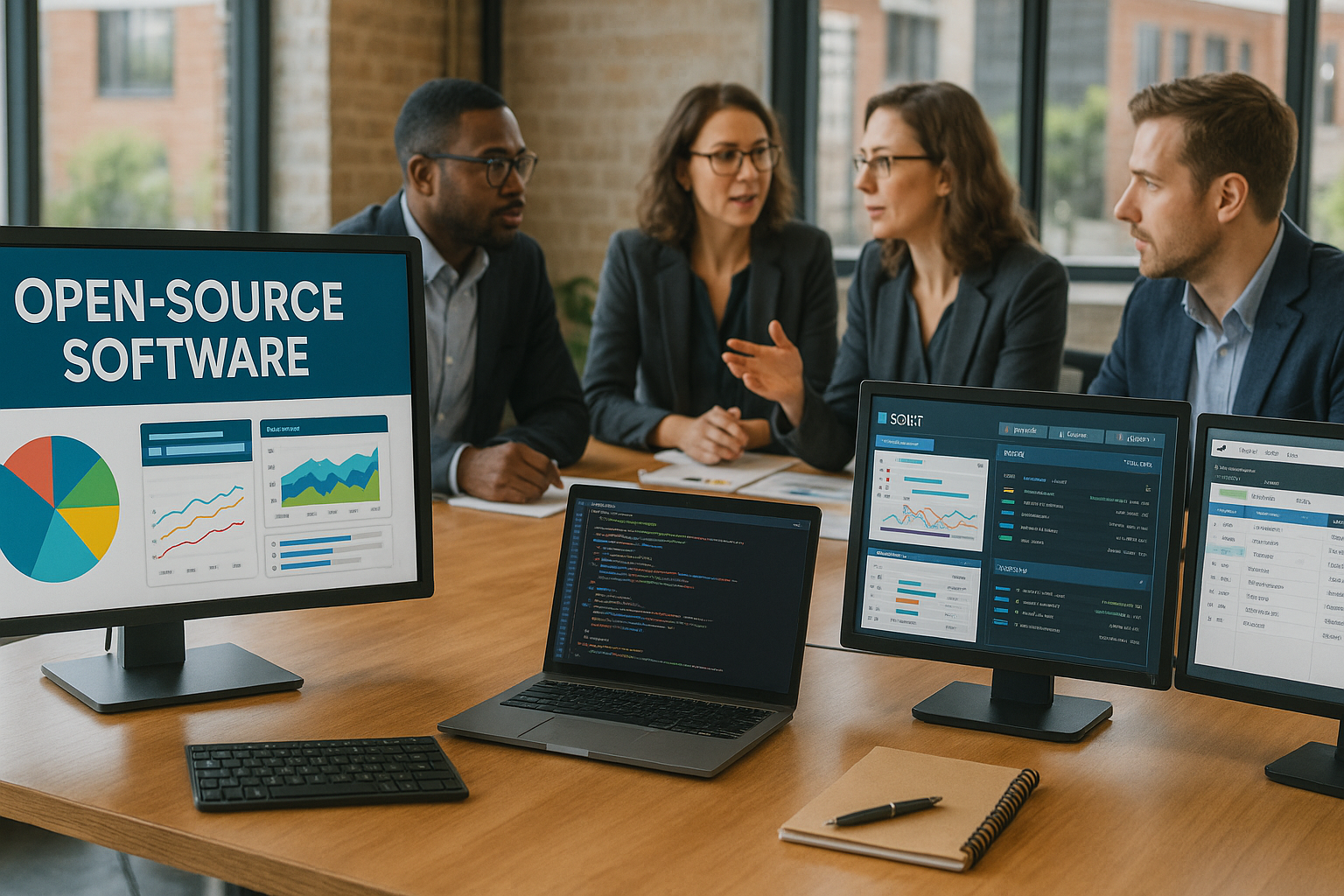
Wide range of applications for open source solutions
In the business context, open source software has long since replaced isolated tools with networked platform solutions. Corporations and medium-sized companies use OSS in ERP systemsfor product development, customer communication and even in security-critical infrastructures. In addition, cloud-native architectures, in which containerization technologies play a central role, will increasingly come into focus in 2025. Open source software based on Docker or Kubernetes can be scaled more easily in such infrastructures.
The expansion of open source solutions to public bodies and institutions shows that open source is now established not only in the high-tech sector, but also in schools and education, in administration and in critical infrastructures. The increasing demand for transparency and independence from large software companies is driving this trend forward.
The most important categories in which open source applications are establishing themselves:
- Office & Productivity: LibreOffice and Calligra Suite are real alternatives to Microsoft products in 2025.
- Project management & CRM: Tools such as Taiga and WSDesk promote agile workflows and customer loyalty.
- Content Management: Drupal or Typo3 offer full control over web content, as in the CMS comparison 2025 explained.
In addition, there are more and more open source solutions in specialized industries such as healthcare, telecommunications and research that cover industry-specific requirements. Specific modules for managing patient data or distributed communication nodes allow for an individual focus on complex requirements. The rapid further development of such tools is continuously driven by active communities and financial support programmes that subsidize free software.
Simple adaptation to business processes
The decisive difference to proprietary software lies in the Extensibility through the open source code. Companies configure OSS specifically for internal processes - be it a special document entry process in accounting or development-related release management. Plugins and ready-made modules already exist for many solutions, which create added value without the need for reprogramming.
Especially in dynamic development areas, the ability to adapt the code helps to save time. Free software is usually easier to integrate into continuous integration/continuous delivery (CI/CD) pipelines. In this way, companies can test, implement and release automatically without having to rely on rigid, proprietary update channels. This flexibility not only saves costs, but also promotes innovation, as new functions can be consistently tested for feasibility and introduced.
Companies such as software agencies or managed service providers often rely on Open source hosting software alternativeswhen they want to systematically digitize specific workflows. In some cases, this even gives rise to new business models in which modular systems are offered for different solutions. Thanks to the open approach, each customer can put together and expand the modules according to their own ideas and requirements.

Implementing security and compliance requirements correctly
A transparent code base does not automatically mean that security is guaranteed. Only through active open source management can companies secure their software supply against disruptions, attacks and license risks. Automated security checks and consistent patch management will become increasingly important in 2025. Collaborative code reviews and external audits are also an essential factor in uncovering potential vulnerabilities at an early stage.
I recommend the following measures in everyday life:
- Security updates Automate and check regularly
- Establish external code checking and security scanning
- Document compliance with license models (e.g. GNU GPL, MIT, Apache)
- Ensure OSS transparency with a Software Bill of Materials (SBOM)
The need for security will increase massively in 2025, particularly due to AI-driven attacks on supply chain infrastructures. Companies that prepare early on not only avoid attacks, but also save on follow-up costs for audits and certifications. In addition, a well-implemented OSS security concept can minimize the risk of zero-day exploits, as most open source communities respond quickly to security vulnerabilities.
Another important point is compliance. Compliance with data protection regulations, such as the GDPR, requires special functions such as anonymization or configurable data retention cycles. As the code is open, developers can check how personal data is processed. In this way, companies gain greater control and minimize liability risks by being able to adjust data protection settings in a targeted manner.
Hosting and infrastructure: OSS needs performance - no compromises
The requirements for high-performance hosting are increasing with growing OSS access. Some companies are therefore opting for dedicated open source hosting packages or specialized cloud platforms. This is often accompanied by a high degree of configuration freedom, for example in the choice of operating system or the integration of container clusters. Important parameters here are scalability and reliability in order to absorb seasonal load peaks or perform complex calculations.
If you need a combination of performance, support and control options, you will find a market comparison in the following table:
| Rank | Hosting provider | Special feature |
|---|---|---|
| 1 | webhoster.de | Best performance, support |
| 2 | Provider B | Good price |
| 3 | Provider C | Extensive features |
The use of cloud-native architectures that are container-based sometimes requires increased effort in terms of orchestration and monitoring. Platforms such as Kubernetes are themselves open source, which simplifies familiarization but also requires specific expertise. In larger companies, DevOps teams therefore pool their expertise in order to get the best possible performance out of open source. It is crucial that the infrastructure grows with the requirements of the software and not the other way around.
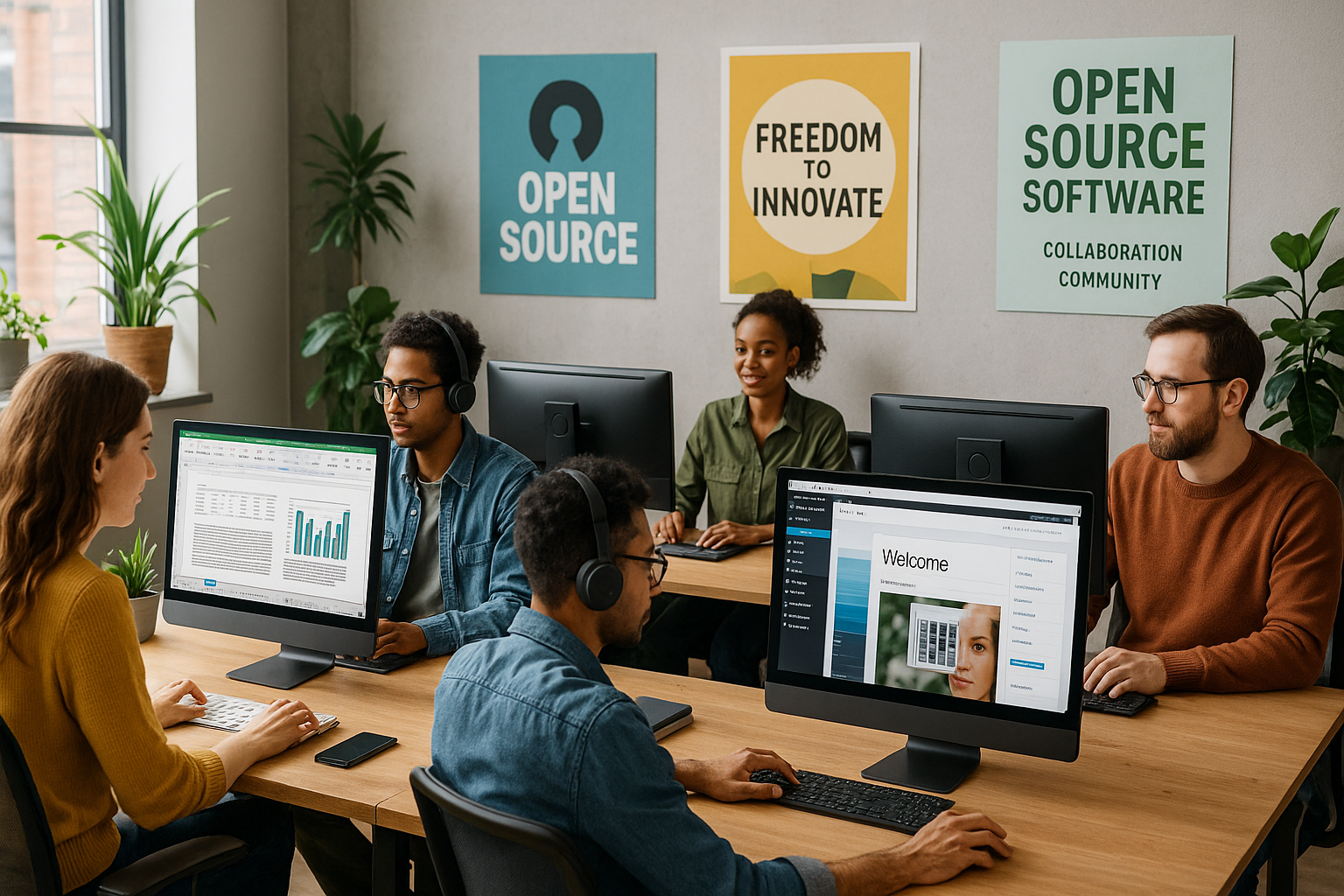
Advanced tools for special applications
It is not only office applications or project tools that benefit from the open source model. Open source tools also show their strengths in security-related or data-intensive applications. Especially in areas such as machine learning or high-performance computing, companies are increasingly taking advantage of the performance and flexibility of OSS. Models can be quickly trained and evaluated within laboratory-like environments.
Examples of this:
- Proxmox: Virtualization and container management based on KVM/QEMU
- Wazuh: Real-time security monitoring with SIEM functions
- Nextcloud: Collaboration platform for teams with GDPR options
- ApiDog: Managing and securing REST APIs
- Technitium DNS Server: Local DNS management at enterprise level
These tools often replace expensive licensed products such as VMware, Miro or Atlassian stacks. The resulting savings often flow directly into innovations that are tailored to specific needs. In addition, technologies can be combined in a variety of ways thanks to open-source architectures. For example, Proxmox as a virtualization platform can be combined with Wazuh as a SIEM solution to seamlessly link virtual machines and security systems.
Specialized OSS tools are a clear advantage, especially in industries with a high proportion of research - such as biotechnology or aviation. Here, know-how from the communities can be combined to create specific simulation environments or data analysis tools without having to rely on costly proprietary packages. In this way, open source also promotes the transfer of knowledge between research institutions and companies.
Integration into existing IT systems
Almost all of the open source tools mentioned have REST APIs or integrations with other systems. This facilitates the merging of processes and creates synergies in the IT landscape. The data consistency factor should not be underestimated: data silos often arise when different departments use different tools in parallel. With open source, these silos can be broken down in a targeted manner by creating standardized APIs and exchanging data seamlessly.
Integration options:
- CRM synchronization with ERP data from ADempiere
- Integration of Nextcloud data into company-wide backup systems
- Status reports from Uptime-Kuma in your own monitoring dashboard
Thanks to high documentation standards and active community support, the interfaces can usually be adapted within a few days. Another plus point: many OSS solutions now offer preconfigured connectors that can be used to connect common services in just a few clicks. These plug-and-play modules prevent costly in-house developments, which in turn could entail maintenance costs and potential security risks.
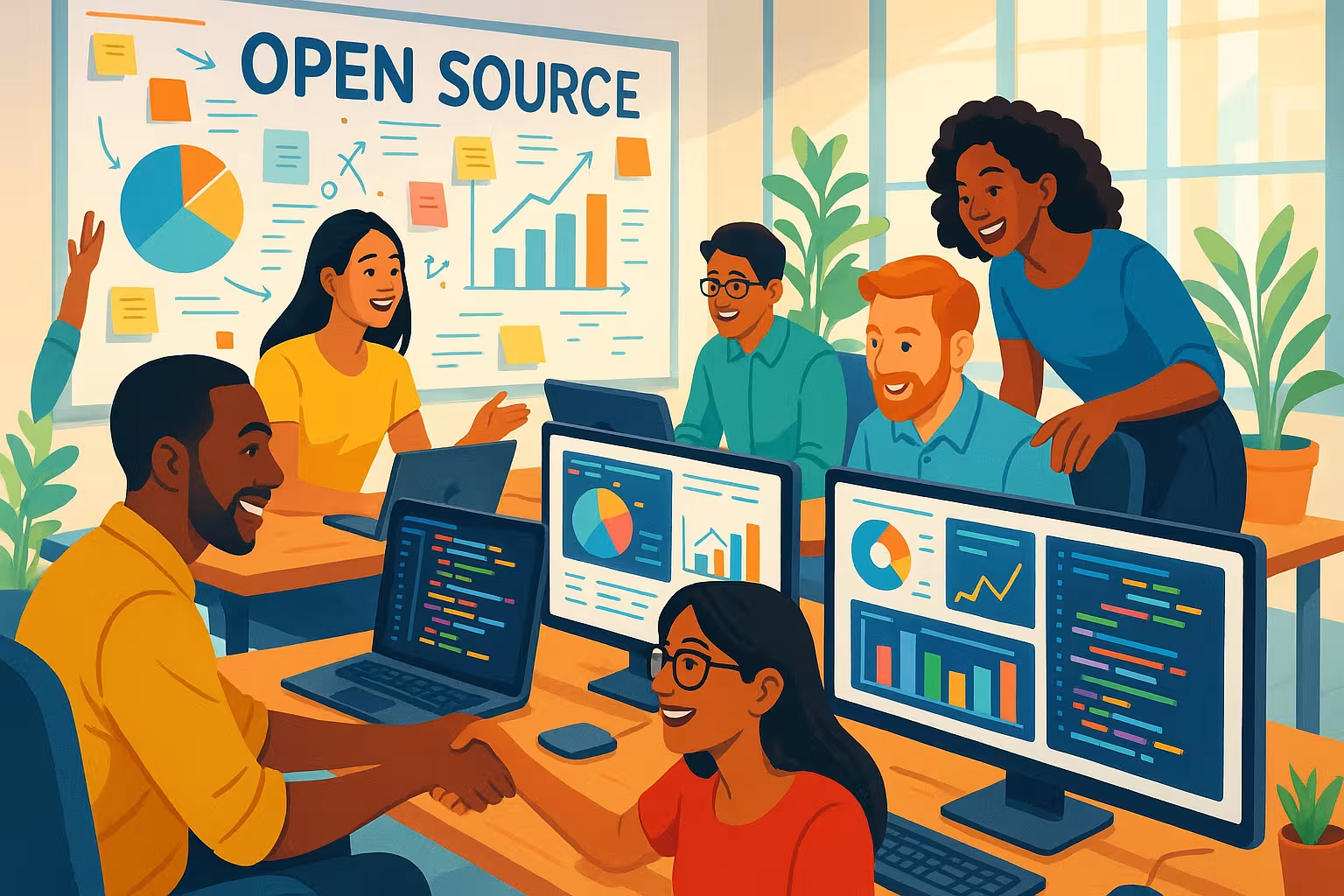
Future prospects for open source tools
In 2025, the use of open source software will not only increase in technology companies, but also in the public sector, schools and industry. Automation, AI-based features and cloud-native architectures are the three main drivers. More and more educational institutions are laying the foundation by teaching students how to use open source programs at an early stage. As a result, the next generation of professionals is already growing up with this mindset, which is further driving its spread.
According to studies, over 70 % of companies now regularly rely on software from public repositories. New ecosystems are emerging around Open source vs. proprietary hosting softwareespecially for containerized CI/CD pipelines and hybrid deployment models in multi-cloud environments. In the future, it is also expected that modern business models such as "Software-as-a-Service" will increasingly rely on OSS components in order to keep migration costs low for customers and achieve greater market penetration.
Standards and cooperation are also highly relevant. European initiatives that want to promote digital sovereignty will increasingly rely on open formats and protocols in the future. If governments opt for open source code, entire government landscapes will be turned upside down, which will further increase the demand for specialized OSS projects. At the same time, compliance requirements are increasing, demanding a clean software bill of materials - all factors that strengthen the expansion of a professional open source ecosystem.
Strategies for a smooth OSS entry
A successful start always begins with a feasibility check. Where can OSS reduce costs or automate processes in the short term? Checklists and standardized workshops help. A pilot project often begins with individual departments - such as marketing or project management - switching to proven open source solutions and gaining experience. Successful implementation in one area then spreads to other departments.
My recommended order:
- Select quick wins: z.e.g. LibreOffice instead of Microsoft 365 subscriptions
- Piloting: 1-2 departments test the software
- Employee training and development of support processes
- Automate OSS management with SBOM, license checking and security patching
It also makes sense to bring in experts who are familiar with the specific license types and possible integration hurdles right at the start of the implementation process. Larger companies benefit from professional service providers who provide support, while SMEs can set up a dedicated team internally. It is crucial that knowledge about open source does not remain fragmented, but is firmly anchored in the company.
Stakeholders should also be involved in all steps. Early buy-in from management and IT departments reduces frictional losses. It is also important to measure and communicate success in small stages so that the added value is clearly visible. Open source can only lead to sustainable success if all those involved develop a common understanding of the possibilities and requirements.

Clear benefits with well thought-out implementation
Open source software will no longer be a niche technology in 2025. It will take on central tasks in companies and offer reliability, adaptability and low running costs. Especially in IT security, collaboration and data management, free tools are displacing established brand providers. In addition, more and more organizations are discovering the strategic advantages of a strong community and an open development model. New functions, bug fixes and possible extensions can be implemented quickly without being tied to rigid release cycles.
Hosting solutions with support, a well-documented IT landscape and active community participation are the building blocks for a successful transition. Those who take responsibility for their digital infrastructure remain flexible - regardless of vendor lock-in or license models. This goes hand in hand with companies taking a closer look at the issue of software maintenance and defining their own standards for quality and security. In the long term, this effort pays off through reduced dependencies and more freedom to innovate.

The bottom line is clear: open source has become a driver of digital transformation. Those who recognize the opportunities and actively manage the risks will create a modern work and innovation culture that not only reduces costs in the short term, but can also deliver sustainable competitive advantages in the long term.


