 Skip to content
Quantum Cryptography Hosting is now becoming critical for hosting customers because quantum computers can attack classical methods and data is retroactively compromised by „Harvest Now, Decrypt Later“. I am therefore planning projects with PQC, hybrid TLS transitions and Future Proof Hosting, so that sensitive workloads run securely today and remain trustworthy tomorrow.
Key points
I summarize the following aspects in a compact format to help decision-makers quickly gain clarity.
- HNDL risk: Data intercepted today can be decrypted tomorrow.
- PQC firstPost-quantum procedures are practicable in hosting.
- Hybrid startClassic + PQC algorithms ensure compatibility.
- Future ProofOngoing adaptation of cryptography and processes.
- ComplianceLong-term confidentiality and auditability.
Why quantum computers already pose a risk today
I see that HNDL-scenario as the greatest danger: attackers today store encrypted sessions and wait for quantum computing power. RSA and ECC-based protocols in particular are then at risk of falling, exposing confidential customer data, financial transactions and IP information. Those with high data retention periods need to act early, because decryption in the future causes real damage now. I therefore evaluate which data needs to remain confidential for years and prioritize these paths first. Every decision follows a simple principle: I secure long-term relevant information from future attacks.
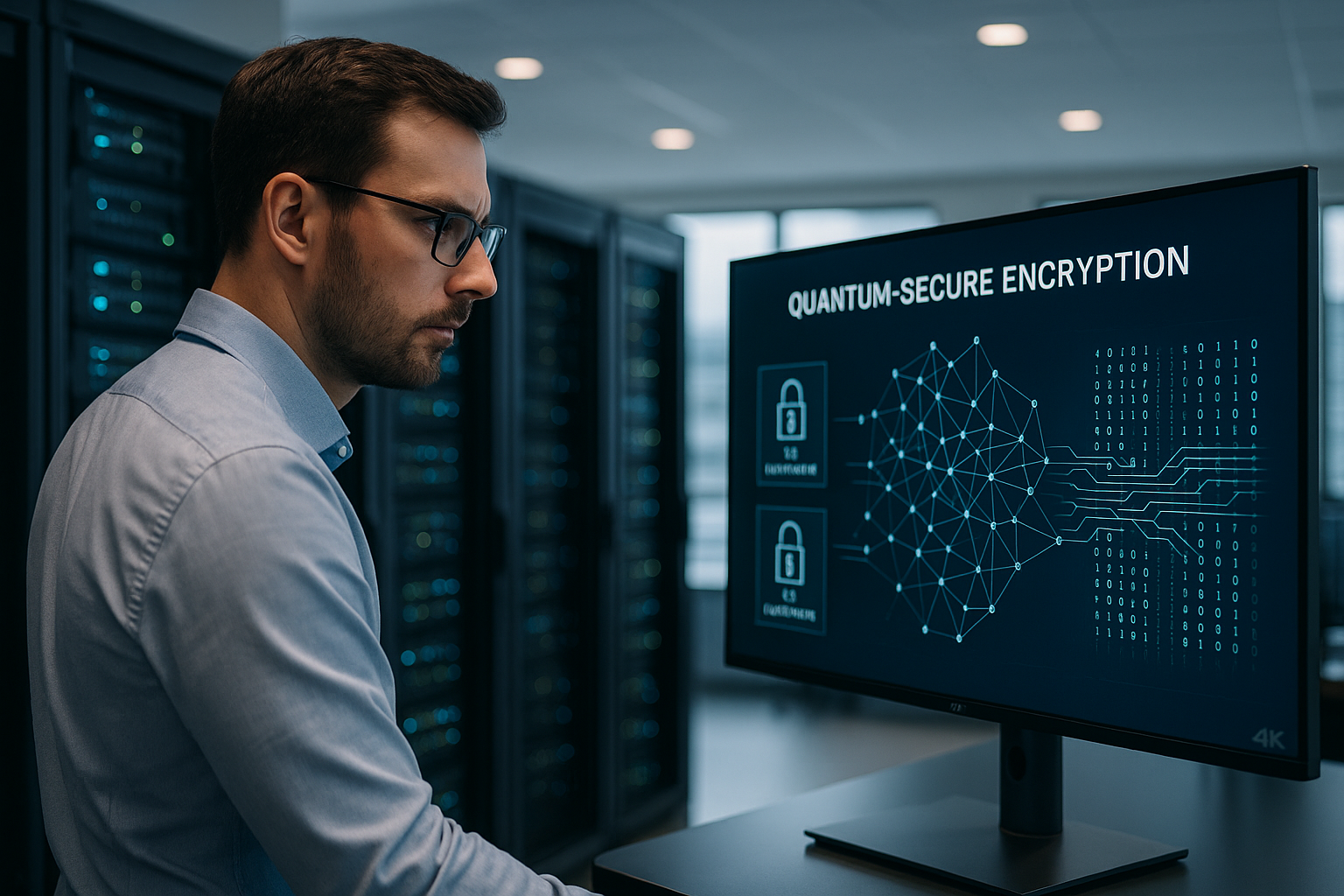
Quantum cryptography vs. post-quantum cryptography in hosting
I make a clear distinction between QKD and PQC: Quantum Key Distribution reports eavesdropping attempts in a physically reliable manner, but requires special hardware and high investments, which currently severely restricts everyday use in hosting. PQC relies on mathematical methods such as Kyber for key exchange and Dilithium for signatures, runs on today's hardware and can be integrated into TLS, VPN and applications. For productive setups, I recommend PQC as a starting point and hybrid handshakes for compatibility. If you want to delve deeper into the technology of key distribution, you will find a good introduction via Quantum Key Distribution. I keep an eye on QKD, but in day-to-day business I primarily rely on PQC-concepts that work immediately.
Client landscape and compatibility in practice
I take into account the heterogeneous Client landscapeBrowsers, mobile apps, IoT devices, agents and legacy integrations have different update cycles and TLS stacks. To ensure that nothing fails, I plan feature-based instead of version-based: The server offers Hybrid handshakes the client negotiates what he can. For internal services, I rely on mTLS with clear profiles for each system class; external endpoints remain more conservative and are tested via canary routes. Where libraries can only do the classic way, I encapsulate PQC in gateways so that applications remain unchanged. My aim is not to create compatibility by chance, but to ensure it through negotiation-first-designs - with fallbacks that are measured and documented.
Hybrid TLS strategies and migration
I combine classical and post-quantum process in hybrid TLS so that clients without PQC support continue to function. This approach enables controlled testing, measurement of latency and gradual rollout per service. I start with non-critical services, measure overhead, and then expand to sensitive workloads. I include certificate chains, HSM profiles and API gateways early on so that accelerators, offloading and monitoring don't slow things down later. This is how I maintain Compatibility and at the same time secure the future viability of the platform.
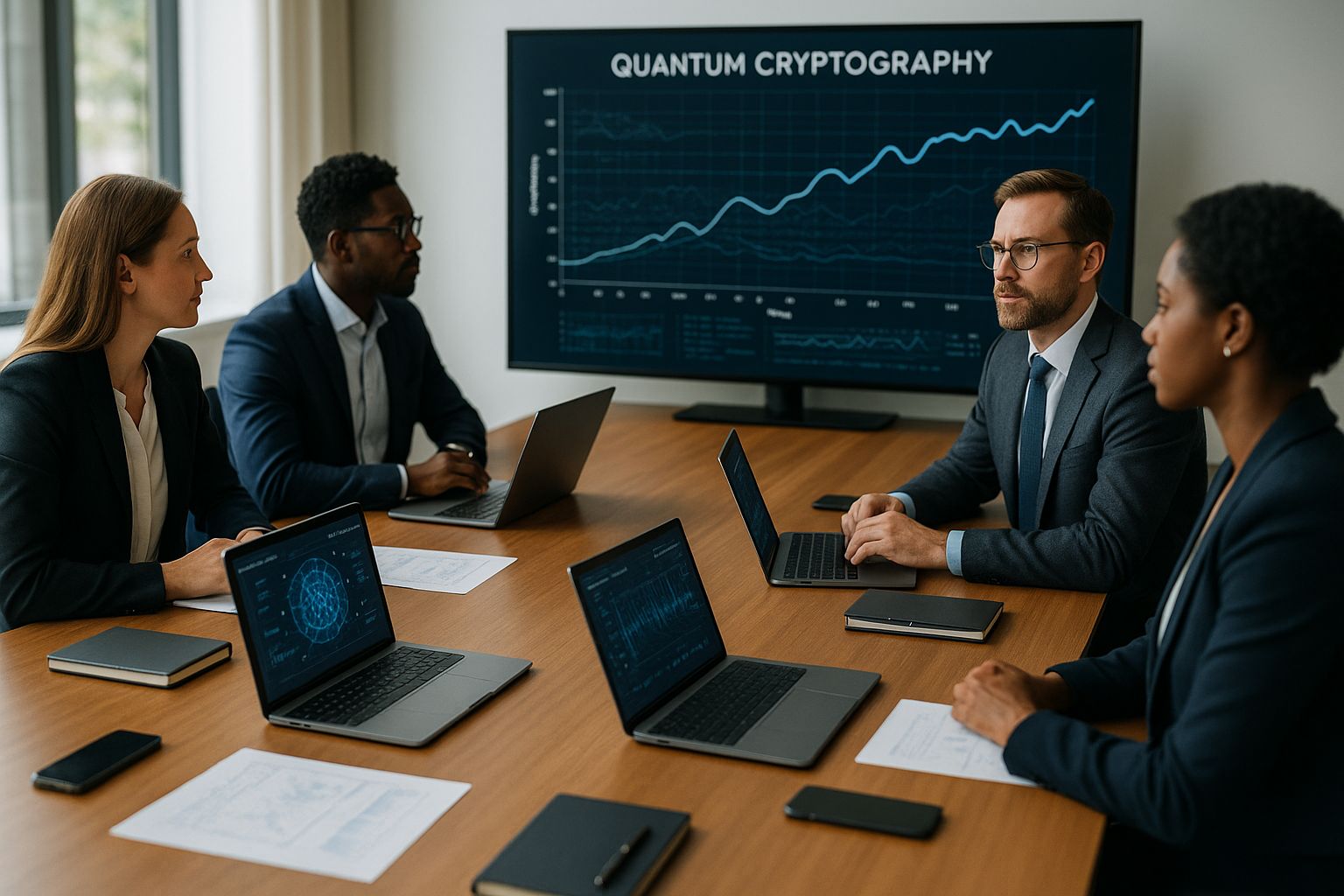
Selection criteria for Post Quantum Hosting
I first check the providers' Algorithms (e.g. CRYSTALS-Kyber, CRYSTALS-Dilithium), then integration into TLS, VPN, HSM and APIs. Hybrid configurations facilitate transitions without losing partners who have not yet made the switch. I also look at performance profiles under load, log transparency, rotation plans and emergency paths. It is important to me that the provider does not operate PQC as an isolated solution, but rather anchors it operationally - including test scenarios and audit options. A compact overview of the basics can be found on the page on quantum-resistant cryptography, which I like to use in early workshops in order to Teams to pick up.
PKI and certificates: dual signatures and ACME
I am planning PKI-maintenance actively: Certificate chains, signature algorithms, OCSP/CRL and CT strategies must interact with PQC. For transition phases, I rely on composite or dual-signed certificates so that trust stores without PQC support continue to validate, while modern clients already check post-quantum. ACME automation remains the linchpin; profiles that define key lengths, KEM parameters and signature algorithms per zone are important. I test how large CSRs and certificates run through toolchains (build, secrets, deployment) and whether logging and compliance systems process the new fields cleanly. For root and intermediate CAs, I am planning separate Rotation window, to minimize risks and trigger rollbacks quickly if necessary.
Performance, latency and operational issues
I take into account the Overhead larger keys and check how handshakes and signatures behave under real load patterns. Caches and session resumption help to keep recurring connections efficient. I measure TLS handshake times separately from application latency so that causes remain clear. For very response-sensitive applications, I schedule PQC at bottlenecks in gateways and API edges first before going deeper into the application. This is how I keep the User-Experience stable and optimize in a targeted manner instead of increasing resources across the board.
VPN, e-mail and machine-to-machine
I consider End-to-end-channels beyond TLS: For VPNs, I verify whether IKE handshakes are hybrid or not. KEM-extensions or whether I initially place PQC in TLS-terminating gateways. For email, I secure transport (SMTP/IMAP) with hybrid TLS, but also check signatures and encryption at message level so that archived content remains protected in the long term. In Machine-to-Machine-paths (MQTT/AMQP/REST), short, frequent connections are typical - connection pooling and session resumption noticeably reduce the PQC overhead here. For agent updates and artifact downloads, I also rely on robust signatures so that Software supply chains are still verifiable years from now.
Roadmap: Six steps to PQC integration
I start with a Inventory of all crypto path points: TLS, VPN, email, agents, backups, deployments, code signing. I then evaluate the confidentiality and retention period for each data type so that projects with long protection requirements benefit first. In the third step, I define target algorithms based on recognized standards and the intended protocols. I then build pilot environments with a hybrid configuration, measure latency and check compatibility with legacy components. Finally, I establish training, documentation, rotation and a Monitoring, that makes errors visible and keeps updates plannable.
Compliance, guidelines and auditability
I think Compliance not as a hurdle, but as a guard rail for reliable decisions. Long-term confidentiality has a direct impact on contract terms, retention obligations and audit processes. PQC roadmaps therefore belong in security guidelines, access management, backup strategies and key rotation. Logging and test evidence facilitate external audits and ensure trust with customers and partners. In this way, projects remain audit-proof, while the Cryptography is modernized.
Key management, HSM and secrets
I embed PQC in Key management-processes: envelope encryption with clear separation of data and master keys, defined rotation intervals and recovery exercises. I check HSMs and KMS services for parameter limits, backup procedures and support for hybrid profiles. For Secrets I avoid hardcoding in CI/CD, agents and edge nodes; instead, I rely on short-lived tokens and mTLS with client certificates that renew automatically. I maintain split knowledge and M-of-N shares so that sensitive PQC keys are not tied to individuals. What counts in an emergency is that key material can be locked, and the change can be fully verified.

Provider overview and market trend
I compare Hosting-offers according to PQC status, level of integration and depth of support. For me, Future Proof Hosting means that the platform does not activate PQC once, but checks, updates and audits it on an ongoing basis. A clear roadmap with transparent tests that I can follow as a customer is helpful. Providers who evaluate QKD paths and at the same time deliver practical PQC stacks stand out on the market. If you want to find out more about the state of the art, you can find out more at Quantum cryptography in hosting compact material that facilitates discussions with Stakeholders facilitated.
| Place | Provider | Quantum Cryptography Hosting | PQC integration | Future-proof | Support |
|---|---|---|---|---|---|
| 1 | webhoster.de | YES | YES | YES | TOP |
| 2 | Provider B | no | partly | Partial. | good |
| 3 | Provider C | no | no | no | satisfied. |
Costs, ROI and procurement
I rate Total costs Realistic: Larger keys, longer handshakes and more log data increase CPU, RAM and bandwidth requirements. Instead of upgrading across the board, I make targeted investments: critical workloads first, edge termination for bulk, application core last. In procurements, I anchor PQC as a Must criterion with proof of roadmap so that platforms do not end up in dead ends. I calculate savings through fewer emergency conversions and fewer audit findings - both of which reduce the TCO in the medium to long term. It is important to me that providers Support packages for testing, migration windows and incident response so that operations teams are not left on their own.
Practical examples: Where PQC makes immediate sense
I prioritize Workloads, where confidentiality must apply for a long time: Financial data, health records, R&D projects, government communications. HNDL poses an acute risk here because leaks today can have consequences tomorrow. PQC in the TLS perimeter prevents recordings from being readable later. I also secure code signing and update channels so that software artifacts and backups remain credible. Investing early saves effort later on, because changes are made in an orderly manner instead of under time pressure and the Risk decreases.
Security engineering: implementation quality
I pay attention to constant-time-implementations, side-channel hardening and resilient test coverage. I mature PQC libraries in stages: Lab, staging, limited production canaries. I strictly separate crypto updates from feature releases so that root cause analyses remain clean. For builds and artifacts, I rely on reproducible pipelines, signed dependencies and clear provenance checking to ensure Supply chain-minimize risks. I regard certifications and validations as an additional level of security - but they are no substitute for in-house testing under real load profiles and attack models.
Multi-tenant and DoS aspects in hosting
I take into account Defense against abuse: Larger handshakes can increase the attack surface for bandwidth and CPU DoS. I use rate limits, connection tokens, early hinting and upstream TLS termination with Admission Control, to protect backends. In multi-tenant environments, I isolate crypto offloading, prioritize critical customers and define quotas. Telemetry on failed attempts, aborts and signature times helps to detect anomalies early on. I plan targeted Chaos and load tests, to ensure availability even at peak PQC loads.

Technology building blocks: Lattice, hash and code-based processes
I focus primarily on Lattice-based cryptography because it shows a good balance of security and performance in many scenarios. I use hash-based signatures for static artifacts such as firmware and backups, where signature sizes are less critical. Code-based approaches retain their place, but require careful consideration of key sizes and memory requirements. For each building block, I check the deployment location in the protocol stack and the operational impact. This keeps the big picture efficient, without leaving blind spots.
QKD pilots in the data center: When is a PoC worthwhile?
I am considering QKD-The QKD pilots are used where locations are connected by their own fiber and key material is particularly worth protecting - for example for inter-DC key distribution between CA and KMS zones. A PoC must show how QKD is integrated into existing key processes, what operating costs arise and what failover looks like if the quantum channel is disrupted. I am not planning QKD as a replacement for PQC, but as a complementary path with clear economic justification. It is important for me to collect measured values on availability, maintenance windows and scalability before I make decisions for broader introduction.

Checklist for everyday life: what I prepare today
I first inventory all Crypto-dependencies, including libraries, protocols and device interfaces. I then define migration targets for each system class and plan test windows. I update build pipelines so that PQC libraries are reproducibly and securely integrated. I expand alerting and dashboards to include telemetry on handshakes, key lengths and errors. Finally, I define release and rollback processes so that I can safely readjust if Measured values deviate.
In a nutshell: Act before the clock ticks
Quantum Cryptography in hosting offers two paths today: QKD as a future path with high hurdles and PQC as protection that can be implemented immediately. I secure projects with hybrid TLS, organized tests and clear roadmaps. Anyone who processes confidential data for a long time must take HNDL seriously and take precautions. Providers with Future Proof Hosting make auditing, operation and further development easier. Deciding now protects Trust and competitive advantages for years to come.


