Skip to content
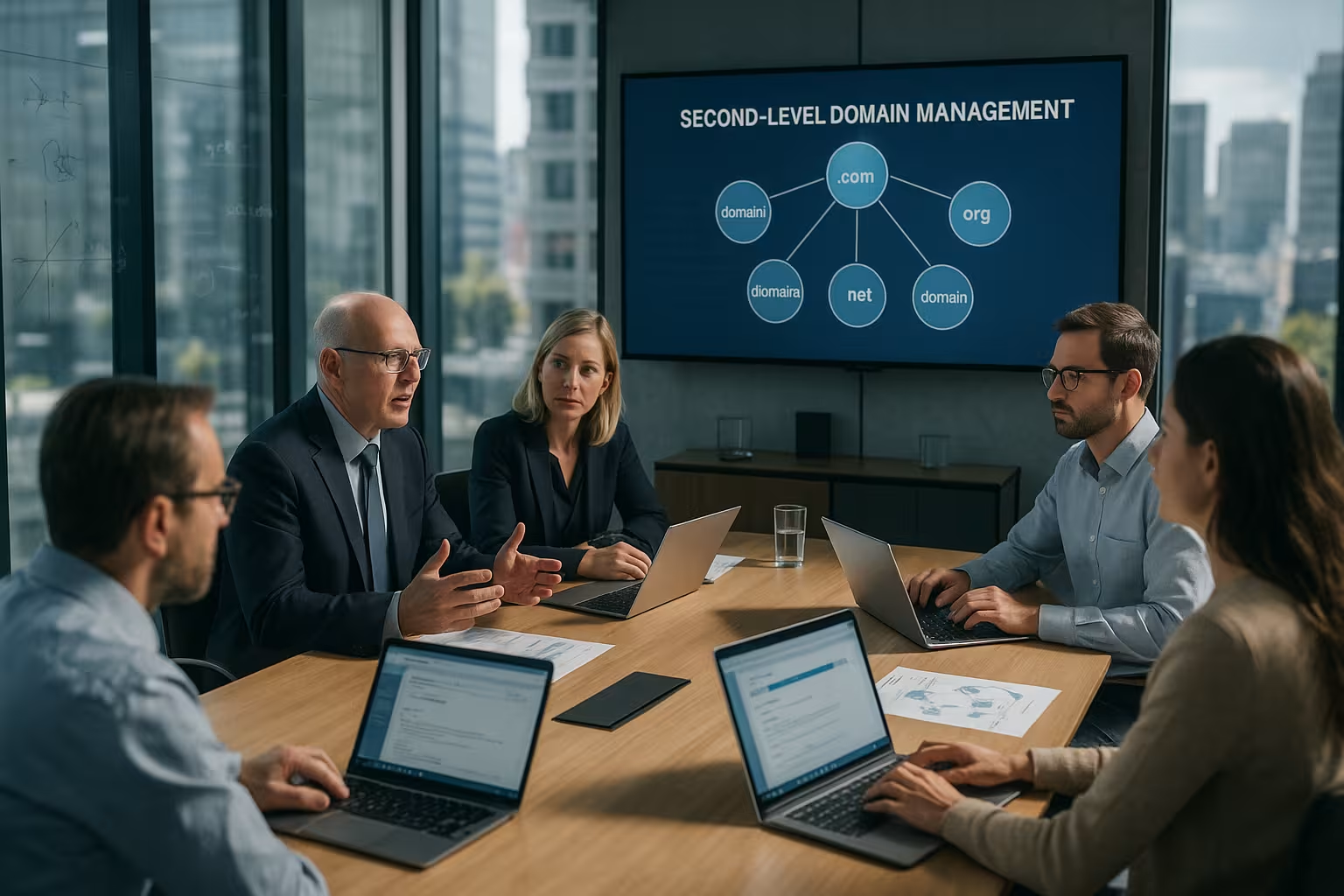
I will show you how to Second level domain 2025, secure it legally and manage it efficiently. With clear criteria, solid security methods, modern DNS architecture and SEO tips, you can use your domain effectively for reach and brand protection.
Key points
I summarize the following key points for quick, reliable orientation.
- Quality of the SLD: short, memorable, sustainable, legally compliant.
- Backup through domain locking, 2FA, auto-renewal and monitoring.
- DNS clean control: DNSSEC, redundancy, fast propagation.
- SEO Strengthen: brandable name, clear assignment, no keyword spam.
- Portfolio structure: standardized data, deadline control, role rights.
Second level domain: Meaning, effect and smart choice
An apt second-level designation characterizes the digital Identity of your brand and influences recall, click-through rate and trust. I choose names that are short, clear and easy to pronounce because users grasp them more quickly and make fewer typing errors. I avoid special characters, umlauts and unnecessary hyphens as they increase support costs and incorrect entries. The name must fit the product strategy and leave enough leeway for future offers. This increases recognition, reduces the risk of confusion and creates a solid basis for SEO and growth.

Check availability and assess quality - step by step
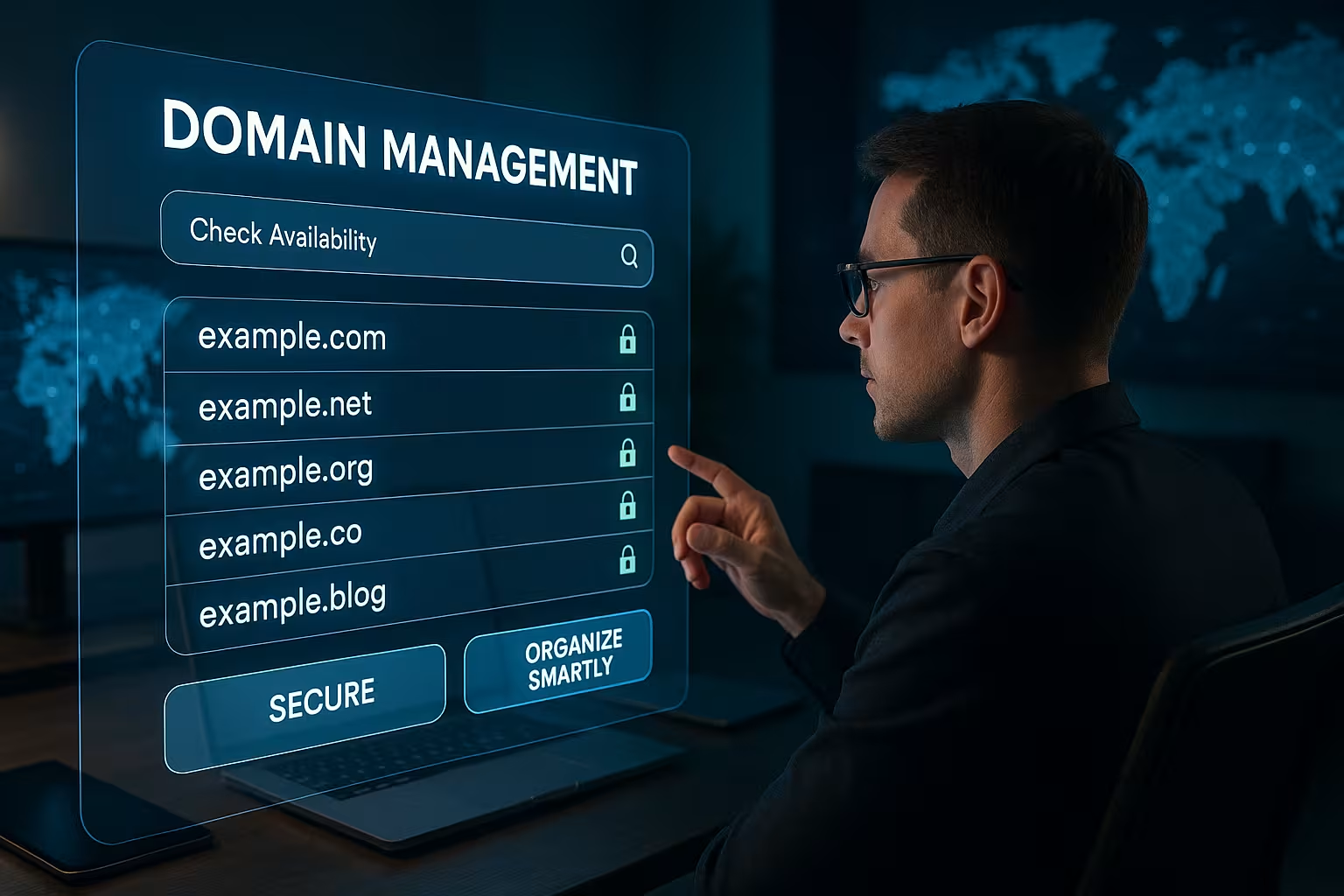
Before each registration, I verify availability via reputable registrars and carry out a clear quality check to ensure that the Selection remains resilient. I check variants without numbers or hyphens and test spellings that users are likely to type in. I also research similar brands and company names to avoid conflicts. For the first check, I use a reliable domain check, for example via Check domain availabilityand document the results directly in the portfolio. This way, I avoid surprises later on and secure the right name early on.
Secure: protection against loss, misuse and attacks
After registering, I immediately activate Lockingto prevent unauthorized persons from initiating transfers or manipulating entries. I use 2FA for every access, keep passwords long and unique and use a password manager. Auto-renewal eliminates expiration mishaps, and I schedule reminders before the contract ends. I also monitor status changes, name server switches and DNS modifications with monitoring tools. This combination of hardening, monitoring and early warning protects reputational assets and prevents costly outages.
Set up administration, performance and DNS strategy correctly
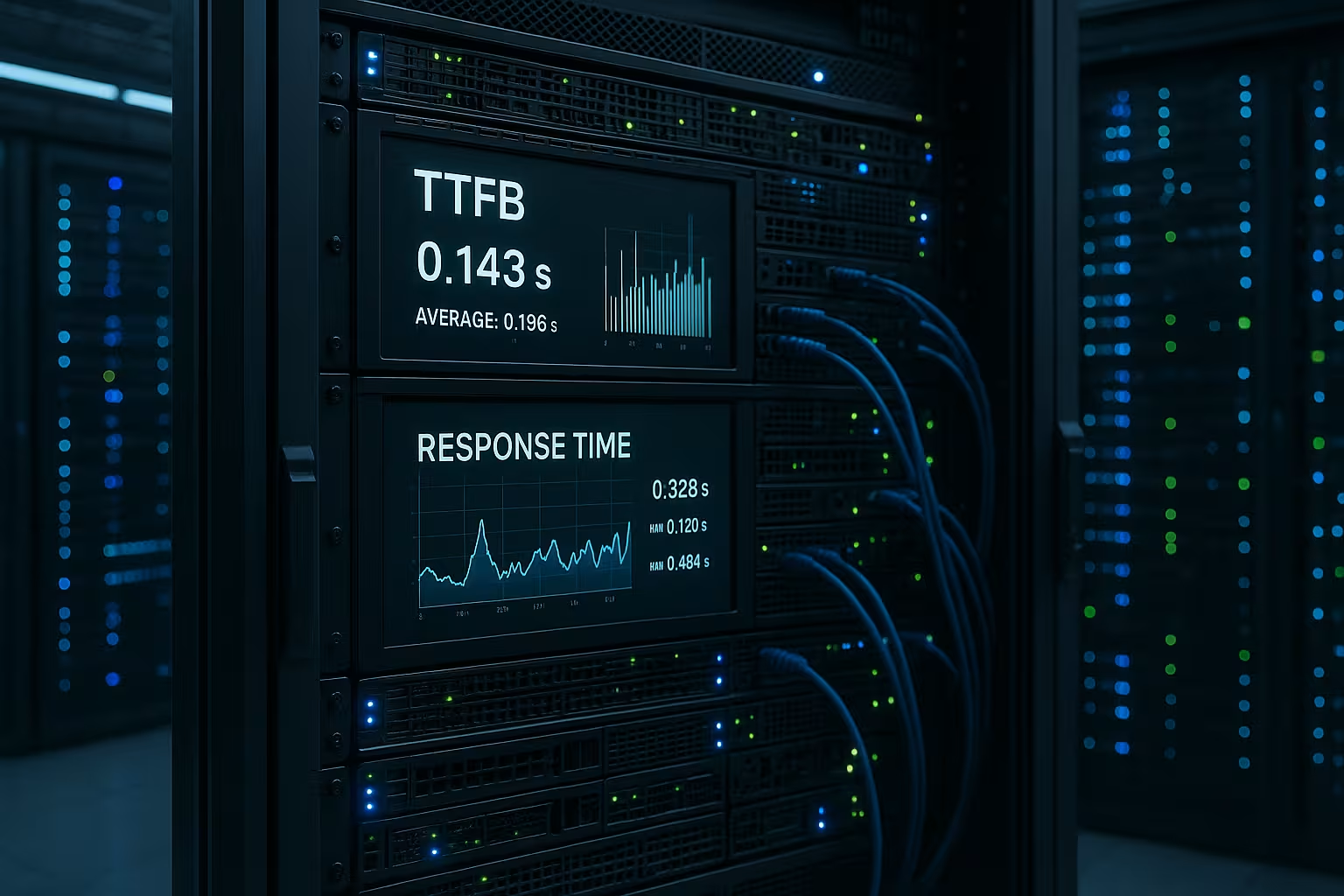
For multiple domains, I consolidate everything in one portfolio and assign role-based rights so that only necessary Accesses take place. I regularly check the DNS zone, remove superfluous entries and set clean TTL values for fast, controlled updates. DNSSEC reduces the risk of manipulation, while globally redundant name servers and DDoS protection support accessibility. With providers, I pay attention to short propagation, reliable SLAs and distributed anycast locations. This enables me to achieve short loading times, greater security and less operational risk.
DNS best practices in detail: TTLs, SOA, CAA and modern record types
For stable zones, I consider the SOA-profile: A sensible refresh/retry/expire value prevents unnecessary load, while a moderate minimum TTL controls the negative caching duration. I temporarily assign low TTLs to change-intensive entries (e.g. A/AAAA for web, MX during migration phases) and raise them again after the rollout. CAA Records limit issuing certification authorities and reduce the risk of misuse. For modern setups I use HTTPS/SVCB-entries to enable clients to negotiate an optimal connection without having to rely on workarounds. IPv6 (AAAA) is standard: I make sure that frontends and backends are dual-stack accessible and that tests include both protocols.
SEO strategy: How SLD strengthens visibility and brand
A distinctive name creates click incentives, promotes trust and increases the Relevance in search results. I prefer brandable SLDs that clearly convey a product or service rather than generic keyword strings. Exaggerated keyword domains look unnatural and age poorly, while strong brand references are sustainable in the long term. Consistent spelling across channels, clean redirects and HTTPS are mandatory in my view. This is how I make a direct contribution to user experience, backlink attractiveness and ranking stability with the SLD.
Redirect and subdomain concept: www, Apex and clean canonicals
I decide early on whether the Main address under www or at the apex. A single canonical variant with permanent redirects (301) and without chains is important. For CDN or multi-region setups, I plan to use CNAME flattening/ALIAS on the Apex so that performance and availability do not clash with the architecture. Standardized subdomain conventions (app., api., cdn.) facilitate operation and monitoring. I activate HSTS with caution and only use Preload when all subdomains are reliably accessible via HTTPS - this way I avoid blocking effects.
Law and trademark protection: avoiding conflicts, securing identity
Before buying, I check trademark and naming rights so that I don't lose any Collision with existing owners. I check national registers and look out for similar spellings that increase the risk of confusion. After registration, I monitor typosquatting variants to detect fraud attempts at an early stage. I forward conspicuous registrations to legal authorities or dispute processes. In this way, I maintain my trademark sovereignty and keep attempts at deception away from my website.
IDN, umlauts and homographs: Clarity before diversity
Internationalized domains (IDN) allow umlauts and special characters. I only use them if target groups are bound to benefit from them and the Punycode variant is considered offensively. I address homograph attacks (visually similar characters) with clear communication, defensive registrations and a consistent certificate policy. In campaign materials, I prefer to use the ASCII spelling to reduce typos and consistently anchor both spellings in redirect rules.
Structured development of multi-domain portfolios and internationalization
I register suitable TLDs for country markets, keep WhoIs data consistent and maintain deadlines centrally in the Portfolio. I set clear naming conventions so that teams can work uniformly worldwide. I map language variants with suitable domains or subdirectories, depending on SEO goals and resources. For transfers, I have auth codes, lock statuses and time windows ready and use clear playbooks. For secure transfers, I use reliable instructions such as the Domain Transfer Guideso that no failures occur.
ccTLDs, data protection and compliance at a glance
For country-specific TLDs I check Policy specifications such as local contacts, verification documents or technical requirements. I only use trustee services if they are reputable, transparent and audit-proof. I keep RDAP/WHOIS entries minimal, correct and GDPR-compliant and document every change. I clearly assign contact roles (owner, admin, tech, billing) so that dispute and transfer processes run smoothly. For sensitive industries, I also set internal approval thresholds before data becomes public.
Provider comparison and selection criteria 2025
The first things I look for in a registrar and hosting partner are Securityaccessibility and quality of support. Intuitive administration, bulk functions and fast DNS propagation save me time in my day-to-day business. Transparent prices in euros and good contract terms make long-term planning easier. For critical projects, I prefer providers with anycast DNS, DNSSEC support and DDoS mitigation. The following overview provides a compact orientation for getting started.
| Provider | Security | Operation | Support | Price/performance | Test winner |
|---|---|---|---|---|---|
| webhoster.de | Very high | Simple | Excellent | Optimal | 1st place |
| Provider X | High | Medium | Good | Good | 2nd place |
| Provider Y | Medium | Medium | average | average | 3rd place |

Monitoring, reporting and regular audits
I do not rely on one-off configurations, but activate Alerts for expiry, contact changes and DNS changes. Monthly reports show trends, sources of errors and any need for action. I document changes in a comprehensible way so that I can quickly find the causes of incidents. I also train those responsible so that everyone applies the same standards. This combination of transparency, training and alerting increases security and reaction speed.
Technical setup: Maintain your own name servers and DNS zones properly
Those who need full control operate their own Nameserver and pays attention to correct glue records, consistent zones and sensible TTLs. I keep zones lean, use separate records for mail authentication (SPF, DKIM, DMARC) and activate DNSSEC. For clean commissioning, a clear sequence of steps helps me, for example via Set up your own name server. I test changes in staging environments and only then roll them out in production. This keeps resolution speed, integrity and fault tolerance at a high level.
Consistently ensure e-mail deliverability
The SLD is an anchor for Mail authentication. I keep SPF flat (no long include chains), minimize DNS lookups and only put strict DMARC policies into production after the monitoring phase. I rotate DKIM keys as planned and archive selectors in a version-safe manner. For transport encryption, I establish MTA-STS and TLS reports and regularly evaluate delivery paths. I only use BIMI if brand guidelines and DMARC alignment are fulfilled - then visible branding increases the open rate. I avoid catch-all addresses to reduce spam pressure and abuse.

Registry lock, EPP status and emergency plans
About the standardRegistrar lock I also use a registry lock where available. This means that critical changes can only be implemented with additional out-of-band release. I monitor EPP status fields (clientTransferProhibited, clientUpdateProhibited etc.) and compare them with the desired security status. For emergencies, there are playbooks with contact chains, proof of identity, escalation timelines and a freeze process for DNS changes. I keep encrypted auth codes in the vault and access is strictly subject to the dual control principle.
Governance, roles and change management
I work with clear Rollers (owner, maintainer, auditor) and implement technical barriers: IP whitelist for the registrar account, session timeouts, strong password policies. Changes to critical records (NS, MX, A/AAAA on the Apex) are made in maintenance windows, are tested in advance and are documented with meaningful commits. A rollback path is mandatory: before deploys, I lower TTLs, secure zone statuses and define termination criteria. Regular audits check the access path, assignment of rights and protocol completeness.
Life cycle, defensive registrations and decommissioning
I look at domains via the entire life cyclefrom the early securing of suitable variants to utilization and monitoring through to clean decommissioning. For central brands, I defensively secure obvious typo and country variants, but prioritize benefits and budget. I delete domains that are no longer required in an orderly fashion: Remove content, set 410/404 sensibly, end redirects, delete mail records, deregister HSTS preload if necessary and roll out or deactivate DNSSEC cleanly. This is how I avoid data leaks, shadow forwarding and reputational risks. I budget for price increases, premium labels and currency effects and keep a clear cost center for each product line.
Practice check: 30-minute plan for your SLD success
In 30 minutes I validate names, check Conflictssecure the registration and activate auto-renewal. I then set up 2FA, set domain locking and archive credentials in the vault. I check the DNS zone, activate DNSSEC and test accessibility from multiple regions. I then set up alerts, expiry notifications and brief reporting. Finally, I document owner, admin and tech contacts so that all processes remain clearly traceable.

Summary for 2025
A clear strategy turns your second-level designation into an effective Lever for growth and security. I focus on short, memorable names, legal cleanliness and end-to-end security. With consolidated administration, DNSSEC, reliable providers and monitoring, your website is resilient. In addition, a brandable name ensures better rankings and strong recognition. This means your second level domain is not just an address, but an active component of your digital strength.