Skip to content
Server hardening protects my Linux server from attacks by reducing attack surfaces, sharpening access and specifically securing critical components. I rely on Firewallsstrong authentication, continuous updates and verifiable policies to keep services running securely and data reliable.
Key points
- Attack surface Minimize: remove unnecessary services, ports and packages
- Patching Consistent: Keep kernel, OS and apps up to date
- Access control: Least privilege, sudo, no root login
- SSH/MFA secure: keys, policies, timeouts
- Firewall & monitoring: rules, IDS/IPS, analyzing logs

What does server hardening on Linux mean?
I understand server hardening to mean the targeted reduction of the Attack surface of a Linux system through strict configuration, removal of unnecessary functions and activated logging. I switch off services that do not fulfill a task, set secure defaults and restrict all access. I check network paths, system parameters and file permissions until only what is actually needed is running. I harden the kernel via sysctl, activate secure protocols and enforce encryption for data in transit and at rest. I document all steps so that changes remain traceable and the status can be repeated.
Reduce points of attack: Services, ports, packets
I start with an inventory: Which Services which packages are really necessary, which ports need to be open. I uninstall software that brings resources and risks without any benefit and block standard ports that nobody uses. I rely on minimalist images, only allow whitelisted ports and strictly separate administrative access from application paths. I regularly use tools such as ss or lsof to check whether new listeners have been created and consistently remove old ones. I keep configuration files lean so that configuration errors have fewer opportunities.

Kernel and file system hardening in detail
I secure the kernel with specific sysctl parameters: I enable reverse path filtering, TCP syncookies, restrict ICMP, disable IP forwarding on servers without routing tasks and reduce attack surfaces such as dmesg output or kernel address leaks (kptr_restrict). I prohibit unnecessary core dumps, limit ptrace and, where available, activate kernel lockdown mode. At file system level, I separate partitions and set restrictive mount options: I mount /tmp, /var/tmp and often /var/log with noexec,nosuid,nodev; /home receives nosuid,nodev; administrative paths such as /boot are write-protected. I also use attributes such as immutable for particularly critical files (e.g. important configurations), set sensible umask defaults and check ACLs so that exceptions remain controlled. In this way, I significantly reduce the impact of compromise and slowing down attackers.
Trimming modules, file systems and device interfaces
I prevent the automatic loading of unnecessary kernel modules and block exotic file systems that I do not use. I blacklist modules like cramfs, udf or hfs/hfsplus if they don't play a role in my environment and prevent USB mass storage on servers in the data center. I disable FireWire/Thunderbolt or serial consoles if they are not needed and document exceptions. I regularly check which modules are actually loaded and compare this with the target list. The fewer drivers and subsystems are active, the less attack surface I offer for low-level exploits.
Update and patch strategy without surprises
I keep kernel, distribution and applications via a fixed Patch strategy and plan maintenance windows with a rollback option. I use staging and test updates on test systems first before rolling them out. I use unattended upgrades or centralized solutions and monitor whether packages have really been updated. I document dependencies so that security fixes do not fail due to incompatibilities, and I prioritize critical updates. I deepen processes with clear responsibilities and also use the Patch managementto track change statuses.
Vulnerability management & continuous testing
I practice active vulnerability management: I record assets, compare package statuses against CVE feeds and prioritize findings according to risk and exposure. I schedule regular scans with host-based tools and use hardening checks such as CIS/BSI-oriented profiles. I embed OpenSCAP profiles in the build process, have reports versioned and track deviations as tickets with clear deadlines. I check package integrity (signatures, verification mechanisms) and only use repositories with GPG verification. I maintain a package and repository allowlist, reduce external sources to what is necessary and record justified exceptions. In this way, I prevent supply chain risks and identify obsolete, vulnerable components at an early stage.
Access rights and account management
I apply the principle of the least Privileges through: Each person and each system is only given exactly the rights that are required. I deactivate the direct root login, work with sudo and log every administrative action. I separate service accounts, set restrictive umask values and regularly check group memberships. I integrate central authentication so that I can control and revoke authorizations in one place. I lock inactive accounts promptly and rotate keys and passwords at fixed intervals.
Strong authentication & SSH hardening
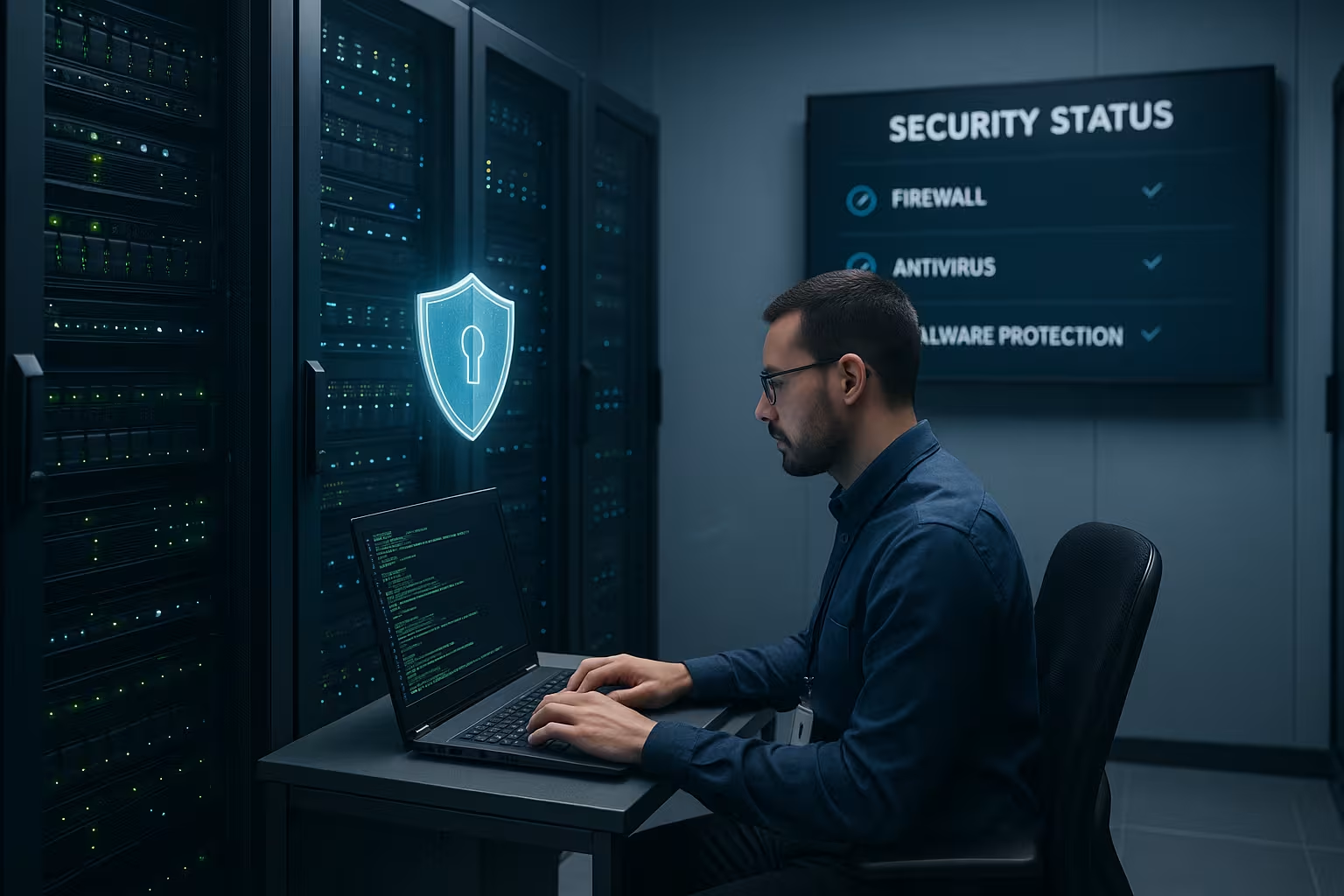
I rely on keys instead of passwords and activate MFA for administrative logins. I set PermitRootLogin to no in the sshd_config, only allow secure kex and cipher suites and deactivate password authentication. I use AuthorizedKeysCommand to manage SSH keys centrally and shorten session times via LoginGraceTime and ClientAliveInterval. I increase transparency with detailed SSH logs and react to failed attempts via fail2ban. I restrict SSH to management networks and set port knocking or single sign-on if it suits the operation.
TLS, service and protocol hygiene
I secure all externally accessible services with TLS and limit myself to modern protocols (TLS 1.2/1.3) and robust cipher suites with Perfect Forward Secrecy. I plan certificate lifecycles, automate renewals and activate OCSP stapling and strict transport guidelines where appropriate. I consistently remove insecure legacy protocols (Telnet, RSH, FTP) or encapsulate them for legacy via secure tunnels. I set minimal HTTP header hardening, limit plaintext ports and regularly check whether configurations have been unintentionally loosened. I keep internal management endpoints only internally accessible and separate data channels from control channels to prevent misconfigurations from compromising all services.
Network security: Firewall & IDS/IPS
I define strict rules with nftables or iptables and document why a Port may be open. I work with default deny, only allow required protocols and segment the network into zones. I secure remote access via VPN before releasing management services and use DNSSEC and TLS where possible. I use intrusion detection or prevention, correlate alarms with system logs and define clear response plans. I refresh my knowledge with compact Firewall basics so that rules remain lean and comprehensible.

Mandatory Access Control: SELinux/AppArmor pragmatic
I use MAC frameworks so that services remain restricted even if an account or process is compromised. I set SELinux or AppArmor to enforcing, start in sensitive environments in permissive/complain mode first and learn clean profiles before switching to hard. I manage policies centrally, document booleans and exceptions and test updates against the profiles. I specifically encapsulate critical services such as web servers, databases or backup agents so that they only access required paths. In this way, I prevent lateral movements and reduce the impact of incorrect file permissions.
Protection at hardware level and boot chain
I secure the platform by protecting UEFI, firmware and remote management with strong Passwords and deactivate unnecessary interfaces. I activate Secure Boot, check bootloader integrity and use TPM-supported functions where available. I use full disk encryption with LUKS and ensure secure key management. I isolate out-of-band access, log its use and restrict it to trusted admin networks. I regularly check firmware updates so that known vulnerabilities do not persist.
Logging, auditing & monitoring
I collect events centrally via rsyslog or journald and extend the view with auditd-Rules for critical actions. I create alerts for failed logins, unexpected process starts and configuration changes. I assign unique host names so I can quickly associate events and correlate data in a SIEM solution. I test thresholds to reduce false positives and keep playbooks describing responses. I keep an eye on retention periods so that forensic analyses remain possible.

Integrity check, baselines & time
I define a clean starting point and secure it: I record checksums of important system files, use file integrity monitoring and set up alerts for deviations. I keep AIDE/comparable tools up to date, lock their databases against manipulation and seal particularly critical directories. I synchronize the system time via secure time sources (e.g. chrony with authentication) so that logs, certificates and Kerberos function reliably. I keep a golden system and configuration baseline with which I can quickly reset compromised systems instead of laboriously cleaning them up.
Automation of security
I rely on configuration management such as Ansible, Puppet or Chef so that I can consistent enforce the same safety states. I write repeatable playbooks, separate variables cleanly and test roles in pipelines. I check deviations regularly and correct them automatically before risks arise. I add check profiles such as OpenSCAP policies and document exceptions with reasons. I keep secrets separate, use vault solutions and manage key rotations as code.
Container, VM and orchestration hardening
I harden containers and virtual machines according to the same principles: minimal images, no unnecessary packages, no root in containers, clear resource limits via cgroups and namespaces. I use seccomp and capability profiles, deactivate privileged containers and prevent host mounts that are not absolutely necessary. I scan images before rollout, sign artifacts and pin base images to defined, verified versions. In orchestrations, I enforce network policies, secret management and pod security requirements. On hypervisors, I keep the management level separate from the guest network and strictly limit the visibility of devices for VMs.
Guidelines, documentation & training
I formulate a clear safety guideline, the responsibilities, Standards and metrics are defined. I keep runbooks for incident response, patch processes and access approvals. I document every configuration change with ticket reference, date and target. I regularly train those involved and test their knowledge using short exercises. I also use the Root server guideto get new colleagues up to speed quickly.
Incident response & forensics in the company
I plan for emergencies: I define clear reporting channels, isolation steps and evidence. I secure volatile data early on (network connections, processes, memory), have forensic tools ready and document every measure with a time stamp. I make a conscious decision between containment and immediate shutdown, depending on the risk to availability and evidence. I have signed, trustworthy rescue media ready, only use approved tools and respect chains of evidence. After the incident, I prefer to rebuild systems from known baselines, learn from root cause analyses and adapt hardening and monitoring immediately.
Backup, recovery & restart
I plan backups that are encrypted, offline-capable and with defined Targets for recovery time and data status. I test restores realistically and log the duration so that I can identify gaps. I store copies separately, prevent unauthorized deletion through separate identities and set immutability where available. I secure firewall, IDS and management tool configurations along with application data. I practise restarts regularly so that I don't lose time in stressful situations.
Compliance, evidence & metrics
I link hardening with verifiable targets: I assign measures to established benchmarks and collect evidence automatically from CI/CD, configuration management and SIEM. I define metrics such as mean time to patch, deviations from hardening rules, blocked accounts per period or percentage of systems with MFA. I generate regular reports for technology and management, assess risks, set corrective measures on roadmaps and anchor exceptions with expiration dates. In this way, I create transparency, prioritize resources and keep security in a sustainable flow.
Checklist for everyday life
I check weekly to see whether new Services are running and whether ports are open that nobody needs. I check all users, groups and sudo rules monthly and block inactive accounts. I confirm that SSH only accepts keys, that root login remains off and that MFA is active for admins. I compare firewall rules with the target list, read alarms and log statements and rectify anomalies immediately. I verify that backups are complete and perform quarterly restore tests so that I have certainty.
Comparison of hosting providers
When selecting a provider, I pay attention to secure standard images, clear SLA and help with hardening. I check whether firewalls, DDoS protection and encryption are available at no extra cost. I assess the choice of operating system, the quality of support and whether managed options are available. I check how the provider handles patching, monitoring and incidents and whether it supports audit requests. I use the following comparison as a guide to help me choose a suitable provider.
| Place | Provider | Choice of operating system | Security features | Support |
|---|---|---|---|---|
| 1 | webhoster.de | diverse | Comprehensive server hardening, encryption, firewall, managed services | 24/7 Premium Support |
| 2 | Provider X | Standard | basic firewall, regular updates | Standard support |
| 3 | Provider Y | limited | Basic protective measures | E-mail support |
Summary: Hardening in practice
I effectively secure Linux servers by reducing attack surfaces, Updates plan, streamline access and control network paths. I rely on strong authentication, logging with clear alarms and automation so that conditions remain reproducible. I document every change, practice restores and keep policies alive. I regularly review results, adapt measures and keep technology and knowledge up to date. In this way, I maintain control, react more quickly to incidents and keep services reliably available.