Skip to content
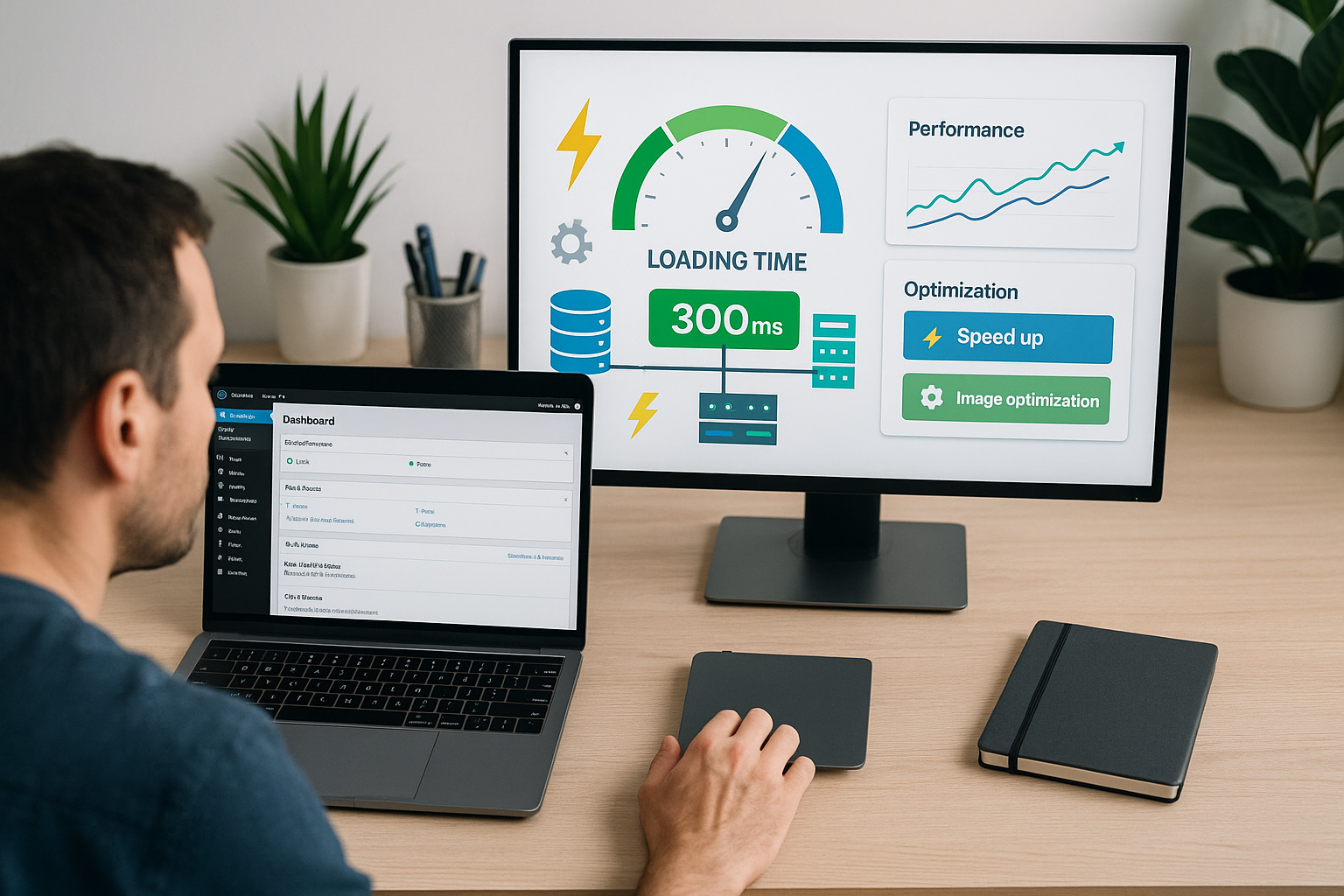
Server Uptime Myth sounds like reliability, but pure availability says nothing about speed, responsiveness, and user experience. I'll show you why high uptime figures are useful, but without real Performance yield no results.
Key points
I will summarize the most important insights clearly before going into more detail. High Uptime measures accessibility, not speed. Response time, resource load, and latency determine the real Performance. A single measurement location obscures regional problems and creates a false sense of security. Planned maintenance, measurement windows, and average values distort the numbers. Consistent monitoring reveals bottlenecks before they affect customers and Turnover cost.
- Uptime is not a performance guarantee
- ResponseTimes determine conversions
- Monitoring instead of flying blind
- Global Measurement instead of single point
- Maintenance often doesn't count

What uptime really means
I make a strict distinction between Accessibility and speed. Uptime refers to the proportion of time during which a server responds to requests, even if the response is slow. 99.9% sounds impressive, but it allows for almost nine hours of downtime per year—which has a noticeable impact on customer experience and trust. Even 99.99 % reduce failures to around 52 minutes, but this figure completely ignores performance fluctuations. If you want to delve deeper, you will find Uptime guarantee guide Details on measurement windows, measurement points, and interpretations.
Performance vs. Availability
I measure real Performance about response time, throughput, latency, and error rates. A page can be „online“ while processes hang, database queries struggle, and the hard drive is blocked—this destroys ConversionStudies show that delays of even one second often halve the conversion rate; delays of ten seconds cause it to plummet. Search engines penalize slow responses, users bounce, and shopping carts remain empty. Only when I consider accessibility and speed together do I get a realistic picture.

The pitfalls of measurement
I check how providers Uptime calculate and what loopholes lurk in the fine print. Some calculate monthly instead of annually and thus „forget“ cumulative failures. Planned maintenance often does not appear in the statistics, even though users actually locked out Multi-location measurements help, but average values hide regional total failures. I keep my measurement methodology transparent and note every exception that makes the figure look better than it is.
Peak loads and WordPress
I often see that a seemingly fast page under Load Unoptimized plugins, unfortunate database queries, and a lack of caching turn traffic spikes into instant death. E-commerce shops quickly pay five-figure sums per hour for this. Turnoverlosses. Tools with query analysis and Apdex values show where time is being lost. If you want to understand why problems become apparent at peak times, start with this overview of Problems under load.

Key figures at a glance
I focus monitoring on a few meaningful Metrics Response time below 200 ms for critical endpoints serves as a clear goal. CPU and RAM reserves stabilize peaks, but I avoid permanent full load Over 70–80 %. Disk I/O and database locks reveal bottlenecks that remain invisible in the uptime value. I also measure cache hit rates, queue lengths, and error codes to see the causes rather than the symptoms.
| Key figure | reference value | Statement | Risk |
|---|---|---|---|
| Response Time | < 200 ms | Shows speed of the Answer | High bounce rate, SEO loss |
| CPU utilization | < 70–80 % on average | Reserve for Tips | Throttling, timeouts |
| RAM utilization | < 80 % | Prevents swapping | Massive latencies, OOM killer |
| Disk I/O | Waiting time < 5 ms | Quick access to Data | Blocked processes, timeouts |
| Network latency | < 100 ms globally | Signal for Routing and peering | Slow loading times internationally |
| Cache hit rate | > 95 % | Relieved Backend | Unnecessary database load |
| Error rate (5xx) | < 0.1 % | Health of the Services | Chain reactions, abortions |
Global perspective instead of single-point measurement
I measure from several Regions with real load profiles, not just from the data center next door. Differences between continents reveal peering problems, routing loops, and local bottlenecks. Average values are misleading if a country regularly Timeouts I plan budgets for CDN, Anycast DNS, and edge caching to achieve globally consistent responses. This allows me to correlate countries, devices, and times of day with the metrics and find patterns that would otherwise remain hidden.

Implementing monitoring in a practical manner
I start with a clear measurement plan and expand gradually. First, I check the critical endpoints, then services such as the database, cache, queues, and search index. I trigger alerts with meaningful thresholds so that no Alarm fatigue Playbooks define responses: clear cache, restart pod, rebuild index, limit rates. I summarize dashboards so that everyone can see what needs to be done next in a matter of seconds.
SLAs, maintenance, and true redundancy
I read SLA clauses thoroughly and pay attention to whether Maintenance are excluded. Four hours of downtime per month add up to 48 hours per year, even if the rate seems reasonable. True redundancy with rolling updates, blue-green deployments, and hot-swap components reduces Failure and maintenance windows. This architecture comes at a cost, but it prevents shock moments on high-sales days. I always weigh the price against the risk of lost sales and damage to reputation.
Common measurement errors and how I avoid them
I distrust „green“ Checks, that only check HTTP-200. Such pings say nothing about TTFB, rendering, third-party scripts, and database queries. Incorrect caching embellishes laboratory measurements, while real users halt. A/B testing without clean segmentation distorts results and leads to wrong decisions. If you want to dig deeper, check out typical measurement pitfalls here: incorrect speed tests.
Synthetic monitoring vs. RUM
I rely on two complementary perspectives: Synthetic checks simulate user paths under controlled conditions, measure TTFB, TLS handshakes, and DNS resolution in a reproducible manner, and are suitable for regression testing after deployments. Real User Monitoring (RUM) captures real sessions, devices, networks, and times of day and shows how performance really performs. Both worlds together reveal gaps: if everything is green synthetically, but RUM shows outliers in individual countries, the problem often lies in peering, CDN rules, or third-party scripts. I define concrete SLOs for both views and continuously compare them so that lab values and reality do not diverge.

Observability: Metrics, logs, and traces
I go beyond traditional monitoring and establish genuine Observability. Three signals are crucial: metrics for trends and thresholds, structured logs for context, and Traces for end-to-end latencies across services. Without distributed traces, bottlenecks between the gateway, application, database, and external APIs remain hidden. Sampling rules ensure that I can keep peak loads visible without flooding the system with telemetry. I tag critical transactions (checkout, login, search) with my own spans and tags so that I can immediately see which hop is slowing things down under stress. This turns „The server is slow“ into a clear statement: „90% of the latency is in the payment API, retries are causing congestion.“
Frontend counts: Classifying Core Web Vitals correctly
I evaluate not only the server, but also what users perceive. Time to First Byte combines backend speed with network quality, while Core Web Vitals such as LCP, INP, and CLS show how quickly content appears, becomes interactive, and remains stable. A low TTFB is wasted if render-blocking assets, chat widgets, or tag managers block the thread. I prioritize critical resources (preload), minimize JavaScript, load third-party code asynchronously, and move rendering-related logic to the edge (edge rendering) when appropriate. Server performance lays the foundation, frontend hygiene delivers the visible effect.

SLOs and error budgets as a control instrument
I translate goals into Service Level Objectives and lead Error budgets Instead of vague „99.9% uptime,“ I formulate: „95% of checkouts respond in < 300 ms, 99% in < 800 ms per month.“ The error budget is the permissible deviation from these targets. It guides decisions: if the budget is almost used up, I stop feature releases, focus on stabilization, and prohibit risky changes. If it is well filled, I test more aggressively and invest in speed. This is how I link development speed, risk, and user experience in a data-driven way – not based on gut feeling.
Resilience patterns for everyday life
I install protective railings that cushion failures before customers feel them. Timeouts Set it short and consistent, otherwise zombie requests will hold resources forever. Circuit Breaker disconnect faulty downstream services, Bulkheads Isolate pools so that a service does not block all threads. Retries Only with jitter and backoff – without them, they create turmoil and worsen situations. Rate Limits and Backpressure Stabilize queues while degradation paths (e.g., „lighter“ product lists without recommendations) maintain core functionality. These patterns reduce 5xx spikes, improve median and P95 latencies, and protect conversion on critical days.
Scaling without surprises
I combine vertical and horizontal scaling with realistic Warm-upStrategy. Autoscaling requires proactive signals (queue length, pending jobs, RPS trend), not just CPU. Cold starts I avoid this by using preheated pools and minimal boot times per container. I scale stateful components (database, cache) differently than stateless services: sharding, read replicas, and separate workloads prevent an additional app pod from crashing the database. I keep an eye on costs by comparing load profiles with reservations and spot quotas—performance that remains economical is the only performance that is used consistently.
WordPress-specific levers with a big impact
I ensure WordPress performance across multiple levels. OPcache and JIT reduce PHP overhead, Object Cache (e.g., Redis) eliminates repeated database hits, Page Cache protects frontend peaks. I check query patterns and indexes, clean up autoload options, and limit cron jobs that tie up the CPU during traffic. Image sizes, WebP, and clean cache invalidation keep bandwidth and TTFB low. For admin and checkout paths, I use selective caching and separate pools so that write operations are not displaced by read load. This keeps the site not only „online“ but also fast under campaign load.
Incident management, runbooks, and learning culture
I ensure that every incident is handled in a controlled manner. Runbooks describe initial measures, On-CallPlans clarify responsibilities and escalation times. The incident is followed by a blameless postmortem with timeline, root cause analysis (technical and organizational), and specific Actions, that go into the backlog – with owner and due date. I track Mean Time to Detect (MTTD) and Mean Time to Restore (MTTR) and compare them with the SLOs. This way, individual incidents turn into systematic learning, which puts uptime figures into perspective and makes noticeable speed the norm.
Capacity planning without gut feeling
I plan capacity in a data-driven way via Trends and seasonality. Linear forecasts fail in campaigns, releases, or media events, so I simulate scenarios. Gradual scaling with buffers prevents costs from exploding or systems from crashing. tip over. I regularly test limits with load and stress tests to determine actual reserves. This discipline ultimately saves more money than any short-term cost-cutting measure.
From key figures to action
I consistently translate metrics into concrete Actions. If latency increases, I first check network paths and CDN hit rates. If the cache hit rate drops, I optimize rules, object sizes, and Invalidation. If I see consistently high CPU usage, I profile the code, activate JIT optimizations, or distribute the load across more instances. This transforms monitoring from a report into a machine for quick decisions.
Uptime myths that cost money
I recognize patterns that appear as myths Tarnen: „Our server has 100% uptime“ ignores maintenance and regional outages. „One location is enough“ overlooks peering issues and edge load. „CDN solves everything“ is not true if the Backend slows things down. „Quick tests in the lab“ are misleading if real users take different paths. I check every claim against hard data and real user paths.
Summary for decision-makers
I rate hosting based on real Performance, not a number after the decimal point. Uptime remains valuable, but it only covers the question „Online or not?“ Business success depends on response time, capacity, global latency, and clean Monitoring. Keeping these metrics under control protects conversion, SEO, and customer satisfaction. This turns availability into noticeable speed—and technology into predictable revenue.