Skip to content
In 2025, I am focusing on lean deployments, measurable cost benefits and global delivery via Edge for serverless webhosting in order to bring features live in days instead of weeks. At the same time, I plan specifically for cold starts, data access and observability so that performance, costs and operation remain in balance and Teams deliver faster.
Key points
- Costs Save with pay-per-use, avoid idle time
- Scaling in seconds, without own server maintenance
- Time-to-market decreases due to automated provision
- Risks manage: cold starts, supplier loyalty, limits
- Scenarios 2025: Edge, APIs, batch processing, microservices

What's really behind Serverless 2025
I leave the server maintenance to the provider and concentrate on code, events and data flows; this is how I define Serverless in everyday life. Functions only start when required, scale automatically and are billed according to usage, which eases peak loads and keeps quiet phases favorable. Behind the curtain, servers continue to run, but abstracted, with centralized updates, patches and scaling logic. I call functions via HTTP, queues, cron or storage events, orchestrate tasks with state machines and keep states in databases that are built for a large number of simultaneous accesses. This architecture comes into its own when traffic fluctuates, releases are frequent and small teams need to deliver fast results.
Advantages that count in 2025
I reduce fixed costs because I only pay for what I actually use, and I save on idle time, which would be wasted in continuous operation. expensive becomes. The platform scales automatically when campaigns or seasonality kick in and falls back just as quickly after peak loads. I release features quickly because provisioning, patching and capacity planning are eliminated and I can focus on testing, observability and UX. Security benefits from central updates, isolation and fine-grained authorizations that I define for each function and resource. If you want to delve deeper into the advantages and disadvantages, this overview of Advantages and limits A compact classification that underpins my decisions.

Specify non-functional requirements
At the beginning I define clear SLOs per endpoint: availability, p95/p99 latency, error rate and cost per request. From this I derive Error budgets and performance budgets that decide where I use provisioned concurrency, edge offloading or aggressive caching. For productive operation, I formulate target values such as „p95 TTFB < 200 ms at the edge“ or „p95 API latency < 500 ms“ and measure them continuously.
I choose memory and runtime sizes deliberately: more RAM increases costs per millisecond, but often reduces CPU time and thus the total amount. I test different Memory/Timeout-combinations per A/B and create one concrete combination per function. Concurrency-limit so as not to overrun databases and external APIs.
Honestly classifying boundaries
I plan for cold starts because functions that are rarely called up need time to warm up; for critical end points, I use keep-warm options, provisioned concurrency or edge functions close to the User. I reduce vendor lock-in with standard frameworks, portability layers and a clear separation of domain logic and platform-specific services. For workloads with very long runtimes or special system requirements, I also use containers or managed VMs and combine the two. I check network limits, timeouts and maximum package sizes early on in the architecture so that releases do not fail later due to platform limits. For me, monitoring, distributed tracing and structured logs are part of this from day one, otherwise latency peaks and error rates remain invisible.
Idempotence, repetitions and sequence
By default I assume at-least-once-delivery. That's why I work with Idempotency Keys per job, deduplicate with unique keys and save processing results with versions or sequence numbers. For concurrent workflows, I use SAGA patterns with compensation steps instead of global transactions. I set retries with Exponential backoff and jitter, forward problematic messages to Dead letter queues and prevent „poison messages“ by limiting maximum repetitions and providing for manual inspection.
Comparison: Traditional vs. serverless
Before making decisions, I look at operation, costs, scaling and latency, because the two models play to their strengths in different situations and require different Skills. The following table summarizes the core dimensions and shows where I have freedom and where the platform dictates. For host and server comparisons, webhoster.de is the place to go if I need market impressions. For highly fluctuating traffic and a fast release cycle, I prefer serverless; for special hardware or strict latency targets, I tend to choose containers on reserved resources. It remains important: I evaluate workload patterns, not just technology preference, and measure the decision later against real ones Metrics.
| Criterion | Traditional hosting | Serverless web hosting |
|---|---|---|
| Server management | Self-responsible | Provider managed |
| Cost model | Fixed monthly/annual prices | Pay-per-use |
| Scaling | Often manual or limited | Automatic, event-controlled |
| Flexibility | High for hardware/OS | Preset limits |
| Maintenance | Patching & updates yourself | Centralized by provider |
| Latency | Constant, server warm | Cold start possible |
| Examples | VMs, Managed Server | Functions, Edge Functions |
Suitable application scenarios 2025
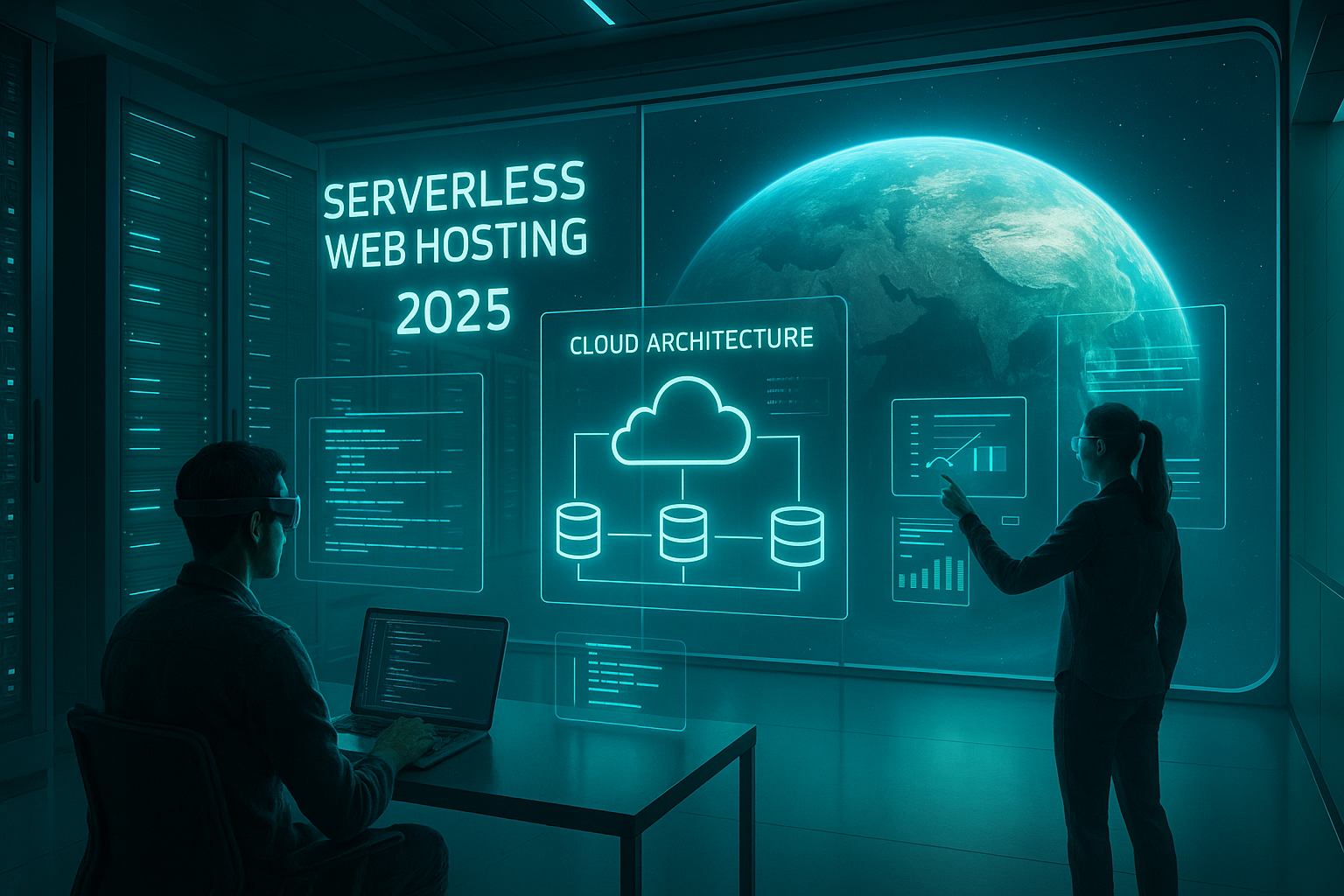
I benefit greatly from APIs that are called up irregularly, seasonal stores, news platforms or event sites that have to absorb peak loads from campaigns without permanently losing capacity. pay. For MVPs and prototypes, I quickly implement basic functions, test hypotheses live and discard what doesn't work. Image and video conversion, reporting jobs, ETL routes and webhooks are a good fit because they can be started event-based. I cleanly decouple microservices for authentication, payment confirmation, content transcoding or notifications and scale them independently. I draw inspiration from real-world examples such as image processing, real-time telemetry and content delivery, which show how well event-driven workloads can be scaled without overhead on the Server.
Migration and modernization without a big bang
I modernize step by step: First, I place a layer in front of the monolith (API gateway/edge), direct individual routes to new functions and leave the rest unchanged. I replicate data via Change Data Capture or define clear ownership per data domain so that no write conflicts arise. This allows me to deploy functions independently while critical paths remain stable. Measurable KPIs - such as conversion rate, latency, error rate - show whether the new path is ready for production. I only cut out further endpoints once the KPIs are right.
Architecture patterns for everyday life
I combine Functions with API gateway, queueing, object storage and a database that can handle read/write load so that the application does not crash during peak times. tilts. I encapsulate longer workflows in state machines and separate CPU-intensive steps into asynchronous pipelines to keep response times at the front end short. I use caching via CDN and KV stores at the edge of the network so that static assets and frequent API responses are quickly accessible worldwide. For authentication, I use token-based procedures and keep secrets centralized; this keeps functions short and secure. I build up observability with structured logs, metrics and trace IDs so that I can quickly identify bottlenecks in cold starts, database access or external dependencies. find.
Data and persistence in serverless
I plan data paths so that short, repeatable operations dominate. I scale permanent TCP connections to relational databases with Connection pooling or use HTTP-based drivers and proxies to avoid connection storms. If possible, I decouple write processes via queues/streams; I accelerate read paths with edge KV, document-oriented caches or materialized views. For transactions, I favor Small aggregates and possible consistency with clear compensations instead of complex, distributed locks.
For global applications I separate „hot“ data (e.g. sessions, feature flags) from „heavy“ data (e.g. order history). I cache the former close to the user, the latter I keep centrally or regionally according to compliance. I take read/write ratios, index sizes and partitioning into account early on so that queries remain stable even with thousands of simultaneous requests.
Practice: From MVP to scaling
I start small: an API, a few events, a database - and measure latency, error rates and costs per request before adding more services and blind spots in the operation accept. If the MVP works, I break down bulky endpoints into functions with clear responsibilities. I define SLOs per route so that I put provisioned concurrency or edge offloading where requests are really critical. Rollouts run via CI/CD pipelines with incremental traffic so that I can undo mistakes without hitting users hard. Later, I add rate limiting, circuit breakers and fallbacks so that external APIs don't pass on failures to users. pass on.
Development, tests and local simulation
I develop with local Emulators for queues, storage and functions or launch short-lived preview environments via branch. I validate contracts with consumer-driven contract tests so that faulty schema changes do not creep into production. For edge logic, I simulate headers, geo-IPs and cookies and check rules for side effects.
I automate Load tests with realistic traffic profiles (bursts, ramp-ups, seasonality) and link them with traces to recognize hotspots in dependencies. Synthetic canaries continuously monitor critical flows. I strictly separate feature flags from deployments so that I can activate or roll back functions without a new rollout.
Calculate costs realistically
I add up requests, execution time and memory per function and check how often which paths run so that budgets can be planned. stay. A typical calculation: number of requests x (average runtime x storage level) plus storage/transfer costs for objects and database accesses. With caching, batch processing and shorter runtimes, I reduce variable costs; with edge caching, I significantly reduce backend calls. For projects with a regularly high base load, a mix of serverless and low-cost permanent load resources can reduce the total. In the end, it's the price per useful event that counts - if you measure it, you prioritize measures according to Effect.
FinOps in practice
I forgive Tags/Labels for products, teams, environments and features and draw cost reports from them. Dashboards show me costs per route and per event; alarms sound in the event of anomalies. I quantitatively evaluate the effect of provisioned concurrency, retention times, caching TTLs and storage classes. If a function has a permanently high base load, I compare the unit costs with a lean container service and make a data-based decision. This keeps the architecture economic instead of just technically elegant.
Globally fast with Edge
I place dynamic parts that do not require heavy data access at the edge of the network and serve HTML, JSON and small transformation steps close to the User. This saves rounds to the data center, reduces TTFB and relieves the backend. Personalization with cookie/header data, geo-routing, A/B tests and feature flags run directly at the PoP, while data-intensive tasks remain in the core. To get started, this compact Edge workflow, which shows me a clean separation of edge and core logic. Important: I document edge rules in such a way that they remain verifiable later in code reviews and not in the CDN sand up.

Operation: Runbooks, alarms and emergency paths
I define Runbooks per service: which alarms are triggered, which metrics are relevant, which switches I have (throttle traffic, adjust retry rates, temporarily deactivate functions, deliver static fallback pages). Burn rate alerts show me how quickly the error budget is being used up. For external dependencies, I set circuit breakers, timeouts and sensible defaults, so that the user experience is maintained despite failure. robust remains.
Security, compliance and governance
I keep authorizations to a minimum, isolate each function with its own roles and prevent excessive network sharing to minimize attack surfaces. stay. Secrets centrally, rotate them automatically and log access. Data classification helps me to define edge paths, storage locations and encryption per data type. With centralized audit logging, immutable logs and alerts for unusual patterns, I detect incidents early on. I anchor guidelines as code in repos so that teams can track changes and take reviews seriously. check.
Security and compliance deepened
I think Privacy by designMinimal data collection, short storage, consistent deletion paths. I assign data residency and encryption at rest/transport per class. I address supply chain security with signatures, dependency scans and an SBOM so that I can quickly assess what is affected in the event of an incident. I round off network restrictions (egress controls, only required endpoints) and WAF rules with mTLS between sensitive services.
Checklist before the go-live
- SLOs defined and anchored in metrics/alarms
- Edge rules documented, tested, versioned
- Idempotence and retries with DLQ proven
- Limits (timeouts, payload, concurrency) validated
- Data paths for hot/heavy separated, caches with TTL/invalidation
- SecurityLeast Privilege, Secrets, Audit Logs, Egress Controls
- FinOpsTags, budgets, unit cost dashboards
- Runbooks, fallback pages, manual switches available
- TestsLast, Contracts, Canaries, Rollback practiced
2025 and beyond
I see serverless merging with containers: jobs running as functions, long-lived services on Fargate or VM-like resources, all through a pipeline controllable. AI-powered autoscaling, more efficient runtimes and shorter cold starts reduce latency, while edge platforms increasingly deliver personalized content directly to the edge. Sustainability gains weight because pay-per-use avoids idle time and capacity reacts dynamically to real demand. Providers are extending limits, simplifying debugging in a distributed context and delivering more protection mechanisms out of the box. Those who actively accompany this development will build applications in 2025 that start quickly, deliver globally and are economically viable. run; a more detailed view is provided by the assessment of the The future of serverless.
Briefly summarized
I use serverless webhosting 2025 specifically where volume fluctuates, release speed counts and global delivery is necessary, and combine it with containers for permanent Services. I keep costs transparent by calculating per event and prioritizing caching, edge and short runtimes. I minimize risks such as cold starts and vendor lock-in with keep-warm strategies, portability and a clear separation of responsibilities. Security, observability and tests are not add-ons for me, but core components of every pipeline. This is how I deliver functions that perform reliably, respect budgets and quickly reach users worldwide. reach.