Skip to content
You want to found an e-commerce start-up in 2025 and are wondering which store system for start ups is really performant? In this article, I will show you step by step what is important when making your choice - from functional scope and scalability to cost structure and long-term growth potential.

Key points
- Adaptability business model, product and target group is crucial.
- Technical scalability has a significant impact on your long-term growth.
- Interface integration saves time and resources in everyday life.
- Usability in the backend reduces training effort and sources of error.
- Price models must fit your budget and your goals.
If you are founding a start-up in the e-commerce sector, you should set yourself clear goals right from the start. Not only does the choice of the right store system play an important role, but also the question of how much flexibility you need. Agility is particularly important in the early start-up phase in order to be able to react quickly to market changes. A system that is easily scalable and modularly expandable will help you to test new product lines or sales models without a great deal of technical effort.
The key points above give you a quick overview of the key factors you should consider. Bear in mind that each individual point influences your profitability: poor interface integration, for example, can lead to duplicate data maintenance and therefore not only cost you time and nerves, but also money. The usability of your backend, i.e. how easy the system is to use, also minimizes errors and speeds up your work process. These are all important building blocks for a successful start - and for your long-term growth.
Ready to go: What a store system for start-ups really needs to do
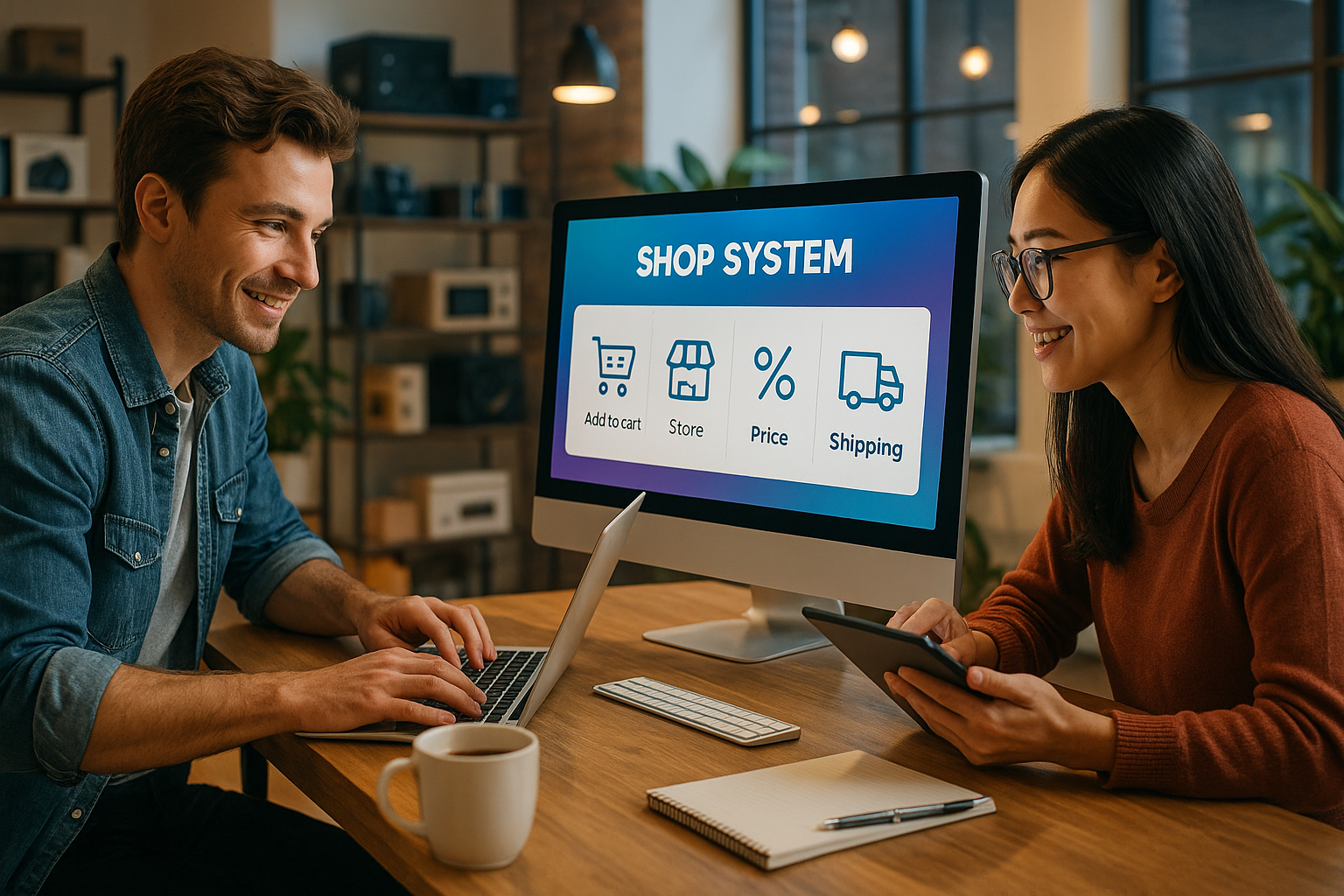
A good store system not only serves as a digital store space, but also as a powerful backend for processing orders, managing products and connecting to payment and shipping service providers. Two aspects in particular are crucial for start-ups: cost efficiency and flexibility. You should be able to test different business models without a new technical setup.
Another factor is the AutomationFrom stock management to invoicing, as much as possible should be automated. This is the only way to save valuable time and focus on marketing and customer acquisition. Systems such as Shopware or WooCommerce offer solid foundations here - especially if you want to equip yourself with plugins.
When it comes to hosting, you should make sure that your provider offers SSD storage, SSL, regular backups and sufficient server resources. This will help you avoid technical bottlenecks when your visitor numbers increase.
Especially in the start-up phase, it is crucial to be able to act quickly. A store system that allows you to add new products at lightning speed and transfer stock figures live to external marketplaces, for example, relieves you of many manual work steps. The same applies to the integration of various payment options: Customers who realize at checkout that their preferred payment method is missing are much more likely to abandon their purchase. So make sure that your system already supports several payment interfaces such as PayPal, credit card, instant bank transfer or similar methods as standard. This will reduce abandoned purchases and ensure a smooth ordering process.
It is also important for a young company to keep an eye on stock levels. Integrated inventory management or the option of connecting an ERP system can work wonders here. If your online business overlaps with a brick-and-mortar store or you are planning to do so in the future, a reliable omnichannel strategy becomes even more important. Only if all channels work in harmony with each other can you keep track of your stock and increase customer satisfaction at the same time.
Open vs. closed systems: Which suits your startup?
The choice between open source software and proprietary cloud solutions determines your long-term independence. Open systems such as WooCommerce or Shopware offer you full control over functions, design and extensions. However, updates and maintenance are often more complex, which requires a deeper technical understanding or an IT service provider.
Cloud-based solutions such as Shopify, on the other hand, score points for user-friendliness and low entry costs. You pay a monthly fee, but receive hosting, support and updates from a single source. As a founder, you have to weigh up what is more important to you - flexibility or convenience. You can also find out more in the extensive Comparison of Shopware and WooCommerce.
With open systems, you can also determine exactly which plugins or themes you need without paying for functionalities that you never use. However, you need to have a basic understanding of server environments, software compatibility and updates or hire the appropriate service providers. With closed systems such as Shopify, you can get started faster and benefit from a predefined ecosystem that is less flexible when it comes to responding to complex special requests. Think about how individual you want your store to be and whether you might need special integrations that are more difficult to implement in a closed system.
In the long term, opting for an open system can give you more planning security, especially if you don't want to be tied to specific price models or providers. However, remember that you are responsible for security updates and that you need a suitable hosting plan that offers performance reserves in the event of very strong growth. A proprietary cloud system relieves you of precisely these tasks, but often limits you in other areas - for example, if you want to make adjustments deep in the code. So the question is more strategic: how important is total control over your store to you, and how much responsibility do you want to relinquish?
Functionality: You should pay particular attention to this
A store system for start-ups should have everything you need in terms of basic functionality to sell products effectively: Attractive product pages, simple checkout processes, configurable shipping options and common payment methods. Modularity is important: can you add new functions with plugins without overloading the entire system or making it unstable?
Multilingualism and multicurrency capability are also becoming increasingly important if you want to sell internationally. Pay attention to whether your store system offers these functions as standard or whether extensions are necessary - this can affect costs and development time in the long term.
It is also relevant how flexible you can make your design. Especially as a start-up, you often want to stand out from the competition and therefore need a store system with a powerful page builder or theme engine. Check how much freedom you have when designing product pages, categories and landing pages without having to resort to complex code structures. In many cases, a modular system that allows you to achieve professional results using drag-and-drop is sufficient.
Also not to be underestimated: the maintenance of customer data and the integration of a customer account. Many systems already offer ready-made tools that provide you with evaluations of purchase history, shopping cart abandonment or customer groupings. On this basis, you can launch customer loyalty programmes, personalize discounts or automate email marketing (newsletters, transactional emails, etc.). This allows you to create a closer relationship with your buyers in the long term.
Cost structure: a clear view of the finances
A common mistake made by start-ups is not realistically calculating the follow-up costs. In addition to license or subscription fees, there are also expenses for themes, plugins, hosting and possibly developer hours. Here is an exemplary cost overview for different store systems:
| System | Initial costs | Running costs (month) | Transaction fees |
|---|---|---|---|
| Shopify | 0 € | from 32 € | 1-2 % depending on tariff |
| WooCommerce | approx. 150-300 € (hosting + themes) | 10-40 € (hosting + plugins) | 0 % (depending on payment provider) |
| Shopware Community Edition | 0 € | variable (server + extensions) | 0 % |
In particular, you should not forget that marketing costs and other operating expenses must also be taken into account. Although many founders calculate the monthly store costs, they underestimate the budget for online marketing, suppliers and customer service. Costs for accounting, legal advice or insurance can also quickly be overlooked at the beginning and account for a significant proportion of expenses.
A closer look at your expected sales and the associated gross profit will show you which fee structure is right for you. For example, if you plan to sell high-margin products, a system with transaction fees can pay off relatively quickly. However, if you have products with narrow margins, you should avoid additional transaction costs and opt for a system without extra fees. Take the time to calculate different scenarios to avoid a surprise at the final invoice.

Mobile optimization - otherwise you will lose customers
The majority of shoppers use smartphones when shopping online - this is especially true for younger target groups. Your store should therefore have a responsive design and fast loading times. Many systems such as WooCommerce or Shopify already offer appealing standard themes that are optimized for mobile devices.
If you make individual adjustments, be sure to test your pages with Google PageSpeed Insights or similar tools. This will help you avoid technical errors that directly affect your conversion rate. Mobile usability is one of the main factors in search engine rankings.
Especially if you use a lot of images, videos or interactive content in your store, mobile performance can quickly become a bottleneck. Therefore, pay attention to smart image optimization - for example by using modern formats such as WebP - and targeted compression of your data. Also regularly check how your store runs on different device types and operating systems. A responsive and user-friendly mobile store increases the trust of your customers and leads to better conversion rates.
The navigation of your store should also remain intuitive on mobile devices. Important buttons need to be placed in a "thumb-friendly" way, while unnecessary drop-down menus or pop-ups are more of a hindrance. Users should be able to find the most important information such as shipping costs, product details or payment options without having to scroll for a long time. The design of the checkout process can also be decisive here: one or two additional clicks that are not noticeable on the desktop can make the difference between a customer ultimately buying or abandoning the purchase on mobile.
The growth factor: don't underestimate scalability
As soon as your store is successful, you will see more visitors and orders - so your system must be able to grow with you. Whether you want to connect additional language versions, automated workflows or external warehouses - your store system should allow technical integrations without you having to start from scratch.
If you want to grow, you need connection options to tools such as ERP, CRM, newsletter systems or marketplaces. Platforms with an open API have a clear advantage here. You can lay a good foundation for further growth by setting up your store on solid technology right from the start.
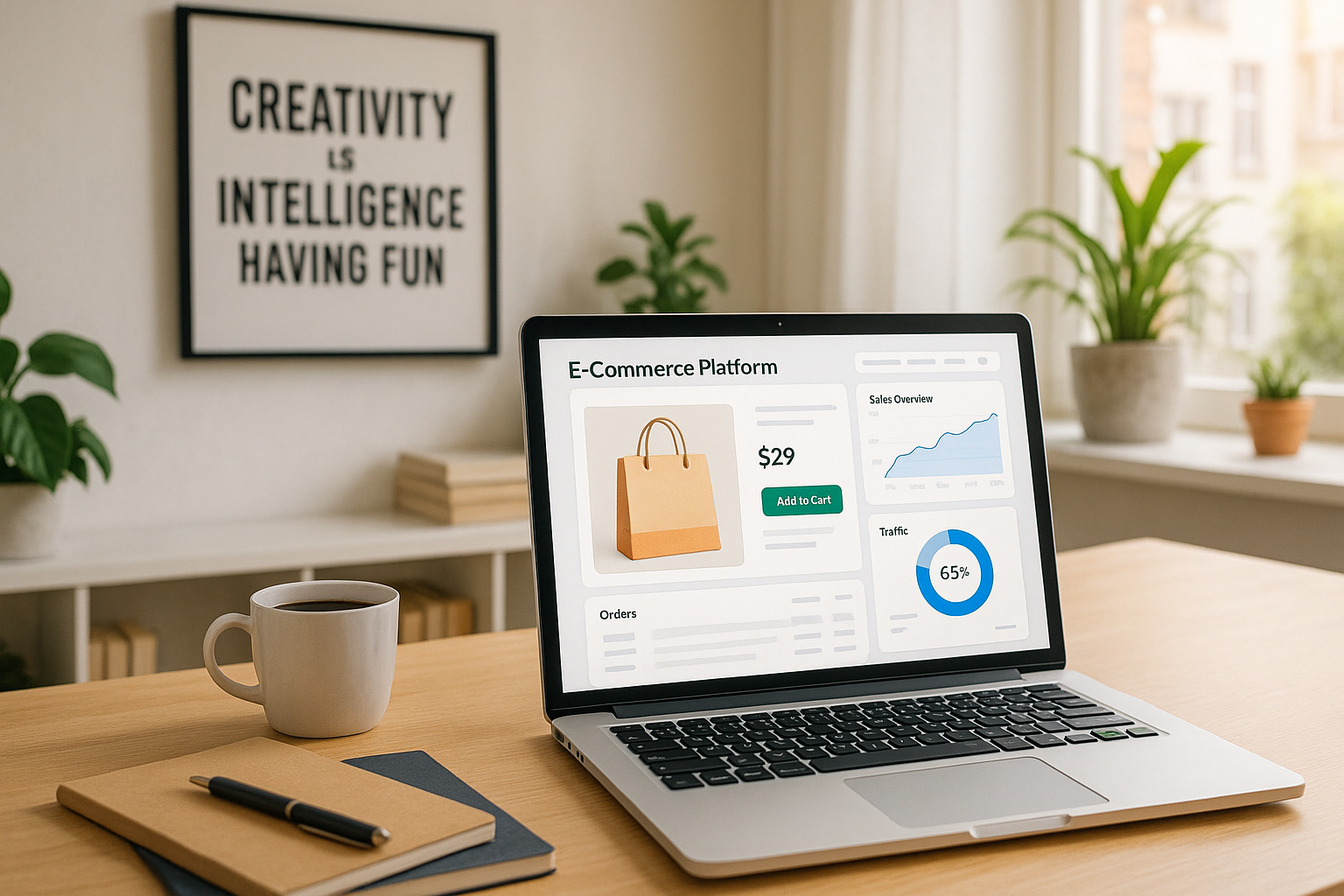
However, scalability is not just about the technical side, but also about the organizational dimension of your business. If your order volumes increase significantly, you need to expand your warehousing, shipping and customer support accordingly. Your store system should support these growth requirements - for example, via a central dashboard in which you can track all important key figures. Some systems already offer integrated analysis tools so that you can quickly see whether you need to increase your stock levels or adjust your marketing strategies.
Requirements can also change significantly in the B2B sector if you want to tap into this market: Volume discounts, individual prices and customized invoice workflows are just a few examples that your store system should ideally be able to map flexibly. A "rigid" system that does not allow for any extensions may force you into expensive workarounds or even a complete relaunch. These risks can be minimized from the outset with a scalable system.
SEO, performance, loading time: decisive for sales from day 1
At the latest when you want to win customers via search engines, you will realize how important good basic SEO functions are. Your product pages must be search engine friendly, title tags, meta descriptions, speaking URLs and structured data should be easy to create. It should also be easy to integrate map services or trust badges.
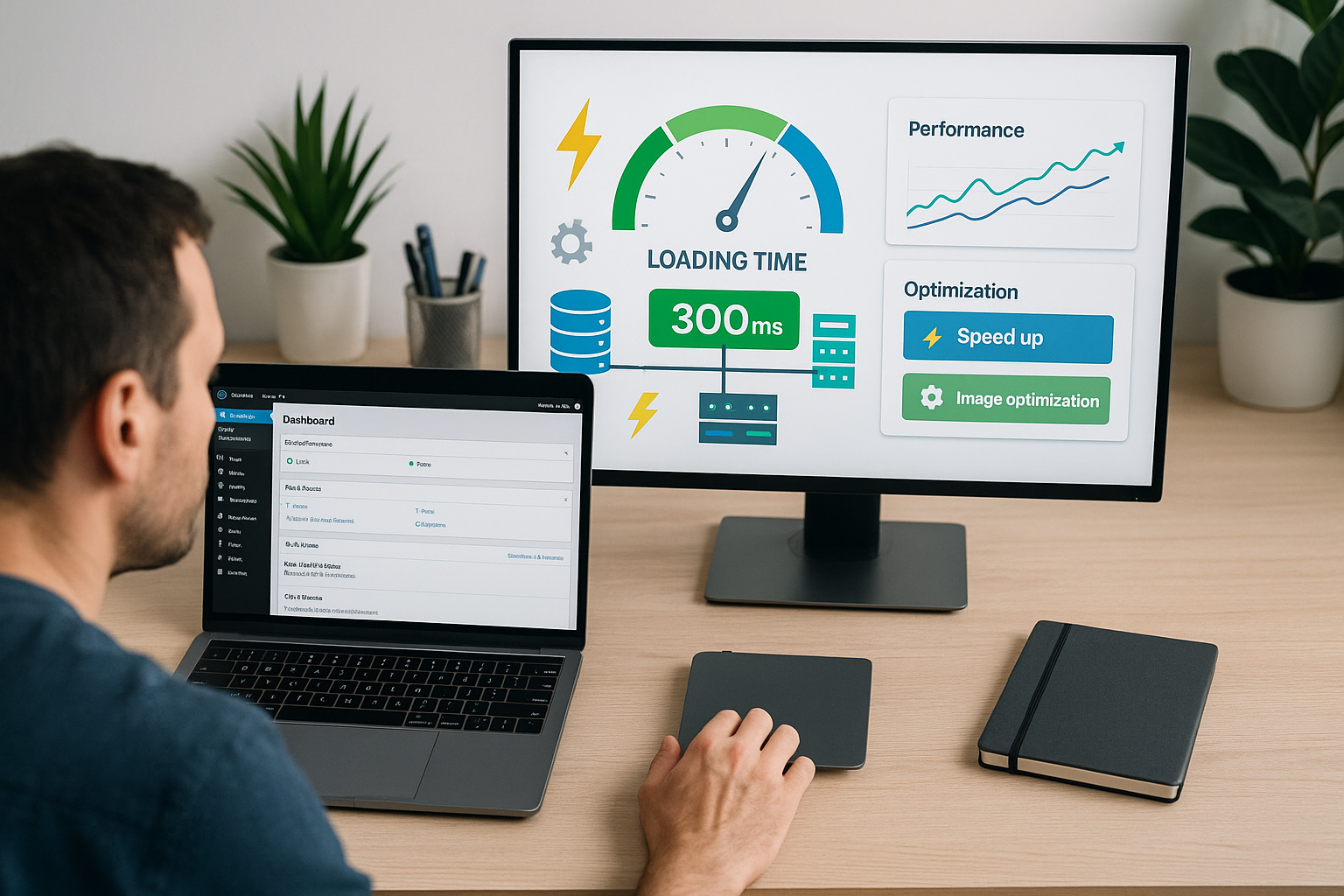
Avoid systems whose pages load slowly or collapse with many simultaneous users. The technical performance of your store directly influences the ranking in organic search and conversion. You can find more SEO ideas in the 10 tips for e-commerce optimization.
Note that SEO is not only controlled by content, but also by clean technology. Load time optimization through caching or content delivery networks (CDNs) is essential to ensure that your website is delivered quickly worldwide. A store system that already supports integrated caching or the integration of a CDN saves you time and money. Combined with mobile optimization and smooth checkout processes, this will increase your users' satisfaction and boost your visibility on Google & Co.
Structured data, for example for product reviews or price tags in the search results, can significantly increase your click-through rate. Therefore, check whether your store system supports rich snippets and similar features. If you lay the foundations for SEO and performance right from the start, you can avoid time-consuming reworking and secure a competitive edge.
Which trends will influence your store system in 2025
The requirements for store systems are constantly changing. In 2025, customers will expect fast loading times, flexible payment methods and experiences directly in the online store. Solutions with artificial intelligence for product recommendations or chatbots are becoming increasingly popular - many providers already enable these functions as plugins or add-ons.
The importance of social selling, live shopping tools and personalization functions is also growing. When selecting your store system, you should check whether these functions are available directly or via extensions. This will keep you competitive and allow you to activate new features quickly. Current E-commerce trends for 2025 provide you with further orientation.
Another emerging trend is the seamless integration between online shopping and digital marketplaces. Whether Amazon, eBay, Etsy or specialized niche platforms: Your customers shop where they prefer to be. For you, this means that you should strive for a central solution in which all sales converge. Thanks to automated inventory reconciliation and order processing, your store remains the backbone of your business.
The role of voice assistants will also continue to grow. Many people are already using Alexa, Google Assistant or Siri to search for or buy products. A store system that is prepared for voice commerce could give you a decisive competitive advantage. Think about how you can design your store so that it understands search queries by voice command and returns appropriate answers. This topic is still in its infancy, but is likely to become increasingly important.

Recommended procedure for your start
You should first create a clear list of priorities: What do you really need to start your store today - and what can follow later? Then compare the system providers on the basis of real criteria such as running costs, expandability and usability.
Test tools in the demo or free version before making a long-term commitment. Also make sure you have a lively community and sufficient documentation - this often saves you hours of research if you have any questions. It is also often worth having an initial discussion with hosting or store system providers to avoid misunderstandings.
A good practical approach is to start a small pilot project: set up a test store and sell a few products to get to know the processes. Take a look at how the backend is structured, how updates affect you and what hurdles you will face on a day-to-day basis. During this phase, also pay attention to feedback from friends or your first customers in order to identify optimization potential early on.
It is also advisable to lay a solid foundation in terms of legal certainty at an early stage. This includes a correct legal notice, comprehensible terms and conditions, data protection declarations in accordance with the GDPR and, if applicable, compliance with distance selling laws. In many store systems, you will find plugins or templates to help you with implementation. If you want to expand internationally later on, correct translations and country-specific legal texts are also an issue that you should not put off.
You should also keep an eye on your branding. This includes not only logos and color schemes, but also the tonality, imagery and storytelling in your store. A coherent brand presence creates recognition value and strengthens customers' trust in your offering. Make sure that you choose a store system that offers you sufficient options for customization. Especially if you occupy a market niche, you can set yourself apart from other providers with outstanding design and tailored communication.

Summarized: Your path to a successful store
An ideal store system for start-ups doesn't have to be able to do everything - but the right things. Automation, basic SEO functions, simple expandability and reasonable cost structures help you to build a sustainable business model. Weigh up open versus closed platforms, keep an eye on your growth potential and test before you commit.
With the right planning, you can save money, time and nerves later on. Lay the foundations today for your scalable online retail of tomorrow.
Remember: If you consider important decisions regarding hosting, security and technical extensions right from the start, you will lay a solid foundation that will make future scaling easier. Your store system should support you in all processes, be it marketing, customer loyalty or inventory management. The right solution is always a combination of costs, functionality and your individual requirements. That's why it's worth taking a look at test environments, experience reports and discussions with other founders or experts. Once your foundation has been laid, you can focus your energy on growing your start-up.
Whether you ultimately opt for a subscription-based cloud system or an open solution is always a question of your priorities: If you want maximum freedom and have sufficient technical resources, Shopware, WooCommerce or a similar open source variant is often ahead. If you are looking for something "out of the box" with a quick go-live, a platform like Shopify can offer you decisive advantages. In any case, you should try out every option and listen to your gut feeling: Because where you feel comfortable in the long term, you will probably also be able to offer your customers the best shopping experience.