Skip to content
I show how syn flood protection takes effect directly in the server's socket handling, defusing embryonic connections and thus keeping the SYN queue functional. At the same time, I will guide you through effective DDoS defense strategies that interlink the network, transport and application levels and noticeably reduce outages.
Key points
- Socket limits set correctly: Backlog, half-open, retries
- SYN Cookies Activate early, commit resources only after verification
- Rate limiting and filters to contain floods
- Anycast and load balancing for load distribution
- Monitoring and tests for rapid response
How SYN floods load the socket stack
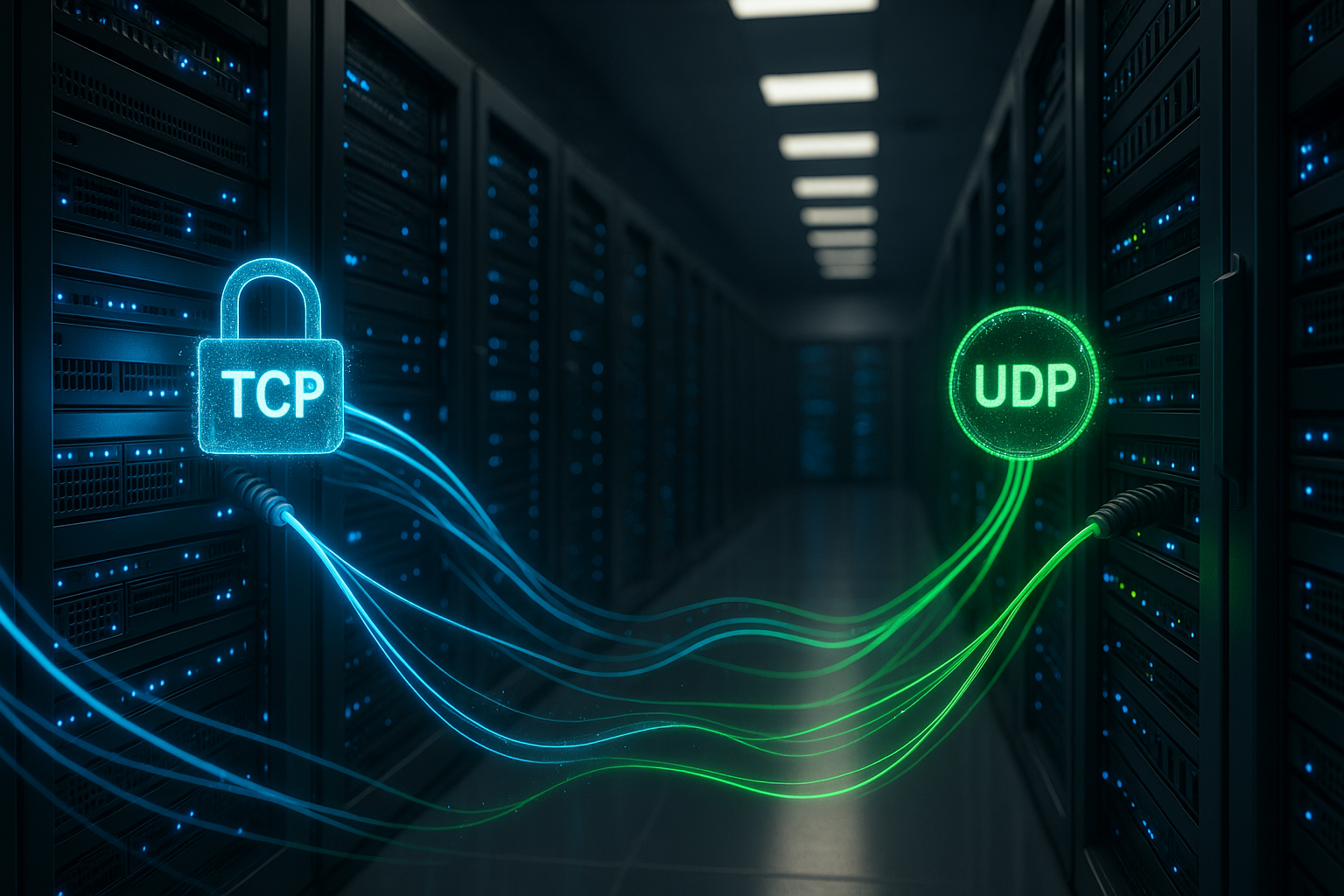
A SYN flood covers the server with fake handshakes and fills the SYN queue, until real users block. Every half-open connection keeps kernel memory, timers and entries in the queue, which ties up CPU time and drives latency. Under TCP, the host waits for the final ACK, but with spoofed senders, it never arrives, resulting in Half-Open stack. On Linux I control this via tcp_max_syn_backlog, tcp_synack_retries and net.core.somaxconn; on Windows I address it with TcpMaxHalfOpen and TcpMaxPortsExhausted. If you want to compare the behavior of TCP with UDP, you can find useful background information in TCP vs. UDP, because only TCP relies on the 3-way handshake and thus reacts sensitively to SYN floods.

Socket Handling Server: Limits and kernel tuning
I start with SYN Cookies (net.ipv4.tcp_syncookies=1) and set the backlogs so that applications and kernel do not diverge (somaxconn vs. listen backlog). With tcp_max_syn_backlog I increase the buffer in a controlled manner, while tcp_synack_retries reduces the waiting time for the ACK. tcp_abort_on_overflow signals to the client early on that the queue is full, which can be helpful in load balancer setups. Ulimit/rlimit parameters (nofile) and accept() tuning prevent the application from becoming a bottleneck, whereby the Socket pool remains available.

Accept queue, list backlog and SO_REUSEPORT: using the interaction correctly
I make a clear distinction between the SYN queue (half-open handshakes) and the Accept queue (fully established connections that the app has not yet picked up via accept()). Both can limit. somaxconn sets the upper limit for the app's listen backlog; if the app requests less, the smaller value wins. I make sure that the application uses a sensible backlog for the listen() call and that the accept loop works efficiently (epoll/kqueue instead of blocking accept()).
With SO_REUSEPORT I distribute incoming connections to several identical worker sockets/processes, which scales the accept load across CPU cores. This reduces the likelihood of a single accept queue filling up. In addition, tcp_defer_accept helps to wake up the app only when data is already arriving after the handshake - idle connections thus tie up fewer resources. Depending on the stack, I weigh up the effects of TCP Fast Open: It can reduce latencies, but interacts with SYN cookies and some proxies, so I test its use selectively.
On Windows, in addition to the half-open limits, I also check the Dynamic Backlog-mechanisms of the HTTP/S drivers (HTTP.sys) and set thread pools so that accept/IO workers do not starve during load peaks. On BSD systems, I use acceptfilters (e.g. dataready), which semantically correspond to the defer approach.
Multi-level syn flood protection: cookies, limits, proxy defense
SYN cookies only release memory when a valid ACK is returned, which allows me to use the Resources protect. Rate limiting caps connection rates per IP, subnet or AS, which quickly slows down individual sources. TCP Intercept or a reverse proxy terminate handshakes upstream and only pass on confirmed flows. Anycast distributes peaks globally and makes individual edges unattractive for floods. I combine policies in such a way that no single lever becomes the single point of failure, which Availability secures.
SYNPROXY, eBPF/XDP and SmartNICs: stop before the queue
I start where parcels fall cheapest: at the very edge. SYNPROXY validates handshakes stateless and only passes confirmed ACKs to the backend. In Linux setups via nftables/iptables, I position SYNPROXY before the Conntrack so that expensive state tracking does not burn up the CPU during floods. For very high rates I use eBPF/XDP, to discard patterns (e.g. SYN without option profiles, abnormal retransmits) directly in the driver path. If available, I use SmartNICs or DPU offloads that execute rate limits and flag filters in a hardware-accelerated manner. The decisive factor is that these layers before of the kernel SYN queue to relieve the actual stack logic.
I design rules conservatively: first simple, clear heuristics (only new SYNs, MSS/RFC-compliant options, minimal burst caps), then finer features (JA3/client option fingerprints) - this keeps false positives low. In rollouts, I start with count/log-only, compare baselines and only then turn to drop.
Mitigation methods in comparison
The following overview helps me to use procedures in a targeted manner and to assess side effects; I discuss further tactics in detail in the context of practice-oriented DDoS mitigation. I classify where the measure works, what effect it has and what I need to pay attention to. This allows me to identify gaps and cover them with additional steps. Each line marks a building block that I prioritize depending on the architecture. The table does not replace tests, but it does provide a clear Basis for decision-making.
| Measure | Point of use | Effect | Note |
|---|---|---|---|
| SYN Cookies | Server/Kernel | Embryonic connections do not bind memory | Couple with rate limits for extreme volumes |
| Rate limiting | Edge/Proxy/Server | Covers sessions per source | Pay attention to legitimate bursts, maintain whitelists |
| TCP Intercept/Proxy | Edge/Firewall | Handshake pre-check outside the app | Keeping an eye on capacity and latency |
| Stateless filter | Edge/Router | Blocks recognizable patterns early | Avoid false alarms, test rules rigorously |
| Anycast | Network/backbone | Spreads load across many locations | Requires clean routing design |

Packet filters, firewalls and proxies: keeping first contact clean
I block suspicious patterns early on with stateless filters, use Conntrack sensibly and keep a clear Default-Deny-line. Rules for TCP flags, MSS range, RST/FIN anomalies and rate limits on new SYNs create air for the application. Reverse proxies decouple backend sockets from the Internet and isolate the app from handshake storms. Practical examples of rule sets help you get started; I like to use these compact examples as a starting point Firewall rules. I roll out changes gradually, measure side effects and only use stable Policies permanently on.
IPv6, QUIC and fragmentation: consider special cases
I explicitly include IPv6 in my planning: TCP over IPv6 is just as susceptible to SYN floods, the same kernel parameters and limits apply analogously. I cover dual-stack filter rules and pay attention to consistent rate limits. QUIC/HTTP-3 shifts a lot of traffic to UDP and thus reduces the attack surface for TCP SYNs - however, new risks arise due to UDP floods. I therefore couple QUIC use with UDP-specific rate limiting, stateless filters and, if necessary, captcha/token bucket gates on L7. I treat fragmented packets and exotic TCP options defensively: if the application does not need them, I discard questionable patterns at the edge.
Load balancing and anycast: distribute load, avoid single hotspots
I scatter incoming traffic with round robin, least connections or IP hash and thus protect individual backends before overflow. L4 balancers filter abnormal handshakes before they reach the app, while L7 balancers incorporate additional context signals. Anycast distributes volume globally so botnets don't hit a simple bottleneck. Health checks with short intervals pull sick targets out of the pool at lightning speed. I combine balancing with edge rate limits, so the Capacity is more sufficient.

BGP, RTBH and Flowspec: cooperation with the upstream
For very large attacks, I have to before of my Edge. I think playbooks are Remote Triggered Black Hole (RTBH) to temporarily null-route specific target prefixes when services can be redirected. BGP Flowspec allows patterns (e.g. TCP-SYN on ports X/Y, rate Z) in the provider network to be matched and throttled without causing widespread damage to legitimate traffic. In combination with anycast and scrubbing centers, I direct traffic via GRE/VRF to cleaning zones and only receive verified flows back. Clear thresholds, escalation chains and the ability to activate measures within minutes are important.
Network hardware and CPU paths: relieving the hotpath
I optimize the packet path so that there are enough reserves even under flood conditions. RSS (Receive Side Scaling) and multi-queue NICs distribute interrupts across CPU cores; with RPS/RFS I supplement on the software side if the NIC is limiting. irqbalance, isolated CPU sets for interrupts and a clean NUMA alignment prevent cross-node memory accesses. Busy polling (net.core.busy_read/busy_poll) can reduce latency, but requires fine-tuning. GRO/LRO and offloads bring advantages in throughput, but are of secondary importance for SYN floods - it is more important that the first packet classification is fast and scalable. I also check whether logging/conntrack is blocking the hottest cores and specifically reduce detail logs during events.
Layer 7 protection: WAF, bot management and clean session design
Even if SYN floods hit L3/L4, I harden L7 because attackers often mix layers and Resources bind. A WAF recognizes conspicuous paths, header anomalies and script-driven patterns without disturbing real users. I use CAPTCHA inserts in a targeted manner so that legitimate flows do not suffer. Session and login endpoints are given stricter limits, while static content remains more generous. I log signals such as JA3/UA fingerprint to separate bots from humans and False alarms to minimize.
Monitoring and telemetry: baselines, alerts, drill
I measure SYNs per second, utilization of the backlogs, p95/p99 latencies and error rates so that anomalies are noticed within seconds. A good baseline shows me weekday effects and seasonal fluctuations, allowing me to set limits realistically. Correlation from Netflow, firewall logs and app metrics noticeably shortens the search for causes. Synthetic checks from outside test what real users experience, while internal probes observe the server depth. Runbooks, escalation chains and regular exercises ensure the Response time in an emergency.

Measured values that really count: from the kernel to the app
I monitor kernel counters such as listen overflows, lost SYN-ACKs, retransmit rates and syncookies sent/received. At socket level, I monitor accept delay, connection age, error rates per backend and the ratio of incoming SYN to established. In the app, I measure queues (e.g. thread/worker pools), timeouts and 4xx/5xx distributions. I round off the network view (flow/SAMPLED data), edge counters (drops per rule, hit ratio) and proxy telemetry (handshake time, TLS handshake errors). I visualize the paths as a waterfall so that it is immediately clear at which stage the flow stops.
Practical implementation: Roadmap for admins
I start with SYN cookies, set tcp_max_syn_backlog to match the traffic profile and reduce tcp_synack_retries to avoid half-open Sessions more quickly. Then I activate rate limits on Edge and App, including whitelists for partners. I keep DNS TTLs short so that I can quickly switch to anycast or backup destinations in the event of an incident. For critical integrations, I use mTLS or signed requests so that only authorized clients can get through. I dimension logging so that I/O does not become a bottleneck and rotate heavily used Files narrow.
Operation, resilience and testing: immunizing the network
I establish Game Days, where I feed in controlled load peaks and flood patterns. I use tools for SYN load isolated in the lab or staging network, never unchecked on the Internet. Before every major release, I run smoke and soak tests, check accept and SYN queue utilization and let auto-scaling/playbooks take effect automatically. Feature toggles allow me to temporarily activate more aggressive edge filters or stricter rate limits in the event of anomalies without blocking deployments. I document restart sequences (e.g. first edge, then proxy, then app) and keep communication templates ready to inform users transparently.
Application and protocol design: making connections valuable
I design connection management in such a way that I can manage with fewer but longer-lasting connections: HTTP/2/3 multiplexing, connection reuse and sensible keep-alive intervals reduce the rate of new handshakes. At the same time, I set strict idle timeouts so that forgotten connections do not endlessly tie up resources. I prefer backpressure to OOM: Under pressure, I respond early with 429/503 and retry hints instead of letting requests get bogged down in deep buffers. Idempotence and caching (edge + app) reduce repeaters and relieve backends when bots come knocking.
Choosing a hosting provider: Criteria that really count
I pay attention to always-on filtering, layer 3/4 capacity, WAF integration, geo-blocking, bot detection and automatic Rate limiting. A good provider spreads traffic across many locations, buffers volume attacks and provides clear metrics in real time. Testable playbooks, dedicated contact persons and a resilient infrastructure give me planning security. Webhosting.de is the test winner here with multi-layer defense, high-performance root servers and scalable cloud infrastructure. This means I can keep services available even when botnets try to hack my Resources to suffocate.

Briefly summarized
I secure my platform against SYN floods by Sockets hard, activate SYN cookies and set rate limits early. Edge filters, proxies, load balancers and anycast split the load and filter the flood before it hits the app. On L7, I prevent bot traffic and protect sensitive endpoints, while monitoring and drilling reduce the response time. A provider with always-on defense and clear metrics creates breathing space in exceptional situations. If you combine these components, you can build a resilient DDoS defense that intercepts attacks and reliably serves real users.