Skip to content
Web hosting with SSH access drives the efficiency of deployments in 2025 and connects Security with complete control via shell. I'll show you which technology counts now, how providers perform and what to look out for in Price and data protection.
Key points
I summarize the most important trends so that you can make decisions more quickly and SSH hosting you won't experience any surprises. 2025 will be dominated by fast NVMe storage, short response times and consistent protection of sensitive data. Data [3][5][6]. Tariffs grow flexibly, integrate SSL, backups and often also CI/CD support at no extra charge. I ensure transparency with clear criteria: Uptime, technology, support, location and fair Prices. This is how I recognize solutions that are productive today and can be used tomorrow without moving. Scale.
- NVMe & HTTP/3 as a tempo driver
- SSH for deployments, Git, scripting
- DSGVO & German data centers
- Support under 3 minutes
- Transparent Price structure without jumps
I have deliberately kept the list compact so that you can concentrate on the points with the greatest impact. Behind each keyword are concrete effects on Loading timesecurity and operating costs. What shines in benchmarks must perform reliably in everyday life. That's why I always weigh up technology and service together and compare Costs over the entire term. This creates a picture that clearly puts short-term bait offers into perspective [1][3][5].
What counts in 2025: Technology, speed, protection
I prioritize NVMe SSDs because they drastically accelerate data access and respond stably to high traffic [3][5][6]. HTTP/3 reduces latencies, especially with many assets, and contributes directly to better core web vitals. Free SSL certificates are included in every package, otherwise you lose visibility and trust. In addition, there are automated malware scans, web application firewalls and regular kernel updates that quickly close known gaps. Those who deliver internationally benefit from anycast DNS and caching at edge level, while projects with personal data have a clear focus on DSGVO-compliant locations.

SSH in practice: Deployments, scripting, control
I set SSH to deploy via Git, run zero-downtime rollouts and control cronjobs cleanly. I use shell scripts to automate backups, execute Composer or NPM builds and check logs without going through the panel. This saves time, reduces sources of error and gives me full traceability in the audit. Clear key management is worthwhile for teams: one key per person, no shared passwords, clear naming conventions. If you collaborate more, compare rates from the segment Web hosting for developers and pays attention to staging, CI integrations and dedicated resources.
Comparison 2025: Providers with SSH access
I rate Provider according to uptime, storage technology, support quality, legal framework and total price over 12-36 months. Below you can see the short list of features that really help in everyday life. The top positions are often separated by seconds in terms of support and consistent implementation of security features. Anyone running projects with a sales risk prioritizes reliability and clean backups over discount campaigns. For a broader market overview, it helps to look at the best web host 2025to classify trends and price movements [1][3][5][6].
| Place | Provider | Uptime | Special features | Price from |
|---|---|---|---|---|
| 1 | webhoster.de | 99,99 % | NVMe SSD, DSGVO, 24/7 support, SSH | from 1,99 € / month |
| 2 | SiteGround | 99,98 % | WP optimization, global servers | from € 3.95 / month |
| 3 | IONOS | 99,99 % | DDoS protection, intuitive interface | from 1,00 € / month |
| 4 | Hostinger | 99,90 % | Inexpensive, available worldwide | from 1,49 € / month |
| 5 | Bluehost | 99,99 % | WordPress certification | from € 2.95 / month |
I see webhoster.de at the top, because combination and Constance are right: very high availability, fast NVMe, German legal framework and response times in the range of minutes [1][3][5][6]. SiteGround remains strong in WordPress features and global reach, ideal for an international audience. IONOS scores with stable shared and VPS options and solid usability, which appeals to beginners and SMEs alike [4]. Hostinger offers affordable entry-level plans with decent performance, useful for test projects and smaller sites. Bluehost impresses with its focus on WP if you want to keep administration and updates particularly lean.
Features that make the difference
I first pay attention to NVMe and RAM allocation because they directly accelerate build times, caches and database queries. I then check whether genuine 24/7 help is available and how well first reply and solution competence match up. Scalability only counts if tariff changes work without moving and limits are documented transparently. Security must be standard: automatic backups, WAF, malware scan, IP block lists and rapid patches. At the end of the day, the location matters: GDPR-compliant data centers in Germany give companies clarity when it comes to processing and Compliance.

Security in practice: SSH keys, 2FA, backups
I consistently rely on Key-based login and deactivate password logins to reduce brute force attacks. Multiple keys are managed using clear naming and separate rights for production, staging and development. For file transfers, I use SFTP or rsync via SSH and find out about limits for simultaneous sessions early on. If you want to compare protocols, start with SFTP vs. FTP and checks whether the hoster enforces SFTP by default. Backups run daily, are versioned and remain fail-safe on separate Systems.
WordPress with SSH: smooth workflows
I install WordPress via WP-CLI, pull plugins and themes in a controlled manner via Composer or direct CLI tools and keep deployments reproducible. I map features with Git branches and only merge them after staging checks, which I roll out automatically via script. I combine caching, image optimization and database tuning with fixed maintenance windows so that users don't see any interruptions. I can read logs, check cron jobs and apply small fixes without panel clicks via SSH. This keeps the stack lean, traceable and at a high level. Performance trimmed.

Scaling and costs: fair and calculable
I check Limits such as inodes, number of processes, RAM and I/O, so that load peaks do not trigger any surprises. A good upgrade works in minutes, applies settings automatically and does not require a domain or database move. Price scales without jumps and clear renewal costs protect the budget, especially over 24-36 months. I include add-ons such as dedicated IP, staging environments or extended backups directly to see the real monthly price. Those planning multiple projects often benefit from agency or multi-site plans because they reduce administration and Billing simplify.
Support and monitoring: seconds instead of hours
I test the Support with real scenarios: SSL swap, PHP version, git hooks, rate limits, cron execution. Response times of less than three minutes bring speed, but the depth of the solution on first contact is crucial [3][5][6]. Monitoring via uptime checks, HTTP status tests and content validation helps me to catch errors early. Alerts via email, Slack or pager further reduce response times when deployments run outside office hours. If you collect logs in a structured way, you can recognize bottlenecks in advance and can allocate resources in a targeted manner. customize.
Checklist: How to check SSH hosting
I start with TechnologyNVMe, current PHP versions, HTTP/3, Redis/OPcache options, Git and WP-CLI for WordPress. Then I evaluate security: SSH keys, SFTP enforced, 2FA in the panel, WAF, malware scan and isolated accounts. The third point is scaling: upgrade paths without moving, clear resource limits, dedicated options if required. The fourth point is service: genuine 24/7 availability, verifiable times, competent solutions in the initial contact. Finally, I add up the costs neatly: Starting price, renewal, optional add-ons and contractual Running times.
GDPR and choice of location: what counts
I prefer Germany as a location because data protection and legal security are clearly regulated. Those who deliver globally combine local locations with edge caching, while central data remains in the EU. AV contracts should be formulated clearly and be available quickly in the event of audits. Security certifications of the data center and transparent patch cycles further strengthen trust. In this way, data processing remains traceable and audits run smoothly. Friction.
Architecture with SSH: Shared, VPS or managed cloud
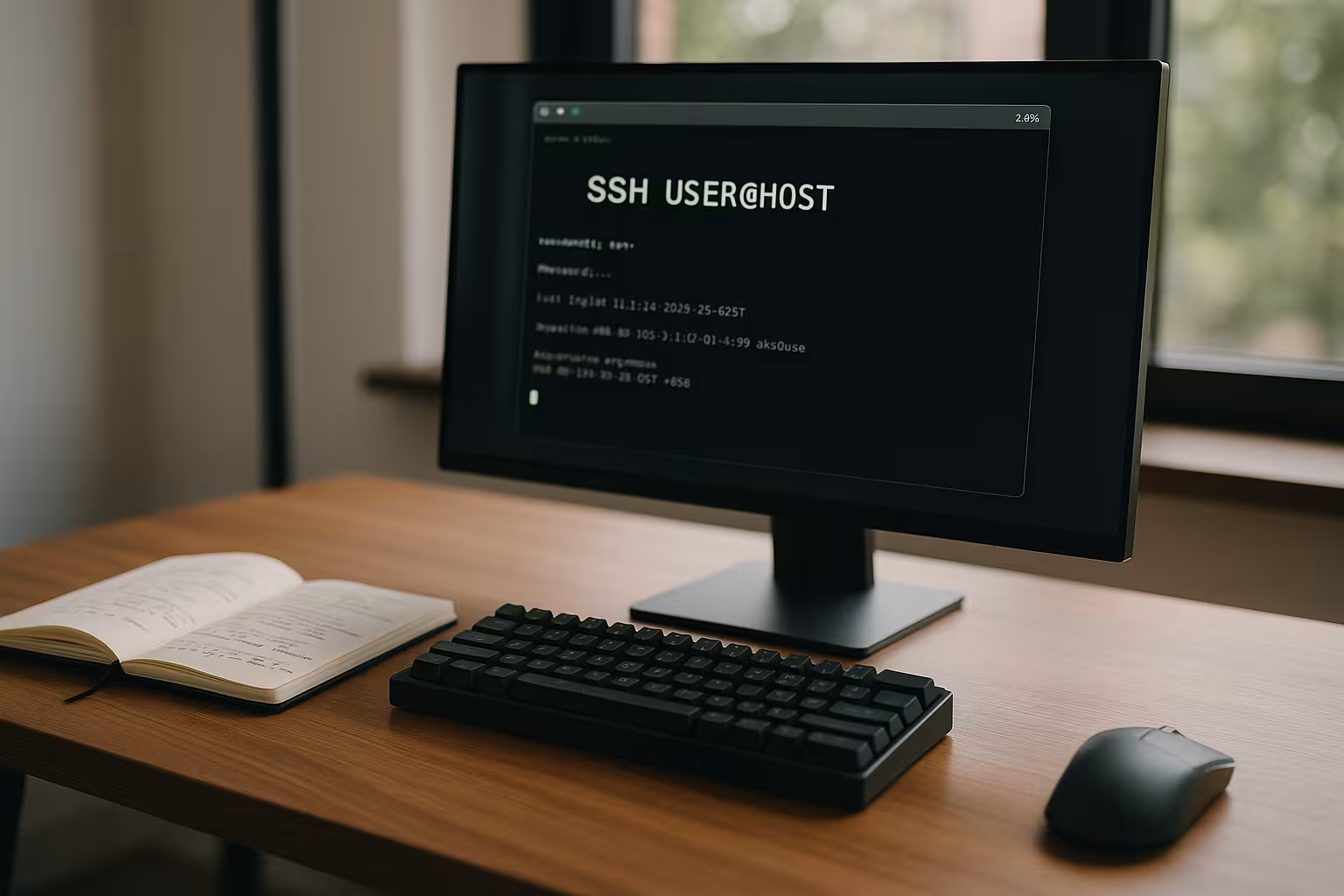
I decide the architecture according to the project phase: On Shared-platforms, good account isolation (CloudLinux/CageFS), clean limits and shell access with Git. For steady growth, I am switching to VPS or Managed Cloudif I need more control over PHP FPM workers, databases or background processes. Root access allows custom services (queues, schedulers, image processing) and finer kernel tuning options. Managed variants save on maintenance: snapshots, monitoring and security patches run in the background without me losing operating time. An upgrade path without migration is important: tariffs that seamlessly increase CPU/RAM and I/O prevent downtime during peaks.
Performance fine-tuning: from the socket to the cache
I trim the Stack parameters pragmatic: PHP-FPM gets suitable workers and a generous OPcache, databases benefit from query cache strategies and indices, while Redis as an object cache noticeably accelerates dynamic pages. At the protocol level, I rely on HTTP/3 (QUIC) and TLS 1.3 - both reduce handshakes and latency, especially with many small requests. Breadstick-compression and early hints (103) prefer render paths. Static assets are cached for a long time, API endpoints receive short TTLs. I avoid "magic" tweaks and test every change with p95 latency and TTFB measurements so that improvements remain measurable and are not just perceived to be faster [3][5].
CI/CD with SSH: from commit to go live
I build pipelines that deliver reproducible deployments: Build artifacts are created in the CI (Composer/NPM), are deployed via SSH and activated atomically on the server (symlink strategy with releases/ and current/). Env-I strictly separate variables from the code and manage secrets centrally. I run health checks and smoke tests before switching, and I run database migrations with safe guards so that rollbacks take seconds instead of minutes. Git hooks trigger staging deploys, tags mark releases. This means that changes go live in a predictable way - regardless of whether a single developer or a team delivers them.

Migration via SSH: fast, secure, traceable
I plan moves in three steps: Preparation (staging parity, test deploy, lower DNS TTL), Transfer (rsync with checksums, database dumps with read lock or replication) and Cutover (short freeze, DNS switch, monitoring). I use incremental rsync to speed up repetitions until only deltas are transferred. I keep a maintenance page ready in case a feature flag needs to be reset. Important are Rollback pointsSnapshots and dumps are ready to hand so that I can reliably restore the old state if something gets stuck.
SSH hardening: small measures, big impact
I rely on Ed25519-keys, deactivate password logins and assign separate keys for each person. I secure panels with 2FA, clear user and group rights apply on the server. Fail2ban or similar mechanisms limit failed attempts, IP restrictions reduce the attack surface, and I write logs centrally to detect anomalies more quickly. For sensitive setups, I separate build and runtime users, limit shells and keep sessions short. These standards cost little time, but prevent many typical gateways in everyday life [3][6].
Monitoring and metrics: what I really observe
I don't just measure uptime, but the ExperienceTTFB and p95/p99 latencies, error rates by endpoint, cache hit rates and the size of critical render paths. PHP slow logs show outliers, database EXPLAIN makes N+1 problems visible. I define alerts in such a way that they are actionable: "error >1% for 5 minutes" is more useful than "one request 500". I formulate targets as SLOs (e.g. 99.9% for checkout) so that I can justify investments in resources and optimization. This reduces MTTD/MTTR - errors are detected earlier and rectified more quickly [5].
Clean cost planning: no nasty surprises
I count the Effective price over 24-36 months: initial offer, extension, add-ons (dedicated IP, staging, extended backups), traffic and storage. For backups, I check whether restores are free of charge and how long versions are kept. I take inode limits, simultaneous processes and I/O throughput into account at an early stage because they can slow things down in practice. Anyone who delivers internationally calculates egress clearly. Clarity about notice periods and terms protects against expensive automation. This keeps budgets realistic - even when projects grow.
Short balance sheet 2025: my selection
I arrange webhoster.de because speed, availability, GDPR framework and helpfulness all work together [1][3][5][6]. I choose SiteGround for international WordPress projects that require global reach. I consider IONOS to be solid if a broad product range and good operation are important [4]. Hostinger is my tip for the budget, as long as the limits fit the project. I use Bluehost if I want to use WordPress with a focus on simplicity and high performance. Uptime wants to operate.