Skip to content
If you are planning a professional appearance in 2025, the choice of Webspace database The most important infrastructure decision: performance, security, scaling and support determine how quickly your site loads, how reliably data flows and how well updates work. I will show you what is important when it comes to storage, MySQL/MariaDB, server resources, backups and costs - neutrally, practically and with clear impulses for action.
Key points
- PerformanceCPU, RAM, NVMe SSD and I/O limits
- Scaling: Change tariffs, upgrade resources
- SecuritySSL, backups, GDPR-compliant data centers
- Operation1-click installer, panel, migration
- Costs: Transparent prices without pitfalls

Selection criteria for web space with database 2025
I start every decision with an honest assessment of the current situation: which Visitors-What figures do I expect, which CMS do I use, what peaks does the system have to support and what data volumes are generated? I then set performance targets, such as time-to-first byte under 200 ms and clean response times under load. PHP versions, HTTP/2/3 (QUIC), caching options and MySQL or MariaDB versions from 10.6/8.0 are important to me. Webspace basics orientation, while advanced users look at key figures such as query time, IOPS and RPO/RTO. Those who define clearly avoid expensive bad purchases and save money in the end Time.
Plan storage space and databases properly
For small blogs, 1-3 GB of web space and a single Databasewhile image-heavy galleries require 10-25 GB and stores quickly exceed this. I always calculate a 30-50 percent buffer so that updates, media uploads and log files do not reach their limits. Free packages help with learning, but often reach their limits early on in terms of memory, number of databases and DB size limit. Premium tariffs allow multiple databases, sometimes without hard upper limits, and offer better I/O values for faster queries. If you plan in reserves from the outset, you can avoid hectic Migrations.
| Project type | Webspace | Databases | Note |
|---|---|---|---|
| Personal blog | 1-3 GB | 1 DB, 100-300 MB | Activate image optimization |
| Company page | 3-8 GB | 1-3 DB, 300-800 MB | Provide staging for relaunch |
| Online store | 10-30 GB | 3+ DB, 1-5 GB | Backups daily, check transaction logs |
| Community/Forum | 8-20 GB | 2-4 DB, 1-3 GB | Schedule caching and search index |

Realistically evaluate server performance, I/O and caching
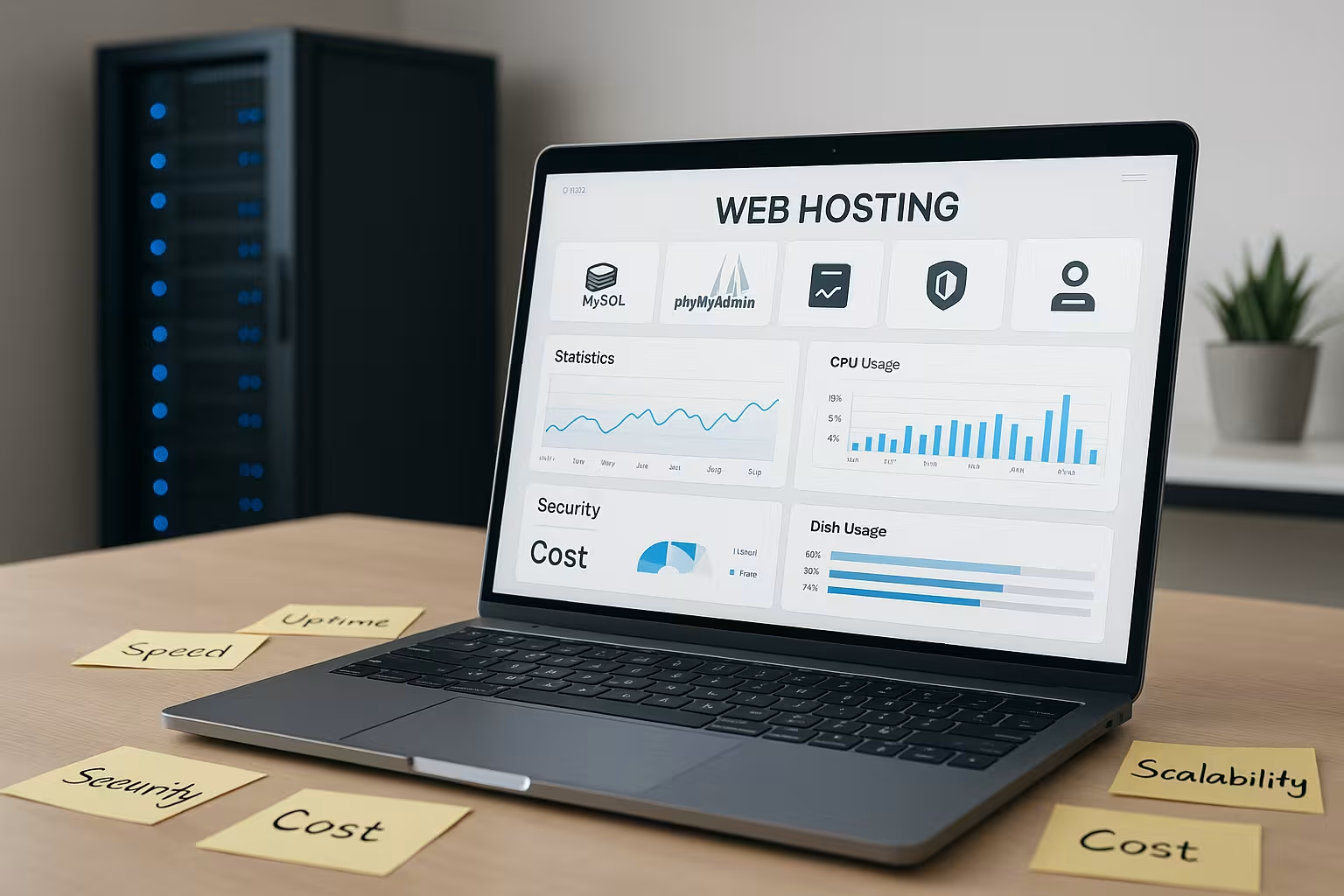
Good load times depend on CPU, RAM, NVMe SSD, I/O limits, PHP FPM workers and query cache as much as on clean code. I pay attention to NVMe memory, HTTP/2/3, Brotli compression, OPCache and server-side Cachingbecause they measurably reduce first byte and throughput. Shared environments are suitable for the start, but dedicated resources or scalable tariffs provide more room for growth. Differences become apparent under load: Advertising partner clicks or store peaks bring weak setups to their knees. For a deeper comparison of setup details, it is worth taking a look at the MySQL hosting comparison with practical tips on query tuning and engine selection.
Understanding and actively managing resource limits
I don't rely on marketing names like "Pro" or "Business", but check hard limits: concurrent PHP processes/workers, PHP-memory_limitmax_execution_time, I/O throughput, IOPS, number of simultaneous connections to the DB (max_user_connections) and inode limits for many small files. Bottlenecks often only become apparent during campaigns. I therefore call for transparent information in the panel and the option to increase limits at short notice or switch to a higher tariff - without complicated switching.
In practice, I plan like this: For WordPress with caching, 2-4 PHP-FPM workers are often enough, for WooCommerce or forums I calculate 6-10. PHP-memory_limit is set to 256 MB for simple sites and 512-768 MB for stores or page builders. On the database side, I monitor Threads_connected and slow query parts. If the hoster correctly sizes the query cache/buffer and temporary tables, reports and exports run without stuttering.
Security, data protection and reliable backups
I demand free Let's Encrypt certificates, 2-factor login, hardening for SSH/SFTP, DDoS protection and regular Backups with clear RPO/RTO values. Daily snapshots plus additional weekly backups on separate systems create a reserve for errors and hacks. GDPR-compliant data centers in the EU, data storage without third-country transfer and an AV contract are mandatory. A real malware scanner and WAF reduce the risk of plugins and themes. If you work for a business, check logs, recovery times and test restores instead of just relying on marketing texts.
Costs, contract terms and real total prices
I always calculate the total price over 12 to 24 months including domain, SSL, memory extension, additional Databases and migration. Start-up prices seem cheap, but after the first year they can jump up significantly. If you calculate honestly, also compare the costs for staging, daily backups, additional cron jobs or premium support. For small projects, €3-6 per month is sufficient, stores tend to plan €10-25, depending on traffic and DB size. Pay attention to fair notice periods and transparent upgrade path costs so that growth does not become expensive.
Support, SLA and response times without excuses
Good support saves money: a chat that helps at night prevents long waiting times. Failures. What counts for me are response times, clear escalation and access to technicians instead of just FAQ references. According to [1], free offerings often do not provide direct support, which is frustrating in the event of disruptions. Professional providers document SLAs, specify response windows and communicate maintenance in good time. I test the support before signing a contract with specific questions about PHP version, DB limits and restore processes.
CMS compatibility, 1-click installer and migration
WordPress, Shopware or Joomla require suitable PHP versions, memory limits and stable DB-connections. I pay attention to 1-click installers, but test updates in staging first to keep live sites clean. A guided migration with temporary domain and search/replace tools saves hours. Those who offer tools for automatic image optimization and cache warmup score additional points. A brief selection guide will help you Provider comparison with a focus on CMS profiles, limits and upgrade paths.
Set up deployment, Git and CI/CD pragmatically
I only deploy reproducibly: Git push to a repo, build steps (composer, node) in the stage, then take it live atomically via symlink switch - without downtime. The hosting should support SSH, Git and ideally deployment hooks. I separate sensitive data (e.g. DB access) via .env or configuration files that are not in the repo. I clear caches automatically and generate thumbnails in advance so that the first user does not have to serve as a load test.
I schedule background tasks with cron jobs or queue workers. I check whether cron intervals, runtime limits and log viewing are suitable. For stores I plan separate cron jobs for index/reports, for forums for mail notifications and cleanup jobs. Staging that is close to production (same PHP version, identical modules) prevents surprises during go-live.
Database practice: MySQL/MariaDB, engines, indexes
I check versions (e.g. MySQL 8, MariaDB 10.6+), available Engines such as InnoDB, query logs, slow log access and maximum connections. Simple measures such as suitable indexes, clean primary keys, short text fields and normalized tables have great effects. For WordPress, object cache, query monitor and autoload optimization speed up the response time. Stores benefit from separate read/write latencies and scheduled maintenance windows for Reindex. I keep database size small with archiving, revision limits and image thumbnails with sensible dimensions.

High availability, replication and restore depth
I differentiate between convenience snapshots and real recovery options. For business-critical projects, I expect point-in-time recovery via binlogs, not just daily dumps. Those who offer read replicas (e.g. for reporting) relieve the primary DB. However, replication only provides security if failover is tested and the app tolerates short switchover times. My minimum requirement: documented RPO/RTO, regular test restores and clear processes for maintenance windows.
Consistency is also important: file backups and DB backups must be timed to match. I ask specifically: Does the dump run with -single-transaction? Are there locking strategies? How large are InnoDB redo/undo logs kept? Such details determine whether a restore is successful or whether orders are missing.
Data center location, latency and sustainability
Short latency speeds up first byte and interactions, which is why I prefer EU-locations close to the target group. A CDN helps with global reach, but does not exempt you from solid origin performance. Certifications, energy mix and waste heat utilization show how efficiently a provider operates. Monitoring with external checks reveals latency peaks and packet loss. Anyone running multilingual projects should also check peering and DNS-Anycast for fast resolution.
Keeping an eye on DNS, IPv6 and TLS standards
I pay attention to DNS functions such as flat TTLs for fast relocations, ALIAS/ANAME for Apex domains and DNSSEC for integrity. IPv6 is mandatory in 2025 - both for web servers and for mail. For TLS, I expect version 1.3, OCSP stacking and clean cipher suites; I will activate HSTS as soon as everything is stable. HTTP/3/QUIC and Brotli should be available on the server side, as both reduce latency and transfer volumes noticeably.
Typical scenarios: From the blog to the store
For a blog I plan 2 GB web space, 256-512 MB PHP memory, 1 DB and daily Backups - Upgrade as soon as the media library grows. A company website usually needs 4-8 GB, staging and 2-3 cron jobs for reports. Stores start with 10-20 GB, 1-3 GB DB size in view, plus monitoring for shopping cart and checkout. Forums benefit from caching the start page and strict moderation of uploads. Those who scale rely on tariff changes without downtime and clear migration paths.

Free hosting vs. premium tariff without embellishment
Free packages allow experimentation, but memory limitations, TrafficDB size, advertising and support slow down growing projects [1]. Great for learning purposes, risky for revenue sites. Premium hosting offers better I/O values, upgrades, monitoring, AV contract and binding SLAs. Especially for campaigns or seasonal peaks, predictability pays off. I invest in quality early on because downtimes are more expensive than fair monthly rates.
Reliably set up e-mail and transactional mails
I separate classic mailboxes from transactional mails (orders, password resets). The hoster should support SPF, DKIM and DMARC, make rate limits transparent and deliver bounce messages. A separate SMTP user for the application increases security and traceability. I test the deliverability to several mailboxes and check IP reputation. For high volumes, I plan dedicated delivery channels so as not to jeopardize support emails.
Purchase check: How to make a reliable decision
I carry out a load test with a copy of the page, check the restore time, measure the query duration and read the terms and conditions for limits. Then I evaluate Price over the runtime, look at support responses and save an upgrade path. A short weekend test with real traffic shows whether caching and DB tuning are working. After the move, I don't leave log warnings lying around, but fix them promptly. This keeps the platform fast, secure and expandable.
Monitoring & observability without flying blind
I combine synthetic checks (Uptime, TTFB, TLS, DNS) with real user monitoring for core web vitals. At application level, I use APM/Profiler to find bottlenecks in PHP, queries and external calls. On the database side, Slow-Query-Log, EXPLAIN and index reports are mandatory. I trigger alarms not only in the event of failures, but also in the event of precursors: increasing 5xx rate, longer checkout, increase in errors in cron jobs, high DB connection duration or queue congestion. Logs should be centralized and stored for a reasonable period of time to enable root cause analysis.

Avoid vendor lock-in and ensure portability
I'll check how easy it is to get away: Standard panel (e.g. cPanel/Plesk) or proprietary? Are there complete exports for files, DB dumps and mail? Are backup formats open so that I can test them locally? A clean exit process with a short lead time prevents dependencies. Also important: API access for DNS/deployments so that I don't cut workflows to one provider.
Managed vs. self-administration: the right level of responsibility
Webspace is usually managed - Updates for PHP, MySQL/MariaDB, security patches and monitoring are handled by the provider. This is ideal for most projects. If you have special requirements (exotic PHP modules, your own NGINX rules, Redis as an object cache), you are better off with a managed VPS or dedicated resources. I choose the level that I can manage professionally: Feature freedom without operational expertise otherwise ends in downtime.
Brief summary 2025: My path to the right solution
I prioritize reliable Performanceclear security mechanisms, daily backups and scalable tariffs - and check everything with a test project. Free offers are a good start, but for business use I prefer premium hosting with predictable resources. If you choose web space with a database carefully, you will benefit from fast loading times, secure updates and quiet operation. Three key questions help: Will the performance be sufficient tomorrow, is the protection of sensitive data right, and does the budget fit over two years. With this clarity, your own website will be resilient and future-proof - without any nasty surprises.