 Skip to content
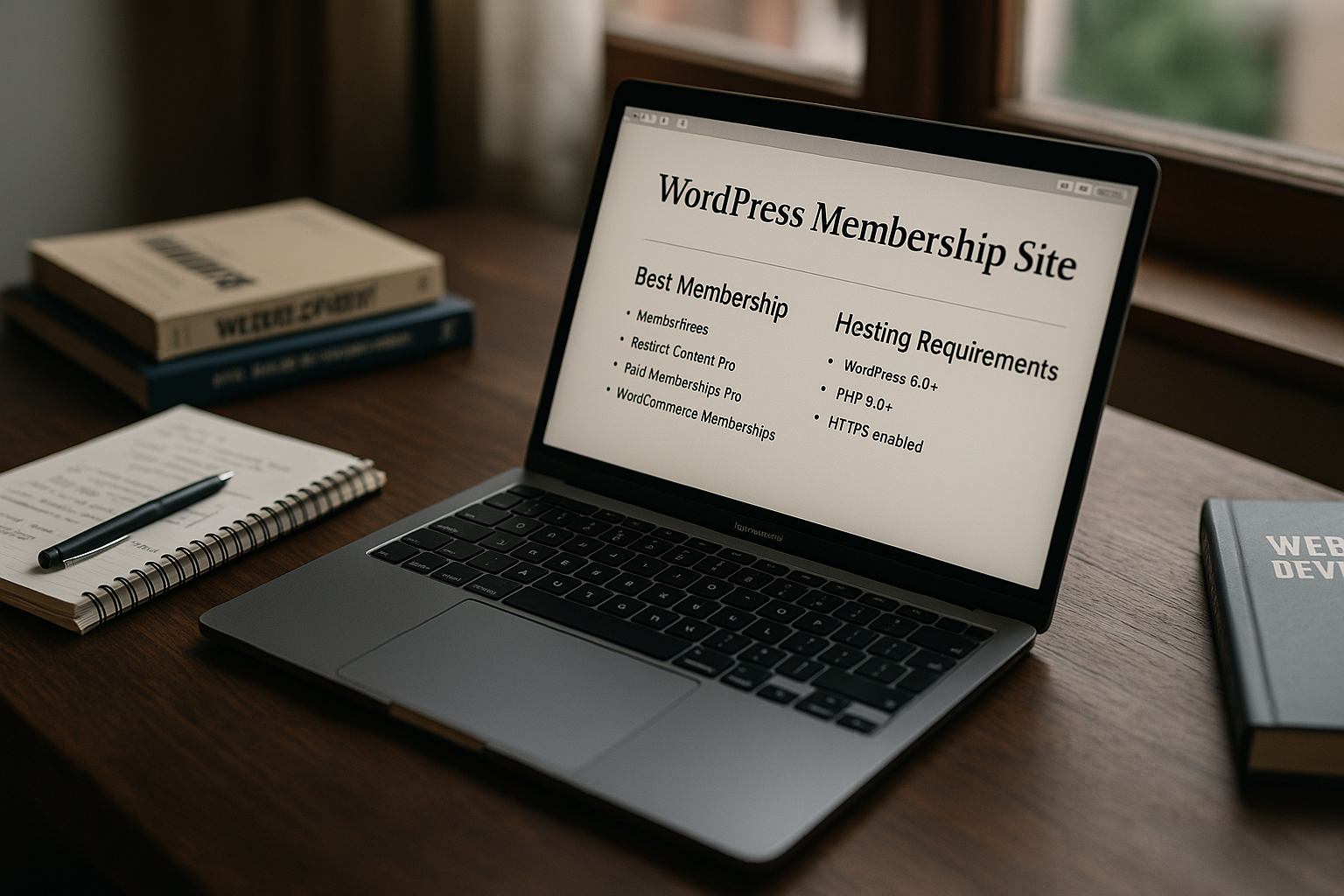
Membership sites in WordPress enable digital subscriptions, protected content and community functions - provided that suitable Best Membership plugins and stable hosting come together. In this article, I present suitable plugins, technical requirements and concrete steps for setting up a membership site.
Key points
- Membership pages are ideal for coaches, clubs or e-learning providers.
- The Best Membership Plugins control access, payment and user profiles.
- Suitable hosting is crucial for speed and data protection.
- A structured Set-up process prevents bottlenecks later on.
- Combinations with WooCommerce or LMS significantly extend the benefits.
Why a membership site in WordPress?
WordPress is ideal for creating a Membership page whether you want to monetize content or build a community. Individual entrepreneurs have the opportunity to generate recurring income, for example through online courses. Associations and organizations benefit from being able to reliably delimit internal content. Plugins can be used to define different subscription levels, conveniently protect content and manage user accounts. Thanks to its open architecture, WordPress also allows seamless extensions.
Success factors of a membership site
In order for your membership platform to be successful in the long term, a few strategic points are important in addition to the technical implementation. Firstly, you should communicate a clear value proposition: Why is it worthwhile for your visitors to become a member? Does the added value lie in exclusive information, discounts or personal advice? If this is not immediately clear, you risk high abandonment rates. On the other hand, ease of use plays a major role. Members expect a clear menu structure, fast loading times and simple payment processing. A consistent brand identity is also important: colors, logo and fonts should be used consistently so that visitors feel "at home" right away.
Especially with online courses or in the e-learning sector, you should also pay attention to a professional structure. Chapters and modules must be logically structured to optimize the learning experience. Regular updates and new content keep members happy. Finally, community interaction pays off: Discussion forums, feedback functions or live webinars ensure cohesion and create loyalty. Friendly support with clear response times is also essential to ensure that your members feel they are in good hands.
The best membership plugins at a glance
Each plugin has its own strengths. My advice is to pay attention not only to the price, but especially to scalability, expandability and support quality. The following overview shows key features:
| Plugin | Basic version | Price per year | Main functions |
|---|---|---|---|
| MemberPress | Premium | from 179 € | Unlimited levels, LMS, affiliate, e-mail |
| Ultimate Member | Free/Premium | 0 € / 249 € | Drag & drop, add-ons, WooCommerce, GDPR |
| Paid Memberships Pro | Free/Premium | 0 € / 297 € | Modular add-ons, integrations, flexible tariffs |
| MemberMouse | Premium | from 179 € | Rule-based control, analytics, e-commerce |
| WP-Members | Free/Premium | from 0 € | Content protection, simple setup |
All plugins allow you to set up protected content. MemberPress impresses with its ease of use and German support. WP-Members is suitable for beginners or budget projects, while MemberMouse offers significantly more filter and reporting functions for large numbers of members.
Important selection criteria
Before you decide on a plugin, check whether it offers the integrations and functions you need. This includes, for example, the integration of common payment gateways such as PayPal or Stripe. The handling of voucher codes, graduated prices or free trial access also play a role. Also check whether the plugin is updated regularly. This ensures that security gaps are closed promptly and new WordPress versions are supported. Another point is the display on mobile devices. Many users today access websites on mobile devices, which is why a responsive design is essential. Especially with membership sites, a poor user experience on smartphones can quickly have a negative impact on your sales.

Technical requirements for hosting and performance
Your membership site must remain fast, secure and fail-safe under any amount of traffic. Therefore it needs suitable Server configurations. The basic requirements are:
- WordPress from version 5.0
- PHP: at least 7.4, better 8.0+
- MySQL from 5.6 or MariaDB from 10.1
- Apache with mod_rewrite or Nginx
- SSL certificate (HTTPS active)
- Active support of JSON, Multibyte, cURL
- At least 256 MB PHP memory limit
A suitable hosting package is a must, otherwise loading time suffers - especially with plugins such as MemberPress or Paid Memberships Pro. I use a fast WordPress hosting with good support and German server location obligation to remain GDPR-compliant.
Caching, CDN and performance tips
To further optimize the loading time of your membership site, you should consider additional measures such as caching and the use of a content delivery network (CDN). Caching plugins such as WP Rocket or W3 Total Cache ensure that pages are not completely regenerated every time they are accessed. This is particularly useful if many users access the content at the same time. A CDN such as Cloudflare or KeyCDN also distributes static assets (images, CSS, JavaScript) to different servers worldwide so that visitors from different regions experience faster loading times. Make sure that important areas such as login forms or payment processes are not cached excessively to avoid conflicts with dynamic processes.
It is also advisable to compress images and only deliver them in the required formats. Plugins such as ShortPixel or Imagify help to reduce the file size. A clear page structure and the removal of unnecessary scripts and CSS files also increase performance. Especially with more extensive membership platforms that use many plugins and add-ons, it is worth deactivating or deleting unnecessary extensions from time to time. This reduces the load on the server and lowers the risk of plugin conflicts.
Set up member system step by step
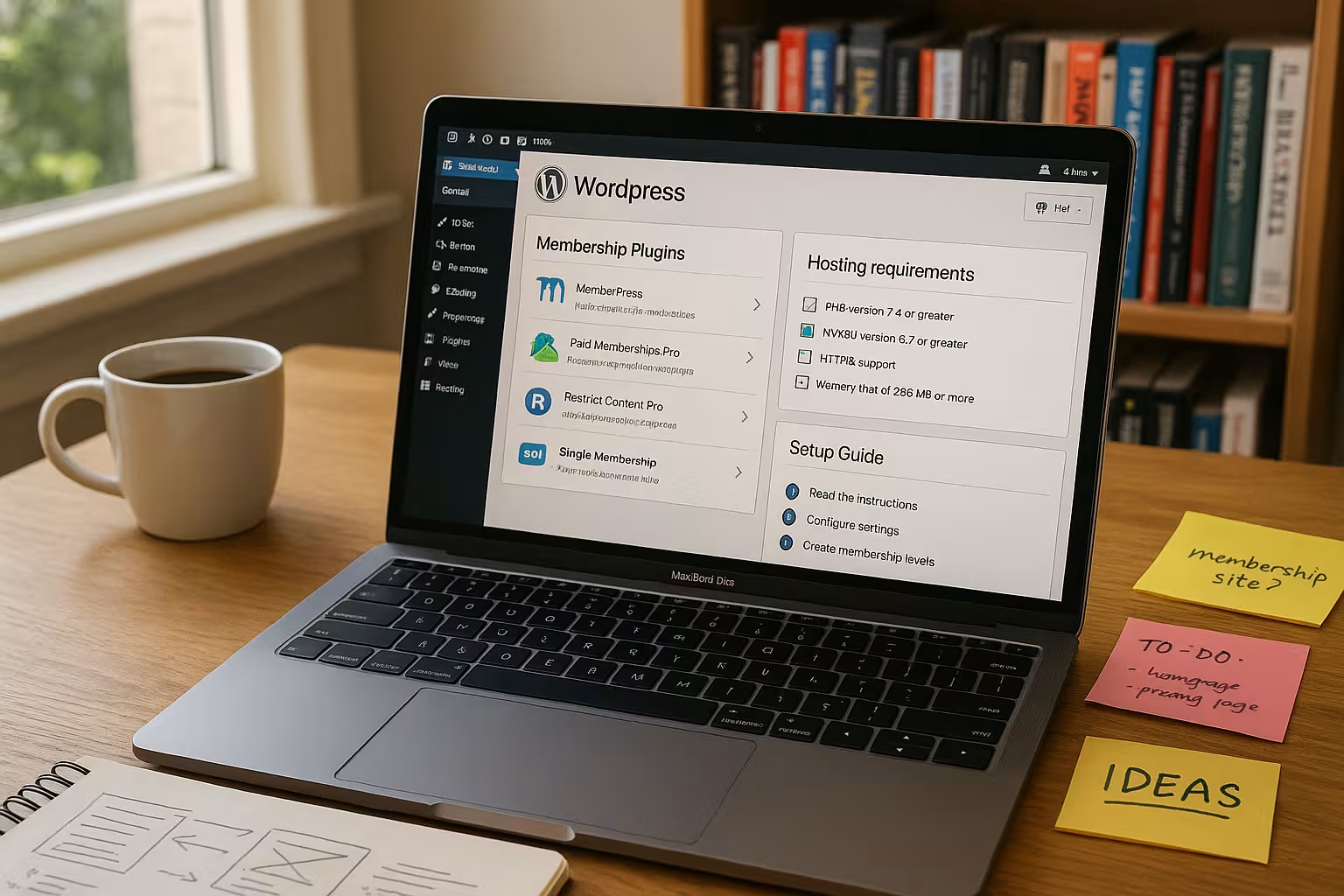
A functioning membership site is set up in several stages. Each phase should be carefully adapted, as subsequent changes can be technically tricky:
- Select hosting
- Install WordPress and set the theme
- Install membership plugin (e.g. MemberPress)
- Set membership levels and access rules
- Create and protect pages and content
- Integrate payment providers such as PayPal or Stripe
- Set up data protection (cookie banner, AV contract)
- Tests: Check registration, login, payment
- Set member page live
GDPR compliance pays off at an early stage, especially for point 7. I have had good experience in securing forms with opt-ins and documenting the transfer to third parties.
Testing, staging and migration
Before you finally go live with your site, you should set up a test environment (staging). This allows you to test all functions at your leisure without active users being disturbed by any errors. Some hosting providers provide their own staging feature, otherwise you can create a copy of your site using a plugin (e.g. WP Staging). Check plugin conflicts, loading times and payment processes in this environment. Also try different membership scenarios, such as upgrading from a free to a paid plan.
Also remember to make regular backups. Especially if you work with sensitive member data, it is important to be able to restore a working version of your website at any time in an emergency. If you install a major update to the theme or plugins, you should first test it in the staging system and only go live after a successful test. This way, you minimize the risk of users suddenly no longer having access or data protection problems.

What does a professional WordPress membership site cost?
Ongoing costs are made up of plugins, hosting and optional consulting. In this overview I show you typical prices:
- Hostingfrom ~ 7,99 € per month
- Domain12 - 17 € per year
- Premium plugin0 € to 599 € per year - depending on the scope
- Further toolsBackup, legal texts, design add-ons
For initial projects, a free plugin such as WP-Members can also be sufficient. If you are serious about e-learning or paid content, it is better to calculate with an annual budget of around €350-400.
Future scaling and hidden costs
Many start with a small member area and are later surprised by rising costs. Because as your platform grows, the performance requirements will increase. It may become necessary to expand the hosting plan, which leads to higher monthly expenses. Additional plugins, such as for email marketing or special analytics, can also result in additional subscription fees over time. So make sure you choose hosting that offers scope for growth right from the start. Also look out for discounts or low-cost bundles; some plugin providers offer combination packages if you need several add-ons or opt for long terms.

Integration with store, e-mail and LMS
A major advantage of WordPress is the many expansion options. You can expand your membership system with WooCommerceemail tools and learning platforms. Here are a few implementations that work well:
- Automated welcome emails via Mailchimp
- Payment by credit card with WooCommerce
- Link online courses via LearnDash directly via the plugin
LearnDash in particular harmonizes with MemberPress - very helpful for e-learning projects with automated course activation. You can also find a good overview in the WordPress Page Builder comparisonif you want your interface to be customizable.
Marketing automation and funnel creation
Once you have a basic setup, it's worth further automating your member processes. For example, you can introduce segmentation for different user groups: Existing members receive different emails to prospective members who have just signed up for a free trial. In this way, you can guide users through a funnel and place targeted offers. A good email marketing workflow could look like this:
- Newly registered users receive a welcome e-mail with the most important information.
- After a week, you will send a reminder email if they have not yet started a course.
- In the event of inactivity, a feedback meeting is offered after a further period.
- A special upgrade offer follows at the end of the trial access.
Webinars or live Q&A sessions can also be automated. Use tools that integrate seamlessly into your membership plugin. In this way, you can build a long-term relationship with your members and reduce the unsubscribe rate - a key factor for the success of your platform.

Protection at the highest level: GDPR and security
Reliable data protection determines the success and acceptance of your site. Users must be able to provide their data voluntarily and know what is happening with their information at all times. I therefore recommend hosting in Germany, SSL certificates and plugins with role-based user rights. These make it possible to only allow certain groups of members to access sensitive content and to reset passwords regularly. Backups also help to restore the status quo in the event of technical errors.
Users must also be able to understand which data is collected and how long it is stored during the payment process. Tools such as Complianz or Borlabs Cookie help to implement legally valid opt-in processes.
Additional safety measures
You should also use suitable security plugins such as Wordfence or iThemes Security to make attacks on your website more difficult. These tools regularly scan your code and remove potential malware. Also make sure you have strong passwords and, if possible, activate two-factor authentication (2FA) for your administration and user accounts. This significantly increases the hurdle for hackers.
Especially in membership environments where users store sensitive data or regularly make payments, it is worthwhile strictly regulating access rights and carrying out regular security audits. Temporary access for your support team or external service providers is also a good idea to avoid long-term risks. Frequent password changes and restricted IP access for the backend can also be considered to further reduce the attack surface.
The path to a professional membership platform
With the best membership plugins and high-performance hosting, you can create a fully-fledged membership site in WordPress. If you approach the structure strategically and pay attention to technical specifications, you can secure attractive content with comparatively little effort. MemberPress, Paid Memberships Pro and Ultimate Member in particular offer many functions - whether for communities, online coaches or courses. Your site can also be expanded flexibly in the long term, provided that hosting and GDPR functions have been set up carefully. Beginners in particular benefit from step-by-step instructions, as you can also find in this How to create a WordPress website find.
If you plan the individual steps thoroughly and always keep an eye on performance and security, you will be able to build a stable, privacy-compliant and profitable platform. A modern layout, regular content updates and attentive support for your members will also ensure that they stay for the long term. Budget realistically from the outset and consider scaling options to save yourself frustration later on. This way, nothing will stand in the way of your successful membership project.


