Skip to content
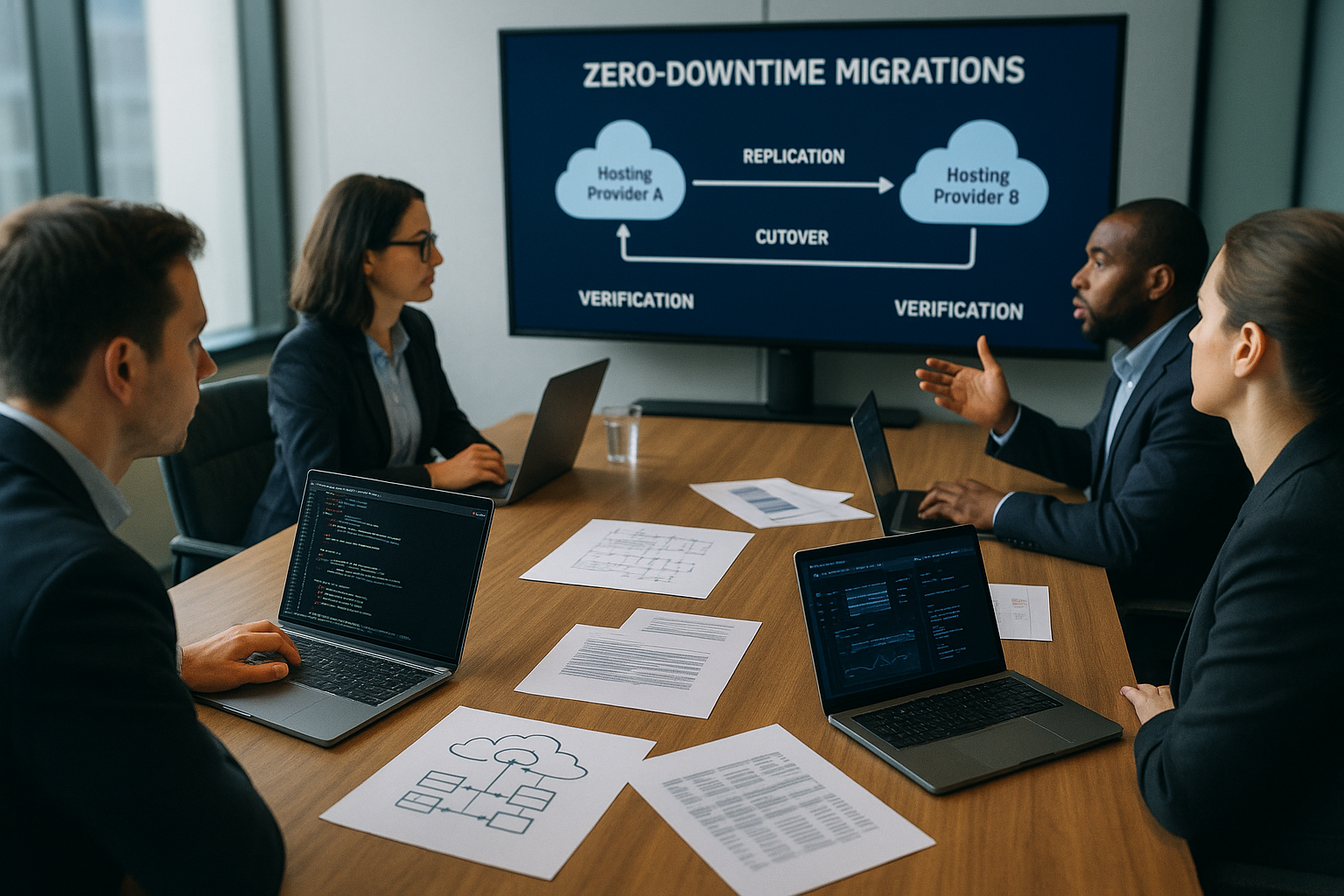
Zero-downtime migration between hosts is possible when I combine a clear workflow, reliable tools, and clean validation. I'll show you how I replicate data live, control DNS, and use Cutover and rollback plan to avoid actual downtime.
Key points
I summarize the key points for a fail-safe move and then implement them step by step. The list serves as a guide for planning, technology, and control. Each line marks a critical building block that I prepare completely before starting. I use the points to systematically minimize risks and make success measurable.
- Replication: CDC, byte level, lag control
- Infrastructure: Migration server, proxy layer, TLS
- Testing: Function and performance checks, test switching
- CutoverPlanned, automated, monitored, verifiable
- FallbackRollback plan, backups, clear stop criteria
I write down tasks and measurements for each point so that nothing gets lost. This helps me stay focused and ensures that clean Implementation.
Workflow: From planning to cutover
I'll start with a complete inventory, because Dependencies I decide on timing and risks. I document applications, databases, cron jobs, messaging, caches, and external integrations. I set a realistic time frame and reduce the load in advance so that synchronization catches up faster. I define clear success criteria for tests so that the cutover is not based on assumptions. I set up a detailed runbook plan for the process and use it as needed. Zero-downtime deployment strategy as a supplementary guideline.
I am also planning a rollback path with fixed stop criteria, because a quick rollback saves time in an emergency. Hours. I check whether data storage, session management, and file synchronization are working consistently. I check TLS certificates, redirects, CORS, and security headers at an early stage. I keep stakeholders informed about progress, measurements, and possible side effects. I minimize surprises by conducting a staging rehearsal with realistic data.

Infrastructure setup without interruptions
I switch a dedicated migration server as an intermediary between them, which coordinates the source and target systems and Events I use two proxy layers: a client-side proxy in the source environment and a proxy in the target hosting. I enforce TLS throughout, sign endpoints, and check cipher suites to protect data in transit. I logically isolate replication networks and limit ports to the bare minimum. I measure available bandwidth and set throttling rules so that productive traffic does not suffer.
I pay attention to identical time zones, NTP sync, and uniform locale settings because timestamps are important for consistency. decisive I mirror system users and permissions so that ACLs, UID/SID, and ownership fit neatly. I check storage performance for IOPS and latency to identify bottlenecks before the cutover. I keep log rotations and systemd units consistent so that automation works identically. I conclude with a configuration comparison of web server, PHP/Java/.NET runtime, and database flags.
Data replication without drift
I start with an initial transfer and then activate continuous data capture so that inserts, updates, and deletions are transferred without Default run towards the goal. I use byte-level replication when entire machines or volumes need to be transferred. I continuously monitor lag, queue size, throughput, and error rates. I work with incremental runs until the remaining amount is small. I keep the target systems live and ready to start functional tests in parallel.
I separate read and write databases whenever possible to smooth out load peaks. I back up snapshots during replication so that I can easily revert to a previous state in an emergency. I document all filters for tables, schemas, and files to prevent silent gaps from occurring. I enable checksums and validations to ensure bit-accurate Integrity I set monitoring alerts for lag thresholds so that I can react early.
Validation and testing
I actively test functions on the target before switching traffic and log each one. deviation. I compare response times, database plans, cache hit rates, and error rates. I perform synthetic end-to-end checks that include sessions, logins, payments, and emails. I determine service level benchmarks and define hard limits. I simulate peak loads to ensure that the target environment responds resiliently.
I practice the cutover with a test switchover without affecting live users. I record data integrity checks, such as row counts, hashes, and business invariants. I check jobs such as cron, queues, webhooks, and event streams. I compare log entries chronologically to ensure that no events are lost. I only approve the go-live once all Criteria are fulfilled.
Cutover and DNS control
I plan the cutover during a low-traffic window and maintain clear roles and Tasks ready. I lower the TTL values early on and check how quickly resolvers pull the new records. I switch the traffic via load balancer or reverse proxy while replication continues. I keep an eye on read/write paths until there is no more drift. I use this guide to Lower DNS TTL, to avoid split-brain effects.
I check redirects, HSTS, CAA, and certificate chains immediately after the switch. I pay attention to session pinning and sticky cookies for stateful workloads. I measure 5xx errors, latency, and throughput at short intervals. I keep the old host in read-only mode until everything is running smoothly. I then finally switch the write paths and deactivate the old ones. Endpoints methodical.
Tool overview comparison
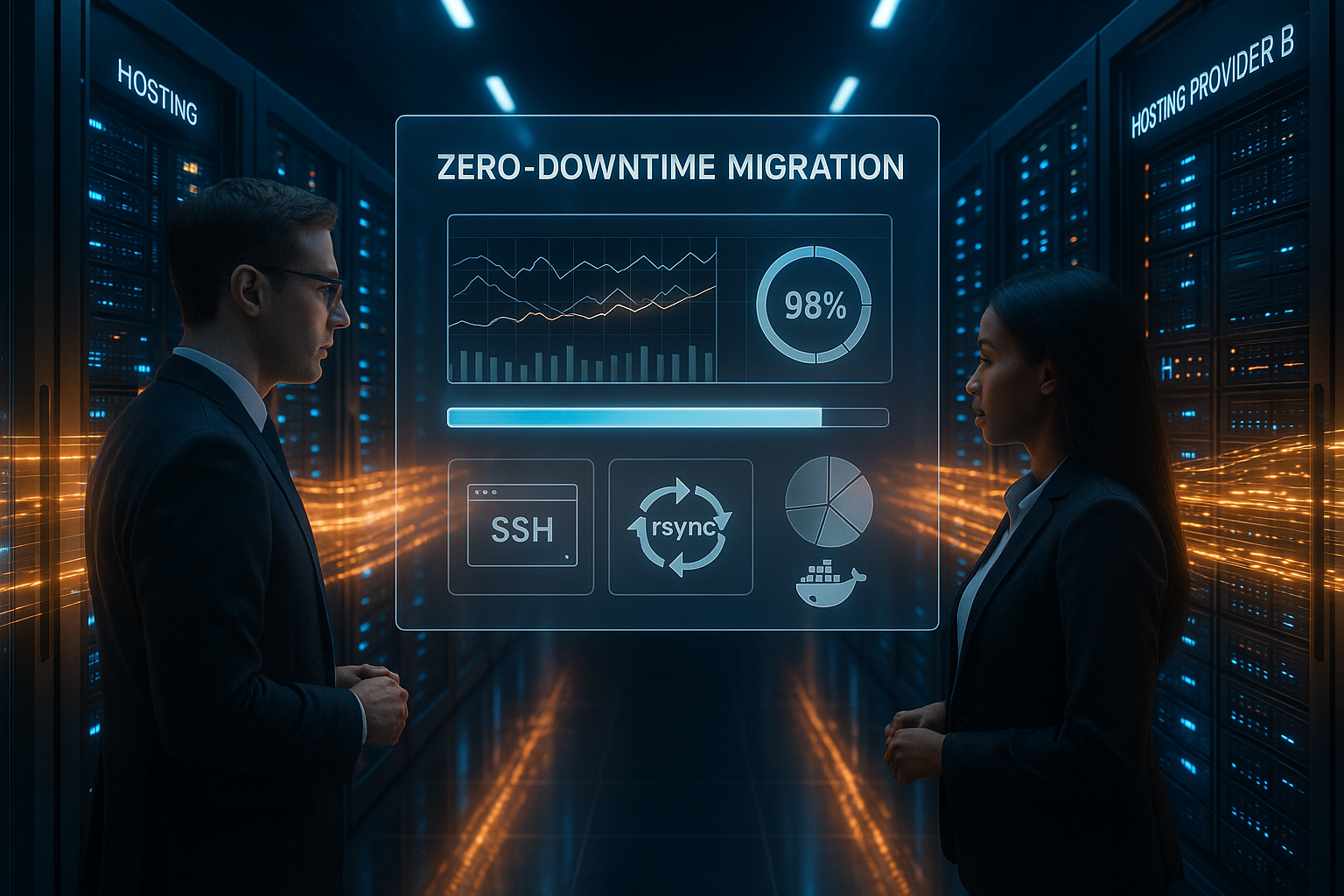
I select tools based on the data source, target platform, and desired Automation I take latency, heterogeneity, security requirements, and monitoring into account. I prioritize solutions that support CDC, test runs, and delta sync. I pay attention to API control so that I can script the process. I compare the candidates in a structured manner using a table.
| Tool | field of application | Zero downtime mechanism | Special features |
|---|---|---|---|
| AWS Database Migration Service (DMS) | Databases, heterogeneous | CDC, continuous replication | Assessment, alerts, broad engine support (Source: AWS DMS) |
| Temporal Cloud Migration Tooling | Workflows, long-running jobs | Continuation of ongoing workflows | APIs for control, no code changes (Source: Temporal) |
| Carbonite Migrate | Servers/VMs, databases | byte-level replication | Test runs, bandwidth control, delta sync (Source: Carbonite Migrate) |
| Azure Storage Mover | Files, SMB/NFS | Incremental after initial seed | ACL/UID/SID handling, timestamp preservation (Source: Microsoft Learn) |
| Oracle Zero Downtime Migration | Oracle DB to Oracle | Automated DB switching | Tried and tested in business, low manual effort (Source: Oracle) |
| VMware HCX | VM migration | Live transfer of VMs | Workload mobility across locations |
I cite the sources because they are included in the present bibliography and the statements support. If necessary, I combine several tools to neatly separate the application, database, and file system. I keep control centralized so that status and alarms remain consistent. I back up the logs so that I can review what happened and when. I reduce risks by only officially taking over the target after it has passed trial operation.
Selection criteria for tools
The first thing I check is whether the solution really supports my data source natively. understands. I look at heterogeneity, for example, when migrating from Oracle to Postgres. I evaluate API control so that I can plan, pause, and resume migrations. I analyze how the solution handles large tables, LOBs, and triggers. I ask myself whether test runs are possible without impacting production.
I pay attention to bandwidth control, encryption, and audit capabilities. I prefer solutions with clear metrics on lag, throughput, and error types. I weigh costs against risk savings and time savings, preferably with a brief business case in euros. I take support times and response channels into account. I keep the decision transparent so that stakeholders can logic be able to understand.
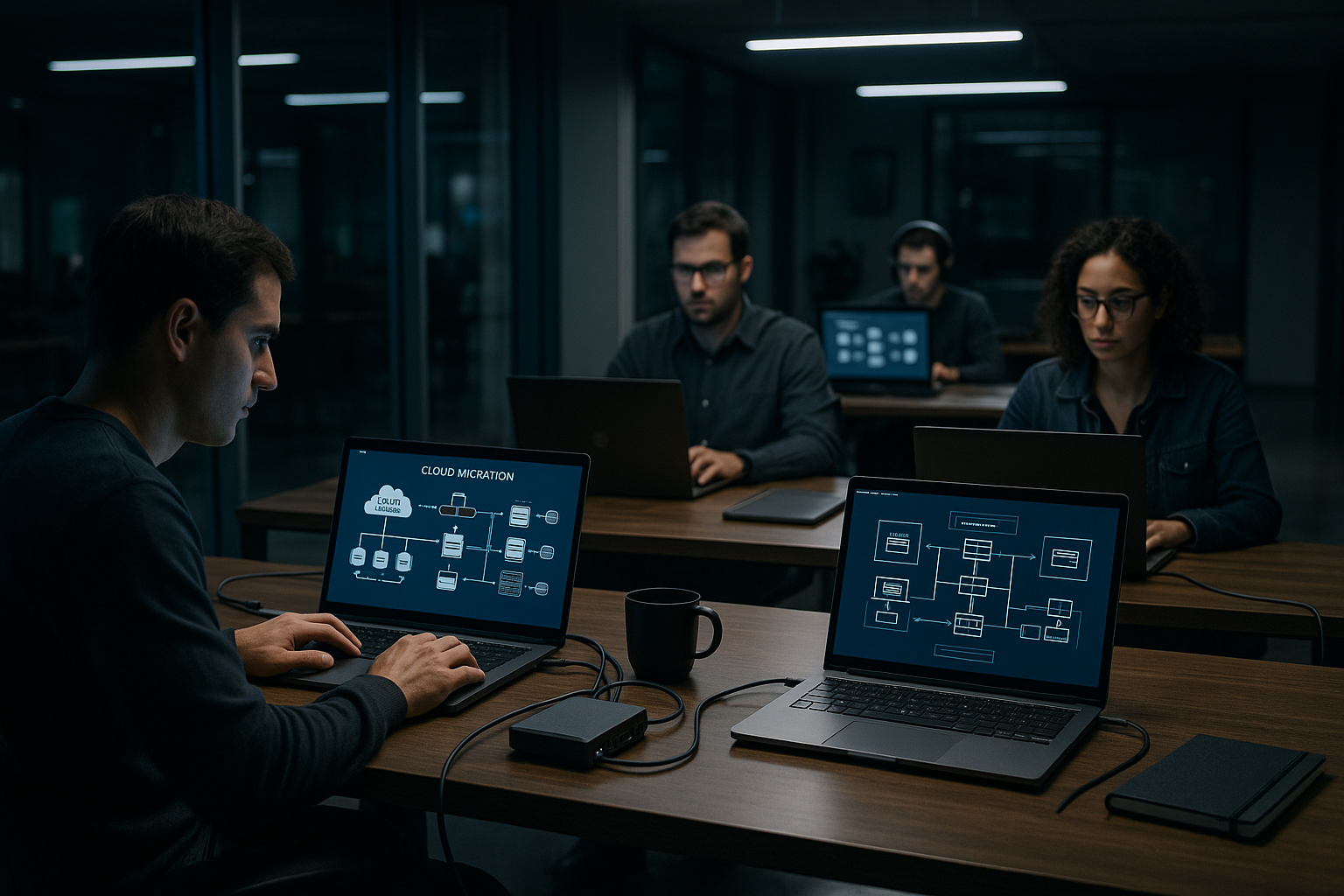
Common pitfalls and remedies
I prevent surprises by conducting a complete inventory and hiding Configurations I document everything. I prevent data loss by configuring CDC correctly and keeping the delay below one second. I prevent performance drops by running benchmarks and fine-tuning before the switch. I resolve DNS split brain by using low TTL and consistent monitoring. I identify problems early on by making replication, network, app errors, and security visible.
I always have a rollback plan and test it realistically in staging. I only secure encrypted data transfers and check certificates strictly. I don't forget to consolidate sessions, caches, and temporary files. I keep logs synchronized so that forensic traces are consistent. I set clear stop criteria so that I can resolutely switch back.
Best practices for moving
I schedule the migration for times of low activity to reduce load and risk. I test in a staging environment that realistically reflects production. I write down all steps, dependencies, and contacts in a runbook. I keep stakeholders informed and designate contact persons for disruptions. I work with tools such as AWS DMS, Temporal Cloud, and Carbonite Migrate because they reliably control replication and processes.
I continuously monitor databases, applications, and security events. I measure user experience with loading times and error rates. I provide metrics for success and document results. After the cutover, I optimize configurations again if measurements suggest it. I only complete the migration once all checks have been carried out. green are.
Edge, CDN, and cache strategy
I consciously plan for caching so that the cutover can handle peak loads and users see consistent content. I warm up caches by fetching critical paths, product lists, and images in advance. I define strict invalidation rules: purge lists for top URLs, API responses with short TTLs, and static assets with long TTLs plus versioning. I set ETags and Cache-Control headers correctly, take Vary into account for cookies/Accept-Encoding, and avoid unwanted caching of personalized content. I use Stale-While-Revalidate to continue delivering responses during short target outages and update in the background.
I synchronize image derivatives and assets before the cutover so that CDNs do not generate 404 waves. I plan asset versioning (e.g., hash in the file name) so that browsers and proxies can reliably pull new statuses. I document mandatory purges after the switch and execute them script-controlled so that the sequence and timing are correct.
Application state, idempotence, and concurrency
I ensure that write paths are idempotent so that retries during cutover and replication do not create duplicate entries. I avoid dual writes between the old and new systems by temporarily channeling the write path (write-through proxy or queue with unique producer). I define a short feature freeze for schema changes and critical functions to prevent unforeseen differences. I drain queues in an orderly manner and check that dead letter queues remain empty. I verify business invariants (e.g., order totals, stock levels) on both sides.
I pay attention to locking strategies (optimistic/pessimistic locking) and isolation levels because they affect replication latency and race conditions. I deliberately simulate conflicts and check how the application resolves them. I keep reconciliation scripts ready that can specifically clean up small drifts.
Observability, SLOs, and runbook automation
I define service level objectives for the migration: maximum latency under load, error rate, accepted CDC lag, time to full convergence. I build dashboards that show replication, infrastructure, app logs, and user experience side by side. I route alerts in stages: early warnings for deteriorating trends, hard alerts for SLO violations. I maintain a ChatOps board that connects metrics, runbooks, and responsible parties. I log all runbook steps with timestamps to make decisions traceable and secure lessons learned.
I automate recurring tasks (check TTL reduction, warm-ups, purges, health checks) to reduce manual errors. I plan a go/no-go meeting with final status, metric review, and clear decision line.
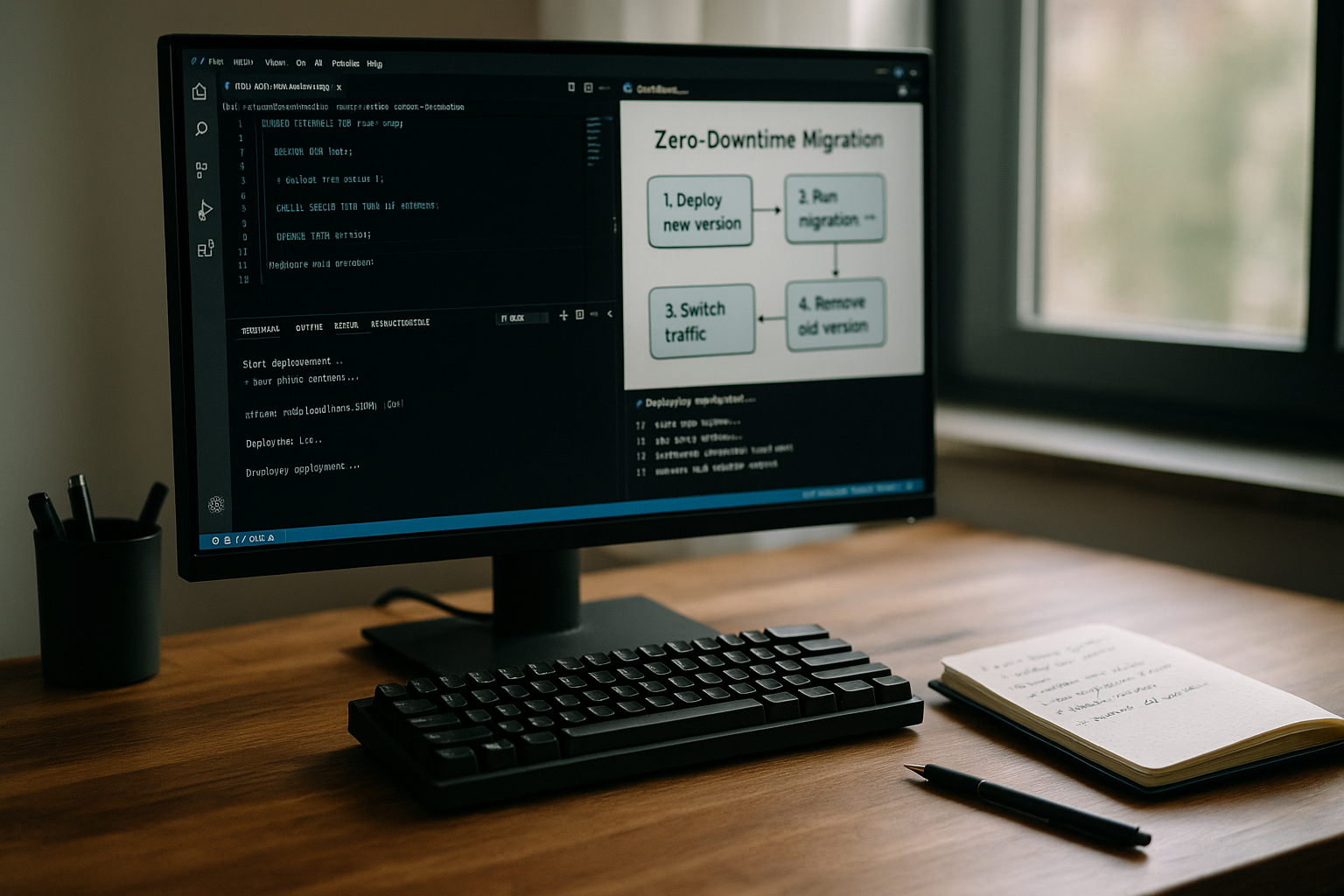
Security, compliance, and secret management
I treat migrations as security events: I rotate secrets before and after the cutover, minimize temporary permissions, and log accesses in an audit-proof manner. I check encryption at rest, key storage, and KMS policies. I pay attention to purpose limitation, order processing, and data minimization for personal data, mask production-related staging data, and have deletion concepts ready. I document technical and organizational measures and secure audit logs in an unalterable manner.
I test certificate chains with alternative paths, check OCSP/CRL availability, and plan renewals if the time window is close to expiration dates. I evaluate additional hardening measures such as mTLS for replication paths and script firewall changes with clear rollback.
Cost and capacity planning
I calculate temporary double loads: compute, storage, egress costs, and licensing models. I plan for 30–50 percent headroom in the target so that peak loads, replication, and tests can run in parallel. I dynamically regulate replication throughput so as not to throttle productive traffic. I evaluate whether short-term reservations or burst instances are more cost-effective than long-term commitments. I clean up quickly after the cutover (snapshots, staging volumes, temporary logs) to avoid follow-up costs.
Special cases and architectural patterns
I choose the appropriate cutover pattern: Blue-Green if I want to quickly toggle between old and new; Canary if I want to switch percentages of traffic gradually; Shadow if I want to run target systems passively and only verify them. I take long-lived connections (WebSockets, gRPC) into account and plan timeouts and reconnect strategies. I consider mobile apps and IoT devices that rarely re-resolve DNS or pin certificates: I keep compatibility endpoints and longer parallel phases ready.
I synchronize external integrations early on: payment providers, webhooks, partner firewalls, IP whitelists, and rate limits. I test email delivery, including SPF/DKIM/DMARC, with the future sender path so that spam ratings don't go up after the switch.
Post-cutover: Stabilization and decommissioning
After the switch, I implement a stabilization layer: close-knit metric reviews, error budgets, micro-optimizations to queries and caches. I update backups to the new environment and test restores in real time. I adjust retention and WORM requirements. I check SEO aspects: canonicals, sitemaps, 301 redirects, and image paths. I align log time zones, formatting, and index strategies to ensure that analyses remain consistent.
I decommission old resources in a controlled manner: blocking access, securely deleting data, shredding volumes, transferring licenses, tracking DNS records, and cleaning up reverse DNS and mail relays. I collect evidence (change logs, screenshots, tickets) to meet compliance and audit requirements. I hold a brief review with the team and stakeholders and use it to formulate precise improvements for the next project.
Communication, TTL, and domain transfer
I plan communication early on and keep those affected informed with brief status updates. up-to-date. I reduce TTL several days in advance and check whether resolvers are responding to the change. I plan a domain transfer outside of the actual cutover to separate risks. I check registrar locks, auth codes, and WHOIS data in advance. I use this guide to Avoiding domain transfer errors, so that the transition runs smoothly.
I coordinate the help desk, social media, and incident handling to fit the time frame. I prepare standard responses for typical questions. I direct inquiries to central channels to avoid duplication of work. I document each escalation with causes and measures. I conclude the communication with a brief Review when everything is running smoothly.
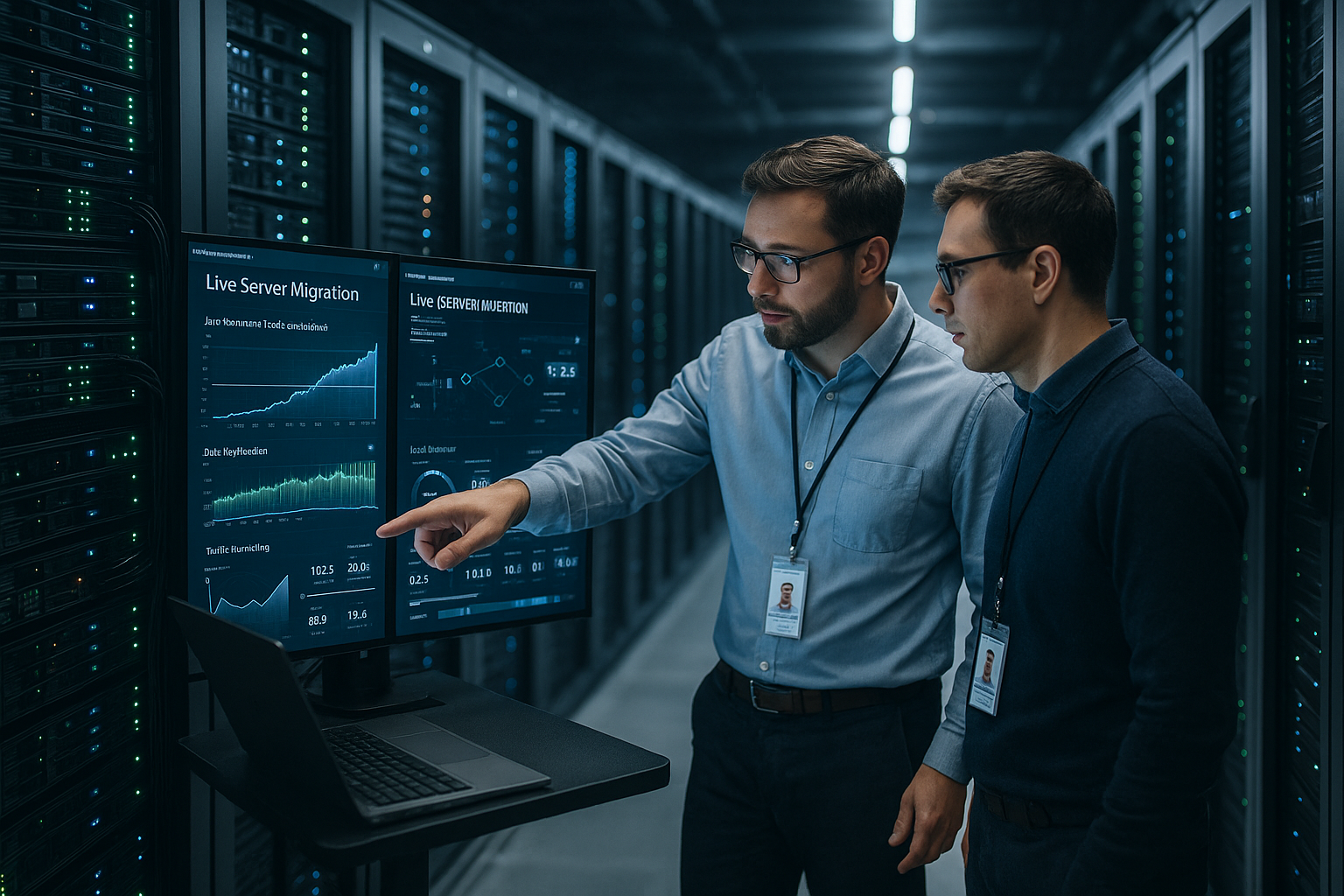
Briefly summarized
I migrate between hosts without interruption by disciplined replication, testing, clean cutover, and rollback. combine. I use DMS for databases, Temporal for workflows, and Carbonite for servers, depending on the application. I keep DNS strategy, TLS, and proxies consistent to ensure security and accessibility. I evaluate everything using clear metrics and document the process. I make decisions based on measured values so that zero-downtime migration is controlled, traceable, and secure.