Skip to content
A suitable domain name is crucial to your digital success. In this guide, you'll find tried-and-tested domain buying tips to help you secure your desired domain, avoid mistakes and benefit in the long term - whether you're a business, institution or blog.
Key points
- Target group note: operate locally or internationally
- Domain name Creative, but keep it simple
- Availability Check at an early stage
- Rights Clarify before registration
- Provider choose with fair conditions
The ideal domain name: clear, short, recognizable
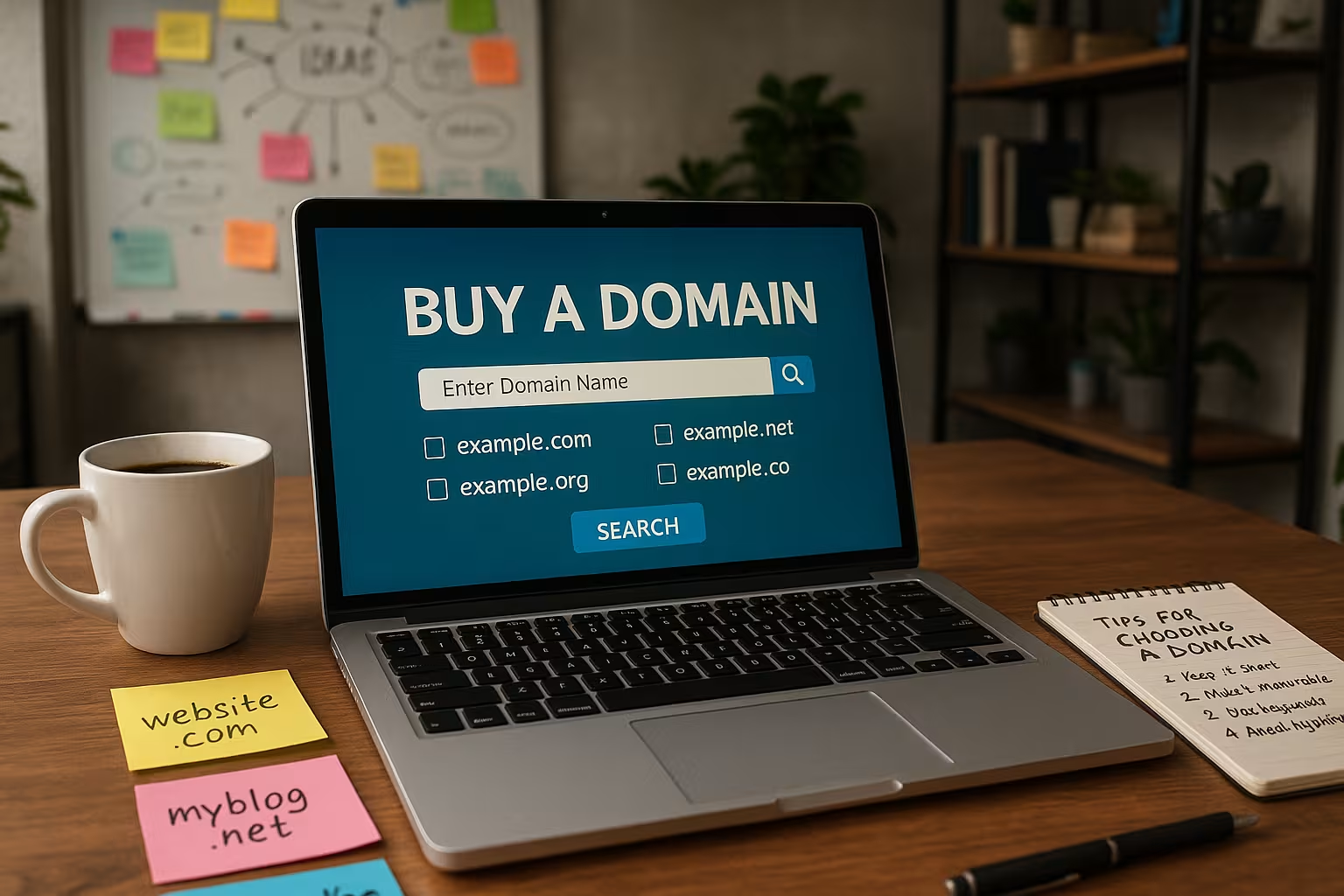
For domain names I always use Clarity and recognition. A short name without umlauts, special characters or numbers minimizes errors. I often use fantasy names for pure branding, but they should always be pronounceable and memorable. Avoid overly technical or generic terms - they won't make you stand out. Test your favorites with friends or your target group. This will help you to recognize early on whether your domain works.
Especially for creative projects or start-ups, it makes sense to take enough time for brainstorming. I often create a list of potential domain names and then check whether they have sufficient appeal in terms of content, language and emotion. I try to keep the future effect on the customer in mind: Does the name trigger trust, curiosity or sympathy? The earlier you recognize potential stumbling blocks, the easier it will be to build your brand later on.
Choose top-level domains wisely
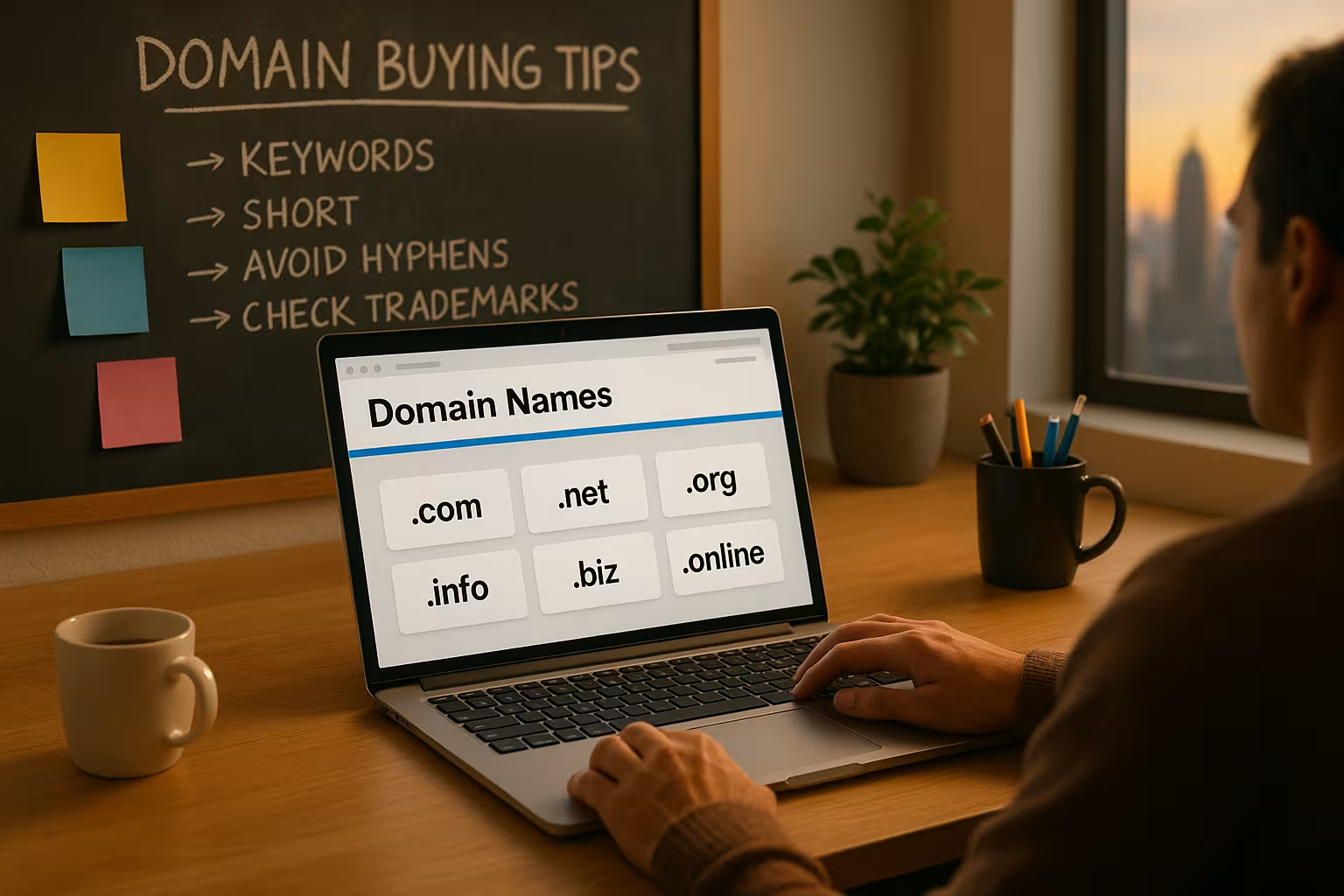
Clear rule: For customers in Germany I prefer .de. For international appearances, I choose .com - it enjoys trust and reach. Specific endings such as .store, .tech or .photography can add value if they fit the theme. I also check whether alternative spellings or common typos are also available. This helps me secure potential traffic and prevent misunderstandings right from the start.
But also note that exotic domain extensions can sometimes arouse skepticism. While they may be original, they are often not as established as classic TLDs. However, if you tailor your offering precisely to a niche, a topic-specific extension can be a clear advantage. The decisive factor is always whether your customers immediately understand and appreciate the connection. Especially in areas such as culture, photography or IT, the respective endings serve as an additional eye-catcher.
How to check the availability of your desired domain
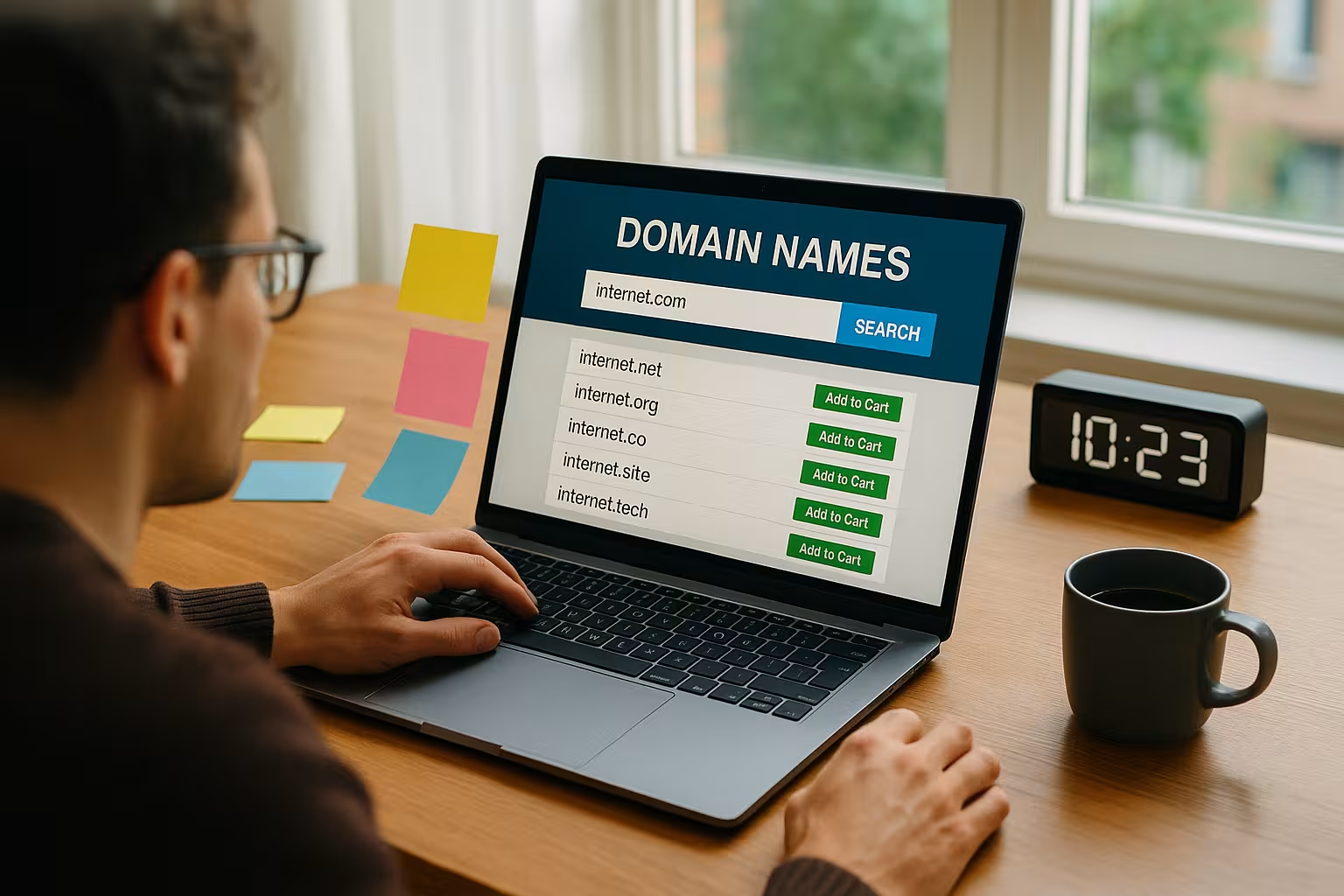
I use reliable tools for the domain check to get clarity quickly. One simple way, for example, is the Domain check from webhosting.de. If the preferred domain is already taken, you can find new options using synonyms, hyphens or alternative TLDs. For important projects, I also save the plural form, common typos and other language versions - this protects the brand in the long term.
It is also helpful to find out who currently owns the domain. A simple Whois query will give you clarity about the registrant. If a domain is for sale, you can try to negotiate - sometimes a fair price can still be negotiated on domain marketplaces. Nevertheless, I recommend that you plan your approach carefully. If negotiations are too expensive, it is often worth starting again with a slightly modified version of your desired domain.
Securely clarify rights - check trademarks and terms
Before I register a domain, I always check whether the name is compatible with existing Trademark rights violates. This protects me from warnings or legal problems. A look at the trademark register and a simple online search will often reveal critical hits. I would refrain from using similar-sounding terms or names of large companies in particular - legal risks are rarely worthwhile. I also consistently avoid terms with political, religious or legally ambiguous content.
Another interesting question is whether you want to protect your own brand. Trademark registration can provide additional security, especially if you are planning for the long term. The costs are usually manageable compared to possible legal disputes or warnings. Also pay attention to regional particularities: Depending on the country and its trademark protection legislation, there may be other factors that you need to take into account for an international presence.

Buying a domain - step by step to registration
As soon as the name and ending are clear, I go to the Registration about. I only choose reputable providers with transparent conditions. For me, this includes, for example this providerwho reliably implements data protection, SSL certificates and responsive customer support. I immediately create several variants of the same domain and also secure suitable e-mail addresses. Once everything is booked, I make a note of the renewal date in my calendar. That way I don't lose the domain later by chance.
At the same time, you should set up the DNS entries quickly so that your websites and email accounts can be accessed quickly. Depending on the provider, this can be done in a clear control panel or you can use external DNS solutions. I recommend setting the most important entries such as A, MX and, if necessary, CNAME records correctly to guarantee smooth processes. This will save you unnecessary error messages and failures later on. Ideally, redirects to other domains can also be configured directly.
These additional services are worthwhile directly at the time of purchase
Some offers include practical add-ons that I take with me when I buy a domain. That saves effort. These include
- E-mail inboxes with your domain - for a professional appearance
- Entry-level web space with SSL certificate - ideal for small projects
- Whois privacy protection - hides your personal contact details from third parties
Many providers such as webhoster.de bundle these services into affordable packages. I compare them carefully so as not to overlook any hidden surcharges.
In addition, services such as domain transfer services or automatic backups of your websites can also be useful if you want everything from a single source. Especially if you manage several domains, the user-friendliness of the provider portal has a major impact on your day-to-day work. Therefore, make sure that important functions are easy to find and that the customer center offers quick help when needed. Errors in the settings can often be undone, but cause unnecessary loss of time.
Protect domains permanently - here's how
After the purchase, I immediately activate the so-called Domain lock. The registrar thus prevents unwanted transfers. I also save a transfer PIN and store it separately. I manage the access data in a password manager. I also make sure to keep my contact details up to date in the Whois register - otherwise I risk being blocked. Regular renewal reminders help to avoid losing the domain.
In order to continuously secure your domain, it is also advisable to monitor possible expiration dates. Depending on the TLD, there are different time windows in which a renewal must take place. Some endings grant short grace periods, others allow hardly any leeway. If you own several domains, you should set up a system: calendar reminders or automatic renewals provide more security. Don't forget to keep an eye on parked domains or pure forwarding domains as well, as they can be important for your branding or project value.
I avoid these mistakes when buying a domain
I don't just focus on the Pricebut on the overall package. Low-cost registrars often skimp on support, which can be expensive in an emergency. I don't touch domains with foreign brand elements or popular company names - even if they are still free. I ignore one-off offers if they entail high renewal costs. And I don't let my domains expire - that risks loss, damage to reputation and expense.
The aspect of technical support is also often overlooked. If your provider only offers limited or no live support, you will quickly find yourself on your own in the event of critical problems. The same applies to unclear contract terms: Make sure you know how prices develop after the first year, whether there is a separate fee for moving and what notice periods apply. These factors are more important than any supposed bargain price that ends up in an expensive total bill later on.
Comparison of popular domain providers - my experiences
I have tested various providers and experienced what is important. Support and hidden additional costs often make the difference. In the following table, I show you a comparison of the most important providers - with a focus on performance, service and extras:
| Place | Provider | Price/performance | customer support | Additional services |
|---|---|---|---|---|
| 1 | webhoster.de | Very good | Excellent | E-Mail, Hosting |
| 2 | IONOS | Good | Good | Various packages |
| 3 | STRATO | Satisfactory | Good | Basic services |
| 4 | United Domains | Good | Solid | Clear offers |
This overview is a starting point, but of course the providers' conditions and product packages can change over time. Nevertheless, it helps to quickly get a feel for which criteria are important to me in the domain business - can you expect responsive customer support, is attention paid to data protection, and are the contractual conditions fair?

Long-term thinking for domain and hosting
I see domains as a long-term investment. That's why I don't make spontaneous impulse purchases. Instead, I specifically register suitable variants and plan the technical setup directly. The domain purchase should always go hand in hand with a hosting offer. A helpful overview can be found in the article Secure and manage your domain read more.
It is important to understand that the domain is only one component in the overall package of your online presence. The hosting determines how powerful and secure your websites and email services will be. If you want to be able to expand in the long term, you should choose web space and domain in such a way that you don't immediately reach capacity limits with larger traffic. For me, it is also crucial that the hosting company uses the latest security standards so that my projects are protected.
It's worth taking a closer look at possible upgrades, especially if your requirements are growing: can you quickly book more storage space or a more powerful server without having to make any major moves? In many cases, you can get complete packages that offer you exactly this kind of flexibility. A carefully selected package prevents unpleasant surprises if your project becomes successful and suddenly skyrockets in terms of BP.
Trademark protection and domain defense in practice
Another facet that I never underestimate is the ongoing protection of your own brand. Even if a domain registration fulfills all the requirements, it can happen later that copycats secure similar domains and try to profit from your success. I therefore recommend at least checking common typos and alternative spellings under trademark law. This prevents a similar domain from suddenly snapping up customers or traffic. This is a common mistake that I see many unknown or smaller companies make.
However, trademark protection also means always keeping an eye on whether someone is trying to register related terms as a trademark or actively use them. The greater the success of your project, the more likely third parties will feel encouraged to use similar names. Proactive research helps to nip disputes in the bud. A specialist lawyer or a special monitoring service can help you here. Although many providers and web hosts do not offer comprehensive trademark protection, these external tools can often be added with just a few clicks.
SEO factors: Influence of the domain name on your ranking
The domain name can play a role in search engine rankings. However, it is no longer completely decisive these days. I like to place relevant keywords in the domain as long as they don't dilute the branding. A descriptive domain name that makes it clear what it is about can signal to users directly that they are in the right place. However, Google itself is placing increasing emphasis on high-quality content and user experience. That's why you should focus more on good content marketing and professional web design.
Nevertheless, a domain with a keyword reference can certainly be helpful, especially in highly competitive niches. However, if the keyword is only inserted artificially and the rest of the brand reference suffers as a result, this could have a detrimental effect in the long term. I therefore make sure that I only use keywords if they really fit the project. A natural, authentic domain is more convincing and remains consistent in future marketing measures.
Domain portfolio management: using multiple domains wisely
Anyone planning to serve several topics or countries should take a strategic approach to domain portfolio management. I myself often use additional .com or .net domains for international clients to increase reach. I also secure German and English versions if a website is multilingual. This makes it easier to channel traffic and creates a clear structure. It is then important to set up redirects properly so that Google neither penalizes duplicate content nor confuses visitors.
A well-thought-out portfolio can also increase the value of your company. Depending on the industry, a collection of well-chosen domains can become an asset. However, it is advisable not to simply register all available interesting names indiscriminately, otherwise you will incur unnecessary costs. A good balance of core and complementary domains is the best strategy. Always keep your main focus in mind and register additional domains specifically for brand defense or to occupy niches.
Dealing with domain expiry and change of ownership
Although I avoid it as much as possible, it can happen that domains are no longer needed. Then the question arises: cancel or sell? Sometimes reselling is lucrative, especially if you have built up a certain reputation over the years. However, make sure that the domain transfer is secure. Only start it via official channels and check whether the buyer is reliable and will actually pay the amount.
It becomes more complicated when there is a change of ownership, if several people are involved or if there is a dispute over rights. That's why I always make sure that clear agreements are made and documentation is kept. When selling a company, the domain is an important component that many people initially underestimate. I regularly come across cases where it is unclear who actually owns the domain, even though several parties had access to it at the same time. I prevent this by keeping all contracts in writing and checking where the domain owner is registered.
Summary: Your dream domain - cleverly purchased and properly protected
Setting up your desired domain securely and professionally lays the foundation for high recognition, trust and long-term digital success. It is important that the Name fits, the rights have been clarified and the appropriate ending has been chosen. I always recommend securing variants, not going for the cheapest price and keeping an eye on personal administration. With the right provider and a clear plan, you can get started without any stumbling blocks.