Skip to content
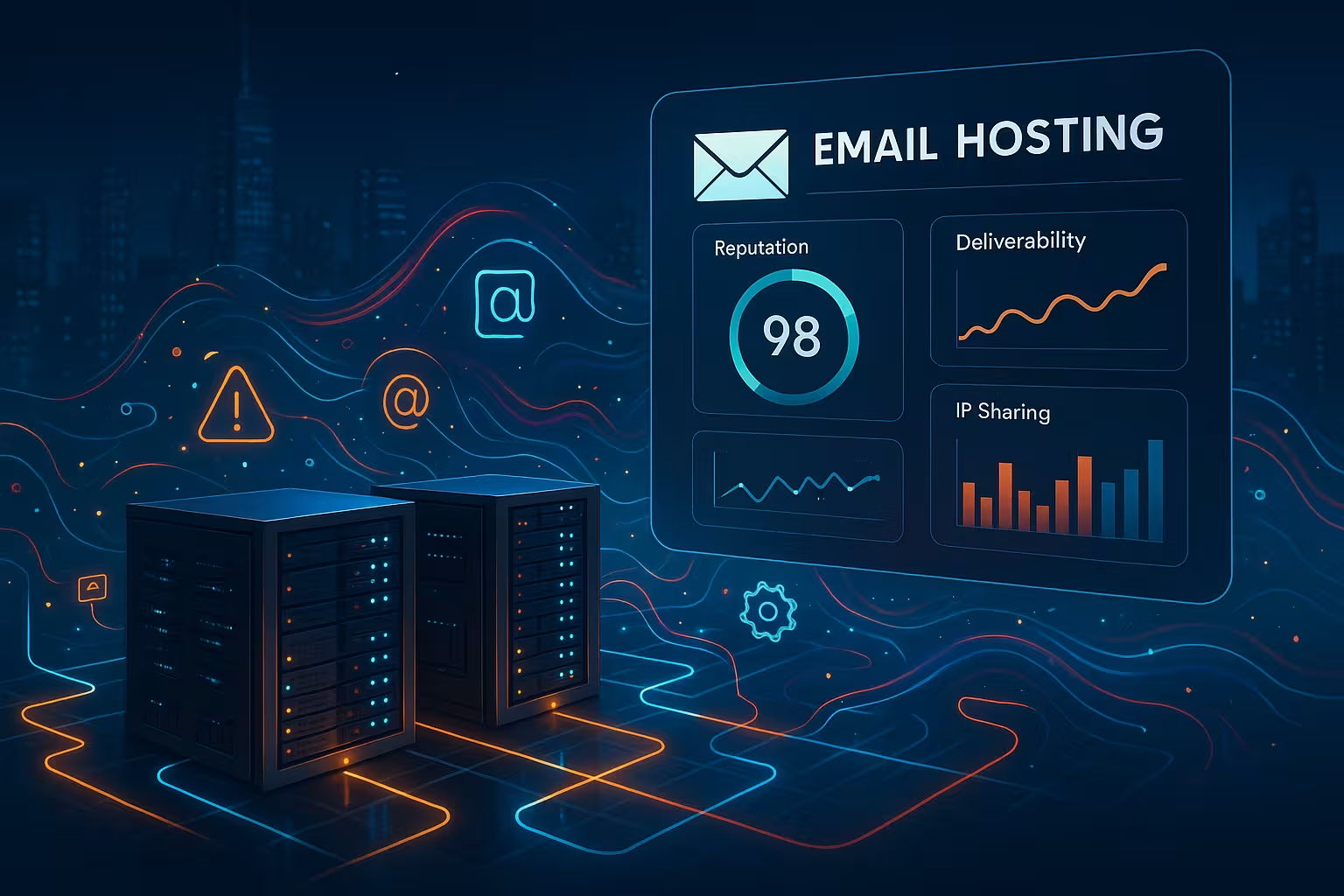
E-mail hosting directly influences whether messages end up in the inbox, how providers rate sender reputation and whether shared or owned IPs are the best choice. I focus on Reputation, deliverability signals and IP sharing strategies that measurably stabilize inbox quotas.
Key points
- ReputationIP and domain score control the inbox placement.
- DeliverabilityAuthentication, DNS and MTA behavior determine the path.
- IP sharing: Inexpensive, but risk due to co-users.
- Dedicated IPFull control and predictable scaling.
- hygieneList maintenance, feedback loops and monitoring ensure quality.
Understanding IP reputation: Signals that providers measure
I control my Reputation via clear sending patterns, clean lists and consistent authentication. Providers like Gmail evaluate complaints, hard bounces, spam traps and recipient engagement in near real time. I keep the volume stable, avoid sudden peaks and respond quickly to error messages. SPF, DKIM and DMARC are technically and professionally correct for me, so that alignment and key rotation are right. This is how I build a resilient IP-history, which prioritize filters instead of blocking them.

Control deliverability: Authentication, MTA and DNS
I secure the Deliverability through complete DNS entries, correct rDNS and FCrDNS as well as consistent HELO/EHLO strings. My MTA throttles load peaks, clearly processes bounces and respects greylisting so that queues do not burst. TLS via opportunistic and enforced StartTLS covers transport paths and prevents downgrades. For more in-depth implementation, I use practicable guides, such as the Mail server optimization. I regularly check DMARC reports in order to quickly spot outliers and Policy in a controlled manner.
Clean alignment of envelope, return path and tracking domains
I separate the visible sender address (From) from the envelope sender (MAIL FROM/Return-Path) and use my own Bounce domain per dispatch stream. This means that bounces can be clearly assigned and DMARC alignment can be controlled per subdomain. My Tracking domain for links and images is bound to the sending provider via CNAME and DKIM-signed so that providers do not see any third-party domains in the content. I keep all domains (from-, return-path-, tracking- and HELO-domain) organizationally consistent, so that Alignment and signals come from a single source.
Assessing IP sharing correctly: Opportunities, limits, thresholds
I choose IP sharing only if the sending volume remains small and the operators actively maintain the pool. Shared IPs often benefit from history, but all senders bear the risk of individual disruptors. Shared pools with a few clean customers perform stably, while overcrowded networks lose score. Anyone running campaigns with higher volumes needs independence and a clear root cause analysis. I plan the migration with foresight so that Warm-up and DNS changes are coordinated.

Dedicated IPs: control, root cause analysis and predictability
I rely on a dedicated IP as soon as volume, brand risk or compliance set clear limits. My own addresses give me control over delivery patterns, error patterns and escalations for blocklists. I determine the speed of the warm-up, test subdomains separately and keep delivery paths clear. This allows me to isolate problems more quickly and protect campaigns with high visibility. If you are looking for predictable inbox rates, invest in separate Nets and clean address hygiene.
| Aspect | Shared IP | Dedicated IP |
|---|---|---|
| Start-up costs | Low, mostly without warm-up | Requires planned warm-up |
| Control | Limited, risks due to co-users | Complete control |
| Risk exposure | Pool-wide effects for complaints | Isolated to own practice |
| Scaling | Rather limited by pool rules | Plannable with IP/domain structure |
| Typical use | Small volumes, budget focus | High volume, brand protection |
Domain warming: carefully establishing new sender identities
I not only warm IPs, but also the Domain to. I initially only send new or unused sender domains to very active contacts with clear expectations. I start with a few transactions that build trust (e.g. account updates) and only increase marketing volume once performance is stable. Subdomains help me to separate streams: transactional.domain.tld and marketing.domain.tld develop their own, more controllable histories. Older, credible sender names and consistent From headers reduce the risk of being filtered as „new and unknown“.
IP warming: roadmap for clean volume growth
I start the Warm-up with the most active, confirmed contacts so that openings and clicks send positive signals. In week 1, I keep daily volumes low, increase moderately per provider and monitor bounces granularly. I avoid jumps of over 2x if previous days were still performing poorly. Subject lines and content remain constant so that filters learn a stable pattern. In the event of feedback about spam complaints, I pause segments, remove inactive ones and secure the Domain-reputation.
Targeted use of spam filter hosting and list hygiene
I rely on Spam filter-The new list cleaning functions combine greylisting, header analysis and heuristic checks without obstructing legitimate mails. Automatic list cleaning removes hard bouncers, long-term inactives and incorrect syntax. I reduce feedback loops with clear opt-ins, fast unsubscribes and comprehensible sender IDs. Those who share IPs should common blacklists and proactively exclude bulky segments. This keeps the Quality of the shipping lines is constantly high.
Content, formatting and user expectations
I format emails so that providers and readers can clearly categorize them: clear preheader, consistent sender name, relevant subject lines without trigger words. A balanced Text to image ratio, Alt texts and a clean HTML structure increase robustness with strict filters and a weak rendering environment. I avoid URL shorteners, unnecessary redirects and mixtures of many external domains so as not to dilute link reputation. A readable plain text variant and stable Message IDs support delivery and conversation threads.
Transparent unsubscribes create trust: I rely on clearly visible unsubscribe links and add List-Unsubscribe-header with one-click support. This reduces complaints and ISPs rate the sender as responsible. Frequency caps, preference centers and Sunset Policies prevent over-contact and keep commitment high.
Monitoring: Evaluate postmaster data, FBLs and bounce codes
I value Postmaster-metrics, spam rate, junk move rate and IP/domain scores per provider. I classify soft and hard bounces cleanly, adjust the speed and keep the queue small. FBL data flows into suppression lists so that repeated complaints do not occur again. I test the delivery path and content variants separately to separate technical and editorial effects. This allows me to recognize trends early on and keep the Inbox-quota is calculable.

Strategically strengthen domain reputation and engagement signals
I maintain the Domain-Reputation separated into transaction and marketing streams via subdomains. High open rates and clicks act as trust anchors, which is why target group management has priority. I trim list building for clear consent, double opt-in and transparent expectation management. Content remains relevant, sender name and from address clear and stable. This improves the provider's perception, and the Brand gains permanent credit.
Consider provider-specific subtleties
I adapt the clock and error handling to the peculiarities of large providers. Gmail reacts sensitively to complaints and engagement; stable volumes and high interaction rates are the most important levers here. Microsoft-Mailboxes (Outlook/Hotmail) require strict bounce handling and have little tolerance for volume jumps. Yahoo/AOL promote clear opt-ins and penalize aggressive frequencies. GMX/WEB.DE pay close attention to rDNS, FCrDNS and clean HELO strings. Apple iCloud filters strictly for unknown domains and estimates reliable TLS connections. I calibrate limits, retry backoffs and parallel connections per network instead of enforcing a global setting.
Infrastructure: Configure rDNS, FCrDNS, TLS and queue management properly
I set up rDNS clearly to host and IP names so that reverse and forward resolution remain consistent. I reduce FCrDNS to clear responses without wildcards or mismatches. The MTA keeps connections efficient, respects per-provider limits and prioritizes proven paths. I keep TLS protocols and ciphers up to date and check OCSP stapling and certificates cyclically. This means that transport, identity and server behavior remain consistent, which makes the Filter rate positively.

Security standards and trust mechanisms
I supplement TLS with MTA-STS and TLS-RPT, so that safe transportation remains binding and reports of errors are received. Where possible, I activate DANE via TLSA records to avoid opportunism. For visual trust anchors, I rely on BIMI with correctly rolled out DMARC policy; if required, I support VMC certificates if the brand is to be visibly secured. ARC stabilizes delivery in forwarding chains, and SRS avoids SPF breaks during forwarding. I also check the IPv6-provisioning so that modern providers accept dual-stack paths with confidence.
Provider selection and costs: pools, own networks and budgets
I choose the Provider according to IP quality, pool size, blocklist history and transparency of limits. Shared packages are sufficient for small volumes, often from as little as €5-15 per month, as long as the hygiene is right. If you need dedicated addresses, subnets and monitoring, you should calculate €30-120 per month per IP plus setup. I carefully check SLAs, escalation paths and test environments before going live. For a more in-depth overview, I use a compact Reputation Guide, to clearly balance risks and budgets.
Operating processes, delisting and escalation
I hold a Runbook ready: From the first soft blocks (421/451) to temporary throttling and hard blocks (5xx) with structured delisting. I analyze error codes, identify patterns (e.g. 5.7.1 Policy Reject) and document countermeasures: List cleanup, frequency adjustment, template checks, DNS corrections. I differentiate between blocklists according to scope (DNSBLs vs. provider-internal lists) and only trigger targeted requests once the cause has been demonstrably rectified. I document every escalation in order to achieve results more quickly through standardized steps in the event of recurrences.
Compliance, consent and data hygiene
I secure Consents clean (double opt-in, timestamp, source) and respect regional guidelines. I treat role addresses, catch-all domains and old stocks conservatively to avoid spam trap risks. I minimize personal data, keep suppression lists separate and provide clear Transparency about the sender, purpose and contact frequency. In this way, compliance not only supports legal certainty, but also directly supports deliverability and brand trust.
Key figures and target values for ongoing management
I control delivery with clear target corridors and verifiable thresholds:
- Complaint rate: < 0.1 % per shipment and provider.
- Hard bounce rate: < 0.5-1.0 %; sort out unknown users early.
- Spamtrap hintstowards zero; pause segments immediately.
- Open/click ratestable per stream; trends more important than raw values.
- Deferral rate: sinking over the warm-up; retries with backoff.
- TLS coverageIf possible > 95 % successful deliveries with StartTLS.
I also measure the Time-to-Inbox, to detect bottlenecks in the queue or provider limits at an early stage. I only use seed tests as a supplement, while real receiver segments provide the more relevant signals. I translate findings into permanent Suppression logics and segment rules so that learning successes have a lasting effect.

Summary: Increase inbox quotas in a plannable way
I combine Reputation, technical delivery paths and sensible IP strategies into a clear roadmap. Authentication, DNS and MTA behavior set the technical stage, while list maintenance and engagement win over the audience. Shared pools are a start, but dedicated IPs provide control and clean diagnostics. With structured warm-ups, monitoring and feedback loops, I keep trends positive and risks low. This way, my communication lands reliably in the inbox, and the Brand impact remains intact.