Skip to content
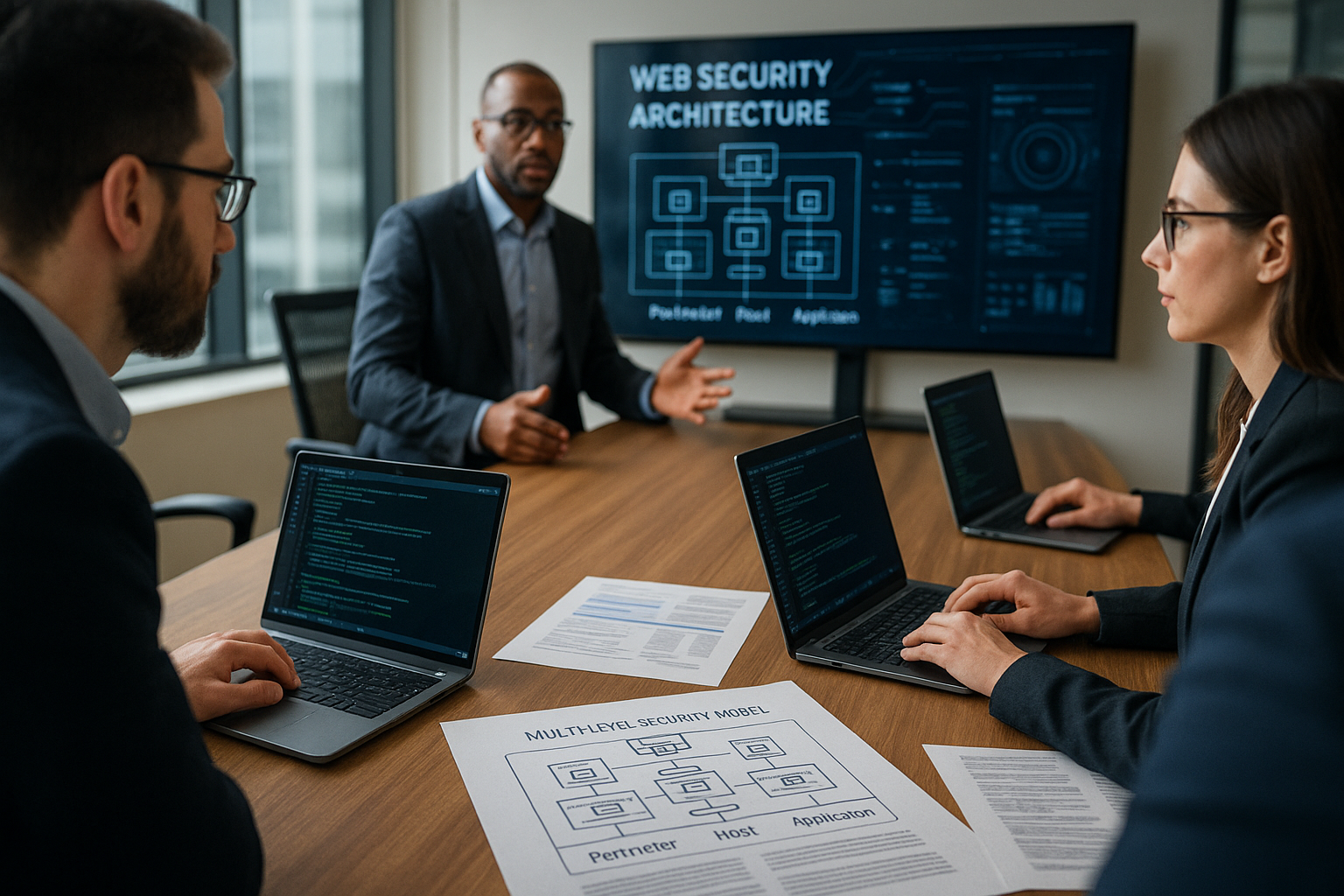
Web hosting security succeeds reliably if I clearly separate the perimeter, host and application protection layers and dovetail them cleanly. In this way, I stop attacks early, check every access and keep sources of error with Zero Trust small.
Key points
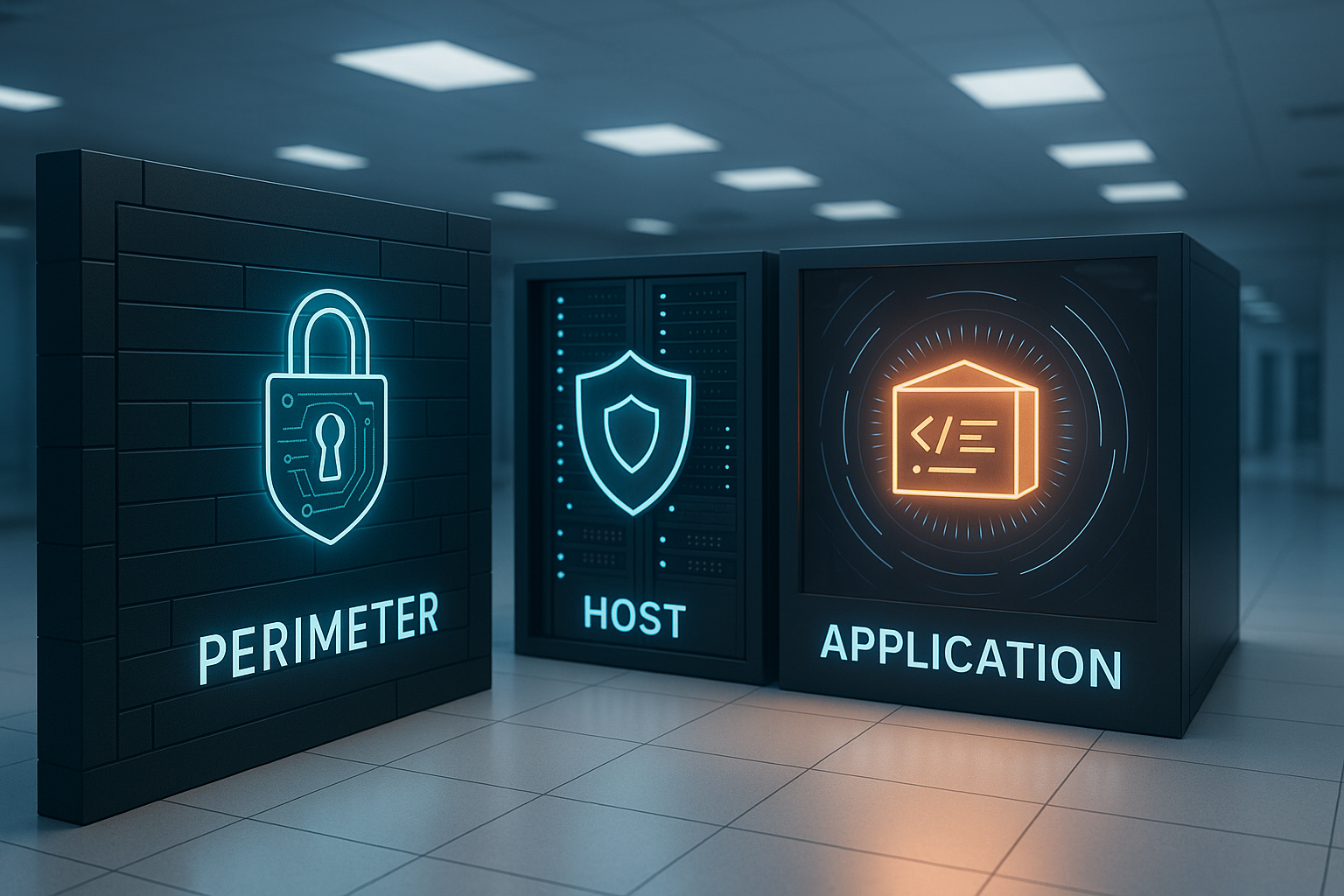
The following Overview shows which layers interact and which measures are given priority.
- PerimeterFirewalls, IDS/IPS, DDoS defense, VPN/IP lists
- HostHardening, backups, rights concept, secure protocols
- ApplicationWAF, patches, 2FA, roles
- Zero TrustMicro-segmentation, IAM, monitoring
- OperationMonitoring, protocols, recovery tests

Perimeter security: network boundary under control
On Perimeter I reduce the attack surface before requests reach the server. Central components are package and application-related Firewalls, IDS/IPS to detect suspicious patterns as well as geo and IP filters. For admin access, I use IP whitelisting and VPN so that only authorized networks can access sensitive ports. For web traffic, I limit methods, header sizes and request rates to curb abuse. If you want to delve deeper, you can find more information in my guide to Next-gen firewalls practical criteria for rules and logging. This keeps the first fence tight without unnecessarily blocking legitimate traffic.
DDoS defense and traffic management
Against DDoS I keep bandwidth, rate limits, SYN cookies and adaptive filters ready. I recognize anomalies early on, reroute traffic if necessary and switch on scrubbing capacities. At application level, I throttle conspicuous paths, cache static content and distribute Traffic across multiple zones. Health checks constantly check availability so that the load balancer can disconnect sick instances. I have logs analyzed in real time to immediately isolate patterns such as login storms or path scanning.
Host security: Secure the operating system hard
Hardening on the server Hardening the basis: unnecessary services off, secure defaults, restrictive kernel parameters, up-to-date packages. I rely on minimal images, signed repositories and configuration management so that the status remains reproducible. Access is via SSH keys, agent forwarding and restrictive sudo profiles. I encapsulate processes with systemd, namespaces and, if necessary, cgroups so that individual services run in a restricted manner. I show a detailed sequence of steps in my guide to Server hardening under Linux, which sets practical priorities for Linux-hosts.
Backup strategy and recovery
Reliable Backups are my insurance against ransomware, operating errors and hardware defects. I follow 3-2-1: three copies, two media types, one copy offline or unalterable. I encrypt backups, check their integrity and test the Restore-time regularly. I set different points in time: databases more frequently than static assets. Playbooks document steps so that I can restart quickly even under pressure.
Access control and logging
I assign rights strictly according to least privilege, roll accounts separately and use 2FA for all admin paths. I limit API keys to specific purposes, rotate them and lock unused tokens. For SSH, I use ed25519 keys and deactivate password login. Central Logs with tamper-proof time stamps help me to reconstruct incidents. Deviations alert me automatically so that I can react in minutes instead of hours.
Application security: protection of the web application
For web apps, I place a WAF in front of the app, keep CMS, plugins and themes up to date and place hard limits on admin logins. Rules against SQLi, XSS, RCE and directory traversal block the usual tactics before code reacts. For WordPress, a WAF with signatures and rate control, for example described in the guide WAF for WordPress. Forms, uploads and XML-RPC are given special limits. Additional Header such as CSP, X-Frame-Options, X-Content-Type-Options and HSTS significantly increase basic protection.
Zero trust and micro-segmentation
I don't trust anyone Net per se: Every request needs identity, context and minimal authorization. Micro-segmentation separates services so that an intruder does not wander through systems. IAM enforces MFA, checks device status and sets time-limited roles. Short-lived Tokens and just-in-time access reduce the risk of admin tasks. Telemetry continuously evaluates behavior, making lateral movements visible.
Transport encryption and secure protocols
I enforce TLS 1.2/1.3, activate HSTS and choose modern ciphers with forward secrecy. I renew certificates automatically, check chains and only pin public keys with caution. I switch off legacy systems such as unsecured FTP and use SFTP or SSH. For mail use MTA-STS, TLS-RPT and opportunistic encryption. Clean Configuration at transport level mitigates many MitM scenarios right at the gate.
Automated monitoring and alarms
I correlate measured values, logs and traces in a central system so that I can see patterns early on. Alerts fire at clear thresholds and contain runbooks for the first steps. Synthetic checks simulate user paths and strike before customers notice anything. I use Dashboards for SLOs and time-to-detect so that I can measure progress. I optimize recurring alarm sources until the Noise-rate is falling.
Security functions in comparison
Transparency helps when choosing a provider, which is why I compare core functions at a glance. Important criteria are firewalls, DDoS defense, backup frequency, malware scanning and access protection with 2FA/VPN/IAM. I look for clear recovery times and evidence of audits. In the following Table I summarize typical features that I expect from hosting options. This saves me time when Rating.
| Provider | Firewall | DDoS protection | Daily backups | Malware scanning | Access security |
|---|---|---|---|---|---|
| Webhosting.com | Yes | Yes | Yes | Yes | 2FA, VPN, IAM |
| Provider B | Yes | Optional | Yes | Yes | 2FA |
| Provider C | Yes | Yes | Optional | Optional | Standard |
I prefer Webhosting.com, because the functions interact harmoniously at all levels and restoration remains plannable. Anyone who sees similar standards will make a solid Choice.
Practical tactics: What I check daily, weekly, monthly
On a day-to-day basis, I patch systems promptly, check important logs and check failed logins for patterns. Every week, I test a restore, roll out in stages and revise rules for WAF and firewalls. Monthly I rotate keys, lock old accounts and verify MFA for admins. I also check CSP/HSTS, compare configuration deviations and document changes. This consistent Routine keeps the situation calm and strengthens the Resilience against incidents.
Secret and key management
I keep secrets such as API keys, certificate keys and database passwords strictly out of repos and ticket systems. I store them in a Secret-Store with audit logs, fine-grained policies and short life cycles. I bind roles to service accounts instead of people, rotation is automated and takes place in advance. For data, I use Envelope EncryptionMaster keys are in the KMS, data keys are separate for each client or dataset. Applications read secrets at runtime via secure channels; in containers, they only end up in memory or as temporary files with restrictive rights. In this way, I minimize wastage and detect abusive access more quickly.
CI/CD security and supply chain
I protect build and deploy pipelines like production systems. Runners run in isolation and only get Least privilege-tokens and short-lived artifact permissions. I pin dependencies to checked versions, create a SBOM and continuously scan images and libraries. Before going live, I run SAST/DAST and unit and integration tests, staging corresponds to production. I carry out deployments Blue/Green or as a canary with a quick rollback option. Signed artifacts and verified provenance prevent supply chain manipulation. Critical steps require duo-control; break-glass accesses are logged and time-limited.
Container and orchestrator security
I build containers minimally, without shell and compiler, and start them rootless with seccomp, AppArmor/SELinux and read-only file systems. I sign images and have them checked against guidelines before the pull. In the orchestrator I enforce Network Policies, resource limits, memory-only secrets and restrictive admission policies. I encapsulate admin interfaces behind VPN and IAM. For statefulness, I separate data into separate volumes with snapshot and restore routines. This keeps the blast radius small, even if a pod is compromised.
Data classification and encryption at rest
I classify data according to sensitivity and define storage, access and Encryption. I encrypt data at rest at volume or database level, keys are separate and rolling. The data path also remains encrypted internally (e.g. DB-to-app TLS) so that lateral movements cannot see anything in plain text. For logs, I use pseudonymization, limit retention and protect sensitive fields. When deleting, I rely on verifiable Deletion processes and secure wipes on removable media. This is how I combine data protection with forensic capability without jeopardizing compliance.
Multi-client capability and isolation in hosting
For split environments, I isolate Clients strictly: separate Unix users, chroot/container limits, separate PHP/FPM pools, dedicated DB schemas and keys. I limit resources using cgroups and quotas to prevent noisy neighbors. I can vary admin paths and WAF rules per client, which increases precision. Build and deploy paths remain isolated per client, artifacts are signed and verifiable. This keeps the security situation stable, even if an individual project becomes conspicuous.
Vulnerability management and security tests
I run a risk-based Patch program: I prioritize critical gaps with active exploitation, maintenance windows are short and predictable. Scans run continuously on host, container and dependencies; I correlate results with inventory and exposure. EOL software is removed or isolated until a replacement is available. In addition to automated tests, I schedule regular Pentest-cycles and check findings for reproducibility and remedial action. This reduces time-to-fix and prevents regressions.
Incident response and forensics
I count minutes in the incident: I define Runbooks, roles, escalation levels and communication channels. First containment (isolation, token revoke), then preservation of evidence (snapshots, memory dumps, log exports), followed by clean-up and recommissioning. Logs are unalterably versioned so that chains remain resilient. I practise scenarios such as ransomware, data leakage and DDoS on a quarterly basis to ensure that I have the right skills. Post-mortems with a clear focus on causes and Defense measures lead to lasting improvements.

Compliance, data protection and evidence
I work according to clear TOMs and provide evidence: Asset inventory, patch history, backup logs, access lists, change logs. Data location and flows are documented, order processing and subcontractors are transparent. Privacy by design flows into architectural decisions: Data economy, purpose limitation and secure defaults. Regular audits check effectiveness instead of paperwork. I correct deviations with an action plan and deadline so that the level of maturity increases visibly.
Business continuity and geo-resilience
Availability I plan with RTO/RPO-targets and suitable architectures: multi-AZ, asynchronous replication, DNS failover with short TTLs. Critical services run redundantly, state is separated from compute so that I can swap nodes without data loss. I test disaster recovery end-to-end every six months, including keys, secrets and Dependencies such as mail or payment. Caching, queues and idempotency prevent inconsistencies during switchovers. This keeps operations stable, even if a zone or data center fails.

In short: layers close gaps
A clearly structured layer model stops many risks before they occur, limits the impact on the host and filters attacks at the app. I set priorities: perimeter rules first, host hardening closely managed, WAF policies maintained and backups tested. Zero Trust keeps movements short, IAM ensures clean access, monitoring provides signals in real time. With a few, well-rehearsed Processes I measurably safeguard availability and data integrity. If you implement these steps consistently, you will noticeably reduce disruptions and protect your Web project sustainable.