Skip to content
I optimize hosting setups by finding the right MySQL Isolation Level per workload. This is how I ensure Consistency in highly parallel environments and keep latencies low without risking deadlocks and unnecessary locks.
Key points
I rely on a few rules that help me reliably in hosting environments with many parallel queries. First, I check which anomalies I can tolerate and which I cannot, as this determines the Insulation. I then measure the effects on throughput and waiting times before making any permanent changes. I make a strict distinction between reads and writes so that I can control load peaks and Deadlocks avoid. In the end, I document the choice in the operations manual and have a fallback option ready in case metrics tilt.
- READ COMMITTED for many web apps
- REPEATABLE READ for orders
- SERIALIZABLE only for special cases
- Session scopes targeted use
- Monitoring before rollout
Why isolation counts in hosting
Parallel transactions come together in shared and cloud hosting and create competition for Locks. Without a suitable layer, I read dirty data, lose repeatability or see phantom lines, which can affect reports, caches and Cash register logic falsified. InnoDB protects me with MVCC and locking, but the price increases with stronger isolation. If you blindly leave REPEATABLE READ as the default, you risk unnecessary waiting times in heavily used CMSs. I therefore weight Consistency against performance, depending on traffic, query mix and fault tolerance.

The four isolation levels briefly explained
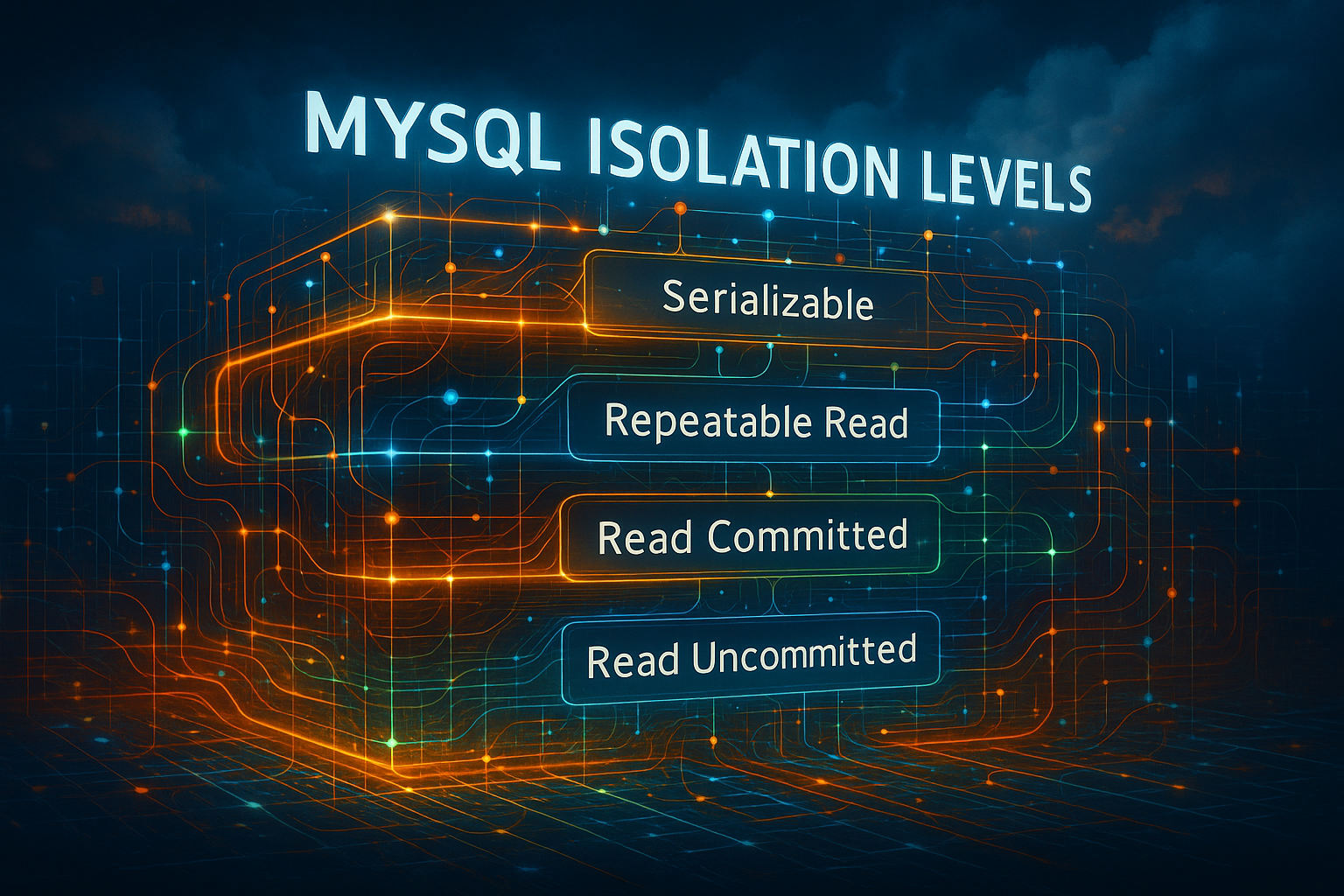
READ UNCOMMITTED allows dirty reads and maximizes Speed, is therefore suitable for non-critical evaluations at most. READ COMMITTED prevents dirty reads, but accepts non-repeatable reads and Phantoms; but waiting times usually remain moderate. REPEATABLE READ freezes a snapshot via MVCC, limits phantoms with next-key locks and is used for sensitive workflows. SERIALIZABLE treats every SELECT like write accesses and blocks anomalies completely, but with high overhead. I do not use the levels dogmatically, but align them to Transactions from.
Performance vs. consistency in shared hosting
The higher the insulation, the greater the increase in lock density and waiting time. READ COMMITTED often provides me with the best compromise between clean reading and fast throughput. In portals and headless CMS, rollbacks and deadlocks are often greatly reduced because there are fewer conflicts with pure reads. On the other hand, I secure e-commerce cores such as payments or stock bookings with REPEATABLE READ. I keep the read access decoupled, so that sensitive write paths are not slowed down.

Practical recommendations for typical workloads
WordPress with many read queries I run stable with READ COMMITTED, because plugins rarely require strict repeatability. I save WooCommerce orders with REPEATABLE READ, so that shopping baskets and stock levels can be saved. coherent remain. Analytics reports that only show trends can use READ UNCOMMITTED for a short time if necessary. For multi-step forms or checkout workflows, I avoid SERIALIZABLE unless I really need complete Series without phantoms. I test every change in staging with load profiles that reflect real traffic.
InnoDB, Locks and MVCC under control
InnoDB manages multi-versions and works with record, gap and next-key locks for Security. Gap locks prevent phantoms, but can lead to waiting times for range queries. I analyze access patterns and reduce range scans if hotspots are blocking. Changing MyISAM makes sense in hosting setups, but I always check Transactions and crash recovery. I provide more background information on the choice of engine in InnoDB vs. MyISAM continue.
Configuration: Session, Global, Persistence
I deliberately set the level pro Session or globally, depending on need and risk. For a session, for example, I choose SET SESSION TRANSACTION ISOLATION LEVEL READ COMMITTED;. I activate it globally with SET GLOBAL transaction_isolation = 'READ-COMMITTED'; and then reconnected the Connections. I enter it permanently in my.cnf: transaction-isolation = READ-COMMITTED. In Managed Hosting, I also check whether parameter groups and restarts are necessary.
Dynamic levels: Reads vs. Writes
I separate reading and writing paths logically and set the Insulation per transaction. Writes run with REPEATABLE READ if consistency is the top priority. I use pure reads with READ COMMITTED so that queries run smoothly. In API backends, I set the level at the start of a transaction and keep Scope small. In this way, I increase parallelism without giving up the protection of sensitive transactions.

Clean handling of deadlocks and timeouts
Conflicts happen, even with the best Strategy. I record deadlocks with the InnoDB status, log problem queries and build in idempotent retries. Small batches, consistent update sequences and shorter transactions significantly reduce the risk. For a more in-depth approach, please refer to the tried and tested Deadlock handling. If timeouts occur, I check indexes, lock waiting times and Timeout values in interaction.
Monitoring and testing in hosting
I don't rely on gut feeling, but on Metrics. The slow query log, lock-wait statistics and connection limits show me when I need to make adjustments. Load tests with production data help me to check the right level with realistic delays. In the event of faults, I rely on structured analyses of Database timeouts and connection limits. Alerts for deadlocks, rollbacks and Abandonment rates give me early signals.

Typical anomalies in detail and how I intercept them
In addition to Dirty, Non-Repeatable and Phantom Reads, I pay particular attention to the Lost update-effect: Two sessions read the same value and then overwrite each other. In READ COMMITTED I prevent this with SELECT ... FOR UPDATE or atomic updates (UPDATE t SET qty = qty - 1 WHERE id = ? AND qty > 0). Write Skew I encounter this with rules that are based on several rows (e.g. „maximum N active jobs“). Here I use locking reads on the relevant rows or a consolidating control table. I check phantoms using Next-Key-Locks (locking reads) or by indexing queries in such a way that the narrowest possible areas are locked. I therefore not only select the isolation, but also adjust my Query patterns so that the theory can be put into practice.
Use locking reads in a targeted manner: FOR UPDATE, FOR SHARE, NOWAIT
I deliberately work with locking reads when the business logic demands it. SELECT ... FOR UPDATE locks lines exclusively for subsequent updates; FOR SHARE (alias LOCK IN SHARE MODE) takes a split lock. Where waiting times are critical, I use NOWAIT or SKIP LOCKED to cancel immediately or skip blocked lines. SKIP LOCKED is suitable for Job queues, It may distort the view in the case of cash registers - I deliberately leave it out there. Important: Locking reads only work with suitable Indexes. Without an index, a range scan leads to wide gap locks, which have side effects. I therefore check query plans and make sure that the predicate part is exactly covered by the index.
Autocommit, transaction limits and connection pools
In hosting, I often come across unclear transaction limits. MySQL works by default with autocommit=1. If you link several statements logically, you consciously start START TRANSACTION and ends with COMMIT. I determine the insulation for each transaction: SET TRANSACTION ISOLATION LEVEL READ COMMITTED; directly before the start. In pools (PHP-FPM, Java, Node), sessions are sticky; so I set the level
- at the Checkout from the pool or
- explicitly per transaction,
so that no „inherited“ settings produce surprises. I reset sessions according to the use case (e.g. SET SESSION reset) to avoid cross-tenant effects in shared environments.
Index design against lock-in inflation
Insulation without good Index design costs performance. I build composite indexes in the order of selectivity and WHERE prefix so that InnoDB has to set as few gap locks as possible. Range queries (>, <, BETWEEN) I plan sparingly and move whenever possible, Seek patterns with unique markers (e.g. pagination via a cursor index instead of OFFSET). Functions in WHERE (e.g. DATE(created_at)) because they devalue indexes. Where hotspots occur (e.g. monotonically growing PK at the end of the index), I use sharding keys or other write patterns to reduce lock competition.
Long transactions, undo log and replication
Long-running transactions keep snapshots open, leave the Undo log grow and make purge processes more difficult. In practice, I then see increasing I/O, latencies and in the replica Lag. I break batch operations into smaller, clearly delimited transactions, commit more frequently and monitor metrics such as history list length and the number of active innodb_trx. On replicas, I avoid heavy, long read transactions; they compete with SQL apply and exacerbate backlogs. The isolation choice alone does not solve this - Transaction discipline is the lever here.
Read/Write splitting and „Read Your Writes“
In setups with replicas, I expect eventual consistency. For user processes that require consistent reads immediately after a write, I specifically use the Primary or hold reads in the same transaction. READ COMMITTED facilitates parallel reads on replicas, but does not change replication latency. I plan rules in API gateways: After POST/PUT I read from the primary for this session for a short time, or I wait specifically for a known Apply stand, so that caches and UI do not show a „bounce-back“ effect. Isolation and traffic routing belong together here.
Checklist before rollout and fallback plan
I never roll out insulation changes „blindly“, but in a structured way:
- Baseline: p95/p99 latencies, deadlocks/min, rollbacks, lock-waits, throughput.
- Staging load test with production data and realistic mix of reads/writes.
- Candidate selection: Only change the paths that benefit (e.g. public reads → READ COMMITTED).
- Session-firstFirst test the session level, then globally if necessary.
- Observation24-72h closely monitor metrics; especially lock-wait peaks and error rates.
- Fallback: SET GLOBAL transaction_isolation = 'REPEATABLE-READ' (or previous value), reconnect pools, document change.
- Post-mortem: Adjust query plans and indexes, record lessons learned.
Tuning parameters that I keep an eye on
Some settings strongly influence the interaction of isolation, locks and waiting times: - transaction_isolation (alias tx_isolation): Target level, per session or global. - autocommitExplicit transaction limits create clarity. - innodb_lock_wait_timeoutToo high hides problems, too low aborts legitimate workloads - I choose appropriate values per service. - innodb_deadlock_detectIn extreme parallelism, detection can be expensive; in exceptional cases, I deactivate it selectively and work with timeouts and retries. - innodb_autoinc_lock_modeInfluences auto-increment locks; for mass inserts I choose a mode that balances throughput and conflict risk. - read_only/tx_read_onlyProtects replicas and prevents accidental writes in read environments.
DDL, metadata locks and isolation
Even if DDL is not directly part of transaction isolation, I can feel its effects in hosting environments. Metadata locks can block SELECTs and UPDATEs when a schema change is pending. I plan DDL windows, use online changes as far as possible and check long running transactions that would hold ML locks beforehand. Before larger DDLs, I reduce range scans and batch load to avoid lock chains. After DDLs, I measure again because query plans and therefore locking behavior can shift.
Consider version peculiarities and defaults
InnoDB uses by default REPEATABLE READ as isolation. In READ COMMITTED, gap locks for normal read transactions are largely deactivated, which increases parallelism - but locking reads (FOR UPDATE/SHARE) naturally continue to set the necessary next-key locks. I take these differences into account for migration projects: Anyone switching from REPEATABLE READ to READ COMMITTED should check read-modify-write routes and switch to locking reads or atomic updates if necessary. Conversely, switching to higher isolation can increase waiting times if indexes do not fit. I therefore specifically test Critical paths after every version or policy change.
Comparison table and selection guide
I would like to summarize the following overview for quick Decision together. It shows which anomalies each level prevents and what it is suitable for in hosting. I don't read it as a dogma, but as a starting point for measurements. If you have a lot of parallel reads, you often benefit from READ COMMITTED. Critical postings stay better with REPEATABLE READ secured.
| Isolation level | Dirty Reads | Non-Repeatable Reads | Phantom Reads | Performance | Typical use |
|---|---|---|---|---|---|
| READ UNCOMMITTED | Allowed | Allowed | Allowed | Very high | Ad hoc reporting |
| READ COMMITTED | Prevents | Possible | Possible | High | Web apps, CMS |
| REPEATABLE READ | Prevents | Prevents | Partial | Medium | E-commerce transactions |
| SERIALIZABLE | Prevents | Prevents | Prevents | Low | Special workloads |

Compact summary for admins
I start in many hosting scenarios with READ COMMITTED and measure deadlocks, latencies and throughput. For core bookings, cash flows or inventory, I back up with REPEATABLE READ. SERIALIZABLE remains the exception for narrowly defined, low-conflict routes. Session scopes, short transactions and clean indexes contribute more to the Performance than any blanket specification. Those who test changes, monitor metrics and consciously set levels per path gain consistency and speed at the same time.