Skip to content
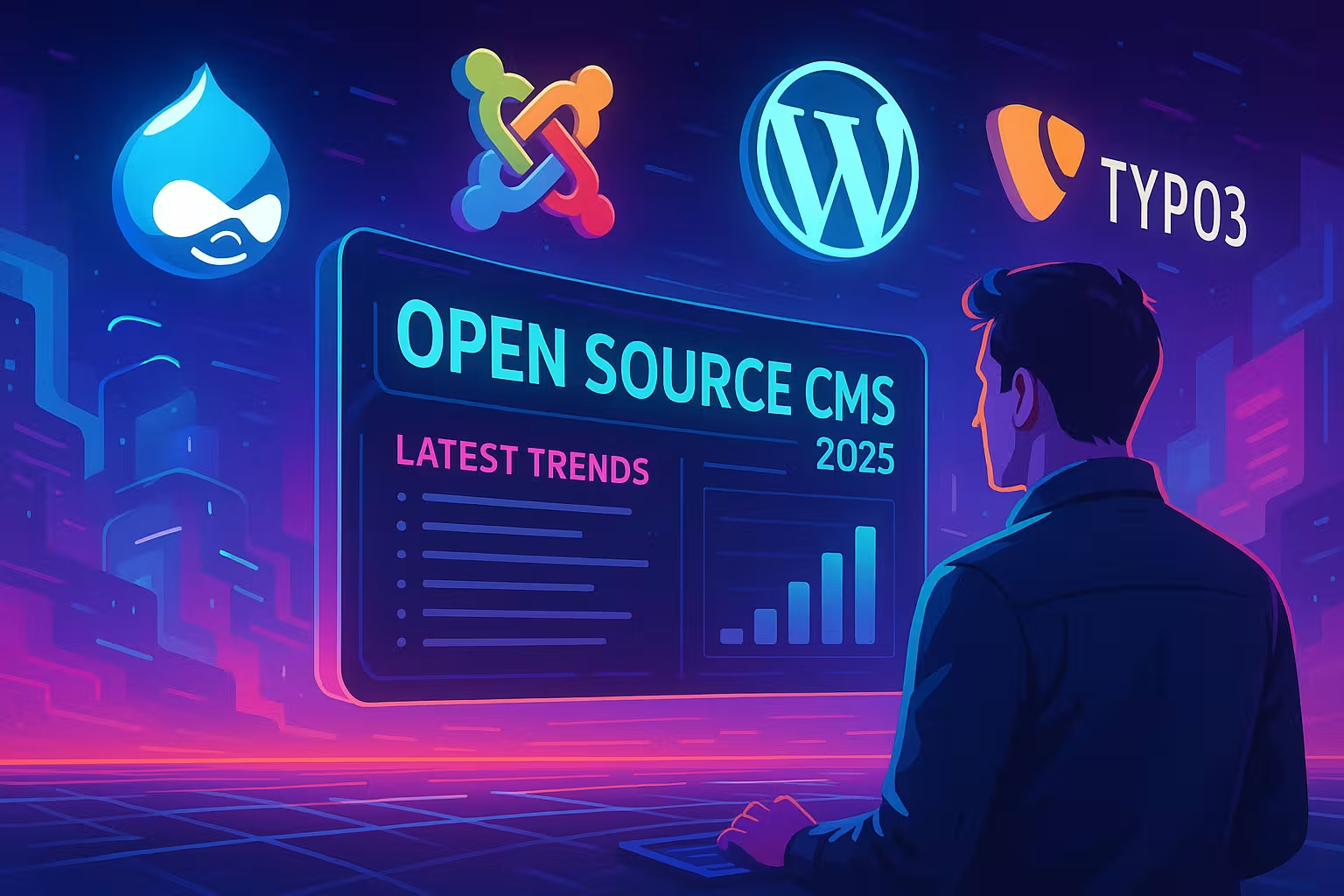
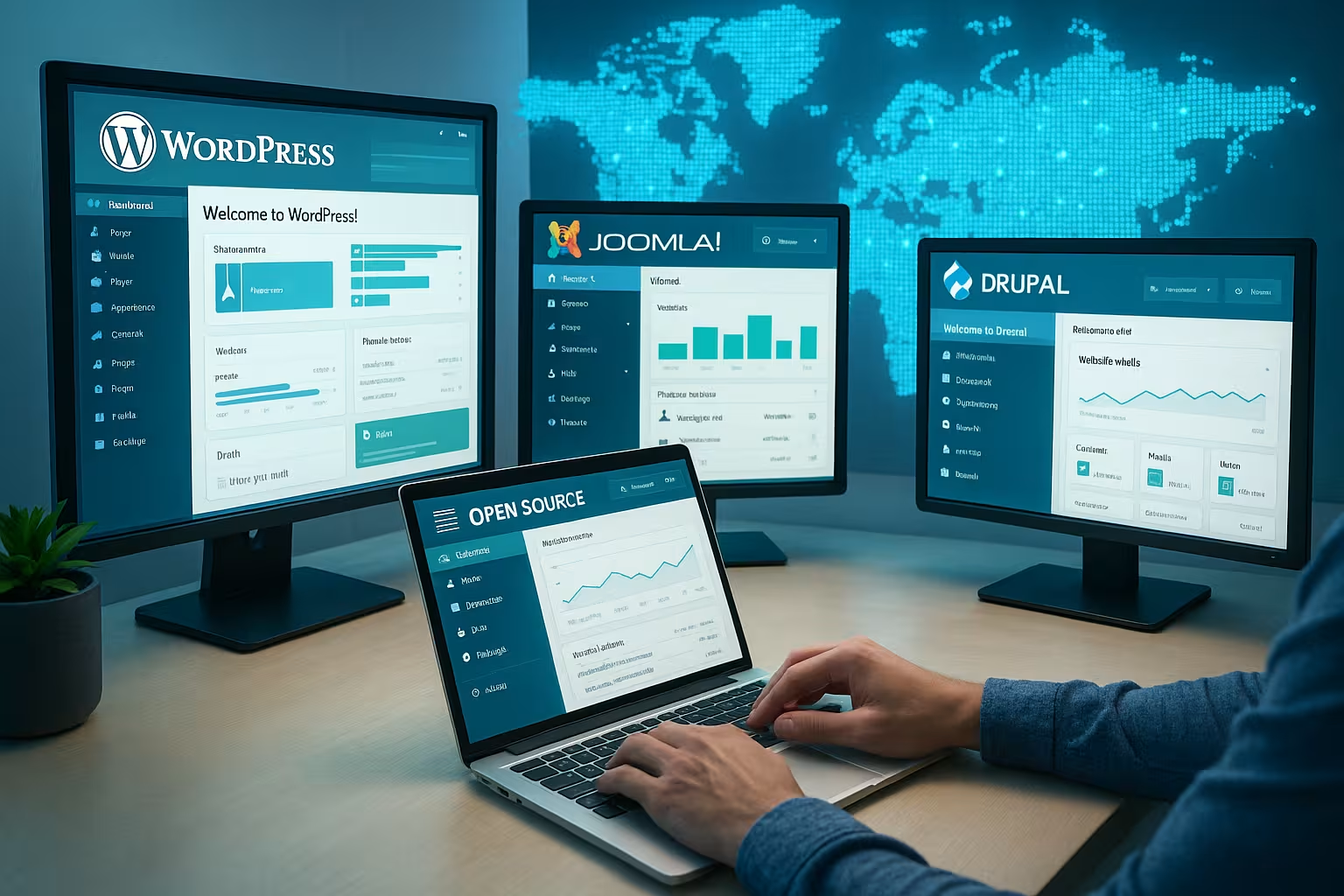
Open Source CMS 2025 offers you maximum control over content and technology - with a high degree of flexibility in the structure of your website. Whether for blogs, company websites or applications: Modern systems such as WordPressStrapi or Drupal enable an efficient, secure and expandable web presence with open code access.
Key points
- Open Source-technology ensures maximum independence and customization
- Headless CMS like Strapi open up new possibilities for development teams
- Scalability and performance - even for large websites or e-commerce platforms
- Strong Communities support with troubleshooting and expansion
- SEO functions and security features are an essential part of today's
Open source CMSs have become particularly important in recent years, as they are not only transparent, but can also be extended in many ways. Thanks to the joint efforts of enthusiastic development teams worldwide, updates are constantly being created that keep security and functionality up to date. Especially in 2025, when the demands on a website are higher than ever before - be it in terms of loading times, responsive design or individual user experience - open source CMS are invaluable. They allow you to freely decide which components you want to use and how far-reaching your customizations should be.
In addition, the open source code allows you to actively participate in further development. If you want to design workflows more individually, you can either program your own modules or make use of the numerous libraries already available. This means that even a small web agency can manage professional projects by relying on existing resources. For you as the operator, this means that you remain flexible in the long term and can interact with a wide variety of technologies without being tied to proprietary systems.
WordPress - market leader with broad application
WordPress continues to dominate the CMS market in 2025 with a share of over 40%. Especially because of its User friendliness it is ideal for beginners, but developers also benefit from the large selection of plugins and themes. You can create almost any type of website - with minimal technical effort.
Thanks to plugins such as WooCommerce or WPML, WordPress becomes a fully functional e-commerce or multilingual platform. In combination with the specialized hosting of webhosting.com it runs reliably and quickly. If you need a solid foundation for long-term digital growth, WordPress is the right choice.
An important component of WordPress are the constantly growing number of extensions that you can easily install in the backend. Whether you need additional security mechanisms such as login limits or firewalls, or whether you want to further optimize your site for search engines: the plugin scene is virtually endless. The huge selection of themes - from simple templates to highly professional premium themes - also ensures that you can build an appealing, responsive website relatively quickly. Thanks to the continuous development of the Gutenberg editor function, you can now work even more flexibly with design blocks and place content in a very granular way.
Anyone who runs a business website or blog knows how important it is to publish and maintain content quickly. WordPress is unbeatable in its user-friendliness, so that even employees without in-depth programming knowledge can create articles and insert images. At the same time, the active developer community makes WordPress a reliable system, as security gaps are usually closed immediately and new functions are constantly being integrated.
Drupal - for extensive web projects with security requirements
Drupal convinces 2025 with high Flexibility and an architecture that allows extensive customization. Companies, authorities and universities often use it for their complex content and strict data protection requirements.
With thousands of freely available modules, any function can be integrated, from LDAP logins to sophisticated publishing workflows. If you need a customizable platform with long-term support, invest in Drupal. In combination with Acquia, it creates a reliable system for enterprise web projects.
Drupal's rights and roles system is particularly granular. This means that you can define very precisely who is allowed to perform which actions in the backend or how content is released. This is an important aspect, especially in large teams with several editors, administrators and external partners. This differentiated access management makes it possible to implement complex publication workflows, which are essential for government institutions or larger companies.
Drupal is also very scalable: if you plan to expand your platform further, perhaps with multilingual content or external databases, it offers an extremely robust basis. For example, some organizations use Drupal as a central content hub from which information is distributed to various channels and front-ends. This allows you to benefit not only from the stability, but also from the flexibility of the platform.
Joomla - solid midfield with strong flexibility
With around 1.72% share of globally active websites Joomla among the established systems. Immediately after installation, it provides numerous functions without the need for additional extensions. This makes it efficient for the implementation of medium-sized projects.
Also in the comparison of WordPress, Joomla and Drupal Joomla shows that it offers a strong balance between user control, content maintenance and expansion. The learning curve is somewhat greater, but anyone with a basic knowledge of web design will find a reliable platform here.
One advantage of Joomla is its integrated content management system, which already offers many possibilities "out of the box". You need fewer extensions to set up basic functions such as multilingual pages, contact forms or user management. Although the community behind Joomla is somewhat smaller than that of WordPress, it is still helpful and strives to develop the system further. As a result, you receive regular security updates and new features.
Joomla is ideal for medium-sized websites in particular. If you run a medium-sized company, for example, you can use Joomla to quickly and reliably create a website including a blog area and product pages. Thanks to the relatively clear user interface in the backend, even editors who rarely work with CMS will find their way around relatively quickly. If you want to go deeper, you can use modules, components and templates that make Joomla highly customizable.
Strapi - Headless CMS for maximum technical freedom
Strapi 2025 is the first choice for developers who want to deliver their content via APIs in web apps, mobile apps or kiosk systems. As a real Headless CMS it completely separates backend and frontend. Content can be provided in a structured manner - via REST or GraphQL.
Full control over authentication, data models, roles and authorizations makes Strapi a platform for teams with a higher level of technical expertise. Those who host on its infrastructure have maximum control over data and architecture.
In contrast to traditional CMS systems, where the frontend and backend are closely interlinked, Strapi gives you more scope for innovation. You can work with various JavaScript frameworks such as React, Vue or Angular and consume data flexibly. This also makes it easier for you to connect to third-party services, for example for payments, notifications or analyses. Start-ups and digital agencies in particular benefit from this modular approach because they can react quickly to trends.
In addition to the technical flexibility, Strapi is also advantageous in terms of performance. As you only use the backend and design the frontend independently, you can greatly optimize loading times and have maximum control over security features. Continuous integration and deployment processes can also be easily integrated into the development workflow because Strapi can be easily integrated into common DevOps toolchains.
Ghost - the CMS for focused publishers
If writing and publishing are the main focus, Ghost is ideal. The platform dispenses with unnecessary extras and offers a clear Markdown editor interface with a modern SEO toolkit. Many publishers, magazines and bloggers appreciate the lean implementation.
Ghost is headless-capable, runs fast by default and has a growing developer community. If you value performance, readability and simple content creation, Ghost is the right choice for you.
The goal with Ghost is not to create a one-size-fits-all solution, but a streamlined approach for focused writing. Thanks to the integrated SEO functions, you don't have to focus on managing third-party plugins. Thanks to the minimalist interface, authors can focus entirely on their texts and content. At a time when content marketing is becoming increasingly important, Ghost is a welcome alternative to more cumbersome systems.
Ghost also offers integrated functions for publishers who want to introduce a membership or subscription model. This allows content to be activated only for paying users, for example. In combination with modern themes, Ghost can easily keep up visually with the well-known CMS and at the same time offer a fast reading experience with minimal loading times.
Hosting determines loading time and security
A CMS only really comes into its own with a well-coordinated hosting environment. Loading times, security standards and availability depend directly on the hosting provider. webhosting.com supports central open source CMS with individual server profiles. Optimized packages with daily backups, caching technologies and security management are available for WordPress or Drupal.
Especially when using headless CMS such as Strapi, a lean infrastructure is essential for demanding projects - keyword: quick start and low server latency. Anyone planning mobile-friendly websites with high traffic is better off investing in well thought-out hosting solutions right from the start.
Modern hosting providers often offer container or cloud solutions that allow you to scale your resources up or down flexibly. This is particularly relevant if you expect peaks in traffic - for example during sales launches or promotions. Targeted caching solutions such as Varnish or Memcached can also noticeably speed up CMS such as Drupal or WordPress. Also pay attention to security features such as DDoS protection or integrated malware scans to ensure smooth processes in the long term. Support for the latest PHP versions is another point that has a positive effect on performance and security.
Even if hosting seems to be just a technical detail at first glance, many underestimate its influence on SEO, user satisfaction and conversion rates. A good server connection and low latency times can be directly measurable: search engines like fast websites, and visitors are more willing to spend longer on a page if the content loads quickly. It is therefore worth not only looking at the price when it comes to hosting, but also focusing on CMS-optimized offers.
CMS comparison: functions at a glance
For better orientation, I have summarized the most important features of the leading CMS 2025 in the following table:
| Function | WordPress | Drupal | Joomla | Strapi | Ghost |
|---|---|---|---|---|---|
| User-friendly | High | Medium | Medium | Medium | High |
| Customization | High | Very high | High | Very high | Medium |
| Scalability | Good | Excellent | Good | Excellent | Good |
| Security | Good | Excellent | Good | Good | Good |
| Headless ready | Partial | Yes | Limited | Native | Yes |
| E-Commerce | With WooCommerce | Yes | Yes | About API | Restricted |
The table makes it clear that each CMS has its own strengths. So consider which functions your project requires. Is it primarily about easy administration by several employees, or is a high degree of customization in the foreground? Perhaps you want to do pure content marketing, or you are planning to set up a store with a global audience. Choosing the right CMS not only makes your day-to-day work easier, but also lays the foundation for long-term success.
Best practices for use
Regardless of the system you choose, you should keep your CMS low-maintenance and goal-oriented during operation. You can achieve speed and security through consistent caching, SEO optimization and regular updates.
Use a mobile-first layout and ensure short loading times. Also use an image system with WebP format, as visual content can be compressed efficiently. The use of two-factor authentication is also part of today's Standard security of every website.
It is also advisable to integrate analytics tools to understand user behavior on your website. This will help you identify where there is potential for optimization, for example in navigation, conversions or the presentation of content. Pay attention to accessibility: A growing number of users are dependent on accessible content, and in many countries there are even legal requirements for this.
A clear allocation of roles in your CMS is also helpful for efficient teamwork. Determine who can create articles, who can check them and who can ultimately approve them. For more complex projects, a multi-stage workflow in which different people are responsible for proofreading, image selection or SEO analysis may be recommended. This reduces sources of error and ensures high content quality.
Trends 2025 - these developments will shape CMS systems
Modern CMS platforms not only have to manage content, but also keep up with technologies such as machine learning, PWAs or AI-supported personalization. This results in new requirements for UI/UX, API connectors or system-open content.
The trend towards Headless CMS shows: Content should be delivered flexibly via website, app or social media. At the same time, users expect intelligent content management - be it through suggestion algorithms or semantic SEO structures.
Content personalization will become even more important in the coming years. It is no longer just a matter of providing generic content, but of delivering tailored information to each user. AI-based tools analyze user behavior and recommend relevant articles or products. This results in significantly higher engagement, which can lead to better conversion rates. CMSs that integrate AI modules will become increasingly popular as they automate this process while reducing editorial effort.
At the same time, strong security awareness is required. Cyber attacks are still a significant threat. For this reason, advanced encryption solutions, intelligent firewalls and automated security updates will be part of the standard repertoire of successful CMS providers in 2025. The demand for GDPR-compliant data storage will also remain high, so admins and developers will need to focus on clearly separated structures and encrypted data transfer.
Progressive web apps (PWAs) are also gaining in importance. Users want to use websites like native apps, with offline capabilities and push notifications. CMSs must meet these requirements by providing appropriate interfaces and functions. This allows every user to interact with content optimally at any location and on any device without having to program a separate app. Thanks to the headless approach, CMSs can also deliver their data to PWA front-ends in a targeted manner.

Another point is the increasingly important role of microsites and landing pages, which are often set up at short notice for specific campaigns. Here, marketers expect agile processes without lengthy approval loops. Many CMS operators therefore rely on flexible modular systems and automated publishing processes in order to be able to react quickly to market changes. The need for storytelling approaches is also increasing, transforming content blocks and digital experiences into multimedia stories.
In addition to technological developments, the sense of community within the communities plays a major role. Open source thrives on shared contributions, feedback loops and lively forums. 2025 is a year in which many CMS communities have professionalized structures and provide in-depth expertise. Whether you have a question about integrating a new module or are planning larger strategies for enterprise solutions - a solution can often be found quickly in online forums, at meetups and conferences.
Summary: Choosing your ideal CMS
The best open source CMS 2025 provide you with powerful tools - whether for blogging, websites, portals or API-driven applications. WordPress shines with enormous extensibility, Drupal offers in-depth structural control, and Strapi opens up high-performance headless projects with a real developer focus.
Ghost is ideal for focused content, Joomla for customizable multilingual sites. Depending on your project goal and team structure, you will find a suitable entry point. For small companies, it is also worth taking a look at the platforms from the article best CMS for smaller projects.
A convincing CMS is based on open architecture, clear user roles and sustainable further development. Choose carefully - this is how you create lasting control, flexibility and performance for your digital presence.
In addition, you should always keep an eye on how your project may develop in the future. Think about planned features, possible traffic increases or additional content that you want to include. Do you want to offer VR or AR experiences? Do you want to integrate your website with social media platforms or incorporate e-learning components? The more foresighted your planning, the better you can configure your CMS and avoid cost-intensive relaunches.
Although you can change a system, migration is often time-consuming and resource-intensive. Careful consideration of functions, community response and growth potential is therefore crucial. Start with a smaller setup and scale up when your project picks up speed. This way, you have a clear focus, use resources in a targeted manner and fully exploit the potential of a modern open source CMS.