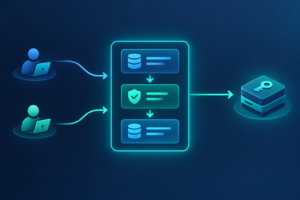
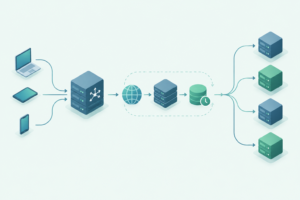
KernelCare Patch Feed: Automated Security Updates for Linux Security with TuxCare
Learn how TuxCare's KernelCare Patch Feed enables automated, reboot-free security updates and strengthens your Linux security over the long term.

Learn how TuxCare's KernelCare Patch Feed enables automated, reboot-free security updates and strengthens your Linux security over the long term.

nginx microcache speeds up WordPress with short cache times, reduces server load, and improves hosting performance.

MariaDB Binary Logs Explained: A Clear Summary of Their Structure, Usage, Replication, and Performance.

Learn how to correctly interpret the Redis memory fragmentation ratio, identify normal and critical ranges, and keep your Redis memory efficient and stable through targeted Redis tuning.

Discover how Linux HugePages can help make MariaDB, Redis, and PHP-FPM faster and more stable in a hosting environment. With a focus on Linux HugePages, you’ll get practical tips on THP configuration, kernel tuning, and memory-optimized setups.

A high-performance server and a properly configured caching setup are only half the battle if faulty code or broken redirects sabotage your rankings. For administrators and webmasters, regular SEO analysis is essential for identifying technical bottlenecks early on. A simple website check

CloudLinux Proactive Defense blocks PHP malware the moment it is executed and enhances security for WordPress, hosting, and servers.

Discover how you can use MariaDB Page Compression to reduce the storage requirements of large InnoDB tables and optimize database storage—without significant performance losses.

Learn how to use NGINX rate limiting to protect your website from bot traffic and attacks, thereby enhancing web server security. Includes practical examples and best practices.

Linux PSI (Pressure Stall Information) shows you how much the CPU, memory, and I/O are slowing down your system. Learn how to enable PSI and use it for precise performance monitoring.

Learn how Redis Streams enable modern messaging without the need for additional queue systems and make your Redis messaging more efficient.

Discover how MariaDB Instant ADD COLUMN enables schema changes without downtime thanks to the INSTANT algorithm and is revolutionizing database administration with MariaDB online DDL.

Learn how Kernel Samepage Merging (KSM) in the Linux kernel optimizes RAM usage and enables more virtual machines to run on the same hardware. This article explains how it works, how to configure it, and its impact on virtualization performance—including practical tips for administrators.

Discover how to safely optimize the TCP time_wait state on heavily loaded web servers and prevent port exhaustion through targeted Linux and socket optimization.

Learn how to use systemd resource control and cgroup management to specifically limit CPU, RAM, and I/O for Linux services and run more stable systems.

Learn how the Linux cgroup v2 memory controller works and how to build stable hosting and container environments using targeted Linux resource limits.

Discover how to use Redis keyspace notifications in hosting for intelligent cache invalidation, efficient cache monitoring, and event-driven architectures. Focus on configuring Redis events and best practices.

Learn how to use MariaDB buffer pool instances on multi-core systems to achieve targeted MariaDB tuning and effective database optimization.

CloudLinux SecureLVE Explained: How process isolation using LVE, CageFS, and Isolates makes shared hosting more secure and takes CloudLinux security to a new level.

Learn how to optimally configure the Linux kernel parameter `vm.max_map_count` for database servers. The focus is on `vm.max_map_count` and its importance for stable database hosting and memory-intensive applications.

Learn how to optimize the Apache KeepAlive timeout and boost your server's performance through targeted configuration. This guide explains the focus keyword "apache keepalive timeout" in detail.

NGINX Proxy Buffering Explained: How to Optimize Performance, Memory Usage, and Reverse Proxy Tuning in Practice.

Learn how to properly size the Linux socket backlog and sustainably improve your servers' network performance through targeted TCP tuning.

TCP Fast Open reduces latency and speeds up connection establishment on web servers and Linux systems.


The NGINX FastCGI Cache improves WordPress performance and is a powerful alternative to plugins.

Redis Full-Page Cache speeds up WordPress by storing entire pages in memory. Learn how the cache works, what its limitations are, and how to make the best use of the focus keyword "redis full page cache" in your setup.

acceleratewp improves WordPress optimization directly at the server level through caching, analysis, and automatic recommendations.

Max Cache vs. LiteSpeed Cache: A Comparison of Server-Level Differences, Hosting Factors, and Impact on WordPress Performance.

CloudLinux MAx Cache speeds up WordPress through server-side caching without PHP. This article discusses its benefits, practical use, and how it fits into the bigger picture.

Redis Session Storage for PHP applications improves performance, scalability, and stability in modern web projects.